The Art of Subtraction (ROUND 4)
scent of the day: Nisatiruk, by Prin
I had a horrible morning followed by fighting back feelings of regret throughout the day (although I will say the regret is a lot less than it would have been 5 and 10 years ago now that the truth of my having just one life grows more concrete and now that I have been pushed into a corner from all sorts of entities and angles, even backstabbing cunts in my own circle who have alienated me from my dearest family members)—and yet, through it all, there is this motherfucker. Holy Moley, this thing is beyond good. If you are okay with synthetics and do not care less about provenance than about effect, then there is little reason to reach into fragrances triple the price point. I do appreciate Ensar’s aura andm to some extent, that throuygh his perfumes I have natural ingredients in a bottle that are virtually extinct. But especially as an animalic lover—Prin still is my favorite
this is an answer to the naysayers that mock Prin’s powers and blending discernment / for all my avowed disgust at autotune aromachemicals (the Amber Xtreme and norlimbonols etc that result in the worst of Terenzi and Gualtierri and especially that utter blasphemy to perfumery, Malle’s Promise), this is yet another Prin composition that shows that mixed media perfumery does it best / The synthetics in Prin releases do not bug me (maybe something in Thichilla as well as Anatolia Anatolia bugs me a tad), but still the synthetics makes them powerful: all Prins real are one sprays—otherwise you go blind/ The one objection I have to this perfume is that it suffers from an issue many from Prins houses do: so many are pretty much riffs on a same theme—as with Tauer, you have to really like him, as a perfumer to have many of his scents / For all the overblown smack talked about Bianchi’s orris butter overdose, Prin and Tauer’s core redundancy is much more intense than hers. / And seeing their one-trick-pony style makes me appreciate Bianchi more and especially legends like Corticiatto (the Guerlain of our era), whose perfumes I do collect and who I do find the most talented perfumer even if his style does not resonate as deeply with me right now as Prin’s does. /
resin-animalic attar-like composition that is at once bodily, vegetal, fungal, and luminous/ clary sage herbality with a lovely musk and a fungal presence on a bed of honeyed hay (hay absolute plus the oud) that does open up after first hour./ clary sage plus ambrette plus Siberian musk create a lovely elegance and alluring musk that is only the merest dirty—and prin holds back on the cumin-centered spice bomb signature he is known for—a smart move because this allows the elegance to really stand out / clove camphor reinforces the honey cola of the oud but that camphor is loudest at the beginning, before it gives way to the musk—which is this scents true place. / I should soon be receiving EO’s Tibetan Musk and I have but have never cracked open Mongolian Mriga, so I would love to see how that compares / (I actually have so much to compare: I have Rahassani by Prin to compare with Forbidden Flower by Areej le Dore on the matter of the skunk tincture—I suspect Rahassani to be the winner there: I love skunk and I hear it is soft in Forbidden Flower, and also Rahassani has the goat fur element of costus that I adore) /
the scent of natural musk can vary greatly based on the specific animal, its diet, the age and quality of the musk pod, and how it is prepared (tincture versus whole pod, or so on): just like with oud, it is not all about the terroir from which it is sourced—that said, we can still make some rough distinctions / powdery-creamy (like makeup compact texture, sort of like orris butter), floral sweet but often with harsh animalic undertones considered low-class, olibanum-like in citrus-pine terpens (especially from the deer diet of coniferous plants in the taiga)—Siberian musk (or Carbadine musk, Moschus moschiferus), feral but presentable (like a wolf in an elbow-patched sports coat) but considered inferiors grade compared to Tibetan musk, is represented decently in this fragrance, and I say “decently” because other elements tame the musk a bit (although perhaps Prin used an aged and smoother form) / Leathery, plummy hay, furry and oily in a goat lanolin-way, dark, bitter, patchouli-like in its sodden-leaf dankness—Mongolian musk (or, Moschus berezovskii), more raw and savage than Siberian, I assume frpom what I read and knowign well regular Mriga will be nicely represented in Mongolian Mriga / truffle-like, toffee-sweet earthiness, one of the most refined and prized form of musk (falling just short of Tonkin Musc: the bourbon vetiver of musk, the kinam oud of oud, the kashmiri saffron of saffron), blackcurrant-like in its with its subtle cat-urine tang (athough the blackcurrant-cassis-like facets are much stronger in tinkion musk, which can give a warmed senior-citizen-skin-meets-fossilized-amber vibe that I do get in at least synthetic form in Parfum d’Empire’s legendary Musk Tonkin)—Tibetan musk (Moschus chrysogasterk), a nice mix of chocolate-truffle cream and urinous-breightness), is represented in beautiful natural form in Ensar’s Tibetan Musk and in beautiful fascimile accord form in Lagerfeld Cologne/
this is a full-throated animalic Prin given the spotlight it puts on real musk, but it by no means one of Prin’s feral animals / That is to say, this is not like Nocturnal poetry or Arsalan or, perhaps the biggest beast of them all, Homa—Onthamara is not crazier, desipite the hype. / Nisatiruk, in fact, is as elegant as Musk Khabib but better in that it has more style and complexity / This would be the one I would introduce to my classiest frag friend Joel, who otherwise might be put off other Prins—especially those that give us goat hair plus cumin spice blend on a straw mat of cyst-infection oud / This is just so beautiful—so deeply alluring and inviting, I almost find this like the Honour Man of Prins, which is saying a lot in my book since Honour Man I rank high in my extensive collection of Amouage despite the flak it gets for being mass-appealing and minimalist /
Nisatiruk’s heart is floral and herbal: tuberose is not a not creamy-gardenia tuberose but rather absolute (dense, oily, slightly camphoraceous, with rubbery indoles that harmonize with the musk); boronia (the only other boronia fragrance beside Hayati from Amphora Exotica and Oud Taiwan from Areej that I have smelled) gives leathery-green, fruity-tea facets, grounding the florals with bitterness; Hiba (Japanese cypress) comes in smoky, hinoki-like, with sharp terpenes and incensey clarity that reinforce the coniferous luminosity of the Siberian musk; tulsi (holy basil) comes with a camphoraceousness, herbal-sweet, with a dentist-phenolic twist amplified by the addition of clove; orris concrete comes off waxy, rooty, and violet-powdered (which perhaps is what is largely responsible for tempering the feral musk-oud, reinforcing the side of itself that is more like the suede-elbow patches of a professor’s tweed jacket./
Prin spices are here, and in the form of his typical ritual brew (halfway between incense and medicine), but they are muted and not so masala like and animalic like the Rhajastani buses so sardined with sweaty lower-caste indians that people must even ride on top / the caraway, for example, does not come off like cumin sweet but the green vegetable breath, which really works with the siberian musk and the black spruce (piney-camphoric, turpentine-like) to reinforce the deer foragign through the Taiga) / Prin like his patchouli adjacent materials and he likes spikenard (which i call Himalayan patchouli, more loamy and mycelial in aroma) even more than the more popular cypriol (which Ramsey calls “Persian patchouli,” more industrial and boot-polish in aroma) / spikenard (or jatamansi) is here too, and it adds its patchouli-adjacent aroma of fungal roots (almost valerian root like), which amplifies—along with rooty vetiver—the actual mushroom in here
the mushroom-centered base is remarkable at least to Prin fanboys like me (others, and this is true sometimes of me, might see merely a common one-trick pony aroma in so many of his scents) / we get that pollen-dusted beeswax of Burmite Honey (one of the most remarkable Prins, not too far from Arsalan in fact) / we get blackcurrant bud, which gives that green-catty, urinous, intensely bitter-fruity aspect often used to amplifies the musk’s bodily vibe (and which I cannt wait toi experience in the Ensar musk) /mate adds a bitter green tea smoke vibe with that tannin aroma I cannot get enough of, especially when done in some of Bortnikoff’s releases like Sans Fluers / Ambrette seed gives pear—seed musk that amplifying the real musk, softening its edges / clary sage, which rings loud at first but stays, pushes out a sort of herbal-ambergris diffusion, helping to project the musk cloud (which is helpful because again this is very much like an attar in wear) / Hay absolute gives us barn-hung tobacco, lovely.
This reads as as fungal-musk oud fragrance complete with bitter herbs and florals / The siberian musk is salty, warm, bodily—and it hums like any good musk should / The spruce, tulsi, and clary sage give it a cooling, almost metallic bite, while the mushroom-spikenard-vetiver axis drags it downward into soil and cave air—pretty decent tension that accurately represents that tension inside of Siberian musk itself: feral yet sacred / I feel as if I am in the same pine forest of Spell 125 but zoomed into the ground where the deer, after having squirted some of the musk from the musk pod located under its skin and between its penis and bellybutton, has stomped it in (like a teen might do his beneath the family-computer ejaculate into the carpet before his mom gets home) with his hind hooves, mixing it into the ground so that it lasts longer (the rock and mycelia and soil and leaves and cones serving as a sort of fixative for its scent marking) while also getting it all over its hooves so that when he walks wafts are spread through the Brokilan-meets-Spell-125 region/
The Art of Subtraction —for Rilke and the six Mikes
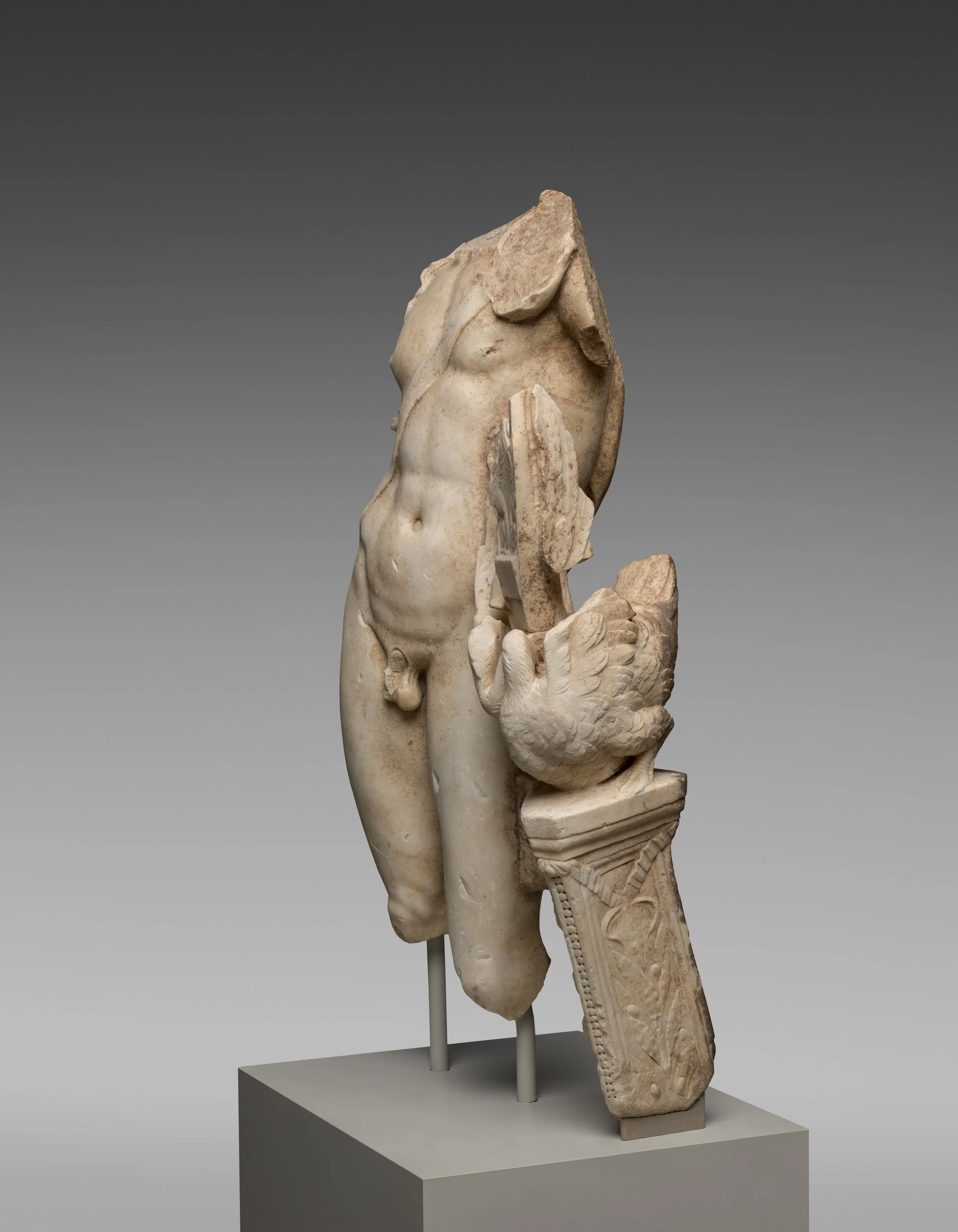
I isolate. Like my own father before me, it takes everything in me to look straight at my son. I have inherited the tremor, the shifty eyes. I walk around hunched. I see now from the inside, in belated empathy for the dead, the difficulty of facing the gaze. How strange what persists in memory: his little nose—“Bip it. Bop it.”—in the bathroom mirror, eyes meeting over “Pee-yew” diapers whose numbered days no father wants to face. To this day it intrudes with the vivacity of mere yesterday— too big they remain in the foreground for me to fathom who he is becoming. To say that is the full story, though, would be yet more vain evasion.
His claustrophobic gab of vigor has ebbed into something considerate, almost—get-the-hint-already squirms having bored into his me-me-me world despite all my pains to be indirect lest he understand his mercy for Dad as I did in his shoes: as mercy for Dad. But still—blazing eyes barging in with ebullience for it all, for what might be, just as I exhale a bit of peace in the bathroom—I look down, look at me, like a cuffed criminal ushered into court for his disgrace. And what do I find? The carved torso of Apollo, marble and mirror, hurling even more dazzle: “You must change your life”— its order v-cut by oblique brutalism: “Your time has come to an end.”
Standing within that whiplash requires no squaring of circles. I know as much. It means surrender. But that surrender, I know too, need not be to weariness. “Become he who can bear not being the center”—that is the hidden hinge, the sunken reconciliation. It is the call to train the spirit for its final crawl, to apprentice oneself into erasure— to practice, yes, the art of subtraction. The image lingers of my own father, head bowed over beer—cans towering in a bravado—beaten by my own blaze. I doubt my strength for the other road, freeing as it might be. What I do know, and what makes that road harder still, is this: if I cannot muster the strength, at least I will walk beside him.
“We need books that affect us like a disaster, that grieve us deeply, like the death of someone we loved more than ourselves, like being banished into forests far from everyone, like a suicide. A book must be the axe for the frozen sea within us.”—Kafka (against the safe-space cancel culture pushed by anti-art bullies, left and right)