The Art of Subtraction (ROUND 6)
scent of the day: Kodo Kanbojia 2020 (Pailin Cambodia), by Yaaseen
This is an antwood oud, which means that the resins produced are not a result of fighting a bacteria or fungal infection but rather from fighting the stresses of an ant infestation. Very fine Cambodian oud—a bright-green woodiness at first, especially set against neat oils like Suma (a smoky dark sumatran oil). It comes off very much like a cross between 3 parts wine lees, spent yeast leavings at the bottom of wine barrels, and 1 part raisin. I feel it would take Salute! By Parfum d’Empire, which focuses on that wine lees element, to the next level.
This reminds me to somedegree of the Cambodian oud I get in Of Wolves and Men, the supersaiyan form of Private Blend: ripe, spicy tobacco leaf in deep reds and dark autumnal oranges, lying beneath warm sunlight cutting through the crisp air of fall. Think of a boozy honey spread over aged reddish-blonde wood. Or better, and to honor the clear tobacco impressions typical of a Cambodian, think of a cherry-rum honey spread over a reddish cigar like Arturo Fuente Rosado Sungrown Magnum. Indeed, some sort of beeswax-woody cigar itself could be considered the representative for this oil. Think a cigar somewhere between the honeyed-bread-and-cedar of a Davidoff Colorado Claro, on the one hand, and the honeyed-bourbon-and-oak of a Cohiba Weller, on the other hand—not at silky as the former but not as robust and full bodied as the latter either.
Over time the darker honey tobacco seems almost to reverse back in time to a fresher state. In the dry down it is more a medicinal-mint cherry like what I get in my Kamboche version Of Wolves and Men. The sweetness, though, is fermented more in a tobacco way and more like grass—almost even tobacco flower. That is why I say that we are almost in a reversal—the tobacco leaf coming back into life as a plant. Indeed, I almost get that sour-green-apple-meets-vetiver-grass like in Bortnikoff’s Vetiver Nocturne Absolu. It’s almost like the more varnishy qualities transform into an apple-sour that gets more and more like ruh khus.
The Art of Subtraction —for Rilke and the six Mikes
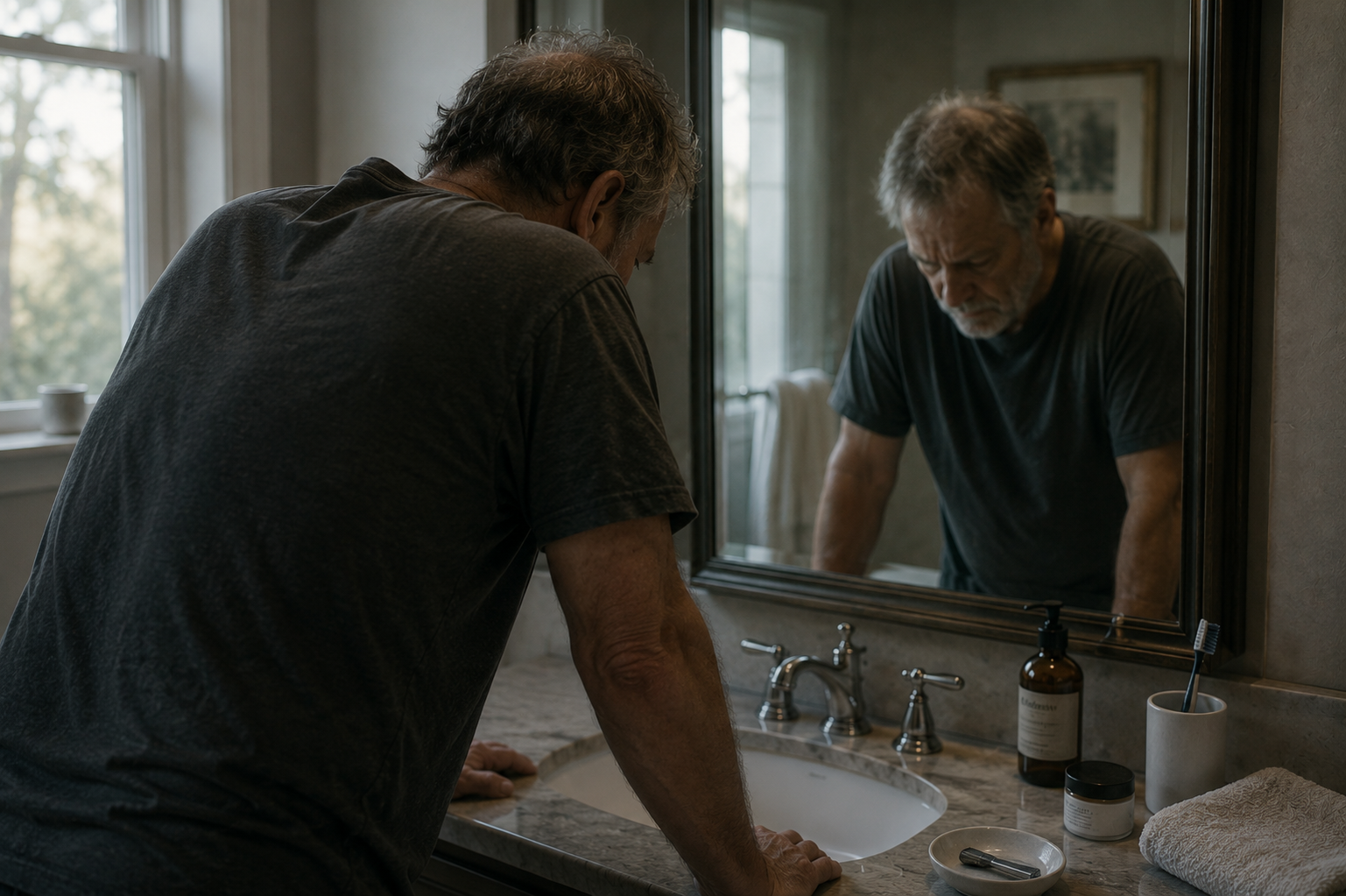
I isolate. Like my own father before me, it takes everything inside me—no longer “promising”— to look straight at my son. It has grown worse, into a thing. I have inherited the same need to twist talk away from dreams and plans, the same shifty eyes that used to bug me to the point of leaping to stay in their line. I slink through rooms now, hunched. From within I see—in belated empathy for the dead— how hard it is to face the gaze: so energized, hopeful. How strange what persists in memory: my boy, his little nose (“Bip it. Bop it.”) in the bathroom mirror, eyes meeting over “Pee-yeeeew” pampers whose numbered days no father wants to face. The nose, all of it, intrudes to this day, vivid as yesterday—too big in the foreground for me to fathom his ascent. To call that the full story— that, if I am honest, would be more vain evasion.
His claustrophobic gab, a wormhole back to before
my face in photos wore suspicion of dispensability
too young, has ebbed into something considerate,
almost—my hand-me-down squirm (get a hint already)
having perhaps bored through his me-me-me despite
my pains to muffle it down to subliminal hum if only
to postpone his coming to see his mercy for Dad
just as I did in his shoes: as mercy for Dad. But still—
blazing eyes barging through the door with ebullience
for it all, for what might be, before I can even exhale
a breather of peace in the bathroom—I drop my gaze,
failing to resist that reflex I detest, like a puny disgrace
ankle-shackled in court. And what do I find? Carved
there (how could I look away?) is Apollo’s torso, marble
doubled in the mocking mirror, hurling more dazzle:
“You must change your life”—its demand v-cut
by oblique brutalism: “Face it. Your time is over.”
Standing within that whiplash of injunctions requires no squaring of circles. I know as much. It requires surrender. That surrender, I know too, need not be—no matter my history, my models— to weariness. “Become he who can bear not being the center. Become, even better, he who can sing backstage.” The hidden hinge of reconciliation, dissolving the apparent double-bind, is the call to train the spirit for its final crawl, to apprentice oneself into the erasure awaiting all—to practice, what might be named, the art of subtraction. The image lingers of my father—his head bowed over beer cans stacked high, a flush of bravado— withered before my blaze. I doubt my strength for the other road, freeing as it might be. What I do know is what makes that road harder still— an exit light: if I fail, at least I walk beside him.
“We need books that affect us like a disaster, that grieve us deeply, like the death of someone we loved more than ourselves, like being banished into forests far from everyone, like a suicide. A book must be the axe for the frozen sea within us.”—Kafka (against the safe-space cancel culture pushed by anti-art bullies, left and right)