The Bad Seed (ROUND 1)
SCENT OF THE DAY: Jamaican Ambergris: Purple Sultani, by Ensar Oud
Black Gris is more my speed, my style, my feel. But this I would say is objectively better and more oud-woody than I expected. A beautiful marine-tobacco scent. Yes, the tobacco aspect of the ambergris really comes out here, but it is more of a feminine tobacco if that makes sense: tilted in the direction of the browned skin of firepit marshamellows. And the aquatic, while saltu as you would expect, has an erect celery stalk aroma.
I expected something that might be a cross between Black Gris and Tahitian Gardenia and Bishara. But while there is distant tropical creaminess, it is more to me like a tobacco ambergris with some rum aspects. Grey humidifier steam through a cotton candy grape filter. When all dried down though you do get the impression that this was not just only the steam but that part of the scent was also the radix of the steam (like the difference between an incense stick and the smoke it gives off). That base, unlike the ethereal steam it gives off, is dark and animalic and salty and musky. The impression is that this base is like a salted dark fruit melange that had been smeared, via that carmelized marshamellow skin made into a cup, on resinous wood and allowed to get tacky like old jelly on a table—a jelly with not a bright purple color but more maroon-brown.
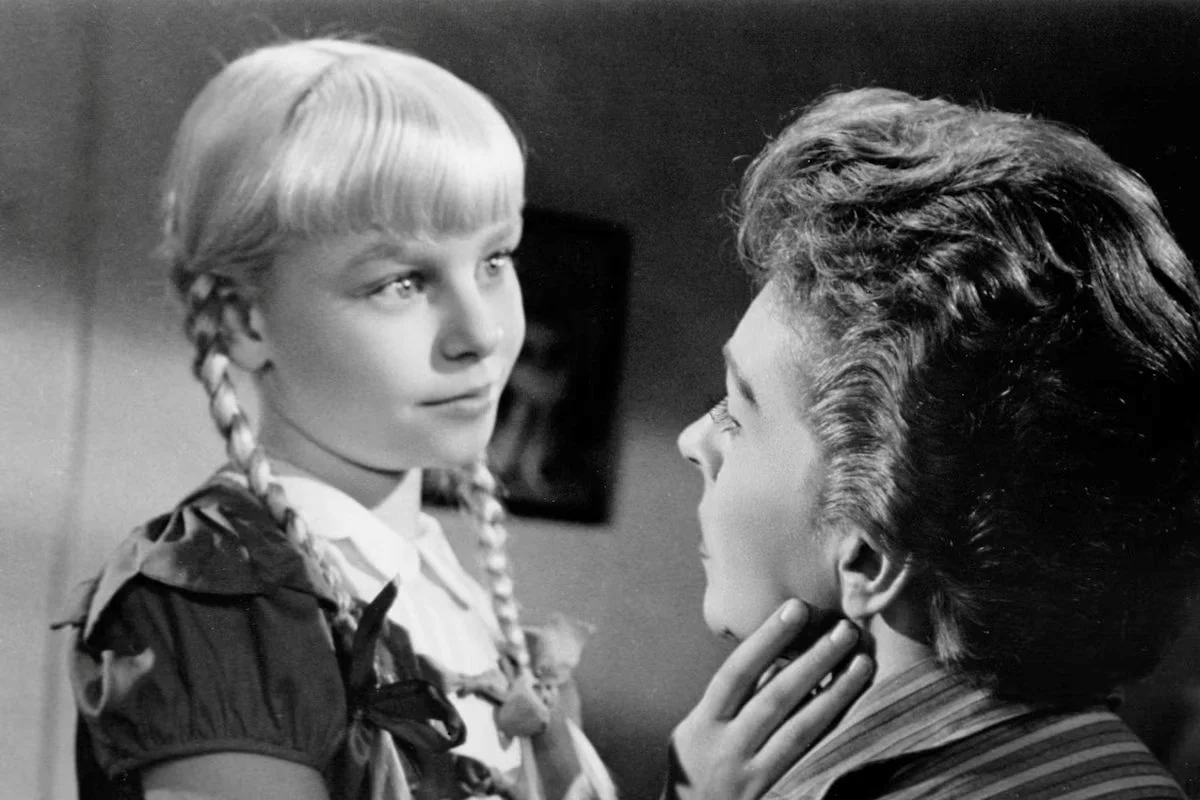
*Let’s workshop this piece about a girl who, aside from shaking up his materialist metaphysics and his views on historical phenomena like the Salem Witch Trials, uncovers a man's hidden evil.
*Rough, very rough
The Bad Seed
My daughter’s sleepover friend is a demon. That sounds odd, I know. But even the biggest pusher of the underage alibi would agree if in my shoes. I’m sure she can play the innocence game well. I saw a glimpse of that with how she handled my wife: “Thank you but my mommy said not to eat too many snacks.” With me, though, her tongue forked into hardcore right from the jump: “I never listen, though.”
Her eyes penetrated, merely through the rearview mirror, like we were complicit in an operation only I had forgotten. Her air stunk with this gaminess, more lamb fat from the bush than lamb wool from the manger—a skunk oil meant it seemed to le-pew awake some sleeper agent in me. Words fail when it comes to these things. But just how she moved, it could be playing hopscotch on the sidewalk, felt like secret communique—like she had split herself in two, in the manner of the Salem’s Sarah Good and Tolkien’s Galadriel alike: dancing with me on a spectral plane of mental rapport even while continuing to go about her earthly business. The more tangible evidence, like how she would look over now and then at me watching through a blind slit no human could perceive, strengthened the intuitive truth no more than an extra virgin would strengthen the bliss of heaven.
Everyone has a story. A handsy uncle, unregulated screen time in an age of OnlyFans WAP and sloppy-toppy jingles—that might have been hers. Who knows? But what I do know, even if I can’t prove it in a court of law, is that this little girl is a bad seed. I’m referring, and this is just one way in which she has shaken me up (because before her I was a strict materialist)—I’m referring to something further back than womb environments, something deeper than genes. Any earthly account for her malevolence, that is to say, would have to fall into one of three categories. (1) That account runs in parallel with what she already is, such that even if we deleted this story she would remain exactly the same (just as, in Leibniz’s metaphysics, the man’s body would surge at T1 onto the subway tracks even if we were to abstract away the pusher body that gives the impression of real interaction when there really was none). (2) That account is the outward aspect of her inner nature—the flip side of the coin, if you will (just as, in Spinoza’s metaphysics, mind and body are just two ways of looking at the same thing). (3) That account is a matter of over-determination, where causes pile up redundantly (like when you add in an extra pallbearer to a casket already fully carried). In short, any explanation that pretends to derive her from circumstance must either run alongside her, redescribe her from a different angle, or redundantly accompany what was already sufficient.
Yawning away my words as no more than hyperbole would be reasonable. That’s how I’d see them had I not been touched. Reducing my words to a mere victim blaming—that, however, would be unreasonable. I deny it outright. And I go further than that. It would have been unnerving enough, knowing then what I know now, if it felt like she were some Ghislaine grooming at the behest of some unseen master. But her whole vibe spoke, through all our earthly differences of age and race and sex, as if we were equals, as if—so I see in retrospect, although from my vantage now it seems I knew even then—we were, yes, in league: two damned souls, coiled together like a snake-kitten chimera more horrible than sad concoction put down in a medieval bestiary, suckling Satan’s teats in the sempiternity of sulfurous night.
Yes, she had been the one, my wife pulling off for a girls’ night of wine drinking, to insist upon driveway hoops: her and my daughter against me—a telling two-on-one. She had been the one—butting her bony hips against me with the post-up fury of Rodman and, wiping her face sweat with the bottom her shirt, flashing huge pepperoni nipples obscene against her flat chest—to take what I figured would be just lazy fun full of girlie giggles as I did the typical dad things (like holding the ball too high for them to reach or picking them up to dunk) and twist it into a serious match whose out-of-breath intensity, vivid enough with salacious grunts to draw rustling peeks from the neighbor hedge, kept my daughter from wandering off to chalk the walkways. And she had been been the one to suggest afterwards, seeing weekend-warrior me limping to the kitchen for another slice of pizza, the wife out on a girl’s night of wine drinking, that both of them rub my calves while we watch a film—her palms and knuckles working with a dedication contagious enough that my daughter did not just give in to the movie after a few seconds as kids do.
But what did any of that count for? What did any of that count for when, in the splice of a couch doze I had not had since childhood myself, I woke up to one of my testicles in this girl’s mouth, pulled taut just far enough not to tear me, and let it continue? How could I be let off of any hook when, despite my erection rip-roaring into the spotlight with a violence that—barring rigor mortis—could never spring from unconsciousness, I faked sleep even as she tongued my ass? No, I was to blame. Naming her nature did not mean deflecting my responsibility.
My little childish peeks of false yogis seen through by her just like with the blinds, the girl made damn well sure (pulling off my shorts) that I could not hide that I was to blame. The source of my behavior was internal, at least as far as anyone’s is. And that—the key to our complicity—we knew was crucial for the most explosive jouissance. Demons aim to spoil innocence. And here I was, activated in my mission, continuing to fake sleep even through her whispers of insistence (“Hurry before he wakes up!”) that my daughter, hitherto watching with slack-jawed curiosity (unmoved even by the start of her favorite Moana song), get her mouth involved too. “You have to spit on it.”
Just as evil mixes truth with lies, it mixes cruelty with care. “You have to go deep now. And you have to go fast.” Proving the partnership, already clear at a gut level from out first meeting, she took my hand and put it on my daughter’s head. To cover my own needed grip, my own swelling fury to push and pull, she kept hers over top of mine—taking all the credit for the agency and yet with a pressure, as always, nowhere near coercion. “Watch watch happens. Faster. Deeper. You have to swallow what happens.”
“We need books that affect us like a disaster, that grieve us deeply, like the death of someone we loved more than ourselves, like being banished into forests far from everyone, like a suicide. A book must be the axe for the frozen sea within us.”—Kafka (against the safe-space cancel culture pushed by anti-art bullies, left and right)