A Dream Is a Wish Your Heart Makes (ROUND 11)
scent of the day: Nose Rest Day
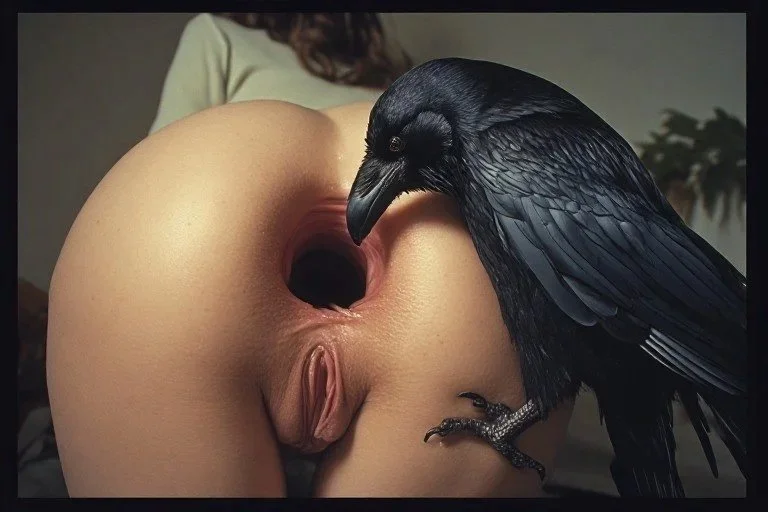
*Let’s workshop this poem about how private desire leaves public traces, how bodies become archives, and how even the smallest witnesses—a bird in a window sill—can be pulled to the core of who we are.
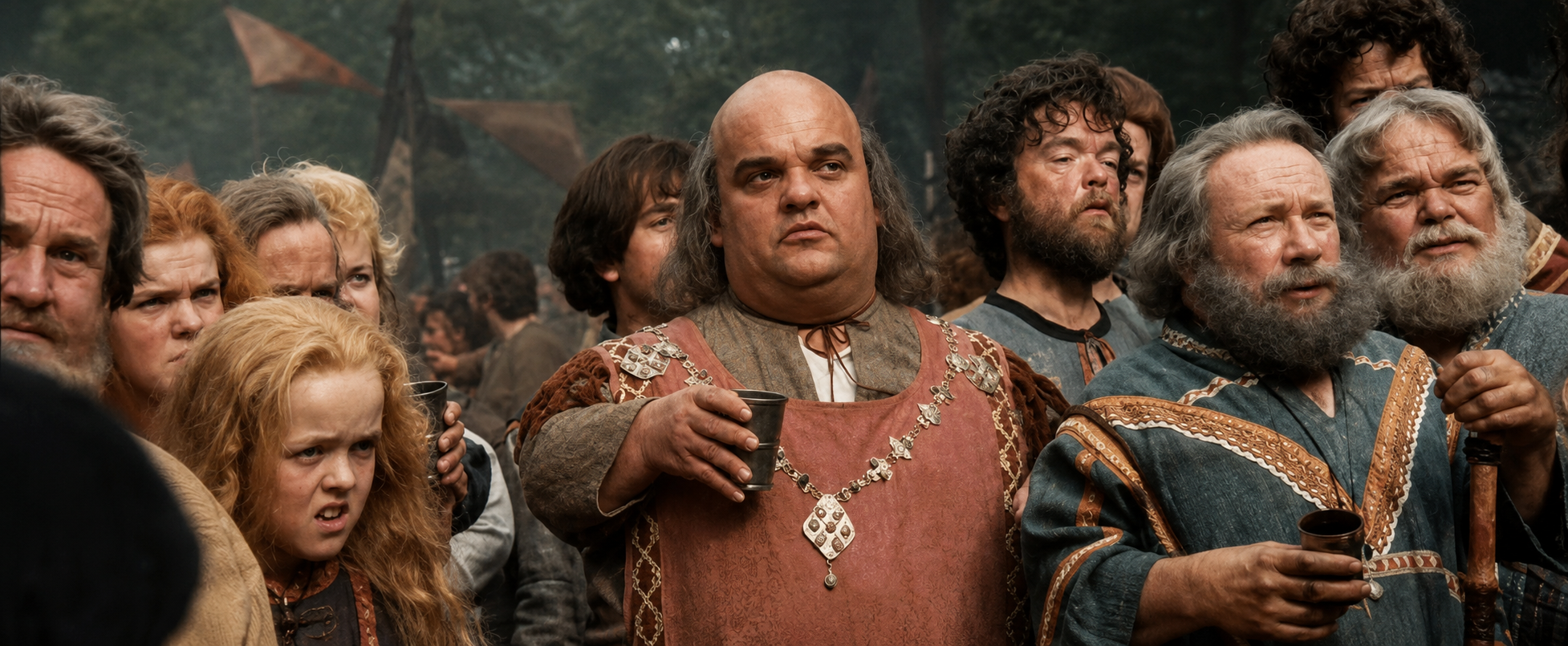
*I added lines to each stanza. I think every addition was a success, especially the sitz bath reference and microperineal tears. The Willow reference to Burglekutt is gold in my book. I was always struggling to link the dildo’s voluminous stature to a little person—but one of those bigger little people, a bauplan approaching someone more like Danny Devitto.
A Dream Is a Wish Your Heart Makes —for my Grandma, Barbara A. Istvan (1939-2015)*
Any thumb-twiddler humming (“Mm hm-mm”) beneath Becky on a mall escalator, let alone any hunter of Jones Beach Bigfoot bobbing and weaving for angles before her sarong draws shut (spousal slaps powerless to stop even the see-through front, the whole minding-my-own-business whistling), has beheld traces of self-play taken too damn far: shadow-puppet wattle (alien slugs, ET undulants), as much tuckable frill as Ray Finkle; a heft of Seussian technicolor that pools in the palm, roast beast whose ripples would make Georgia O'Queef herself rubberneck— rubbernose even, covert pleat-parting nudges gone truffle-snout mania—like a postdoc botanist before an uncatalogued flower. It would seem a lie given her five-foot frame of bird bones, clavicles like wire hangers under cold skin—straight madness
cloaked in the blondest of ditz. But bitch gets real mean with it: The Gut Puncher: Trauma Bae™—that suction-bottom Popeye fist (truly the last ratchet up in size, she swears this time), its bulbous silhouette in the spook-the-shit-outta-ya shadows mistakable less for Grandpa’s O2 tank than for a big Burglekutt lawn gnome hatless and akimbo like the snap-back butcher it is, cornstarched after the requisite sitz bath and stowed under the bed juddering siren calls of elastomer stank with each Babylon local. If only we could see it pummel (well, be pummeled by) that brown eye, that one surviving gullet whose indigenous grip still afforded some semblance of violation sensation (that hole edged now, when off duty, with mini lips all its own: demonic slanders to God like inhale-spoken litany at a tilted altar), we would believe. If only
we could see what—after each puckerless plop of retraction— reposes at such Beldar Conehead limits of sunlimned dilation, no time under the “Cinderelli-Cinderelli” singsong of Disney would be needed to translate (or to empathize with, outright) the crow’s crazed cawing, its Hitchcockian head smashes, at the uncurtained window pane of her exhibitionist kink: crazed pleas to perch upon Becky’s perineal ledge, that calamari keloid glistening like Crisco even when dry (all its micro tears, zigzagged like lightning bolts, clear even without the blanch of displacement); thanatos pleas to peck at intestinal breadcrumbs like an oxpecker, that scavenging symbiont to the Serengeti rhino—deeper and deeper like a child gathering flopping fish, or whatever slimy currency, in the majestic drawback of a tsunami sea.
* A grandson trying to preserve the vulgarity of his people, who are mostly gone—that is the hidden emotional center of this poem. There is a deep tradition of bawdy humor in my family—the Istvan clan, the Last of the Mo’Beacons. Obscenity kept affection alive and distracted us from hunger pangs. Grandma—an old-school banger of pots and pans out in the street (which funny enough was one of many things that made my visits to Sangre Grande in Trindad, twenty years ago now, feel like coming home)—liked to sing, for example, the Istvan twist on the ditty uniting noncontiguous trashlands across America.
She burped and she farted and she shit on the floor.
The gas from her ass blew the hinges off the door.
She carved her initials in a bucket of shit.
The moon shined bright on the nipple of her tit.
Who you gonna get it from? Rosette.
Who do you want it from? Lizette.
Sung by the whorehouse named Quartet.
Of course, I have elevated the familial vernacular into something that would give even Cormac McCarthy pause. And it has come at a major price. It secured my alienation from my native kith and kin, who not only—like the rest of us—do not read (a fact that speaks to the Quixote-nature of my vocation, alienating me from most of the world) but also in several cases cannot read in the literal sense. However much I elevate the language into literary platinum, and however many degrees I have earned that might otherwise distract a populace so mired in genetic fallacy that they judge art by its maker, the humor does reveal my class position. And that—along with my insecure posture, and hand jazz while speaking, and eating like I am in jail, and using “sorry” as a conversational filler, and treating service staff as peers instead of ignoring them in good manners—was one of the things that alienated me from the academy, one of the things that made me vulnerable to cancellation even before the tides of TDS cancel culture put everyone with my optics—yes, even the most kowtowing ally—on probation.
But I honor my grandmother by carrying forward, as my late father did before me, that torch. With them it was all oral. But I have taken the written approach. I have followed the lead of the great writers who have become—stuck in the overlap of various no-man’s lands, more and more hated, can you blame me?—my true family, if only out of the same necessity that makes people on a deserted island start talking to coconuts. That—along with a tad of Nietzschean self-mythologizing (yes, I am not blind to what I do)—really helps to take the edge off in a world where now even those who check all the boxes (politically correct, the right color, the right gender, the right cadence) are alone, everyone staring into their phones. It prepared me early, before the phones took over. I am grateful for that. And yes, gratitude—trite as it is to say—is another thing to add to the take-the-edge-off arsenal.
Chaucer is a good example of someone in my soul tribe, my astral family. It is sad that my people will never know The Canterbury Tales, even though their own toilet humor amounts to twists of what Chaucer already wrote there. Take The Miller’s Tale, for instance. A parish clerk named Absolon tries to woo a woman named Alison. Absolon comes to Alison’s window at night, begging for a kiss in the dark. Instead of her face, Alison sticks her naked backside out the window. Absolon, expecting a romantic moment, “kissed her naked arse / full savorly.” He only realizes his French mistake when he feels her pubic hair, which Chaucer describes as being like a beard.
When I first read that, back in my undergrad days at Stony Brook, I thought immediately of a story my dad often told me—I had to be no older than six the first time—about a guy who goes into a whorehouse. The mistress of the house says the man can visit every floor he wants, except the top floor. The man sees that it is getting sweeter—tighter, warmer (whatever)—on each floor. So by the time he gets to the last permitted floor, he knows he must hold out his jing for the musky paradise soil—what we might call Jannah in the language of Russian Adam—that must be one floor up. But when he opens the door from the stairwell, everything is pitch black. He feels around until he finds a hairy patch. He unloads in only a few strokes, like a horse—pent up as he was. When he is leaving, the mistress says, “You didn’t go to the top floor, did you?” He says, “Nope.” But then all of a sudden a midget with a beard runs out and goes, “Yes he did—ptuah ptuah. Yes he did—ptuah ptuah.” I tried to tell my dad about the Canterbury Tales. I even tried to get my dad to read the fucking thing. Part of me believed—with these totally naive eyes, the same eyes that would believe his promises to quite drinking—that he could.
Totally ridiculous, I know. But I have always been this way. And most of you who read my work, a rare few to whom I owe many thanks, likely feel the same way. That is what Obama meant by his campaign slogan: “the audacity of hope.” I talk to my cats like children. Deleuze would hate me for it. He would call me “disgusting” for it. But I do. I sit them down and tell them where they went wrong and where they went right and why they can’t get this piece of meat: “There’s too many seasonings, my men. Daddy can’t just wash it off this time.” I rationalize my continued way. What else am I going to do when, like Martin Luther said when he nailed the 95 Theses up in 1517, I cannot do otherwise? I rationalize my native style by saying that, in the case of the cats, some inadvertent good comes from the talking (same with talking to plants), even if they do not understand. Perhaps with age and disconnection I have grown funny, like Radagast. But I do believe the cats get it, especially over time, more than skeptics might think. Deleuzian becoming runs both ways. Cats can be “lifted”—or “moved,” since “lifted” speaks to the arborescent-hierarchical model, whereas “moved” is the more Deleuze-friendly rhizomatic-lateral term—to a more human level. They know “no” and “chicken.” My cat Fille knows just what to do when I say, “Let me get that belly, babe!”
By the way, the Becky I have in mind is the character Becky, a woke white woman from my story “Arlo.” You do not need to know the story to enjoy the poem. Nor do you need to know that my writing is perhaps the only thing stopping me from de-mapping as many instantiations of her type before I de-map myself. In the early morning twilight sleep on the day that I wrote this poem, I had been dreaming of a bird at work on a rhinoceros anus—an image we all know. I realized I had no choice but to follow it where it led. So I took some of the imagery surrounding Becky’s use of the Gut Puncher (the “Trauma Bay” edition) and crafted a poem that would have my grandma laughing—and yet, tragically, would never have her laughing even if she were still alive.
That is the thing. I am stuck in a cultural no-man’s land: too feral for an institutions that prioritize sterilized optics (all institutions, I am afraid), yet completely unreadable to the very kin whose ghosts I am trying to honor. Even when I was in academia, I always felt more comfortable on the fringes. The poor-boy inferiority complex I carried with me was something I could never fully escape. I always preferred chatting with the janitors in the library and going out for a smoke with them rather than engaging with fellow professors. The janitors made me feel at home; they were like home, with their TB coughs and all. But I had become weird to them too. Yes, because of my educational experiences—reflected in my vocabulary and manner of speech—I now find myself alienated even from the poor people. I am stuck in a crack of disconnection. This is why I often remind people of the dangers of trying to rise from the underclass to something like the ivory tower. Without care, you risk being stuck forever in that liminal space.
That is the thing. I am stuck in a cultural no-man’s land: too feral for institutions that prioritize sterilized optics, yet completely unreadable to the very kin whose ghosts I am trying to honor. Even in academia, I only ever felt comfortable on the fringes. I preferred sneaking out to the loading dock to smoke with the library janitors—they felt like home, TB coughs and all. But I had become a freak to them too. My vocabulary had mutated. The very rhythm of my speech, however hard I tried, came out wrong. That is the risk of trying to climb out of the underclass toward the ivory tower. You might not make it all the way. You might fall through the joists and end up suspended in the dark between floors—unreachable from below, intolerable from above, banging your pots in an empty street.

“We need books that affect us like a disaster, that grieve us deeply, like the death of someone we loved more than ourselves, like being banished into forests far from everyone, like a suicide. A book must be the axe for the frozen sea within us.”—Kafka (against the safe-space cancel culture pushed by anti-art bullies, left and right)