Neurospicy Fingers (Round 1)
SCENT OF THE DAY: Opus XII Rose Incense, by Amouage
Opus XII Rose Incense (2019, Bruno Jovanovic)—inspired by the mystery in Citizen Kane as to why, in his last breaths, the protagonist utters the word “rosebud,” the name of his childhood sled (it could be his longing for a lost childhood of innocence; it could be a critique of nostalgia and idealized memory; it could be a poetic way to claim that pussy, particularly young pussy, is what ultimately drives a man’s life; or so on)—
juxtaposes elements of radiant brightness (lemon-pepper elemi, limonene-happy frankincense hyperabsolute, fleshy-dewy Damask rose) with elements of overcast intensity (velvety-musky-leathery suederal, pinene-tar-smoke frankincense absolute, bitter-medicinal myrhh, earthy patchouli) into a wildly dramatic package that walks a fine line between the challenging rose of Opus X and the approachable rose of Lyric Man
(dramatic due to the vacillating clash between spring dew and liturgical ash and sandalwood cream; dramatic also because the rose not only rises from and falls back into a gray ash so silky and fluffy like it is creamy like firepit cremains, but itself vacillates between the spring-soap of the more wearable Lyric man and the rose-water-tea of the more diasporic Epic Woman and the sour-tart of the less wearable Imitation Man and, because of the vanilla that becomes more prominent with time, even the loukoum gourmand of the more leathery Anatolia Anatolia),
the whole drama set clearly in the golden age of print journalism (the early twentieth century, the vibrant time of Kane’s NYC newspaper empire) by means of a carbon-soot ink accord (I picture the inking rollers of a film noire montage, only lifted into something more spiritually revelatory like when one lifts a urinal into art by setting it in a museum) that blooms not only from the paper-evoking cedar and the various resins (Lillipur-like camphoraceous incense plus especially myrrh) but also likely from patchouli or cypriol and various unlisted synthetics (violet leaf for that dry-green floral sharpness that we get from Portrayal Man in 2019 as well and safraleine for a steely-graphite rose edge, perhaps even norlimbanol for ashy-metallic diffusion and cashmeran for velvety texture and geosomine for a chemical sheen)—
the overall result being what I would say, especially given the multifaceted nature of both the rose and the incense here, could be a niche-level benchmark for the glutted rose-incense category (although I have never tried Tauer’s take) and is arguably the best rose scent in the Amouage catalog (besting perhaps even Opus X and Imitation Man), its black ink accord (almost a flapping Polaroid smell) at the same time bringing an intellectual edge of transportive uniqueness (a flair that does not preclude it from being a rose-incense paradigm any more than the glut of herbs and spices precludes Ambre Sultan from being an amber paradigm);
the overall result being, in other words, a resinous-floral concoction of high regality whose ash-meets-dew-meets-cream aroma-texture makes it full of dramatic tension and whose smoke and dust and suede makes it more masculine (more Kane-like) than all the other rose-dominant Amouage releases (although I hear Lyric Woman is very masculine)
*I have been working on “Hypocorism” everyday for the last few months. Here is a portion I wrote today.
Neurospicy Fingers
She let go of his hand. “I’m sorry. I know you need to drive. Nigga got a bitch goin.”
He brought his hand to his thigh to wipe the evidence of his anxiety, figuring she had been repulsed. He pressed his head back against the headrest, eyes closing for a breath. But she came to the edge of the back seat, in the middle, so she could continue holding the hand. It was from over the top. That was a relief.
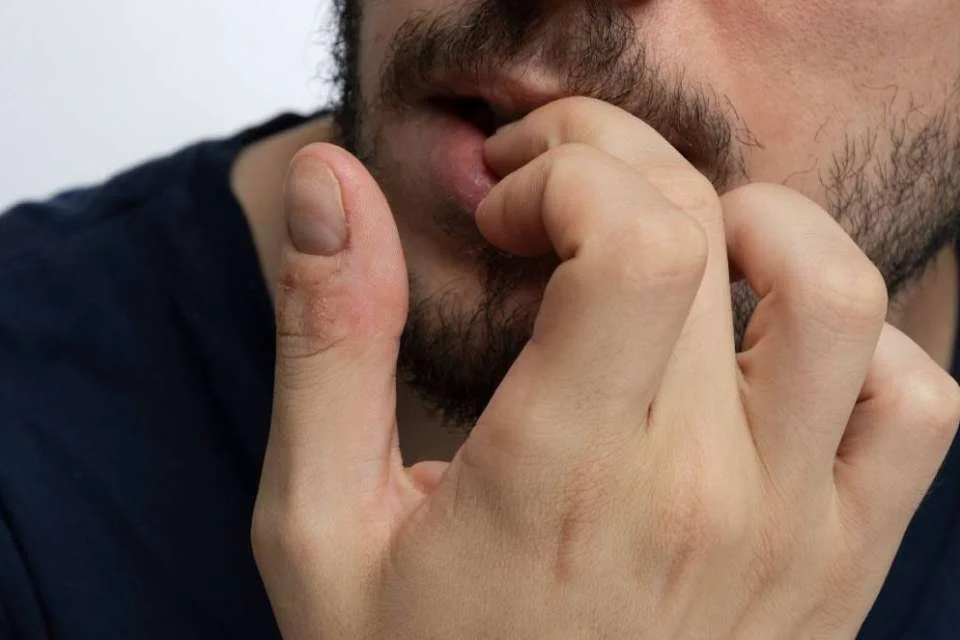
The relief could not last. He would have squirmed under such intimacy regardless. But she went right to the worst of it: the thumb—tracing, like a braille reader both blind and dyslexic, the snaggy shards of hyperkeratosis around his nail, the tactile erratics redolent of iceberg meaning beyond their mere non-belonging. Most of his fingers lived in that chronic state of apology, even his pinkies: maimed and scabbed, in daylight hours often actively bleeding—blood pooling in the cuticle trough only to spread around the whole nail if left alone to physics. He picked and bit them back open the way you worry a loose thread you cannot leave alone.
The reasons never to let them heal—abuse upon abuse like one of those deals where, unable to stand the mirror-like look she has with her busted lip and a black eye, you beat the shit out of her yet again—compounded over unbroken decades, control trumping both pain and shame. It helped him concentrate, a normal writer’s nicotine. It soothed him in times of fear—not the best strategy, of course. For the soothing was the kind that bills you later, beyond just the concomitant disfiguration. Seeing the blood, seeing the sock cuffs and inner jean pockets and shirt hems full of rust crescents where he had covertly tried to stanch the embarrassing seep (blotting himself before, say, flashing his ShopRite loyalty card at the register at an angle that would make a toupeed perserverator proud), only seemed to legitimize the fear as worthy of such twisted self-soothing.
He hated the unevenness that resulted, the micro razors of lift on a canvass that ought to be smooth. Those tactic triggers that, even though he himself was from the hood, could not be ignored any more than a smoke detector’s low-battery chirp—he could not stand them. For a control freak such as himself that could mean, especially factoring in the self-sabotage of his drunk and illiterate kith and kin, little else but a deface-fix feedback loop—so simple it was stupid, so stupid it was hard not to punish by ramping up the intensity—of more picking and nibbling even during those breather moments of relative placidity that would otherwise have meant truce.
His Spanish teacher in middle school said to the class once, her words casual but aimed enough to make him gulp, “Don’t make biting your fingers a habit. It puts you at risk of cancer. Cancer is about inflammation.” Such a warning—lodging into his soul like a metaphysical splinter—was big for him, a child who by this point had many years under his belt—walking in his own private hell even during the laughter and birdsong of recesses—convinced that a certain bump on this arm or head meant he would by going to be bald and done for soon.
But still he could not help it, chasing an armistice he always broke with his own teeth. Not long into double digits—top front incisors noticeably slanted from the compulsive nibbling, mammelons worn well away on the left even while still fresh as first rupture on the right—he had reached the cerebral milestone of veteran addicts where they promise themselves, yet again (as if just asking to be demoralized), this will be the last: this will be, and here he could not help but think of Mrs. Murphy’s warning every time, the picking and biting that will even things out well enough to end all picking and biting.
“We need books that affect us like a disaster, that grieve us deeply, like the death of someone we loved more than ourselves, like being banished into forests far from everyone, like a suicide. A book must be the axe for the frozen sea within us.”—Kafka (against the safe-space cancel culture pushed by anti-art bullies, left and right)