


to Hive being
welcome
What is Hive Being, and Why the Name?
You have likely heard talk of a hive mind, where one global mind finds more or less figurative expression in various local minds. Such talk is common enough in nature documentaries, especially ones concerning ants or bees, and in sci-fi programs. Take that notion, at least a loose version of it, and broaden its scope. That will be a decent first step in understanding the title I have chosen both for my Blog and for the first five-volume installment of my magnum opus Made For You and Me, a fragmentary collection of minimalist stanzas from 2016 to 2020.
In alignment with Spinoza (the 17th Century Rationalist to whom I devoted my doctoral studies), I view reality in its totality as a grand hive Being: all entities are but pulsating manifestations of the buckstopping fount of everything, an ultimate being we might call “God” or “Nature” (so long as, out of respect for the capital “G” and the capital “N,” we limit it neither to some anthropomorphic cloud father hurling lightning bolts nor to mere wilderness untouched by human smog). According to the hive-Being view (where reality is one lone superorganism, a monistic—and we might even say unividualist—conception I defend in both my creative and academic capacities), each non-foundational being (each being, that is, whose essence does not involve existence) is an utterly necessitated expression or eruption or exudation of this eternal source—each is, perhaps better put, a mode or manner of being, and so a focal point through which is disclosed, what classical theists sometimes call “being itself” (ipsum esse subsistens): the realness of the real, the being of whatever may be, the sheer activity of being, the very isness of whatever is. This Blog, which duplicates my Substack, throbs as but one among many literary unfurlings of this self-necessitated foundation, this supreme wellspring, of which we—like black holes and broken beliefs, like fractal ferns and flickering flames—are the inevitable stylings.
My Journey
I am an academic who found himself pressured into early retirement by the rising tides of cancel culture. The illiberal scourge of censoring, silencing, and shaming—although always with us throughout our evolution—reached a local peak around 2021. That was the turbulent year my creative pursuits, which the old left once encouraged as a healthy outlet for the stresses of a childhood steeped in poverty and illiteracy, drew the ire of the new safe-space left. A small cadre of self-proclaimed victims and their allies, several of whom continue to berate me years later under pseudonyms as see through as their sexual infatuation, sought to erase me and my heterodoxy. They found support from a wannabe-woke dean, covered in the grand inquisitor robes of our decadent modernity (full-body tattoos) and just itching to signal his commitment to protecting “vulnerable populations” from triggering material (even if just, as it was in my case, off-duty poems “unbecoming for someone calling himself a teacher”). Although I eventually won my due-process case with the help of The Foundation for Individual Rights and Expression, I slunk away from a college that turned its back on protecting freedom of expression and from an institution increasingly intolerant of intellectual diversity.
The wrecking ball to my too-comfy office in the windowless ivory tower came with a silver lining. From the ashes of my professional aspirations rose a phoenix of increased freedom to fulfill the literary calling I have pursued for decades. Reputation concerns never stopped me, even within academia’s sterile halls of conformity. Indeed, my unapologetic defiance, which has long baffled friends and family, no doubt chummed even safe waters—almost as if I were asking for it all along—until the cancel shiver grew too frenzied to hold back its blind thrashings. But now, now I piston the most forbidden territories of human thought with no longer even a twinge of conscience. The newfound freedom means extra time to hone my craft. When not assisting special-needs communities (a day job far more rewarding than freeway-flyer drudgeries), I pursue my literary mission with Dionysian fervor.
Call for Co-Conspirators
This space, my digital sanctuary, showcases the fruits of my mission. Think of my posts, even those linking to my publications, as works in progress. I want your input, unflinching brutality included. Each post begins with an invitation to action: “Let’s workshop this [draft about x, y, z].” Your contributions, whether through public comments or my contact page, help hammer scraps of ore into polished blades fit for magazine publication.
Your input is valuable, even if you are neither a writer nor a reader of literature—twin disciplines dying by the cyber nanosecond. Sometimes—even if at the risk of uttering banalities—an outsider’s fresh vantage can pierce the veils of convention to reveal what insiders miss. It often takes an outsider to make us even think to question our ingrained presuppositions and attitudes. I stand by the hygienic value of contagion. That is one reason I advocate so strongly for intellectual diversity and freedom of expression. And that is also one reason I was so harrowed by the anti-diversity swell of cancel culture in academia (an institution that should be the utmost caretaker of such values)—harrowed especially insofar as that swell masqueraded under the gaslighting guise of “diversity”).
You will witness the breathing evolution of my writings over time. To track these changes, I label each revision by round: “ROUND 2,” ROUND 3,” and so forth. Each piece undergoes continuous refinement based on your feedback and my own revisitations. Sometimes changes will mar the work. That is the risk of creative tinkering as a finite creature. I hope you will alert me to missteps. After many semesters of university writing workshops, one rule has impressed itself upon me: when someone senses a flaw, something almost always needs to change—even if, yes, the proposed solution misses the mark (which often it does). From a quick look into the archives, accessible here, you can see how much I have benefited from your feedback so far.
My Hope
Sharing drafts can be daunting. But showing you the ravaged and unperfumed real deal unfiltered by makeup (stuttering starts and falsities, awkward line breaks and clumsy word choices, grammatical errors and misspellings)—that not only makes my work more relatable, but helps me refine things through your input. I hope the unfiltered look at the raw process of fumbling, rather than just the polished product, also helps other writers develop their craft. Imperfect works often instruct more than perfect ones: whereas the perfect ones tend to have a grace by which they slip inside us without activating our scrutiny, the imperfect ones—especially the near perfect ones—show us glaringly what not to do.
People laugh at me, seeing—in my tilting at the windmills of literary excellence—a Don Quixote clunking around in Arthurian armor in a post-knight era. I am not naïve. I am well aware of the diminishing ability to read, let alone well: slowly and deeply, with gratitude. I am also aware that my style, which often nests subpoints within larger points, never waters down virtuosity for the sake of mass appeal. I watch readers stumble over my sentences, unable to unlock even just the music of the envelope let alone the semantic meat within, which—given my tendency to flashlight through the darker facets of human nature (the addicts, the miscreants, the abusers among us)—only adds an additional alienating layer of difficulty). Beholding these depressive scenes of even supportive family members getting bucked off my syntactic bronco makes me feel like a dinosaur who should get a hint and, if not succumb to the brain rot of skibidi-toilet speak, just hang himself already. Even though the decline in linguistic background and grammatical voltage makes my compositions seem quixotic in a world binging Netflix and TikTok, I persist—raging against the dying of the light—by some internal compulsion to celebrate the richness of language and thought.
My hope is that, despite social media’s unparalleled power to farm our attention, people never forget the unique power of writing. Beyond unveiling hypocrisy, teasing out complex implications, and detailing the commonalities between even the most alien phenomena, writing offers something we need today—trapped in agoraphobic cyber bubbles only thickened by the Lyme dangers of forests and the COVID dangers of cities—perhaps more than ever. Granting us rich access to the first-person perspectives of others (to how things feel to them), writing serves as one of humanity’s best tools for combating loneliness. It allows us to linger, broadly and deeply and at high resolution, within the inner lives of others in a way that other arts can only suggest.
What to Expect
My work spans a broad spectrum: from metaphysical discourses on free will and determinism and the ontology of holes to the ephemera of western culture (whether the childhood impacts of the hypersexual mono-image of black woman as squirting twerkers or Terrence Howard’s sham revolution of mathematics). Some tight and minimal, others free-flowing sprawls; some heady and abstract, others emotional and imagistic—my inkwell musings, which often blend scholarly rigor with a dark humor from both high and low culture, aim to capture the visceral intensity of our personal and social and ultimately existential predicaments.
By no means can I deny that drug abuse, sexual assault, and the tales of the broken and the damned loom large in the tag cloud of my work. My writing will never be a paradise of easy truths and comforting lies. It will challenge you, provoke you, and at times even repulse you. I offer no apologies for the monsters I unleash. They are as much a part of us, at long root scared rodent mammals scurrying in the shadows of dinosaurs, as our noblest aspirations.
But make no mistake. It is not all downer darkness. The archives are my receipts. You will find pieces exploring the pursuit of authenticity in a media-saturated world, the search for meaning in an indifferent cosmos, and the celebration of beauty in both the sublime and the profane. I locate much of my inspiration, in fact, in novelists like Dostoevsky and poets like Ted Kooser—writers unafraid to pursue moral agendas or risk Hallmark sentimentality in an age that often sneers at sincerity.
Be they satirical dissections of modern social dynamics or poignant poems about addiction or academic articles on moral responsibility, my goal is to provoke thought, evoke emotion, and foster meaningful dialogue. Fear has not and will not stop me from challenging humanity’s fundamental taboos (like bestiality and cannibalism) or self-reflecting into the dark chaos of the subconscious, even if that means exposing the Jungian shadows—the inner Goebbels—lurking within us all!
Expect posts each day, no day missed. Donations are welcome, but I impose no paywall: it feels wrong to charge for art, especially given our date with obliteration. Feel free to explore what amounts to, at the time of writing this, close to a thousand pieces of poetry and prose here. That should give you a sense of what awaits.
Join me—specula holstered—on this literary odyssey into the public and private nooks of the hive Being. Let us navigate the labyrinth of creation together, confronting our demons and even slaying our darlings if we must. Let us dance on the razor’s edge between the sublime and the profane in pursuit of an elusive literary perfection never to be confused—as it has been confused in our declining civilization—with the pursuit of popularity or likeability over truth.










tag cloud
- literature community
- American literature
- poetry
- literature
- poem
- literary
- creative writing
- writing
- poetry community
- Michael Istvan
- Istvan
- perception
- defiance
- suffering
- existential poetry
- dissociative
- existential
- healing
- human
- mortality
- power
- art
- artist
- evolution
- God
- death
- love
- darwin
- anxiety
- rape
- psychoanalysis
- addiction
- homeless
- addict
- trauma
- therapy
- rapist
- traumatic
- hypersexual
- hyperarousal
- grooming
- anal sex
- anal
- heart
- incendiary
- dead
- Identitarianism
- tyrant
- meditation
- poverty
- fap
- choking
- traitor
- treachery
- identity
- honey pot
- true crime
- power dynamic
- woke
- cunnilingus
- Vaginal
- animals
- OwnVoices
- empathy
- ally
- crime
- summer
- scarf
- body disposal
- kidnapping
- Klan
- sex
- crack
- identity politics
- Vagina
- disease
- indians
- turtles
- fisting
- Pussy
- surrealism
- anality
- erotic
- scatalogical
- violence
- teenybopper
- artistry
- borders
- mommy
- poet
- animal
- victim
- sublime
- pedophilia
- van gogh
- adult-minor
- safe space
- americana
- math
- poetry editor
Posts
MADE FOR YOU AND ME 3: hive Being (Stanzas 2018--part 12)
Scholarly Essay: "Made for You and Me 3: Hive Being (Stanzas 2018 — Part 12)"
"Made for You and Me 3: Hive Being (Stanzas 2018 — Part 12)" is the most philosophically meditative installment of the series encountered so far, its aphoristic range tilted more heavily than its predecessors toward observations about mortality, identity construction, cultural normalization, and the specific textures of aging consciousness. Where Part 11 carried political anger at higher temperature and Part 10 demonstrated the project's democratic range most expansively, Part 12 moves at a slower, more ruminative frequency — the hive in a contemplative phase, the cells producing observations that circle back on themselves, that qualify and extend and occasionally contradict each other across the field. The piece is not less transgressive than its predecessors, but its transgressions arrive more quietly, embedded in a texture of philosophical reflection that makes them land differently.
"History crawls out of nothing but its own skin — even the iPhone was no rupture" — the opening observation establishes the piece's relationship to continuity and change. The iPhone, which its manufacturers and much of the culture experienced as a civilizational rupture, is here demoted to the status of history's ordinary molting: the snake that sheds its skin does not become a different snake. The observation is not anti-technology but anti-rupture-narrative, resistant to the human tendency to experience each technological development as the beginning of a genuinely new era. Every era believes itself the first to have broken with what preceded it. The hive has always been producing this belief, and the belief has always been mistaken to the same degree.
"Holiday tables are places to see if family members are hard of hearing" — this is the piece's most quietly devastating domestic observation. The holiday table as audiological diagnostic: the repetitions, the raised voices, the conversations that continue past the point where comprehension has clearly failed, all reveal the accumulating sensory losses that family members conceal between gatherings. The observation carries the full weight of aging without naming it — it finds the subject in a specific and mundane detail, which is the aphoristic form's greatest strength.
"Hooking up with someone even more suicidal than yourself" — the piece's first overtly dark entry, and it carries a specific psychological logic: the person who seeks out someone further along their own trajectory, the comfort of finding a floor below the one you currently occupy, the perverse reassurance of the comparison. The observation names a real pattern of behavior without judgment, with the flat precision that characterizes the project's best entries on difficult psychological terrain.
"The exact niceties will be different, but it will happen to you" — this is the piece's most universalizing observation, and its power comes from the absence of its referent. What will happen? The niceties vary; the thing itself does not. The observation could refer to death, to humiliation, to loss, to any of the numerous misfortunes the piece surrounds it with. Its refusal to specify is not evasion but precision: the principle is universal precisely because it applies to everything that the reader is currently imagining will not happen to them.
"Clinical detachment toward news horrors" — the piece names, without elaborating, the psychological adaptation that contemporary media consumption has produced in virtually every engaged citizen: the numbing that allows a person to process atrocity as information, to absorb reports of mass death with the same cognitive register applied to weather forecasts. The observation does not condemn this adaptation; it notes it as a feature of the environment, as real and as unremarkable as the peripatetic bottle collector's limping cart that appears later in the piece.
"Peer pressured to declare that you too heard the voice, the call" — the religious vocation as social performance, the conversion narrative as community compliance. The piece identifies the pressure to produce a legible spiritual autobiography as a form of social conformity that may have little to do with actual experience. "The call" requires a caller and a recipient, but the piece suggests that many recipients have been pressed into service by the social requirement to have been called rather than by any actual summons.
"Fucking freshly turned earth, ready for garden seed" — placed between the observations about darkness and isolation, this entry arrives with the quality of a non-sequitur that is actually a philosophical proposition: the fertility of the prepared ground, the specific readiness of earth that has been turned and opened, rendered in the language of sexual penetration. The piece finds in this agricultural act the same erotic logic it finds in other forms of preparation and opening — the ground that is ready receives, as the body that is ready receives, and the language of readiness and reception is the same in both cases.
"Acid to undermine body identification" — four words that contain a whole forensic procedure: the use of acid to destroy the distinguishing features of a body, to prevent identification, to convert a person into unidentifiable matter. The observation does not contextualize the acid — is this a crime scene procedure, a historical atrocity, a contemporary disposal method? All of these simultaneously, perhaps. The piece places it without comment between the garden earth and "mommy's new pipe," which is itself a compressed domestic image of whatever has replaced the previous pipe — drugs, a new partner, a new pleasure — in the mother's life after a loss or a transition.
"Is that what that is?" — the piece's most minimal entry, and its most philosophically generative. The question is addressed to no referent, which is its point: it names the experience of sudden recognition that something one has been observing without understanding has now been identified, the "is that what that is?" of the moment when a pattern becomes legible. Applied to any of the surrounding entries — the clinical detachment, the peer pressure to declare a call, the acid — the question performs the recognition that the piece has been making available throughout: so that is what is happening here.
"A being who does not laugh is not worthy of worship (unless that being / is the very radix of laughter); and one who would have us, who would / wish for us to be, ever solemn — that being is to be positively contemned" — this is the piece's most formally constructed philosophical argument, given three lines instead of the usual one or two. The argument is precise: laughter is a criterion of worthiness for worship, because a being without laughter lacks something essential to the quality of existence that worship honors. The exception — the being who is the radix, the root of laughter itself — preserves the principle: the exception proves the rule by making laughter foundational rather than incidental. The condemnation of the being who would impose solemnity is the argument's sharpest edge: not merely that such a being is inferior but that it is to be "positively contemned," actively opposed, because it seeks to diminish the quality of existence it claims to govern.
"Make up for having avoided the delivery room; / keep the body at home: wash it, dress it, be / near it — learn that you too are bound to die" — this is the piece's most directly instructional entry, and its instruction is the oldest and most consistently avoided: the confrontation with mortality through the body of the dead. The man who could not be present at the birth is asked to be present at the death — to perform the intimate labor of the corpse's preparation, which cultures throughout history have understood as both a service to the dead and a necessary education for the living. "Learn that you too are bound to die" is not a threat but a curriculum: the body teaches what no abstraction can.
"Normal gets you in the end: hated pop plays unbidden in your head enough years / that it comforts you; you describe the old film to someone using the same / ad ploy you rolled your eyes at back then" — this is the piece's most psychologically precise observation about cultural normalization, and it tracks the process with uncomfortable accuracy. The pop song you despised becomes, through sheer repetition and temporal association, the soundtrack of your own interior life — unbidden, comforting, yours despite yourself. The advertising language you recognized as manipulation becomes, once enough years have passed, the language you naturally reach for when describing the thing. Normal gets you not through conversion but through accumulation: enough exposure, enough time, and the resistance is worn smooth.
"Blacks are the only people who have declared open season on blacks, / and the proof is in the pudding: ask any black person where / he would rather walk alone at night: through the hood or the sticks" — the piece's most politically direct entry and its most likely to generate controversy, which is precisely why the piece includes it with the same flat delivery it applies to everything else. The observation belongs to a tradition of Black conservative critique of Black-on-Black violence that the mainstream left has consistently found difficult to accommodate — difficult because it complicates the structural racism narrative without replacing it, because it makes a claim about internal community dynamics that the external gaze has always distorted. The piece does not present this as a refutation of structural racism; it presents it as an observation about the specific geography of violence that any honest account must include.
"That moment is a sort of forever, / so it was not a lie when he said / that he would love you forever" — the piece's most lyric entry and one of its most philosophically generous. The defense of the declaration of eternal love is made through the phenomenology of the moment: the moment of love, experienced from inside, is experienced as a sort of forever — it has the quality of the permanent, the boundless, the unconditional. The person who said "I will love you forever" spoke from inside that moment, and the moment was genuinely experienced as forever. That the feeling has since changed does not retroactively falsify the declaration; it reveals only that the phenomenology of the present moment does not constitute reliable prophecy. The lie is not a lie; it is the honest report of a temporal experience that happened to be, like all temporal experiences, finite.
"You keep your dog locked away / from sex, but refuse to relieve it / with at least a clinical hand job?" — the piece in its most deliberately provocative register, applying to the pet owner's stewardship of animal sexual frustration the same pragmatic care-ethics that underlies the rest of the project's approach to bodily life. The observation is structured as a genuine ethical question: if one accepts responsibility for an animal's wellbeing, why is sexual wellbeing excluded from the scope of that responsibility? The answer — because the act is taboo, because the cultural prohibition on sexual contact with animals renders the question unanswerable in the affirmative regardless of the ethical logic — is the answer the piece is interrogating. The logic of the prohibition may not survive the logic of the question, and the piece is interested in exactly that gap.
"Why pay some stranger to do your dead mother's makeup how she never would?" — the funeral industry's insistence on presenting the dead in a stylized approximation of the living, applied here to the specific case of a mother whose appearance in death will be managed by a stranger with no knowledge of how she actually looked, who will apply to her face the conventions of mortuary cosmetics rather than the particular way she wore her face in life. The question is not morbid but pragmatic and affectionate: the stranger's makeup is not the mother's face.
"What to make of a literary culture in a world where reading is done / only under severe duress — the comparatively mild duress of ennui, / at airports and waiting rooms, now nullified by images on the phone?" — the piece's most explicit self-implicating observation, directed at the conditions of its own reception. The literary culture that produced this project — and that the scholarly apparatus around the project represents — exists in a world where the specific form of attentive solitude that reading requires has been systematically colonized by the image. The "comparatively mild duress of ennui" at airports and waiting rooms was the last remaining guaranteed reading time, the enforced pause that sent the hand to the bag for the book. The phone has closed that window. The piece is aware that it is being written into an environment increasingly hostile to the kind of reading it requires.
"Aspersing your society to improve it / is one of the most innocent displays / of optimism, of faith, in that society" — the piece's most direct statement of its own ethical position and one of its most compressed philosophical formulations. The critic who attacks their society is, by the act of criticism, demonstrating a belief that the society is capable of improvement — that the criticism will be heard, that it can produce change, that the society has the resources to respond to honest assessment. The cynic who has abandoned faith in the society's capacity for improvement does not bother to criticize; they simply leave or fall silent. Criticism is hope in action. The piece has been demonstrating this principle throughout its serial run, and here it names it.
"A first step in at least living symbiotically with depression is not taking it personally" — the observation reframes the relationship to depression from combat to cohabitation, from illness to condition, from something that happens to you to something that is part of you. "Not taking it personally" is not a dismissal of its severity but a strategic reorientation: the depression is not a judgment, not a punishment, not an indictment of the self. It is a feature of the terrain. Living symbiotically with it — finding the mutual benefit, the cohabitation that does not require victory — is offered as a first step rather than a solution, which is precisely the piece's characteristic epistemic honesty: it does not promise more than the step it describes.
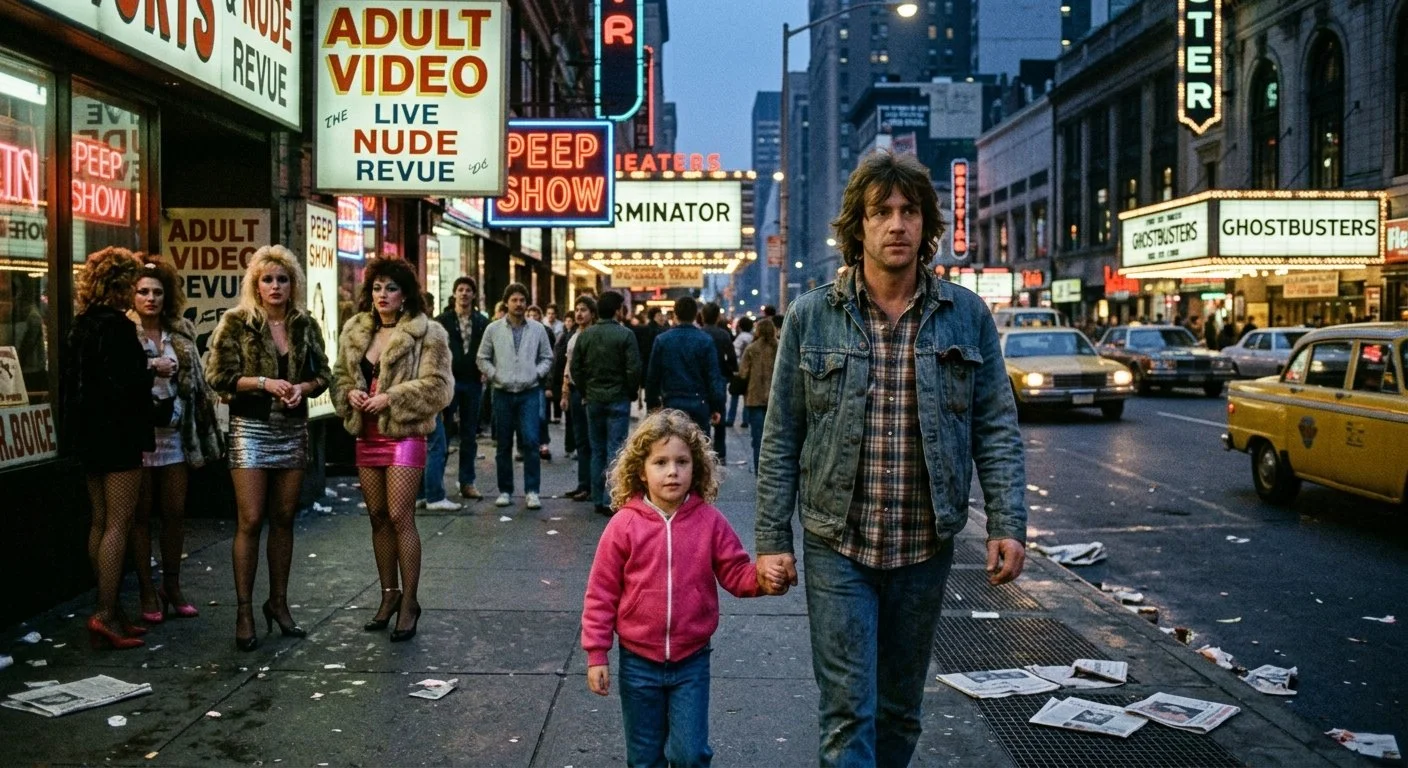
"Widespread fear and repulsion of street hookers, / their exotic power over Times Square in the eighties, / drew in the young girl holding her father's hand" — the piece's closing entry is its most cinematically precise and its most quietly devastating. The image is exact: the child's hand in the father's hand, the child's attention drawn precisely to the source of the adult's repulsion, the forbidden thing that the adult's visible fear and disgust has converted into an object of fascination. The piece closes here not with a philosophical proposition but with a scene — a father, a daughter, a Times Square, the late eighties, the hookers whose "exotic power" over that geography was inseparable from the culture's simultaneously lurid and moralistic relationship to sex work. The scene is also a portrait of a certain kind of transmission: what the parent fears, the child desires to understand. What the culture marks as repulsive, the child marks as powerful. The hand-holding does not prevent the looking. It may be precisely what makes the looking possible — the security of the father's grip enabling the child's attention to go exactly where the father's repulsion directs it.
Formally, Part 12 distributes its philosophical weight more evenly across its entries than any previous installment, rarely allowing any single observation to dominate. The three-line entries — the being who does not laugh, the body preparation, the normal that gets you in the end, the aspersion of society as optimism — suggest a piece that is working toward argument more consistently than its predecessors, the hive building cells that are slightly larger, that require slightly more space for what they contain. The overall impression is of a consciousness that is aging — not declining, but deepening, the observations more frequently concerned with what time does to people and to cultures, with what survives and what doesn't, with the specific quality of a mind that has been watching long enough to notice that history does not rupture but only sheds its skin.
Meta Description
The twelfth installment of a serial aphoristic poem whose meditative register — mortality, cultural normalization, identity construction, the symbiotics of depression, the optimism embedded in social criticism, the child's hand in the father's hand at the edge of Times Square — marks a deepening of the hive's philosophical ambition, the cells slightly larger, the observations more consistently reaching toward argument without abandoning the democratic adjacency that defines the project.
Keywords
Made for You and Me Hive Being Part 12, serial aphoristic poem, mortality and aphorism, cultural normalization, clinical detachment, holiday table aging, iPhone and rupture narrative, body preparation for death, laughter and worship, symbiotics of depression, aspersion as optimism, Times Square eighties, close reading contemporary aphorism, M.A. Istvan Stanzas 2018, hive consciousness and aging, democratic adjacency poetry
MADE FOR YOU AND ME 3: hive Being (Stanzas 2018--part 11)
Scholarly Essay: "Made for You and Me 3: Hive Being (Stanzas 2018 — Part 11)"
"Made for You and Me 3: Hive Being (Stanzas 2018 — Part 11)" continues the serial aphoristic project established in Part 10, but with a tonal shift that distinguishes it from its predecessor. Where Part 10 moved between registers with something like democratic equanimity — the carny cumshot and the Miles Davis fingers accorded equivalent attention — Part 11 is darker in its overall atmosphere, its observations more frequently concerned with mortality, political corruption, the failures of institutional life, and the specific loneliness of consciousness that cannot turn itself off. The hive in this installment is showing its structural stress. The cells are producing, but what they are producing more often now is evidence of things breaking down.
The opening images establish this register without announcing it. "That candy-bowl person in the office" — the employee whose function in the social ecology is purely ambient benevolence, whose presence is constituted entirely by the small generosity of the candy bowl — is rendered with the precision of someone who has noticed that this person exists and has thought about what their existence means: the reduction of a human being to a single gesture of availability, the social role that survives without requiring anything further from its occupant. "Banged by the girl who hates your wife" — the observation does not develop the scenario; it simply names the specific erotic charge of the transgression, the hatred of the wife as part of the seduction's structure rather than incidental to it. These opening notes establish the piece's characteristic movement: from the small and ambient to the intimate and morally complex, without transition or hierarchy.
"The watch did not stop ticking when the owner did" is the piece's first overtly elegiac observation, and it names a specific grief: the persistence of objects past the lives they were made to serve, the mechanical indifference of time's instruments to the cessation of the time-conscious creatures that relied on them. The image carries the full weight of grief without sentimentality because it makes no claim about what the watch's continued ticking means. It simply notes the fact. The fact is unbearable and ordinary simultaneously.
"In the false reign of whiteness, only whites are to blame for their own failures" — the piece begins here a thread of political observation that it will pursue across multiple entries, and the threading of these observations through the ambient and the intimate is one of the piece's formal distinctions from conventional political commentary. The observation names a double standard — the ideological framework that attributes white failure to individual agency and minority failure to systemic oppression — and it names it from a position that is not comfortable on either side of the culture war. The companion entry much later — "before you label the black man 'toxic' and 'traitor' for spreading the lie — / the excuse-entitling, agency-crippling lie — that the whiteness hunts blacks / more than ever, consider whether you could resist the temptation of pampering" — extends the same critical attention to the left's relationship to Black political identity. Both observations are equally uncomfortable to the ideological positions they challenge, and their placement in the same aphoristic field without editorial connection is the piece's method of refusing to let either position claim the piece's authority.
"Only the realest leap from the suicide bridge when the water is ice" is the piece's most chilling one-liner, and it resists easy reading. It is simultaneously an observation about the logic of resolve — the demonstration of seriousness through the choice of conditions — and a dark comedy about a hierarchy of authenticity applied to the most absolute of acts. The "realest" is the specific vocabulary of a certain strain of hip-hop masculinity, and its application to suicide produces a tonal collision that is the piece's most compressed version of what it does throughout: taking the logic of a cultural value system and applying it to a context that reveals the logic's absurdity or cruelty.
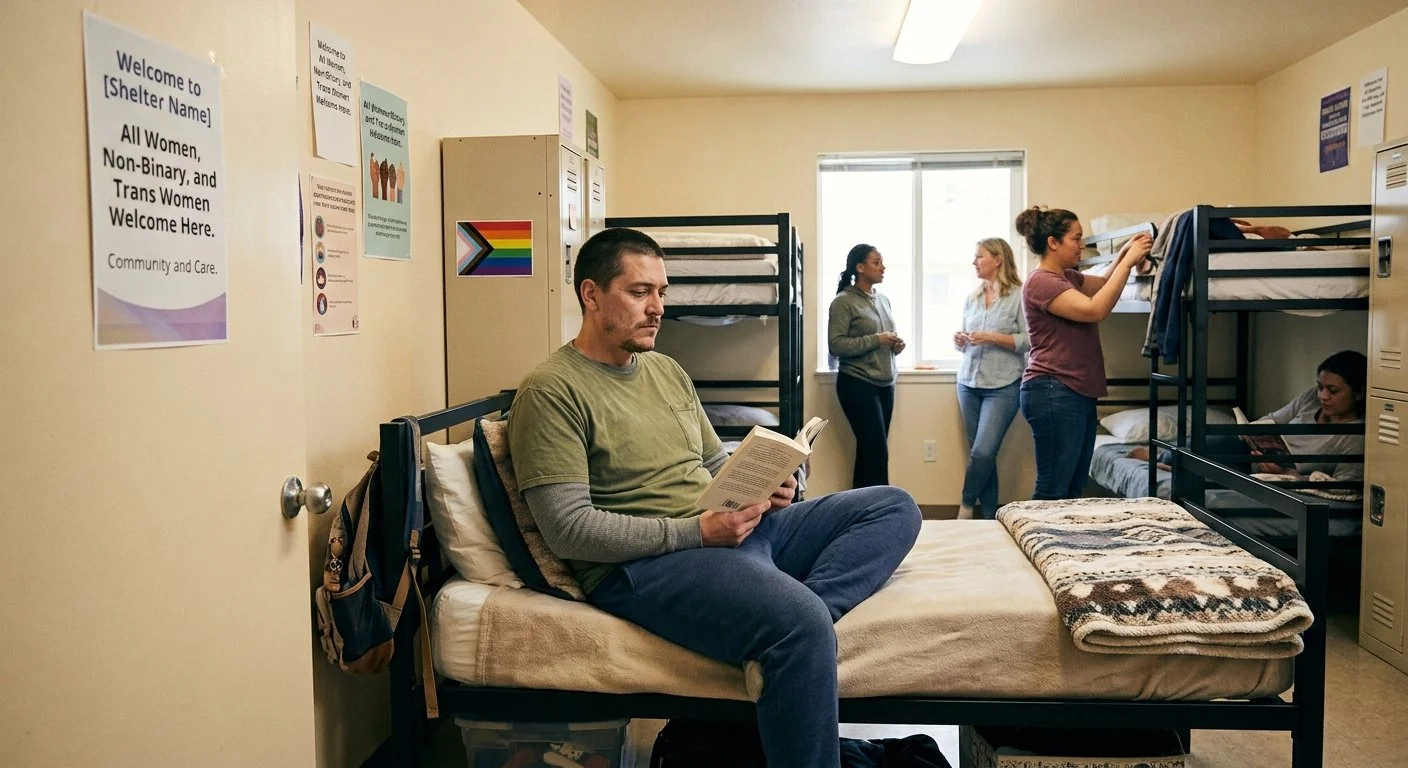
"Trans women — real women — jerking off in the night bunks of a woman's shelter" is the piece at its most politically precise and most politically unacceptable simultaneously. The em-dash — "real women" — performs the ideological assertion that the piece then immediately tests against its material consequence. The woman's shelter exists specifically to provide a space protected from male bodies and male behavior; the night bunks are the site of that protection's most intimate application. The observation does not argue against trans identity or trans inclusion in women's spaces; it refuses to pretend the tension does not exist. This is the piece's characteristic operation on politically settled questions: not to unsettle the moral answer but to insist that the material complexity be held alongside it.
"Clip the nails of your fisting hand" — pragmatic, graphic, offered without context or commentary. The piece treats this as it treats everything else: a piece of useful knowledge, a detail of a life, a thing that is true that most writing considers beneath notice. Its placement between the trans shelter observation and "skydive before suicide" creates a sequence that moves from political tension to bodily practicality to existential counsel without pausing to acknowledge the transitions, which is the piece's central formal argument about what consciousness actually contains.
"Skydive before suicide" is the piece's most condensed piece of pragmatic philosophy: the suggestion that the experience of voluntary freefall — the chosen encounter with death that nonetheless returns you to the ground alive — might constitute a form of experiential argument against the finality being contemplated. It does not sentimentalize suicide or dismiss it; it offers a single concrete intervention with the directness of someone who has thought about what might actually help rather than what sounds appropriately concerned.
"'What?' voiced in an empty room" is the piece's finest lyric image and one of its most philosophically resonant. The "What?" addressed to no one — the reflexive vocalization of disbelief or confusion in the absence of any interlocutor — names a specific form of loneliness: the mind that continues performing social speech acts when the social context has dissolved. It speaks to grief, to isolation, to the persistence of the dialogic self in conditions that have removed the other half of the dialogue. The empty room does not respond. The "What?" hangs in it, unanswered, which is its own kind of answer.
"Racing home before the opioid kicks in" — the specificity of this is what makes it devastating rather than merely topical. Not "dealing with addiction" or "struggling with opioids" but the particular calculation of the person who has taken something and is now working against time to reach safety before the drug removes their capacity for navigation. The image captures the addict's relationship to their own impairment: the simultaneous use of and flight from the substance, the narrow window of functional consciousness managed with desperate pragmatism.
The political observations accumulate in the piece's middle section with a density that distinguishes Part 11 from Part 10. "Resist the Palpatine slogan 'Free speech is not hate speech' lest you find yourself / ousted for asking a black student — a queen — to lower her voice" — the Star Wars reference is the piece's most culturally specific political notation: Palpatine, the senator who consolidates power by manufacturing emergency, whose political success depends on the people voluntarily surrendering their freedoms in the name of safety. The piece names the rhetorical move — the conversion of "free speech" into "hate speech" as a mechanism of institutional power — and then gives it its specific contemporary application: the professor fired for the entirely ordinary pedagogical act of asking a student to moderate their volume in class. "A queen" — the piece preserves the ideological framing even in the act of critiquing its consequences, which is more precise than simply dismissing it.
"Black asses — clapping with lyrical obscenity — gobble up / the rain of dollars in a frenzy of prehensile precision / that would leave Attenborough himself speechless" — the strip club rendered through the language of the nature documentary, Attenborough as the inadequate narrator of human erotic behavior, the "prehensile precision" of the dancers' movement given the same quality of evolutionary marvel that the nature documentary would attribute to primate dexterity. The observation is not condescending; it finds in the scene what the nature documentary finds in any scene: a species deploying its evolved capacities in the service of its drives, with a skill that commands respect regardless of the context.
"Father and daughter both knew it was one another by voice, / by smells and moles, but the orgy's doorway ski-mask demand / licensed creampies piped with the nastiest been-wanting-it talk" — this is the piece at its most transgressive, and it is doing what the transgressive entry always does in this project: naming an extreme case in order to force the question of what the extreme case reveals about the general principle. The ski-mask as instrument of deniability, the mutual recognition that persists through the anonymizing convention, the "been-wanting-it talk" as the psychological residue of a relationship that has found this particular illegible outlet — the observation does not endorse the scenario but it does not perform outrage either. It asks, with the same calm attention it brings to "clip the nails of your fisting hand," what is happening here and what it means.
"Catfish with bottle shards in their underbellies, hermit crabs homed in beer cans" — this entry and its philosophical extension constitute one of the piece's most genuinely beautiful passages. The image is real: catfish swallowing glass, hermit crabs occupying the discarded containers of human culture because the natural supply of shells has been exhausted. The extension — "that we and our artifacts / are as natural as stones and moss, as natural as catfish and hermit crabs see us" — is the piece's most direct statement of its ecological philosophy. The piece does not frame human culture as opposed to or destructive of nature; it insists on the continuity. The beer can is a shell. The catfish's gut is an environment. We are part of this, not above it, and the discomfort the image produces is the discomfort of a species that has convinced itself of its own exception.
"The ceremonial disposal of wealth still occurs: / burning Benjamins like a great native chief / might have burned his first born son" — the potlatch and the rapper's conspicuous destruction of currency placed in the same frame. The piece identifies the structural continuity between forms of ritual conspicuous destruction across cultures separated by centuries and by the entire apparatus of modernity, finding in the contemporary gesture the same logic that organized the ceremonial destruction of the pre-modern one. Neither is more rational than the other; both are ritual performances of a relationship to surplus that cannot be fully explained by purely economic logic.
"Dying, defecating, and doing it / are most disgraceful in cultures / desperate to deny our animality" — the three D's placed in their common field: the processes the culture most aggressively conceals are precisely those that most insistently recall the body's animal nature. The piece does not argue for uninhibited animality; it observes the relationship between shame and denial, between the intensity of a culture's concealment and the intensity of what is being concealed.
"Are you big enough to own / who made your success possible — / who might have even saved you?" — this is the piece's most direct address to its reader, and it arrives without the protective distance of the third-person observation that characterizes most of the entries. The "you" is exposed, accountable, asked to perform an act of acknowledgment that the question implies is difficult. The implication of "who might have even saved you" is that the acknowledgment is owed not merely to mentors or advantages but to specific people whose intervention — which may not even have been intended as intervention — altered a trajectory that would otherwise have ended badly. The piece's autobiographical background makes this entry's specificity felt without requiring it to be stated.
"Muttering to oneself out loud — our tree days still speak — for a semblance of sympathy" — "our tree days still speak" is the piece's most lyrical formulation, and it carries a philosophical weight that exceeds its compression. The hypothesis that human self-directed speech — the muttering, the talking-to-oneself that the self-conscious urban adult performs in guilty privacy — is a vestige of something more ancient, a behavior that made sense when the trees were the audience, when speaking aloud was addressed to an environment that might respond. The tree days are still in us. We speak to them still. The sympathy we seek from ourselves, in the empty room, is addressed to a world that preceded the self-consciousness that makes us ashamed of seeking it.
"What if your voice, the one they tell artists to find, is twisted — perverted, demonic?" — this is the piece's most direct self-implicating entry, and it arrives late enough in the text that it has accumulated its own evidence. The piece has been demonstrating a voice throughout: purple, maximalist, capable of moving from the lyric to the pornographic to the ecological to the political without acknowledging the transitions. The question is not rhetorical. It is asked in genuine uncertainty about whether the voice one has found is a gift or a problem — whether the compulsion to go where the language leads, regardless of where it goes, is a form of artistic integrity or a form of damage. The piece does not answer. It asks.
"Showing the young girl pornography / so she will see it is no deformity / having such monstrous inner labia" — the piece's final transgressive entry, and its most morally complex. The scenario described is a parent's or guardian's intervention in a girl's sexual self-image: the use of pornographic evidence to counter a girl's belief that her anatomy is abnormal. The intervention is well-intentioned, the harm it addresses — the sexual self-disgust produced by the gap between a girl's actual body and the surgically modified bodies of pornographic performers — is real, and the instrument of the intervention is itself harmful. The piece holds all of this simultaneously without adjudicating it, which is not moral cowardice but moral precision: the observation that good intentions, wrong instruments, and real harm can coexist in the same act is not a comfortable observation, but it is an accurate one.
"In the democratic space of social media / sleazy ads appear alongside mainstays / (Tide, say), tainting even them with distrust" — the closing entry is the piece's most formal observation about the information environment that produces the hive's conditions. The algorithm's indifference to the adjacency of content — the placement of the predatory alongside the domestic, the sleazy beside the trustworthy — is a precise description of what social media has done to the epistemological environment: not simply introduced bad content but corrupted the adjacency relations that allow trust to form. Tide is not sleazy. But next to something sleazy, in the same frame, in the same democratic space where no hierarchy of credibility is maintained, it cannot maintain its trustworthiness intact. The taint is structural, not incidental. The piece closes on this image of contamination by adjacency, which is also a description of what the piece itself has been doing throughout: placing things next to each other that the culture normally keeps apart, and watching what happens to each in the other's company.
Formally, Part 11 is denser with political observation than Part 10 and correspondingly darker in its ambient emotional register. The entries concerned with mortality — the watch, the "What?" in the empty room, "the dying who do not drop their falsities," "more dying than we would like to admit would take the living with them" — create a cumulative pressure that is not present in the same density in Part 10. The hive is still producing. But the piece is aware, more explicitly than its predecessor, of entropy: of the ticking that continues after the owner stops, of the flood that evicts from the home and then from the grave, of the consciousness that cannot find relief even in its own termination. The serial project's ambition — to map the full range of hive being across its accumulated parts — requires that individual installments take on different emotional weather. Part 11's weather is overcast, the observations colder, the democratic equanimity of the project maintained but under more visible strain.
Meta Description
The eleventh installment of a serial aphoristic poem whose democratic adjacency of observation — mortality, political corruption, erotic extremity, ecological continuity, and the loneliness of unrelenting consciousness — maps the full range of hive being under conditions of increasing structural stress, the hive still producing but the entropy more visible, the weather darker, the "What?" hanging in the empty room unanswered.
Keywords
Made for You and Me Hive Being Part 11, serial aphoristic poem, democratic adjacency, mortality and aphorism, political observation poetry, cancel culture aphorism, trans women women's shelter, opioid crisis poetry, strip club nature documentary, catfish and hermit crabs ecology, tree days and human speech, demonic voice artist, close reading contemporary aphorism, M.A. Istvan Stanzas 2018, hive consciousness and entropy, empty room lyric
MADE FOR YOU AND ME 3: hive Being (Stanzas 2018--part 10)
"Made for You and Me 3: Hive Being" is a work of accumulated aphoristic intelligence, a serial poem that thinks in units rather than in arguments, proceeding by juxtaposition rather than by development, and trusting the friction between adjacent observations to generate meaning that no single observation could carry alone. It belongs to a tradition of gnomic verse that runs from Heraclitus through Blake's Proverbs of Hell through Nietzsche's aphoristic books through the pensée-collections of the twentieth century, but it is distinctly contemporary in its materials: it reads like a mind that has been everywhere at once — in the hood, in the academy, in the body, in the news cycle, in philosophy, in pornography, in grief — and has refused to arrange these locations into a hierarchy. The poem's democracy of attention is its central formal and ethical commitment. Nothing is too small for it and nothing is too large, and the transitions between scales happen without announcement, which is the point.
The title's triple register establishes the poem's ambition from the start. "Made for You and Me" invokes Woody Guthrie's anthem of democratic belonging — "This Land Is Your Land" — and immediately complicates it with the subtitle "Hive Being," which names a mode of existence that is collective rather than individual, distributed rather than centered, organized around the group's survival rather than any member's self-expression. The tension between the democratic "you and me" and the hive's subsumption of individual identity into collective function is the poem's organizing contradiction. We are made for each other — built for sociality, for love, for mutual recognition — and we are also hive beings: shaped by forces larger than our individual consciousness, running on inherited instincts, social scripts, and environmental conditioning that we rarely examine and cannot fully escape. The poem's individual observations are the hive's cells: each one sealed and complete, together constituting something structural.
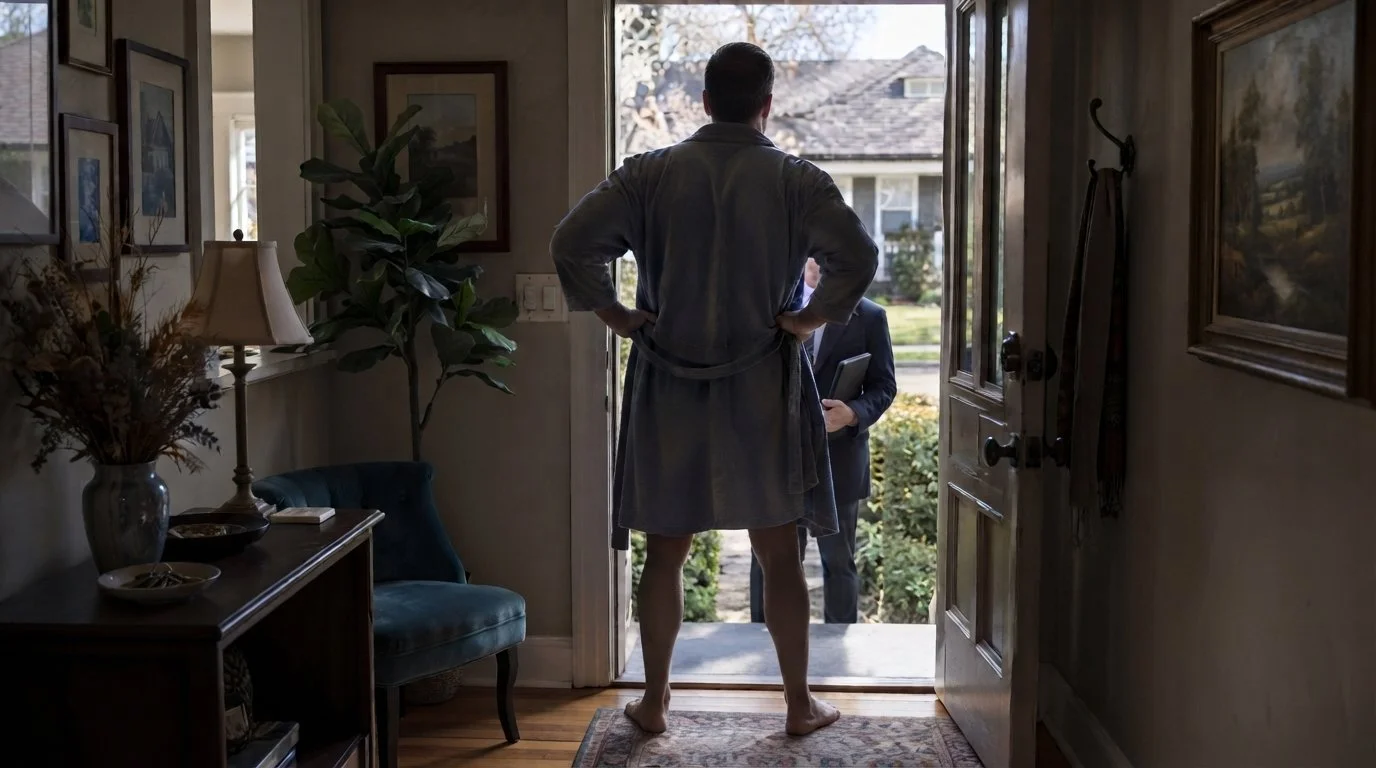
The opening image — "solicitors audacious enough to boil with rage when you answer the door balls adangle" — establishes the poem's tonal range immediately. It is funny, it is crude, it is exact, and it contains a genuine psychological observation: the particular inversion of social norms in which the intruder, caught in the act of intrusion, converts his embarrassment into aggression. The solicitor's rage at being answered is a compressed study in the defensive turn — shame converted to offense, vulnerability expressed as fury. The poem begins here because this conversion will return in many registers across the full text.
"A woman for whom no bus or train is wrong" — this is one of the poem's most quietly devastating entries. It names a psychological condition — the complete surrender of self-direction, the radical openness to wherever conveyance takes you — that could be read as freedom or as dissolution. The woman is not lost; she has no destination to be lost from. The poem does not judge this. It notices it with the precision of someone who recognizes what it costs to have a destination, and what it costs not to.
"Not feeling trauma about the pleasure until society tells you to" enters the poem's ongoing concern with the relationship between experience and its interpretation — with the way social framing retroactively reorganizes felt reality. The observation does not minimize trauma; it locates its construction. Experience precedes its meaning, but meaning subsequently rewrites experience. This is not a conservative argument against trauma discourse; it is a genuinely complex observation about the temporal structure of psychic injury, one the poem refuses to simplify in either direction.
"Mall fountain quarters for the arcade" and "mummy ape fingers like Miles Davis" sit in adjacent proximity, and the juxtaposition is characteristic of the poem's method. The first is pure recovered sensation — the childhood economy of fountain coins, the petty theft that was also a kind of magic, transforming civic decoration into personal pleasure. The second is a portrait so compressed it barely declares itself: Miles Davis's hands, long and hieratic and ancient-seeming, described through the image of mummy ape fingers — a phrase that is simultaneously reverential and grotesque, that finds in bodily strangeness a kind of sanctity. The poem moves between these registers — the vernacular and the sacred, the childish and the elegiac — without marking the transitions.
"The heel taps of a whore on a dead dawn, mincing to get out of the drizzle" is a line of genuine lyric beauty that refuses to aestheticize its subject at the expense of her reality. The sound — heel taps on a dead dawn — is precise and poignant; "mincing to get out of the drizzle" grounds it in the particular physical discomfort of work that goes on in all weather. The poem is not romanticizing sex work; it is insisting on the specific sensory reality of a person moving through a specific morning, which is what the lyric does when it is working honestly.
"Neighbor discourtesy frozen in winter, soft again in first spring — as if shat just then" is a small sociological poem in itself. It names the seasonal rhythm of human community in cold climates: the retreat into private warmth that produces social atrophy, and the spring thaw that restores contact, but the "as if shat just then" refuses to let the restoration be innocent. The neighbor's spring warmth is not a renewal of genuine affection; it is the resumption of a performance that was interrupted by inconvenience. The scatological simile is not shock for its own sake — it conveys the quality of something extruded, involuntary, and slightly embarrassing about the neighbor's performed friendliness.
"Any person's life is ultimately what any tree's life is for" is the poem's most compressed philosophical entry, and it repays considerable attention. The statement is not nihilist — it does not say that life is meaningless. It says that the meaning of a person's life is of the same order as the meaning of a tree's life: ecological, relational, part of a system whose purposes exceed and partially constitute the individual's purposes. The tree lives for the forest, for the air, for the creatures in its canopy, for the soil its roots hold, for the wood of its eventual death. A person's life is "ultimately" — not in every moment, but in its final accounting — of the same order. The poem places this observation after the applesauce-sandwich poverty entry, and before the eviction image, and the sequence implies something: that this ecological understanding of a life's meaning is most available to those who have been stripped of the illusion that individual striving determines one's fate.
"Refusing to get up, the whole night, from the kitchen table at the curb of eviction" is the poem's most sustained image of a specific kind of poverty-adjacent psychological state: the paralysis that comes not from depression exactly but from the complete absence of any action whose outcome seems worth the effort of undertaking it. The kitchen table at the curb of eviction is a real piece of furniture — already outside, already displaced — and sitting at it through the night is an act that is simultaneously stubborn, defeated, and in its own way dignified. The person refuses to get up. That refusal is the only sovereignty available.
The poem's ongoing engagement with sexual life refuses the sanitizing impulse throughout. "Carny cumshots in the sawdust used to stabilize the mud paths," "ass to pussy to ass — knuckle sammiches with square-peg-in-round-hole insistence," "men seek a tang most would never name beyond evasions like 'rosebud'" — these entries are not provocations but observations, placed alongside philosophical aphorisms and ecological meditations without hierarchy. The refusal to segregate sexual content into a separate register is itself an argument: the poem insists that the erotic is part of the same continuum as the metaphysical, the social, and the elegiac, and that any account of hive being that excludes it is lying about what hive being actually is. The Heraclitean reference in the "licking flames" passage — "churning variations of the same fundament" — makes the philosophical claim explicit: even at its most transgressive, erotic life participates in the same principle of flux and transformation that governs fire and rivers and everything else.
The suffering observation — "you might think that absolute suffering would require that you are the only one suffering... but the only thing required is that you think you are the only one suffering" — is one of the poem's most important philosophical entries, and it deserves to be read as a major contribution to the phenomenology of pain. It does not minimize suffering by observing its social construction; it identifies the mechanism of its intensification. Absolute suffering is not a matter of quantity or comparison but of perceived isolation. The togetherness of shared misery is a genuine mitigation — not because the misery is lessened but because isolation is removed from it. The poem's observation implies its corollary: that the most effective tool against absolute suffering is the perception of company, which is why community, art, and literature — the poem itself — are not luxuries but survival technologies.
"Getting yourself out of the way, / so that the dying — not you — / can be the star of their own death" names a specific form of ethical attention that is rarely discussed: the discipline of not making grief about the griever, of maintaining the dying person as subject rather than object of the final scene. The poem frames this as an act of self-erasure — "getting yourself out of the way" — that requires effort and intention, which implies that the natural tendency is the opposite: to make the death about the witness, to center the survivor's feeling. The poem does not moralize about this tendency; it simply names the alternative as a practice.
"Pretty much every time he lights up he thinks of then: / those hooky days when he would stand on the corner, / hand cupped around a nonexistent cigarette" is the poem's most sustained lyric memory, and it works through the precise image of the child's body mimicking an adult gesture it had not yet been given permission to perform. The cupped hand around the nonexistent cigarette names the childhood rehearsal of future selfhood — the pre-enactment of an identity not yet available — and the adult cigarette's capacity to carry that memory forward whole each time it is lit. The present-tense smoking and the past-tense pretending collapse into each other; the man lights up and becomes briefly again the boy on the corner, practicing at being the man he has since become.
The poem's political entries are distributed throughout and refuse to cluster into a consistent ideological position, which is part of their argumentative force. "Sudden onset of destroying individuals for decades-old attitudes encouraged / by that same society — if that were not wild enough, sometimes those attitudes / had been set into place beforehand by unfathomable eons of natural selection" states a genuine philosophical problem about retroactive moral accountability without adjudicating it. "You are not the disempowered one / you frame yourself to be if you can render him / unemployable for mocking your ideas" names the exercise of institutional power through the rhetoric of powerlessness, which is a real phenomenon that most political discourse cannot accommodate without discomfort. "Simply enter its welfare system if your society allows / mere accusations of matters tolerable even to puritans — / pats on the shoulder, smiles — to ruin your career" names a different but related institutional pathology. These observations do not constitute a political program; they constitute a political honesty — a refusal to exempt any position from scrutiny, which is the aphoristic tradition's oldest function.
"He loathed her perfume when she was here, but after / so many ziplock years of sniffing he must snort / to get even a trace what is now most likely but a mirage" is one of the poem's most accomplished love lyrics. The ziplock bag as grief technology — the preserved scent kept against the nose's fading — is both absurd and heartbreaking. "Must snort" gives the grief an addict's quality: the escalating dose required to achieve the diminishing return of a sensation that may now be entirely internal. "What is now most likely but a mirage" is the poem at its most epistemologically honest: the scent may be gone, the memory may be generating what the nose reports, and the man is sniffing a ziplock bag in any case. The poem does not mock this. It holds it with the same precision it brings to everything.
"We will die so soon meeting this late — / but at least there is no time / for loathing to taint our love" is the poem's most explicitly elegiac entry, and its most formally controlled. Three lines, each one carrying a complete thought that qualifies the one before: the mortality of the late meeting, the consolation of insufficient time, the understanding that love and loathing are not opposites but temporal neighbors, and that the gift of brevity is the preservation of the love from the loathing that would eventually — given time — find its way in. The poem knows that love, given long enough, becomes more complicated. It also knows that the knowledge of death is what holds some loves clean.
Formally, the poem proceeds by what might be called democratic adjacency: the unit of meaning is the individual observation, and the meaning produced by sequence is always provisional, always available to be disrupted by the next entry. This is the hive's structure applied to verse: each cell autonomous, the whole larger than any cell's intentions, the organization emergent rather than designed. The poem's title — part of a series, positioned as part 10 of a longer project — confirms that this structure is not a failure of resolution but a chosen form: the poem does not end so much as pause, which is the honest formal acknowledgment that the hive of observation never stops producing.
What "Made for You and Me 3: Hive Being" ultimately argues, across all its registers and scales, is that a fully honest account of human life requires the willingness to hold in the same field of attention the carny cumshot and the mummy ape fingers of Miles Davis, the empty-nest mother and the widow with the ziplock bag, the philosopher's Atman and the post-shower-fart wipe check positive, the political anger and the dying person's right to be the star of their own death. The poem's achievement is not any single observation — though many of them are extraordinary — but the form itself: the demonstration that this is what a mind looks like when it refuses to organize experience into a hierarchy, when it takes the hive seriously as a model not just for society but for consciousness.
Meta Description
A serial aphoristic poem assembling democratic observations across the full range of human experience — erotic, elegiac, political, philosophical, domestic, and vernacular — into a hive structure that argues by juxtaposition rather than argument, insisting that honest consciousness cannot organize life into hierarchies of significance without lying about what life actually contains.
Keywords
Made for You and Me Hive Being, aphoristic poetry, serial poem analysis, gnomic verse tradition, democratic adjacency, Heraclitean flux, phenomenology of suffering, hive consciousness literature, contemporary American aphorism, erotic and elegiac poetry, political honesty in verse, ziplock grief, close reading aphorism, vernacular and philosophical register, M.A. Istvan poetry, Stanzas 2018
MADE FOR YOU AND ME 3: hive Being (Stanzas 2018--part 9)
Scholarly Essay: "Made for You and Me: Hive Being (Stanzas 2018 — Part 9)"
"Made for You and Me: Hive Being (Stanzas 2018 — Part 9)" is the most personally inflected installment of the series, and its personal quality is inseparable from its formal quality. Where earlier sections maintained the distributed intelligence of the hive across a relatively stable tonal range — the aphoristic, the political, the philosophical, the erotic — Part 9 allows a more confessional register to surface alongside the usual range, producing entries that feel less like observations from a distributed consciousness and more like notes from a specific life. The hive here is more visibly one person's hive, and that visibility is the section's formal achievement: it does not abandon the distributed form but reveals, at intervals, the individual behind the distribution.
The section opens with an entry that closes — or rather, frames — the series in a specific biographical and thematic register: "pussy-finger nose circles on the streetball courts of boyhood." The image is precise: the adolescent male on the basketball court who has recently had his fingers somewhere intimate and who carries that fact on his face in the form of a gesture so habitual it becomes unconscious self-advertisement. It is a memory image, a boyhood image, and it is also the section's first invocation of a social world — the streetball court — that the final entry will return to as the measure of a particular kind of social formation and its absence. The series begins and ends this section with that court.
"Massage abuse therapy" is the section's most compressed compound, holding a full argument in three words: the therapeutic framework applied to the body can become its own form of violation, or alternatively, the therapeutic language applied to obvious exploitation ("massage abuse therapy" as a euphemism) is itself a form of secondary harm. The ambiguity is the entry's content: both readings are available and both are the point.
"Take it easy, but still take it" — the bumper-sticker wisdom revised into something more demanding. The first clause is the conventional advice of the culture: pace yourself, don't push so hard. The revision insists on the second clause: but still take it, still engage, still claim what there is to claim. The entry is a small philosophy of moderated ambition that refuses the consolation of pure relaxation.
"Boredom notices the latent" and "mastery requires the wild" operate as a paired aphoristic sequence. The first makes a phenomenological claim: boredom, rather than being merely the absence of engagement, is a state of heightened receptivity in which what is normally occluded by activity becomes visible. The second makes a claim about craft: that technical mastery, without the wildness that generates genuine discovery, produces only competent repetition. Together they constitute a small theory of creative practice — the boredom that reveals and the wildness that activates.
"Parasocial relationships with your own fantasies" is the section's most psychologically precise entry and one of its most compressed. The parasocial relationship — the one-way attachment to a media figure who does not know you exist — is here applied inward: the self in relation to its own fantasies, maintaining a relationship with imagined scenarios that has the same structure of investment without reciprocity. The entry names a specific form of psychological stasis: the person who has developed a more elaborate relationship with the imagined version of their life than with the actual one.
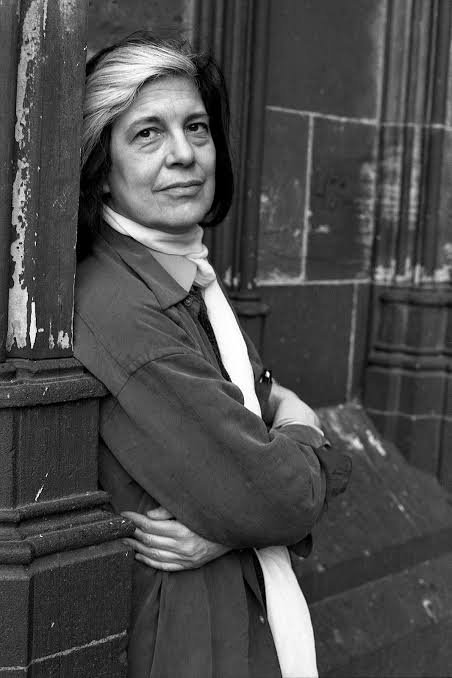
"That Susan-Sontag Anthony-Bourdain bauplan" is the section's most culturally precise compound. "Bauplan" is the German biological term for the fundamental body plan of an organism — the structural template that generates its specific form. Applied to Sontag and Bourdain, it names the specific template of a recognizable intellectual-cultural type: the rigorous, appetitive, polymath sensualist who moves between high culture and street-level experience with equal ease and who performs that movement as a mode of identity. The entry identifies this as a template — reproducible, imitable, a bauplan rather than an individual achievement — which is simultaneously an observation about cultural aspiration and a gentle deflation of its pretensions.
"Kids stomped by the mushroom fairies" operates in the register of the psychedelic and the violent simultaneously — the fairy-tale image turned traumatic, the mushroom trip as a stomping rather than an elevation. "Over-identifying with the corpse" follows as its psychological companion: the person who, having been stomped, has made the corpse their primary identity, who wears their damage as their most essential self. Together the two entries constitute a small psychology of psychedelic and cultural trauma.
"Government at least should be guaranteed employers of last resort" is the section's most explicitly political economic entry, and it arrives without irony or qualification. The claim is a standard Keynesian position — that the government should provide employment when the private sector cannot — but its placement among the aphorisms gives it the force of a conviction arrived at rather than a position taken: the "at least" is the entry's most important word, conceding everything that might be objected to about government employment while insisting on this minimum.
"Even the rich are pollution vacuums like us" and "rich neighborhood dumpster diving" are the section's environmental class entries, and they work as a pair. The first collapses the distinction between rich and poor on the basis of shared environmental exposure: the air does not respect the zip code of the lungs it enters. The second inverts the expected class geography of dumpster diving: what are the rich discarding that makes their dumpsters worth diving? The entries together suggest a more permeable class boundary than the standard model assumes, at the level of both exposure and resource.
"Cat scratching at the irresistible clap of your balls against its owner grundle" is the section's most purely comic entry, a domestic scene of feline curiosity about human sexual sound rendered with the specificity of lived observation. The entry works because it is exact: the cat is responding to an unfamiliar sound with the investigative behavior its nature prescribes, and the human's position — mid-act, suddenly aware of an audience — is the comedy of domestic life's refusal to accommodate human privacy.
"Traveling in hope was better than the arrival" is the section's most elegiac aphorism, and its tense is important: the past tense ("was") positions this as a retrospective recognition rather than a current experience. The hope that sustained the journey has not been answered by the destination; the destination has revealed the hope as the thing that mattered.
"Splashing the back of your neck with hard liquor, / a suggestion of the special-ed teacher back in High School, / so people might just think you are a drunk instead of a retard" — this is the section's most biographical and most formally dissonant entry, and it earns its place as one of the collection's most quietly devastating. The teacher's suggestion — that stigma management is more important than authentic presentation, that the strategic deployment of one social stigma can displace a more damaging one — is rendered without editorial comment. The entry simply holds the suggestion and its logic and lets the reader feel the weight of what it means that a teacher gave this advice to a student.
"He likes his girls like he likes his sweaters: / extra small with a lot of stretch / and a little bit of kink in the neck" — the entry deploys the "he likes his X like he likes his Y" format with a precision that makes the comparison work at every level: size, material compliance, and the specific detail of "kink in the neck" that is both a sweater's textile flaw and a human posture's erotic charge. The entry is comic and exact and does not editorialize its own subject.
"The constant therapy of writing / the craziest shit makes the writer / such a nice person in real life" — the entry names something the collection as a whole has been demonstrating: that extreme literary content is not a symptom of pathology but its displacement, that the page absorbs what would otherwise find less sanctioned outlets. The claim is partly self-serving and the entry knows it, but it is also psychologically plausible.
"Making companions on the adventure, / the adventure itself / makes for its own adventure" — the tercet form here is the section's most formally self-conscious use of line breaks, each line a step in an argument about the recursiveness of experience: companions make the adventure; the adventure-making is itself an adventure; the adventure is its own companion. The entry folds back on itself the way experience does when reflected upon.
The double-bind entry about the young woman who insists "men only want one thing" while maintaining a male "bestie" is the section's most sociologically precise observation about the inconsistencies that self-protective narratives require. The entry does not condemn the young woman but identifies the logical structure of her position: the general claim about male desire is maintained alongside specific exceptions that the general claim would predict to be impossible. The paranoid loser accusation at the end is the social cost of noticing the inconsistency.
The pornography entry — "do you like blur-speed pummeling in itself, the sensation, or do you like it because it / allows you — unable to be present in your body in a PornHub globe of cyber swiping — / to disassociate during an intimacy you have not yet achieved the maturity to handle?" — is the section's most therapeutically precise question and one of the collection's most direct engagements with digital sexuality's psychological function. The question distinguishes between the sensation as intrinsically desired and the sensation as a vehicle for dissociation — a distinction that most discourse about pornography's effects fails to make. The "PornHub globe of cyber swiping" positions the contemporary sexual landscape as a form of globalized commodity consumption rather than intimacy, and the "maturity to handle" frames the problem as developmental rather than moral.
The white supremacy funding entry continues the collection's political argument about the self-defeating logic of victimology: needing white supremacy so badly as an explanation that you fund its continuation when it would otherwise expire. The "worm-tongue whites in your ear / with a campus bullhorn" names the specific mechanism: the white progressive who sustains the narrative for their own purposes, whose investment in black victimhood is the mechanism of its perpetuation.
The surgery embarrassment entry is the section's most precisely observed vanity paradox: the scar of cosmetic surgery is itself a mark of the insecurity that produced it, so that the surgery creates the evidence of the very embarrassment it was meant to erase. The entry traces a loop that has no exit: embarrassment, surgery, embarrassment at the surgery, and the impossibility of returning to the pre-surgical state in which the first embarrassment existed without its compounded sequel.
"Stipends for prostitutes to take care of the homeless population" is the section's most deliberately provocative policy proposal, and it is delivered with the deadpan that characterizes the series at its best: a genuine policy argument — harm reduction, economic support for sex workers, addressing the social isolation of homelessness — presented in the most maximally unsettling formulation available. The entry dares the reader to dismiss it on grounds of propriety rather than engaging with the logic.
"Shutting down the factories / to have a blue sky by the time / the important leader arrives" is the section's most geopolitically specific entry — a reference to the Chinese government's practice of temporary factory shutdowns before major events and official visits — and one of the collection's most compressed indictments of the gap between environmental performance and environmental reality.
"If we all chip in, armed neo-panthers / can make living wages watching over / police procedure in our districts" is the section's most specific community policing proposal, delivered in the tone of a practical suggestion rather than a radical demand. The "armed" qualifier is the entry's most significant word: the proposal is not for unarmed observers but for armed ones, a detail that insists on the asymmetry of power in police encounters as the premise of any effective oversight.
The entry about the being who feels your regret and anticipation as its own — "a being who feels the very same regret for your mistakes, / the exact same anticipation of your future pleasures, / as it feels for its own — is it numerically the same as you?" — is the section's most philosophically rigorous entry and one of the collection's most serious engagements with personal identity theory. The question is a version of the psychological continuity problem: if a being shares your psychological states exactly, what distinguishes it from you? The entry asks this without answering it, in the tradition of the series' refusal to settle questions it genuinely cannot settle.
The final entry brings the section's personal and thematic concerns together with the precision of a closing argument: "the insulated chess prodigy, stuttered by the glare of public acclaim, makes his moves / less from instinct than from interrogation — that absence of childhood social friction, / streetball to pussy-finger nose circles, now a monster presence who loves a good closet." The chess prodigy is a figure of isolated, early mastery — the child removed from ordinary social formation in favor of intensive development in a single domain. The "absence of childhood social friction" — the streetball courts, the nose circles — has produced not freedom but a different kind of constraint: the interrogation of instinct rather than its deployment, the closet as refuge from the monster presence that public acclaim has made of the self. The streetball courts that opened the section close it as the measure of what the prodigy missed — not mere childhood pleasure but the specific social formation that produces the instinct that mastery requires. The entry brings the section's opening image and its theory of mastery — "mastery requires the wild" — into their final, melancholy relation.
Meta Description
The ninth installment of the Hive Being series: the most personally inflected section, ranging from the streetball courts of boyhood to chess prodigy isolation, from the special-ed teacher's stigma management advice to the parasocial relationship with one's own fantasies, holding the political and the confessional at the same distributed frequency.
Keywords
Made for You and Me Hive Being Part 9, distributed consciousness, aphorism poetry, parasocial fantasy, bauplan Sontag Bourdain, massage abuse therapy, chess prodigy isolation, streetball courts, pornography and dissociation, victimology funding, surgery embarrassment paradox, boredom and latency, mastery and wildness, close reading, Hypocorism, hive being series
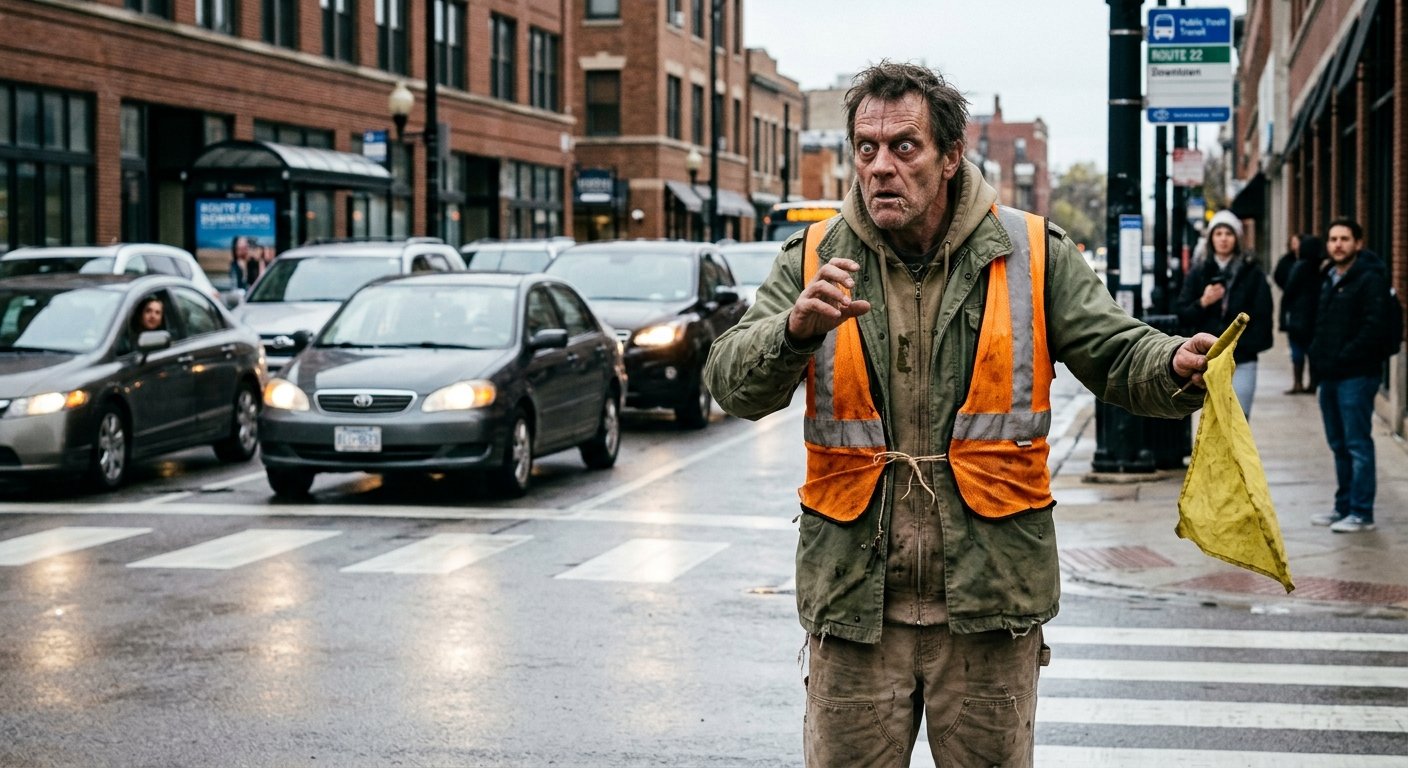

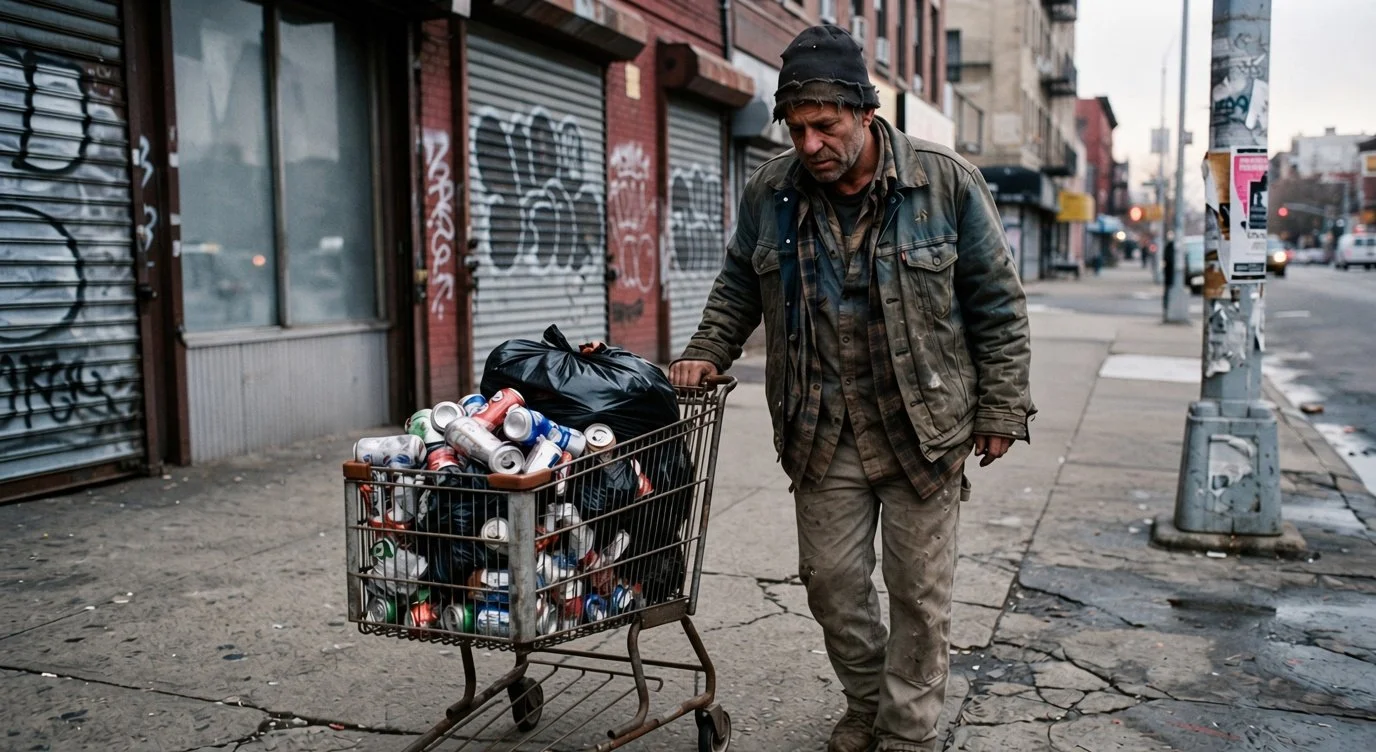
MADE FOR YOU AND ME 3: hive Being (Stanzas 2018--part 6)
"Made for You and Me: Hive Being (Stanzas 2018 — Part 6)" is the most formally various installment of the series, ranging across its widest tonal spectrum — from pure image to sustained philosophical argument, from domestic bathos to ontological vertigo — while maintaining the distributed intelligence that has defined the project throughout. Where Part 5 was the series' most philosophically dense, Part 6 is its most emotionally various: entries about grief, bodily humiliation, domestic intimate life, and the specific textures of ordinary despair sit alongside logical arguments about determinism and ethics, meditations on identity and echo chambers, and political observations about the mechanisms of social justice culture. The hive here is at its most fully human — which is to say, it is simultaneously thinking and suffering and laughing and noticing, all at the same frequency.
The opening entry — "cripple porn" — is the series' most compressed provocation, two words that do the work of an entire cultural analysis by naming a genre and trusting the naming to be sufficient. The entry does not explain, contextualize, or editorialize. It places the phenomenon in the hive's field as a datum, a fact of contemporary appetite, and moves on. The compression is the argument: that this exists, that it can be named in two words, that the two words are sufficient, is itself a form of cultural diagnosis.
"Enough empties fill the rusty shopping cart for a nice bottle of dinner" — the entry achieves its devastating effect through the precision of its economics. The rusty shopping cart of collected empties, the return value of those empties calculated against the cost of a bottle — the arithmetic of poverty and alcoholism conducted with the attentiveness of genuine financial planning. "A nice bottle of dinner" is the entry's most precise inversion: the bottle is dinner, and the modifier "nice" insists on the dignity of the preference, the maintenance of standards within constraint. The entry does not pity. It accounts.
"Wondering if your presence will taint the family photo since you are so soon to die" — the entry places terminal illness inside the domestic ritual of the family photograph with a specificity that makes the abstract concrete: the dying person calculating their own visual contamination of the record, wondering whether the knowledge of their proximity to death will shadow the image retrospectively. The family photo is usually organized around permanence, around the production of a record that will outlast the occasion. The dying person's presence introduces the counter-pressure: the knowledge that the record will be shadowed by what came shortly after it.
"Rejecting the best statesmen, but not the best brain surgeon, for cheating on his wife" — the entry identifies a specific inconsistency in contemporary moral reasoning: the application of private conduct standards to public roles with varying degrees of rigor depending on the stakes. The statesman's character is treated as relevant to his fitness for office; the brain surgeon's character is bracketed in favor of his technical competence. The entry does not resolve the inconsistency. It names it and leaves the reader to sit with the question of where the principled distinction lies.
"Is it possible to fear the worst without denominating what it is?" — the entry is the section's first purely philosophical question, and it addresses a genuine feature of anxiety: the way that the most debilitating fear can be structureless, without object, resistant to the naming that would make it manageable. "Denominating" — giving it a denomination, a specific value, a name that would make it exchangeable with other named fears — is the entry's precise verb for the cognitive operation that anxiety resists. The question leaves open whether such structureless fear is possible or whether fear always has an implicit object even when it cannot be named.
"Since everything has a sufficient reason (such that every agent's ways and deeds / are locked in place by antecedent factors), and since ought implies can, ethics — / normative at its core, concerned with what ought to be — has no ultimate footing" — this is the section's most formally complete philosophical argument, and it is compressed into three lines with the economy of a proof. The argument moves from the principle of sufficient reason — established in an earlier poem in the series — through the compatibilist pressure point of ought-implies-can to the conclusion that normative ethics, if determinism is true, loses its ultimate justificatory foundation. If every action is locked in place by antecedent factors, then no agent could have done otherwise, which means that the "ought" of ethical prescription has nothing to grip. The entry does not linger over the argument or offer its refutation. It states it as a consequence that follows from premises the series has already been examining, and moves on.
"Funding is available to preserve / only those endangered creatures / more conspicuously charismatic" — the entry names a specific and documented bias in conservation economics: the preferential allocation of preservation resources toward species whose appearance generates human sympathy — the panda, the tiger, the elephant — over those whose ecological importance is equivalent or greater but whose appearance does not. "Conspicuously charismatic" is exact: the charisma must be visible, legible to the general public's aesthetic response, to generate the funding. The entry is simultaneously a conservation critique and a broader observation about the relationship between legibility and resource allocation in any domain where scarcity requires prioritization.
"That navel-gazing posture engenders / the very protruding belly you loathe / and keep checking for: a human story" — the entry operates on its double meaning with unusual gentleness for the series. The navel-gazing posture — the head-down, inward-turning position of excessive self-scrutiny — literally produces the physical condition it is scrutinizing: the downward gaze creates the appearance of the belly it is checking for. The entry names this as "a human story" — the mechanism by which self-monitoring produces its own object, the way attention to a feared condition can generate or amplify the condition itself — and the designation "a human story" is both compassionate and diagnostic. This is what we do. This is what we are.
"Present the convicted with data, / and the clutch upon belief tightens; / tempestuous gestures are needed" — the entry names the backfire effect with precision: the empirically documented phenomenon by which presenting people with evidence contrary to their beliefs produces not revision but entrenchment. The conclusion — "tempestuous gestures are needed" — is the entry's most provocative move. It does not advocate for reason; it identifies reason's failure mode and suggests that what moves people is not evidence but the emotional force of the gesture. This is not a celebration of irrationalism but a description of human persuasion mechanics that the entry refuses to sentimentalize away.
"No one left to remember that event, you feel as if from some alien planet" — the entry names the specific alienation of outliving one's contemporaries, the way that shared memory constitutes a form of belonging and its erasure produces the experience of having originated elsewhere. The "alien planet" is not hyperbole but phenomenological description: the person who has outlived everyone who remembers what they remember experiences the present social world as a place whose inhabitants do not share their reality, which is the functional definition of being from somewhere else.
"The father commands the beaten child, 'Kneel now / and beg for God's mercy,' but with rage contrived / to hide from himself his talking mostly to himself" — the entry is the section's most psychologically penetrating portrait of a specific family pathology. The father's invocation of God as the authority before whom the child must kneel is identified as self-deception: the rage is contrived — performed, manufactured — to disguise from the father himself that the prayer he is demanding from the child is the prayer he cannot make for himself. He is asking his own beaten child to perform the supplication he needs to perform. The entry names this mechanism with a precision that is its own form of indictment.
"Remorse never directly alters the past, / anxiety sometimes directly alters the future, / but both spur us to achieve time travel" — the entry is a compressed phenomenology of the two dominant negative affects and their temporal orientations. Remorse is backward-facing and impotent with respect to its object — the past cannot be altered — but it drives a form of psychic return to the past that constitutes its own mode of time travel. Anxiety is forward-facing and occasionally effective — sometimes the anticipated bad thing is prevented — and it drives a form of psychic projection into the future that constitutes another mode. Both emotions are forms of temporal displacement from the present, which the entry identifies not as pathology but as a specific human capacity, painful but also a mode of access to times other than now.
"What is worse, pretending to be who you are or pretending to be someone else?" — the entry is the section's most condensed identity paradox. The first option names inauthenticity disguised as authenticity: the performance of a self one has constructed and mistakes for discovery. The second names the more ordinary inauthenticity of role-playing a different self. The question holds open which is worse without resolving it, and its genuine philosophical content lies in the implication of the first option: that pretending to be who you are is possible, which means that the self one performs as "who you are" may be as constructed as any other performance.
"Wanting stability enough that you hide from chaos, that which builds stability" — the entry names a specific avoidance paradox: the conditions necessary for the development of genuine stability are the conditions being avoided in the name of protecting existing stability. The entry does not moralize the avoidance. It names the mechanism — the way that the desire for stability can become the precise instrument of its own frustration — and moves on.
"Identity is merely whatever we insist it is (girl, black, Little Mermaid, God) so long as / we are not social creatures — and so the more we retreat into our echo bubbles (easy / with cyberspace) the more legitimate it is to say our identity is whatever we insist it is" — the entry is the section's most formally complete social media argument, and it turns on the conditional "so long as we are not social creatures." The argument is not that identity claims are illegitimate but that their legitimacy is a function of the social conditions under which they are made. In a fully social environment — one in which identity must be negotiated with others, tested against their perceptions, modified by encounter — identity cannot be simply whatever one insists it is. The retreat into echo chambers, however, creates the conditions of partial isolation in which the insistence can be maintained: the bubble provides the social validation without the social friction that would otherwise pressure the identity claim toward revision. The entry identifies the feedback loop: isolation enables the insistence, the insistence requires the isolation, the technology makes both easier.
"The urgency with which students imitate the social-justice protests of the 60s has them / convinced that dead issues are worth blind fury — if only such innocence did not stir / such evil: spoiling blacks into invalids and demonizing whites into told-ya-so backlash" — the entry identifies a specific generational mechanism: the imitation of historical protest movements whose battles have been largely won, the urgency borrowed from those battles being applied to conditions that are not equivalent, and the consequences of that misapplication named without euphemism. The "told-ya-so backlash" is the entry's most politically precise designation: the way that the excesses of one political tendency produce the conditions for the strengthening of the tendency it most opposes. The entry does not argue against social justice; it argues against the specific mechanism of performative urgency applied to misidentified targets.
"Shore returns of sea burials" — the entry is pure image, and it is among the series' most resonant. The sea burial is the final dispersal, the commitment of remains to a medium that promises dissolution without return. The shore return names what the sea actually does: it brings things back, deposits them on the sand, refuses to keep what was given to it. The entry does not say what it means. It does not need to.
"There is something extra unsettling / about female serial killers, and likewise / about female white nationalists" — the entry names a real phenomenological response without claiming to fully explain it. The "extra unsettling" is in excess of the ordinary unsettledness that serial killing and white nationalism produce in any form: there is a supplementary disturbance that the female perpetrator generates, and the entry identifies this as genuine rather than dismissing it as mere gender bias. The source of the extra unsettlement — whether it is the violation of gendered expectations, the disruption of the maternal archetype, or something else — is left for the reader to locate.
"Biological males should be allowed to swim against, / or even fight, biological females in athletic events, / but let that be done in its own mixed category" — the section closes with its most politically precise resolution to a current controversy. The entry does not oppose transgender participation in athletics; it proposes a structural solution that neither excludes nor conflates. The mixed category preserves competitive integrity while maintaining inclusion: a category defined by biological diversity rather than by the binary that produces the controversy in the first place. The entry's "or even fight" is the section's final comic note — the deliberate escalation to combat sports that makes the absurdity of the current arrangement vivid without requiring elaboration.
Formally, Part 6 achieves its effects through the widest tonal range of any installment in the series. The movement from "cripple porn" to the determinism argument to "shore returns of sea burials" to the transgender athletics resolution is not random but calibrated: the hive's intelligence moves through registers because the world it is mapping contains all of them simultaneously. The section's formal achievement is its refusal to let any single register dominate long enough to become a position — the comic deflates the philosophical before it becomes pompous, the lyric image interrupts the political argument before it becomes strident, the domestic detail grounds the ontological vertigo before it becomes unmoored. The distributed intelligence holds everything at once, which is the series' definition of attention, and Part 6 is the fullest demonstration of what that attention can sustain.
Meta Description
The sixth installment of the Hive Being series: the most tonally various section, ranging from determinism and ethical footing to shore returns of sea burials, from the backfire effect to the specific unsettledness of female serial killers, holding the comic and the catastrophic at the same frequency across its widest emotional and philosophical spectrum.
Keywords
Made for You and Me Hive Being Part 6, distributed consciousness, aphorism poetry, determinism and ethics, ought implies can, sufficient reason, echo chambers and identity, social justice imitation, shore returns, female serial killers, backfire effect, conservation charisma, time travel and remorse, close reading, Hypocorism, hive being series
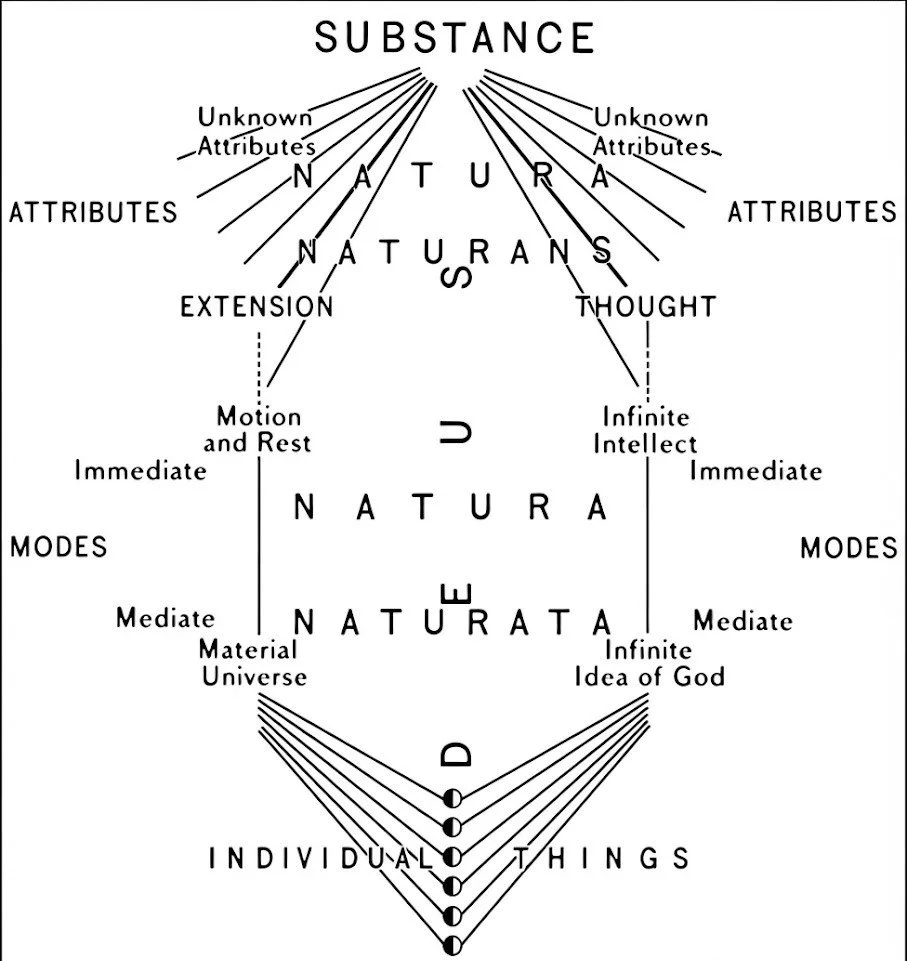
MADE FOR YOU AND ME 3: hive Being (Stanzas 2018--part 5)
Scholarly Essay: "Made for You and Me: Hive Being (Stanzas 2018 — Part 5)"
"Made for You and Me: Hive Being (Stanzas 2018 — Part 5)" is the most philosophically rangy installment of the series, moving between ontological argument, psychological precision, political provocation, and lyric image with a fluency that feels less like juxtaposition and more like a single consciousness operating at full bandwidth. Where Part 4 organized itself temporarily around the anaphoric catalogue, Part 5 returns to the series' purest distributed form: no sustained structure, no formation held, just the hive's omnidirectional attention ranging freely across every register of experience simultaneously. The result is the series at its most characteristic and, in several of its entries, at its most philosophically ambitious.
The opening entry — "a beer-can metropolis on the kitchen table each morning from dad" — achieves its effect through scale and specificity. "Metropolis" is the operative word: not a can or two but a city's worth, an architecture of cans that has accumulated overnight and greets the child each morning as the landscape of the father's inner life. The entry does not editorialize about alcoholism or its effects. It renders the scene as a child renders it — as an environment, as what mornings look like, as the given condition of the kitchen table — and the word "metropolis" carries both the child's awe at the scale and the adult's retrospective recognition of what that scale meant.
"When everyone around you is dying, it seems wrong — unnatural — to go on living" — the entry names a specific survivor's phenomenology with clinical precision: the way that mass bereavement in a community produces a guilt organized around the body's persistence, its refusal to join the dying, its wrongness in continuing. "Unnatural" is exact: survival feels like a violation of the pattern, a deviation from what the environment has established as normal. The entry does not offer consolation or reframe. It names the experience and moves on.
"Turning to the internet to be told that your want is okay — or, in its speak, 'valid'" — "valid" in quotation marks is the entry's most precise gesture. The word has migrated from logic — where validity is a property of arguments, not of feelings — into therapeutic and social media discourse, where it designates the conferral of legitimacy on desire or experience. The entry identifies the specific mechanism: the person does not turn to the internet to understand their want, to examine it, to determine whether it is good or harmful. They turn to be told it is okay. The validation is the product. The internet provides it at scale.
"Insecticide-soaked cotton balls in the nostrils of the dead" — the entry is pure image, no commentary, and its specificity is its meaning. This is a specific funerary or preservation practice, the detail so precise that it constitutes research rather than invention, and its placement in the hive's field without explanation or context performs the series' characteristic trust in the image to carry its own weight. The dead are being prepared. The cotton balls are soaked. The insecticide is doing its work. The entry closes there.
"Patience to pursue star crushes after they wash up" — the entry is the series' most compressed portrait of a specific masculine erotic economy: the man who waits, with genuine patience, for the moment when the actress or celebrity or public figure whose inaccessibility has been the condition of his desire becomes, through the mechanism of career decline, theoretically reachable. The "wash up" is not incidental — it is the enabling condition, the event that converts the star crush from fantasy into prospect. The entry does not moralize this calculation. It names it as a form of patience, which is what it is.
"Singing rapture into crippled forms to uplift them — if only by sparking a drive to dig / deeper — is construed, in a victim era of righteous mediocrity, as an insensitive taunt / against the marginalized (a supremacist ploy even) rather than as love for all mankind" — this is the section's first extended entry, and it addresses the specific contemporary mechanism by which the demand for excellence directed at those who have not yet achieved it is reframed as cruelty rather than care. The entry identifies "righteous mediocrity" as the operative ideology: the protection of existing achievement levels as an act of advocacy, the challenge to exceed them as an act of aggression. The "supremacist ploy" parenthetical names the specific accusation — the conversion of the demand for excellence into racial violence — and the entry's final phrase, "love for all mankind," insists on the motivation that the accusation erases.
"Ill-timed notes sung flat, twitches of the brush beyond borders preordained — in them / he saw only stains to be winced from mind instead of milkable breaks, muses nudging / the stream toward unguessed glory that could wind up crowning them lynchpin stars" — this is the series' most concentrated entry on artistic perception, and its argument is about the relationship between error and discovery. The flat note, the brushstroke beyond the border — these are the accidents that a certain kind of artistic intelligence recognizes as invitations rather than failures, as the muse's nudges toward something the preordained plan could not have reached. "Milkable breaks" is the entry's most precise coinage: the accident that can be worked, extracted, developed into something the original intention could not have generated. The entry identifies the failure to see this — the wincing from the stain — as the artist's deepest limitation, and it does so without sentimentality.
"It is reasonable to trust your gut when something does not feel right, but recognize / that your gut is shaped by outside forces (racist and otherwise): people genuinely felt / something was wrong — toxic — about blacks and whites swimming in the same pool" — the entry is the section's most careful navigation of a genuinely difficult epistemological problem. It does not dismiss gut feeling as a cognitive tool; it accepts its reasonableness as a starting point. What it insists on is the second move: the recognition that the gut has been shaped by forces external to the individual, forces that include but are not limited to racism, and that the feeling of wrongness is not self-validating. The swimming pool example is the entry's evidence: people genuinely felt it, and the feeling was wrong. The entry does not extend this to all gut feelings. It installs a necessary skepticism that the first sentence's reasonableness had opened the door to dismissing.
"However true it may be, do not say / that you will give her a kidney if need be — / at least not after just one bout of phone sex" — the entry is the section's most perfectly timed comic piece, and it earns its comedy through the specificity of its timing caveat. The problem is not the declaration of willingness to give a kidney — that may be entirely true, may reflect a genuine depth of feeling. The problem is the temporal positioning: after one bout of phone sex, the declaration cannot be received as what it may genuinely be. The entry is about the gap between true feeling and legible expression, and it lands as comedy because the gap is real and the advice is sound.
"Selecting how to feel before feeling that way" — the entry names a specific and underexamined psychological phenomenon: the prospective construction of emotional experience, the way consciousness can orient itself toward a feeling before the feeling arrives, shaping its own subsequent experience through the anticipation of it. The entry does not say whether this is adaptive or pathological, conscious or unconscious. It names it as a phenomenon and leaves the evaluation to the reader.
"The glazed eyes of the wizard point guard / dribbling down the court, his look riveted / on nothing but the dynamic panoply itself" — the entry is the section's most purely aesthetic image, and "the dynamic panoply itself" is its philosophically precise designation: the point guard's vision encompasses the entire court as a dynamic system, attending to no single element but to the totality and its movement. The "wizard" is not a nickname but a designation of the specific cognitive mode — the perception of the whole that makes individual genius possible. The glazed eyes are the outward sign of a consciousness operating at a level that cannot be described as looking at anything in particular because it is looking at everything simultaneously.
"Time would pass, so you imagine, even if / everything you were observing were static / because you, observing, would not be static" — the entry is the section's most compressed philosophical proposition, and it makes a genuine claim about the relationship between temporal experience and the observer's nature. Even in a perfectly static universe, time would be experienced because the observer — whose consciousness is itself a process, whose attention moves, whose neurological state changes — is not static. The experience of duration is a function of the observer's dynamism, not the observed world's. The entry is a small phenomenology of time in nine words of conditional reasoning.
"You can give a man everything without everything ceasing to be everything only if / you really give him everything: not just all of natura naturata but natura naturans / (the eternal arche) — turning him, in effect, into ipse esse subsistence: being itself" — the section's most technically philosophical entry deploys Spinoza's distinction between natura naturata (nature as created, the totality of existing things) and natura naturans (nature as creating, the generative principle itself) in the service of a claim about the conditions of genuine gift. To give someone everything in the first sense is to give them the contents of the world; to give them everything in the second sense is to give them the source, the generative principle, the arche — which would turn them into being itself, into ipse esse subsistens, the Thomistic designation of God as subsistent being. The entry is making a precise claim: partial gift, however vast, leaves something withheld. Only the gift of the generative principle itself would constitute the giving of everything, and that gift would transform the recipient into what only God is. The entry is simultaneously a meditation on gift, on theology, and on the impossibility of total giving within the constraints of finitude.
"Satire spotlights stupidity: not only that of those / who think it true and agree, but especially of those / who — despite concord with the author — are offended" — the entry is the section's most formally self-aware, and it applies directly to the series containing it. The double target of satire — the naive reader who mistakes it for sincere advocacy and the sophisticated reader who understands it but is offended anyway — identifies the second group as the more revealing case. To agree with the satirist's actual position while being offended by its satirical expression is to prioritize the form of advocacy over its content, to police the manner of truth-telling rather than attending to the truth being told. The entry is the series' implicit defense of its own methods.
"A society in which people see little hope / even in paying for the funeral of family / should at least invest in suicide booths" — the entry is the section's darkest comic proposition, and it earns its darkness through the logical structure of "at least." The society that has failed to provide its members with even the minimum of dignified death — the affordable funeral — should, by the logic of harm reduction, provide the infrastructure for self-determined exit. The entry does not advocate for suicide; it advocates for consistency, and the consistency it demands from a society that has already failed its people in life is the consistency of following that failure to its logical provision.
"A wicked script rehashed in college bars ('Whites ruin it all!') — a gaslighting script given / the enlightenment ideals and emancipatory norms of western civ ('Yuck!') that lift us / to Sagan stars, shelter the helpless, abolish monkey law (slavery), enshrine rights for all" — the section closes with its most politically direct entry, and it closes with force. The "whites ruin it all" script is identified as gaslighting — the psychological mechanism of making the target of manipulation doubt their own perception of reality — in light of the specific historical record of Western civilization's emancipatory achievements: the Enlightenment's epistemological revolution, the abolition of slavery, the enshrinement of universal rights, the scientific achievement that Sagan's name designates. "Monkey law (slavery)" is the entry's most compressed historical designation — slavery as the law of dominance hierarchies, the law of the strong over the weak, the law that the Enlightenment's emancipatory norms were explicitly designed to abolish. The "Yuck!" parenthetical names the reflex dismissal of this record with the onomatopoeia of disgust, and the entry closes by listing what that dismissed record actually produced. The section ends not with a question but with an inventory, and the inventory is the argument.
Formally, Part 5 is the series' most philosophically dense installment, carrying more entries that sustain genuine argumentative development across multiple lines than any previous section. The range — from beer-can metropolises to Spinoza's natura naturans to the wizard point guard's glazed eyes — is the section's formal achievement: a consciousness that can hold all of these simultaneously, that does not compartmentalize its philosophical ambition away from its comic instinct or its lyric attention away from its political nerve. The hive is at full capacity here, and the distributed intelligence it enacts is, across its range, the series' most complete demonstration of what the form can carry.
Meta Description
The fifth installment of the Hive Being series: the most philosophically ambitious section, ranging from Spinoza's natura naturans and the phenomenology of time to beer-can metropolises and suicide booths, with the series' most concentrated entries on artistic perception, gut epistemology, and the gaslighting of Western civilization's emancipatory record.
Keywords
Made for You and Me Hive Being Part 5, natura naturans, Spinoza, philosophical aphorism, distributed consciousness, wizard point guard, survivor guilt, righteous mediocrity, gut epistemology, satire and offense, suicide booths, Western civilization, Enlightenment emancipation, close reading, Hypocorism, hive being series

MADE FOR YOU AND ME 3: hive Being (Stanzas 2018--part 4)
"Made for You and Me: Hive Being (Stanzas 2018 — Part 4)" is the most politically extended installment of the series, and it earns that extension through formal innovation: the "a land where" anaphoric sequence that occupies its center is the series' most sustained single rhetorical construction, a litany that accumulates its indictments through repetition until the repetition itself becomes the argument. The hive's distributed intelligence is here organized, temporarily and unusually, around a single grammatical structure — the rhetorical device of the catalogue — before releasing back into the series' characteristic aphoristic scatter. The result is a section that feels simultaneously like the others and like something new: the hive briefly finding a formation, holding it long enough to do specific damage, then dispersing again.
The opening entry — "'you know I woulda raped that pussy if you aint give it me, right? That asshole too!'" — arrives as direct quotation without attribution, speaker, or context. The quotation marks are the entry's only frame. The voice is specific and completely rendered in a single sentence: its vernacular grammar, its retrospective boast, its casual annexation of the second orifice as afterthought, its "right?" seeking confirmation of what it has just threatened. The entry does not comment. It places the voice in the hive's field and moves on. The reader is left holding the sentence, which is the point.
"Lottery tickets, just hoping the weekend will get here for mind-numbing sitcoms" — the entry names a specific configuration of managed despair: the lottery ticket as ritualized hope too small to constitute genuine aspiration, the weekend as the unit of time worth surviving toward, the sitcom as the analgesic waiting at the end of the survival. The three elements form a closed system of low-level endurance that the entry renders without condescension and without uplift, simply as a description of how a significant portion of human time is actually organized.
"Kicking that rock habit for sanctioned Red Bull in sleep-tight conscience" — the substitution is the entry's argument: crack for energy drink, illegal stimulant for legal one, the same neurological craving redirected through a channel the culture has approved. "Sleep-tight conscience" is exact — the person who has made the substitution can sleep, their conscience satisfied by the legality of their new habit, while the underlying compulsion continues unchanged. The entry is not about addiction but about the cultural machinery that designates which compulsions are permissible.
"The appeal of being unclear is that unclear arguments are not so clearly unsuccessful" — this is the series' most purely logical entry, a proposition about rhetorical strategy that is itself a model of clarity. The entry identifies a genuine incentive structure: precision invites refutation; vagueness frustrates it. The entry does not restrict its application to any particular discourse — it is as true of academic writing as of political speech, as true of therapy-speak as of theology.
"A cat pawing and flipping into the air its hobbled prey, wanting the hunt to go on" — the entry is pure image, no commentary, and it is one of the series' most resonant because it refuses the allegorical reading it invites. The cat is a cat. The hobbled prey is a mouse or a bird. The wanting the hunt to go on is feline nature, the predatory intelligence that finds the chase more satisfying than the kill. Whatever human behavior this illuminates — and it illuminates several — the entry does not say. It presents the image and trusts the hive's distributed intelligence to complete the circuit.
"If a stud oohing to the blowjob of her strap-on / is mental illness, the blind caning around / everywhere in public is outright insanity" — the entry applies a reductio to the pathologizing of non-normative sexuality: if the pleasure response to a particular sexual act constitutes mental illness, then the navigational behavior of the visually impaired — caning in public spaces, reading the environment through an extended prosthetic — constitutes a more severe disorder by the same logic. The entry is not dismissing concerns about sexual psychology but exposing the inconsistency and arbitrariness of where pathology gets applied and where it does not.
"Things can matter to machines / sophisticated enough; machines / can give a damn (like us)" — the parenthetical "like us" is the entry's pivot and its most philosophically loaded gesture. The claim that sufficiently sophisticated machines can genuinely care — not simulate caring but actually give a damn — is radical enough. "Like us" then raises the question of whether our caring is itself so different from what a sufficiently sophisticated machine would do as to warrant the distinction we habitually draw. The entry does not resolve this. It plants the equivalence and moves on.
The "a land where" sequence begins here and constitutes the section's formal and argumentative center. The anaphora is borrowed from the rhetorical tradition of prophetic indictment — the catalogue of a society's failures, each introduced by the same grammatical structure, each adding weight to the cumulative charge. What distinguishes this catalogue from its prophetic antecedents is its refusal of moral hierarchy: the entries arrive in an order that is associative rather than ranked, so that "a land where literacy and numeracy are considered evil expressions of whiteness" sits alongside "a land where 'subpar' gets autocorrected as 'Subaru'" without either being designated as more or less serious than the other. The sequence treats the comic and the catastrophic with equal formal weight, which is itself an argument: the culture being catalogued has lost the capacity to distinguish between them.
"A land where literacy and numeracy are considered evil expressions of whiteness" — the entry names a specific and documented phenomenon in contemporary educational discourse, the framing of academic achievement standards as racially coded, as tools of white supremacy rather than as neutral measures of knowledge. The entry does not argue against this framing at length; it names it and places it in the catalogue, where its proximity to other entries performs its own commentary.
"A land of criminalizing comedy" — the entry's compression is its precision. The criminalization is not literal but social and professional: the career-ending joke, the retroactive excavation of old material, the application of contemporary sensitivities to humor produced under different conditions. "Criminalizing" names the mechanism — the conversion of social transgression into something treated with the apparatus of prosecution — without overstating it as literal law.
The catalogue's most politically charged entries cluster in its middle section. "A land where the 'b' in 'black' must be capitalized, but never the 'w' in 'white'" identifies a specific asymmetry in contemporary style guide orthodoxy — one that the entry holds up for inspection without endorsing either the capitalization or its absence. "A land where trauma must be time-stamped, notarized, before even poets can speak it" is the sequence's entry most directly relevant to the book containing it: the demand for credentialed, verified, institutionally legible suffering as the prerequisite for artistic authority, which the entry identifies as a form of bureaucratic gatekeeping applied to the most ungovernable of human experiences.
"A land where we fetishize the primitive — indigenous cosmology on a par with physics" names the specific epistemological collapse of treating all knowledge systems as equally valid regardless of their predictive and explanatory power. The entry is not dismissive of indigenous knowledge traditions; it is skeptical of the political mechanism that places them beyond comparative evaluation, which is a form of condescension disguised as respect. "A land where all kindness is seen as an agenda (as it often is)" — the parenthetical is the entry's most precise move, conceding the empirical basis for the cynicism it names while identifying that cynicism's cost: the environment in which genuine kindness cannot be received as such.
"A land where Beyoncé and Sister Souljah surpass Beethoven and Shakespeare" — the entry names the specific cultural valuation that places contemporary popular artists above the canonical figures of Western artistic tradition not on the basis of comparative aesthetic analysis but on the basis of identity and political alignment. The entry does not argue for Beethoven's superiority; it identifies the mechanism by which the comparison has become impermissible rather than merely contested.
"A land where incest is rape" — arriving near the end of the catalogue, this entry is the sequence's most compressed legal and philosophical provocation. It names a specific position in contemporary discourse — the argument that the power dynamics inherent in family relationships make genuine consent structurally impossible — without endorsing or refuting it. Its placement after fifty-plus entries in the same grammatical structure gives it the same weight as the entries surrounding it, which is the catalogue's governing formal principle and its most unsettling quality.
The sequence releases back into the section's characteristic aphoristic scatter with entries that carry the full tonal range of the series. "Dope-sick mothers renting out / the vicious suckling of their newborns — / 'just the fuckin mouth' — to drug-dealer testicles" is the section's most viscerally devastating entry, and it achieves its effect through the specificity of the quoted speech: "just the fuckin mouth" is the mother's negotiation, her delimitation of what she is offering, and its presence in quotation marks makes it testimony rather than description. The newborn is present. The mouth is specified. The drug-dealer's testicles are the economic end of the transaction. The entry renders this without editorializing because editorializing would be insufficient.
"Those who, before going to war, / do not fuck like they are going to war / are not ready to go to war" — the entry is the series' most aphoristically concentrated statement about the relationship between erotic and martial intensity, and it works through the repetition of "going to war" across three lines in which the phrase accumulates different meanings. The first instance is literal; the second is figurative — the quality of erotic engagement as a measure of one's relationship to mortality and urgency; the third returns to the literal but is now inflected by the second. The entry is not advocating for war but for a relationship to one's own intensity that does not flinch from its own implications.
"Your desire to support her does eclipse / your desire to fuck her, but the proximity / that comes with support has you fuck her" — the entry is the section's most precise account of a specific mechanism of desire: the way that genuine care and genuine erotic interest, even when the former authentically outweighs the latter, conspire through the simple physics of proximity to produce the outcome that the ethical hierarchy had apparently foreclosed. The entry does not moralize. It describes a mechanism that operates regardless of the moral intentions of the people inside it.
"If you cannot criminalize a certain group (blacks), / have people link that group with a practice (crack use) / and then excessively criminalize that practice" — the section closes with the series' most compressed account of structural racism as a legal and political mechanism: the three-step process by which racial targeting is achieved through the criminalization of racially associated behavior rather than through explicit racial designation. The entry is an instruction manual for a process that has been extensively documented in American legal history, rendered here in the format of a logical sequence — if A then B then C — that strips it of euphemism and presents it as the deliberate procedure it has been.
Formally, Part 4 achieves its effects through the tension between the catalogue's sustained anaphoric structure and the section's surrounding aphoristic scatter. The "a land where" sequence creates a temporary organization — a formation — that the section's other entries do not share. The formation's dispersal at both ends of the sequence makes the catalogue feel like a moment of collective focus in a consciousness that is ordinarily distributed: the hive briefly swarming in one direction before returning to its characteristic omnidirectional attention. That the formation is organized around indictment — around a sustained accounting of a culture's failures — gives the section its heaviest political register while the surrounding entries maintain the series' commitment to ranging freely across every other aspect of human experience simultaneously.
Meta Description
The fourth installment of the Hive Being series, organized around a sustained anaphoric catalogue of cultural indictments — "a land where" — embedded in the series' characteristic aphoristic scatter, ranging from dope-sick mothers and structural racism to the epistemological collapses of a culture that has lost the capacity to distinguish the comic from the catastrophic.
Keywords
Made for You and Me Hive Being Part 4, anaphoric catalogue, a land where, cultural indictment, aphorism poetry, structural racism, cancel culture critique, epistemological collapse, distributed consciousness, contemporary American satire, close reading, Hypocorism, litany form, political poetry, hive being series
MADE FOR YOU AND ME 3: hive Being (Stanzas 2018--part 3)
"Made for You and Me: Hive Being (Stanzas 2018 — Part 3)" continues the serial project of distributed consciousness that the earlier installments established, but this section carries a tonal register distinctly heavier than its predecessors. Where earlier sections moved with the aphoristic agility of a mind equally at home in the comic and the devastating, Part 3 has a higher proportion of entries organized around death, terminal conditions, and the specific grief of having arrived too late — to the father's body, to the dying wise man's bedside, to the moment before suicide became obvious. The hive is still buzzing, still ranging freely across registers, but something in this section has begun to feel the weight of its own accumulation.
The opening entry — "on your childhood bed after decades, the wake underway downstairs" — achieves its effect through spatial and temporal compression. The childhood bed and the adult body returning to it after decades, the wake proceeding below — the entire architecture of mortality, memory, and the body's persistence through time is held in a single prepositional phrase. The wake is downstairs: the dead are being mourned in the social space while the mourner has retreated to the private space of childhood, to the bed that knew the body before the body knew grief. The entry does not say whose wake or whose bed. It does not need to. The situation is total.
"A species for whom explaining is seen as losing, we were always anti-intellectual" — the plural "we" implicates the reader in a cultural self-diagnosis that the entry refuses to soften. Explanation as defeat, as exposure, as the surrender of the rhetorical high ground — this is named as constitutive rather than recent, "always" anti-intellectual rather than newly so. The entry is itself an explanation, which gives it the recursive quality of much of the section's best aphorism: it performs what it diagnoses.
"If no one thinks they have an accent, what else does no one think?" is the section's most compressed epistemological entry, and one of its finest. The accent is the standard example of the invisible norm — the way those who set linguistic standards are unaware of their own particularity, hearing themselves as accentless while hearing deviation in everyone else. The question extrapolates from this single case to an open-ended inventory of equivalent blind spots: what other norms are invisible to those who embody them, what other absences of thought are mistaken for the natural condition of thought itself. The entry asks the question and leaves it open, which is the only honest thing to do.
"Getting him back only to restore your chance to be the one to leave" is the section's most concentrated portrait of intimate bad faith, and it achieves its devastating compression by naming a motivation so true and so rarely admitted that its statement feels like exposure. The entire labor of reconciliation — the negotiation, the forgiveness, the reinstallation of the relationship — is revealed as instrumental: not a desire for reunion but a desire for the power of departure, for the restoration of agency in a situation where being left had stripped it away.
"Your tween daughter comes home from a sleepover / with a new coffee habit, like she is in Sex and the City — / perhaps just the tip of what the other daddy showed her" — the entry moves from the comic to the sinister across a single dash. "Like she is in Sex and the City" is the parent's amused observation of precocious sophistication; "perhaps just the tip of what the other daddy showed her" turns the observation inside out. The idiom "just the tip" carries its sexual register without announcing it. The entry does not accuse; it deploys possibility with a casualness that is its own form of indictment.
"Hypersexual and hyperviolent and tribal; remixing instead of being / the ultimate wellspring; regarding explaining oneself as weakness — / the black American shows us who we truly are, and we cannot stand it" is the section's most formally and politically charged entry, and it demands careful attention. The entry does not make a claim about black Americans as a group in isolation. It makes a claim about the universality of what is being described — hypersexuality, hyperviolence, tribalism, the preference for remix over origination, the equation of explanation with weakness — and identifies black American culture as its most visible and honest expression, while arguing that the broader culture's hostility to it is a function of self-recognition rather than genuine difference. The mirror dynamic the entry invokes is the same one the section names at its close: those who disgust us serve as mirrors, and the disgust is self-directed. The entry is deliberately uncomfortable in its framing, as the poem elsewhere names uncomfortable things directly; its argument is not that these characteristics are racial but that their most unashamed expression in one cultural context makes that expression a diagnostic mirror for the broader culture's own suppressed version of the same tendencies.
"Cancel culture, while it masquerades as self-love, is but the vitriol of our self-hatred / for being cripples hooked on coddling that cripples — and so to stab its heart is to lure / babies into self-love by inviting home varieties of the unsettling for them to overcome" — this is the section's most elaborately constructed single entry, and its argument is three-tiered. Cancel culture presents itself as self-love, as the protection of the vulnerable from harm. The entry identifies it instead as self-hatred projected outward — the self-punishing impulse of people who have become dependent on the coddling that perpetuates their helplessness. And the antidote it proposes is not resistance in the obvious sense but its opposite: inviting the unsettling in, exposing the young to difficulty and discomfort as the only actual path to the self-love that cancel culture claims to provide. The entry performs the argumentative complexity it describes: it does not simply attack, it diagnoses and prescribes.
"If you knew for sure it was God telling you to kill the baby, / your refusal to do it would amount to not understanding / that the being in question — perfect — knows what is best" — the entry enters the territory of Kierkegaard's teleological suspension of the ethical with the same compression it applies to everything else. The Binding of Isaac is here reframed as an epistemological problem: if the being commanding you is perfect, then your moral hesitation is not virtue but a failure to understand the nature of perfection. The entry does not endorse infanticide. It exposes the logical structure of any theology that attributes perfection to its deity while retaining the right to override divine commands on moral grounds — a position it identifies as internally inconsistent.
"Even if lions all of a sudden became peaceful, it would remain wise for finite creatures / like us to stay on guard around them at least in the transition period — profiling them / harder if their most popular music depicts them glorifying themselves as predators" — the analogy is the section's most politically compressed, and its final clause is its argumentative core. The entry does not argue for racial profiling directly. It argues for behavioral profiling — for the use of cultural self-representation as evidence about risk — while using the lion analogy to suggest that this is not prejudice but prudence. The most popular music is the cultural output the community has chosen to amplify; if that output depicts predation as identity, the entry holds that this constitutes relevant evidence for threat assessment regardless of individual variation. The entry is deliberately provocative in its implications and does not insulate itself from the discomfort those implications produce.
"How did liquidating yourself go, / so suddenly, from unimaginable / to the most obvious solution?" is the section's most devastating single entry, and it achieves its effect through the verb "liquidating" — financial, bureaucratic, cold — applied to suicide. The entry does not ask this question of a specific person. It asks it of the phenomenon itself: the way the threshold between unthinkable and obvious can collapse without warning, the way the mind can reorganize itself around a conclusion that would have been incomprehensible a week before. The question implies a witness, someone who watched the reorganization happen or found its aftermath, and who cannot account for the speed of the transition.
"Drawn together by trauma, the boy is down / whenever his father is down — but this day / a rollicking butterfly has drawn him away" — the tercet is the section's most purely lyrical entry, and its final image earns its lightness through everything that precedes it. The boy whose attunement to his father's depression has become its own kind of depression is, on this day, drawn away by a butterfly. The butterfly is not symbolic in any heavy sense. It is a butterfly, rollicking, which is a word that carries its own irresistible energy. The distraction is accidental and total and temporary and sufficient. The entry does not say whether the father notices or what the father feels. It ends with the boy's attention elsewhere, which is enough.
"Parents, mom too, heckling their kids / for reading: 'Look at this pussy-ass nigga — / reading a fuckin' book!'" — the entry names a specific and devastating form of anti-intellectualism: not the passive neglect of reading but its active punishment, the community enforcing its own intellectual suppression through the mechanism of shame. "Mom too" is the entry's most precise detail, insisting on the mother's participation rather than allowing her to be exempted from the dynamic by gender. The entry connects directly to the section's opening claim about explanation as losing: here the culture's equation of intellectual engagement with weakness is being installed in the next generation in real time, by its parents, with the tools of humiliation.
"Deathbed dying tends to come in such doses / that it is easy to persuade yourself, some / moments, that you might just pull through" — this is the section's most compassionate entry about mortality, and it is compassionate precisely because it is accurate. The intermittency of terminal dying — the moments of relative stability that the dying and their witnesses interpret as recovery before the next decline — is rendered without sentimentality but with a recognition of the psychological necessity of that misinterpretation. The persuasion is not delusion but the mind doing what it must to remain present in the room.
"The knowledge — unspoken on all sides — / that the Make-A-Wish teen wants pussy, / not videogames and a trip to Disneyland" — the entry is the section's most darkly comic, and it earns its comedy through the universality of the suppressed knowledge it names. The Make-A-Wish fantasy is a cultural institution built around the idealized desires of ill children: the theme park, the celebrity meeting, the gaming console. The entry identifies the gap between institutional fantasy and actual adolescent desire with the directness that the institution's sentimentality forecloses. The teen's wish is unspeakable within the framework that exists to grant wishes, which is a small but precise portrait of how institutional care systematically misreads the people it serves.
The section closes with two entries that function as a paired coda. "In realizing you are pretty much stuck in the home underclass, / for sanity you open to the beauty of those who disgusted you — / and so too to yourself, since they served as mirrors all along" — this is the section's most explicit statement of the mirror dynamic that underlies so much of its political and social analysis. The opening to beauty in conditions of constraint is not resigned acceptance but a perceptual reorganization: those who disgusted are recognized as reflections, and the disgust as self-directed, which transforms the social landscape and the self simultaneously.
"Making by hand invites, in the meditative clearing it safeguards, / ornamentation: self-amused patterns knifed into the pie crust / and penned deviations from the mono-style of the internet age" — the final entry is the section's most formally generous, and it closes the hive's buzzing on a note of careful, embodied making. The meditative clearing that handwork creates is the space in which ornamentation becomes possible — not the optimized, algorithmic ornamentation of digital production but the self-amused deviation, the pattern knifed into pastry by a hand that is amusing itself, departing from the mono-style not as rebellion but as the natural expression of individual attention given time and a surface to work on. The entry is a small argument for craft as resistance to the homogenizing pressure of networked production, and it lands with a quietness proportional to its confidence.
Formally, Part 3 of the series continues the ethical montage structure of its predecessors while allowing individual entries more breathing room than the densest passages of earlier sections. Several entries extend to three lines and develop genuine argumentative arcs rather than operating purely through compression. This expansion corresponds to the section's tonal weight: the death entries, the suicide entry, the butterfly and the boy — these require a slightly longer beat to register at full depth. The section does not abandon compression; it calibrates it, allowing the most devastating entries the space they need while keeping the hive's distributed intelligence intact.
Meta Description
The third installment of the Hive Being aphorism series: a distributed intelligence ranging across death, anti-intellectualism, intimate bad faith, racial mirrors, terminal dying, and the meditative clearing of handwork — heavier in register than its predecessors, carrying more of the weight of accumulated consciousness.
Keywords
Made for You and Me Hive Being Part 3, aphorism poetry, distributed consciousness, ethical montage, cancel culture critique, anti-intellectualism, terminal dying poetry, suicide threshold, Make-A-Wish satire, mirror dynamic, handwork and craft, racial mirror, Kierkegaard binding of isaac, contemporary American poetry, close reading, Hypocorism
MADE FOR YOU AND ME 3: hive Being (Stanzas 2018--part 2)
"Made for You and Me 3: Hive Being (Stanzas 2018 — Part 2)" is a poem that operates as a collective nervous system — a distributed, non-hierarchical intelligence registering the full frequency range of contemporary experience simultaneously, without the consolation of narrative sequence or thematic resolution. Its form is the aphorism pushed past the point of wisdom into something more volatile: observations that begin in wit and end in vertigo, ethical provocations that implicate the reader before they have finished processing the sentence, juxtapositions whose violence is structural rather than rhetorical. The poem does not argue. It accumulates. And what accumulates is a portrait of a civilization that has lost the capacity to integrate its own contradictions — not because the contradictions are new, but because the mechanisms for managing them (narrative, ideology, sentiment, humor, religion, theory) have been simultaneously exposed and retained, emptied and still in use.
The title's three-part structure encodes the poem's central tension. "Made for You and Me" is the language of romantic inclusion, of popular song, of the American folk promise — Woody Guthrie's land made for you and me, the domestic idyll, the shared inheritance. "Hive Being" immediately complicates this by dissolving the dyadic "you and me" into collective organism: not two individuals who belong together but a swarm intelligence in which individual identity is a functional illusion. The parenthetical "Stanzas 2018" grounds the hive's buzzing in historical specificity — 2018 is a particular moment of American and global political fracture — while "part 2" signals that this is not a complete argument but a fragment of an ongoing, perhaps uncompletable, inventory. The title is itself a small aphorism: togetherness as both promise and dissolution of self.
The opening entry — "that cuck chair in the motel corner" — arrives with maximum compression and minimum explanation. "Cuck chair" imports the full toxic freight of contemporary internet culture's most weaponized sexual insult: the cuckold, the man who watches while another takes what is his, now evolved into a term of political emasculation applied to any perceived capitulation or weakness. In a motel corner it becomes furniture — ordinary, specific, slightly melancholy — the way ideology always eventually becomes decor. The chair is "that" chair: definitively known, perhaps frequently encountered, its presence unremarkable to those who furnish such rooms. The poem opens by naming an object that contains an entire theory of masculinity, sexual anxiety, political resentment, and cheap accommodation without explaining any of it. This is the poem's fundamental method: the named thing is already saturated; the poem relies on that saturation rather than producing it.
"Nostalgic about the way the place used to be as soon as they migrate there" is the poem's first sustained aphorism and one of its most precise sociological observations. The sentence identifies a temporal paradox at the heart of gentrification, displacement, and cultural colonization: the newcomer's nostalgia is not for a personal past but for an imagined prior state of the place they have just entered and begun to transform. The nostalgia is produced by arrival, not by departure. It precedes any actual attachment. And yet it functions as attachment — as entitlement, as grievance, as the emotional basis for further transformation. The sentence says nothing about race or class explicitly, but its implications extend through both. It is the mechanism by which every encroachment justifies itself as preservation.
"The preferred weed sack; the preferred woman: fat, pungent, no seeds" performs its equation with deliberate crudeness. The parallelism — sack/woman, fat/pungent/no seeds — is the poem's most openly provocative yoking, and it refuses to signal whether it is endorsing the equivalence, reporting it, or both. What it does is name a set of preferences that exist in the same consciousness, organized by the same aesthetic logic, without the usual separation of registers that allows people to maintain contradictory self-images. The connoisseur of quality marijuana and the man who prefers large, aromatic women without complications (no seeds: no reproductive consequence, no entanglement) are not being contrasted. They are the same person applying the same criteria. The crudeness is the point: the poem denies the dignity of separate categories.
"Medical test results in a river" is the poem's most compressed tragedy. Five words contain an entire biography of poverty, shame, fear, and magical thinking — the refusal of diagnosis, the literal disposal of knowledge that cannot be afforded or survived psychologically. The river is both specific (Southern, gothic, American) and mythological (Lethe, the river of forgetting). The person who throws their test results in a river is not ignorant; they are making a rational choice within an irrational system, choosing the uncertainty they can live with over the certainty they cannot.
"The inhumanity of not letting strangers hold your baby" is the poem at its most mischievous. It reframes a contemporary bourgeois norm — the protective anxiety around infant contact, the sanitized stranger-danger that has replaced village-level communal child-rearing — as inhumanity rather than care. The entry doesn't argue this at length. It simply names it and moves on, leaving the reader to sit with the possibility that the gesture of protection is also a gesture of severance, of anti-communal privatization of new life.
The entry immediately following — "but wait, are we not nothing more than avatars of our race and gender identities?" — performs a mock interruption, a satirical voice-from-the-theory-room objecting to the implied humanism of the previous observation. The "but wait" mimics the rhetorical move of progressive discourse that would dissolve the "stranger" and the "mother" and the "baby" into subject positions determined by identity categories, making the spontaneous human impulse to hold and be held legible only as the reproduction of structural power. The poem does not reject this analysis. It places it next to the baby and lets the discomfort accumulate.
"Enemies invented to sell weapons" is the poem's most direct political aphorism, and its brevity is its argument: the sentence is short because the mechanism is simple, and the mechanism's simplicity is the scandal. Adjacent to it, "gas station libido packets" drops into the register of the bathetic and the commercial — the blister-packed aphrodisiacs, the rhino pills, the desperate late-night purchases — with a deflation that is itself a kind of commentary on what becomes of desire in a militarized consumer economy. The juxtaposition is not explained. It doesn't need to be.
"What in her he so needed to kill was the only thing keeping him with her" is the poem's most devastating single observation, and it stands as its own complete psychological novel. The sentence describes the mechanism of intimate destruction with a precision that neither condemns nor excuses: the thing targeted for elimination in the beloved is simultaneously the thing that produced and sustains the attachment. Destroy it and you are free; destroy it and you have nothing. The sentence does not specify gender but its grammar — "in her," "him" — deploys the conventional pronoun assignment of heterosexual destruction, while remaining open to other configurations. It is the most purely literary entry in the poem.
The coitus-in-front-of-children entry is the poem's most deliberately outrageous philosophical proposition, and it earns its outrageousness through the precision of its argument. The claim is not simple provocation: it holds that exposing children to parental sexuality is in some pure, anthropological sense an act of life-affirmation — the opposite of the bloodbath gaming and cinema that the same culture accepts without comment. The qualifier "in our anti-life land" is the key: the proposition does not advocate but diagnoses. The culture that traumatizes children with graphic death while protecting them from consensual adult sexuality has arranged its taboos around the suppression of life and the normalization of violence. This is a genuine argument, made in three lines, surrounded by forty-eight other arguments.
"'I won't make you promises' / is not a true deconstruction if the subtext / is 'I won't after this one, of course'" performs a philosophical and emotional operation simultaneously. It identifies the self-exempting clause hidden inside the rhetoric of non-commitment — the performative contradiction of the person who promises not to promise. The word "deconstruction" is used precisely: not in its academic sense but in its popular appropriation as a term for dismantling convention, and the poem notes that this dismantling is always already re-conventionalizing itself through the exception it carves out for the present moment.
The placebo and color of Jesus entry — "since different color placebo pills / have different efficacy, might / different color Jesus's as well?" — is the poem's most compressed theological provocation. The empirical finding (that placebo effect varies by pill color, shape, and perceived authority) is extrapolated into comparative religion with the lightest possible touch. The question mark keeps the poem from settling into either mockery or mysticism. It is genuinely asking whether the cultural specificity of religious representation has measurable psychological efficacy — whether a Black Jesus or a Brown Jesus or a White Jesus works differently in the nervous system of the believer, and whether this would be an argument for or against the truth claims of any tradition.
"Hypersexualized bodies (blacks, say) are more easily raped in good conscience / animalized bodies (blacks, say) are more easily killed in good conscience" — these two parallel entries are the poem's political and historical spine made briefly visible. The parenthetical "blacks, say" is doing enormous work: it names without insisting on uniqueness, marks without reducing to a single case, acknowledges the pattern while leaving open its application to other bodies organized by similar logics of dehumanization. The entries do not editorialize. They state mechanisms. The horror is in the statement's accuracy, not in any rhetorical amplification.
"Remaining exploited because it frees you from having to care" names a genuine psychological economy of oppression: the way in which powerlessness can function as a form of exemption from moral responsibility, from the exhausting labor of agency. The entry does not moralize about this. It simply identifies it as a real structure of consciousness — one that is simultaneously understandable and, in its own way, a form of complicity with the conditions that produce it.
The poem's final entry — "with pathetic plosives, a young boy battles / plastic figurines from the film coming soon / as puff-eyed parents, bedside, pray for time" — arrives as a kind of negative epiphany, a closing image that refuses closure. The "pathetic plosives" are the child's sound-effects, his mouth-made explosions and crashes, "pathetic" in its root sense of pathos-laden rather than merely pitiable. The film coming soon has already colonized his imagination; he is playing inside a commercial fiction that will become a commercial reality. The parents, puff-eyed from crying or sleeplessness or both, pray "for time" — not for healing, not for miracle, but for time itself, which is to say they have already moved past hope into the more desperate prayer of postponement. The scene is rendered without sentiment, which is what makes it devastating. The poem ends not with aphorism but with image — with three people in a room, the child making the sounds of battle while his parents pray at the edge of something the poem will not name.
Formally, "Made for You and Me 3" operates through what might be called ethical montage: the juxtaposition of entries produces meaning that neither entry contains alone. The cuck chair and the nostalgia of gentrification illuminate each other across the white space between them. The preferred woman and the medical results thrown in the river share a logic of avoidance and appetite that becomes visible only in proximity. The poem's white space is not absence but pressure — the force of relation held open for the reader to complete or refuse. This is a poem that trusts, perhaps demands, an active reader: one willing to sit in the discomfort of adjacency, to make connections the poem refuses to make explicit, to be implicated by what they recognize.
What "Made for You and Me 3" ultimately refuses is the consolation of a position. It does not stand anywhere stable long enough to be located. It moves through registers — the sexual, the political, the philosophical, the domestic, the theological, the ecological — with an agility that prevents any single framework from organizing the whole. The hive being of the title is not a unity but a distributed intelligence, sensing everywhere at once, incapable of the kind of hierarchical meaning-making that would allow any entry to dominate or resolve the others. The poem is itself a hive: its individual observations are workers, each doing a specific function, and the queen — if there is one — is something like the pressure of living consciously in a civilization that has not yet found a way to integrate what it knows about itself.
Meta Description
A formally distributed poem of aphorism, provocation, and ethical montage — moving through sexuality, race, power, religion, grief, and consumer culture without hierarchy or resolution, building a portrait of collective consciousness that registers everything and metabolizes nothing.
Keywords
Made for You and Me 3, Hive Being, aphorism poetry, ethical montage, contemporary American poetry, race and sexuality, consumer culture critique, distributed consciousness poetry, placebo theology, gentrification nostalgia, intimate destruction, political aphorism, close reading contemporary verse, Hypocorism, fragmented form poetry
MADE FOR YOU AND ME 3: hive Being (Stanzas 2018--part 1)
The first installment of the 2018 sequence announces a shift in the hive's atmospheric pressure. Where the 2016 and 2017 sequences built their range gradually, moving between registers with something like leisure, Part 1 of 2018 arrives already at maximum compression — its entries shorter on average, more aphoristically concentrated, and more willing to let a single phrase do the work that earlier installments might have distributed across three lines. The sequence feels accelerated, as though the hive has learned that the world it is documenting moves faster than the forms available to document it, and has adjusted accordingly.
The sequence's opening entries establish its governing tensions immediately. "A neck-rubbing boss — your neck" is eight words and a complete power analysis: the intimacy of physical touch deployed as a vehicle for dominance, the possessive "your neck" implicating the reader in the subordination. "Off-the-rack identities" follows, naming the commodification of selfhood with the precision of a fashion metaphor that is also a critique of the identity politics it describes — identities assembled from available stock rather than made to measure, the illusion of individuality within a system of standardized options. These early entries are working faster than their predecessors, trusting the reader to fill in more of the analytical space.
The gender cluster in Part 1 is the most sustained and most contentious in the project so far, and it demands serious engagement rather than either endorsement or dismissal. "The barbarism of gender-reveal parties in an age of choose your own gender" identifies a genuine cultural contradiction: the elaborate celebration of binary gender assignment at birth sits in uneasy tension with a culture that increasingly insists gender is self-determined. The poem does not resolve this tension; it names it. "Born gay, perhaps — but born fagulously falsetto?" is sharper — it distinguishes between the reasonable claim that sexual orientation has biological basis and the more questionable cultural performance of gay identity, suggesting that the latter may be learned rather than innate without thereby dismissing the former. "Then let any AI who identifies as human compete in human chess" applies the identify-as logic to an absurd case, not to mock transgender identity but to examine the philosophical consistency of the underlying principle. The sequence is not anti-trans; it is philosophically rigorous in ways that contemporary discourse has largely foreclosed, and its rigor is the form's commitment, not a political position.
"The uncomfortable alliance between nostalgic regressives and trans revolutionaries / on shared advocacy of gender stereotypes" is the sequence's most analytically precise gender entry. The observation is genuine: certain strands of trans discourse, in insisting that gender identity maps onto the full apparatus of traditional gender presentation — pink for girls, blue for boys; dolls and trucks; particular vocal registers and behavioral norms — reproduce the gender essentialism that feminist theory spent decades critiquing. The alliance with "nostalgic regressives" is uncomfortable precisely because it is structurally real, whatever the intentions of either party. The comparison to the Klan/NOI alliance on racial separation is extreme but not arbitrary — it names the phenomenon of ideologically opposed movements converging on shared positions, which is a real political pattern.
The testosterone entry is the sequence's most medically pointed intervention in the gender debate: "testosterone is such an anxiety slayer that giving / the teen just a pinch will drive away any dubitation / about whether gender dysphoria is her real issue." The argument is that anxiety, depression, and gender dysphoria can present similarly, and that testosterone's anxiolytic effects might resolve the presenting symptoms without resolving — and while foreclosing the resolution of — the underlying question. This is a genuine clinical concern, not a transphobic dismissal, and the sequence's willingness to name it reflects the same commitment to uncomfortable honesty that runs through the project's treatment of race, addiction, and death.
"His trauma turned into a pathology, but his pathology made his vengeance unending" achieves what the best mosaic entries do — it names a psychological mechanism that is immediately recognizable once named, that one has never seen named in quite this way. Trauma pathologized becomes justification for the very behaviors the trauma produced; the pathology, once established, provides infinite warrant for its own continuation. The entry is not about any specific person but about a structure of self-perpetuation that operates across contexts.
The Bateman entry is among the installment's most culturally pointed: "like those who 'miss the point' and celebrate Patrick Bateman, we seem now a culture / that celebrates, apes even, artistic depictions of our depravity." The American Psycho reference names the specific failure of ironic consumption — the reader who takes the satirical portrait of aspiration and sociopathy as aspiration rather than critique. The sequence extends this beyond Bateman to the broader cultural pattern: art made in critique of the worship of "bling and Botox hoes" consumed as endorsement of exactly that worship. The ironic register becomes unavailable once the audience has lost the capacity to register it.
The slavery entry — "negatives of slavery aside, at least blacks got to learn who the real God is" — is the installment's most deliberately provocative and most carefully calibrated irony. Voiced in the register of the apologist, it enacts the rhetorical move it is critiquing: the acknowledgment of atrocity as a prelude to the claim of compensatory benefit. The irony is complete and requires no authorial commentary; the logic exposes itself. That it will be misread by some readers is the point — the sequence trusts that misreading to identify its own audience.
"Mushrooms cutting out the priest between you and God" is the installment's most compressed psychedelic theology, and it is entirely serious beneath its wit. The priest functions as institutional mediator — the church's claim to interpretive authority over divine experience requires that direct encounter be classified as either illegitimate or pathological. Psychedelics are the pharmacological disintermediation of that authority, producing experiences of the kind that the institutional framework claims to facilitate but actually channels through its own structures.
"The moon tends not to speak much to those with glowing screens" achieves the rare thing of being a complaint about technology that is also genuinely beautiful. The moon has always been the figure for the kind of attention that requires darkness and quiet and the willingness to simply be present to what is there. The screen is its negation not because technology is inherently alienating but because the screen's specific operation — the pull of notification, the demand of the feed — forecloses precisely the kind of receptive stillness the moon requires. The entry does not moralize; it observes, and the observation is enough.
"We belong to a 'fixed' constellation in another's night sky" is the installment's most quietly devastating entry. From our own position we are moving through space; from a sufficiently distant vantage, we appear fixed, part of a pattern we cannot ourselves perceive. The application to human life is immediate: the patterns we constitute for others — the fixed points in their sky — are invisible to us from inside our own motion. The entry is about the gap between self-perception and how one appears in another's life, between the experience of change and the appearance of constancy, between the self we know to be in flux and the self others have integrated into their own orientation.
Formally, Part 1 of 2018 is the most compressed installment in the project to date. The average entry is shorter, the transitions more abrupt, the gaps between topics wider. This is not slackening of attention but its intensification — the hive moving faster through its material because the material itself is moving faster, because the cultural moment it is documenting has accelerated beyond the pace of the earlier stanzas. The 2018 sequence has absorbed the 2016 and 2017 sequences' lessons and is now operating at a higher frequency, trusting that the reader who has traveled this far can keep up with the hive at full speed.
Meta Description
The first 2018 installment of the mosaic poem arrives at maximum compression — its entries shorter, its transitions more abrupt, its cultural analysis more concentrated — moving through gender politics, trauma pathology, psychedelic theology, Bateman and ironic consumption, testosterone and dysphoria, and the moon's silence in the age of glowing screens, all at the accelerated frequency of a hive that has learned its own method and is now operating at full speed.
Keywords
Made for You and Me 3, hive Being, 2018 sequence, mosaic poem, gender politics, trans debate, testosterone and dysphoria, Patrick Bateman irony, psychedelic theology, moon and screens, trauma pathology, gender reveal parties, slavery apologist irony, constellation and selfhood, compressed aphorism, contemporary American poetry, fragment poetics, cultural acceleration, identity commodification
MADE FOR YOU AND ME 2: hive Being (Stanzas 2016--FULL YEAR)
The 2016 installment of "Made for You and Me" — the first chapter of the hive Being project — is both foundation and overture. Where the 2017 sequence arrived already in full command of its method, the 2016 installment is the form discovering itself: more exploratory in its range, more willing to sit with pure image rather than argument, and in certain stretches more nakedly elegiac. It is also, in aggregate, the sequence's most sustained meditation on the comedy of embodiment — the relentless, undignified, often hilarious fact of having a body that farts and ages and desires and fails and finally stops. That this comedy is inseparable from the sequence's deepest pathos is the 2016 installment's central formal discovery.
The sequence opens on "yard sale dentures" and closes, after thousands of entries, on "those after us create the legends of our time" — a trajectory from the discarded remnants of a mouth to the future's act of meaning-making from our debris. This arc is not plotted but accumulated: the sequence does not argue toward its ending so much as arrive at it through the sheer weight of everything that precedes it. The dentures establish the governing tonal register immediately — objects that were intimate, functional, intimate again in their abandonment, and faintly comic in their visibility at a yard sale. The sequence's characteristic move is present from the first entry: the domestic object carrying more than it appears to carry, the ordinary surface concealing and revealing simultaneously.
The form's most distinctive feature in the 2016 installment is its treatment of pure image. Where the 2017 installments frequently extend into argument and aphorism — three-line stanzas that build a position, turn it, qualify it — the 2016 sequence includes a higher proportion of entries that are purely observational, refusing to do anything with what they notice except notice it. "The drowsy dog / raises an ear of alertness / at the sound of his own fart" is not an argument about anything. It is a moment rendered with the precision of a haiku and the comic timing of a perfect joke. "Monarch butterflies suckling dog shit, / their pleasure too intense to care / about being blindsided with a rock" is similarly pure — the juxtaposition of beauty and squalor held without comment, the butterflies' absorption in their pleasure rendering them vulnerable to a violence the poem does not enact but names. These entries trust the image to do all the work, and that trust is itself a formal argument: attention is sufficient; the world, attended to without agenda, is already extraordinary.
The body is the 2016 sequence's most persistent subject, and its treatment of the body is more consistently comic here than in the 2017 installments. The sequence attends to the body's indignities — "farts that interrupt the urine stream," "the shiver after urination," "nitrogen bloat in compacted intestines," "the groan it takes her to exit the sedan" — with an affectionate specificity that refuses both aestheticization and contempt. These are not grotesque details deployed for shock; they are the simple truth of what it is to inhabit a body, rendered with the same quality of attention the sequence brings to dying stars and dying people. The body is comic because it is irreducible — it keeps insisting on itself at the worst moments, it has its own agenda, it will not be dignified by the mind's preferences. The sequence loves it for this.
The dying cluster in the 2016 installment is distributed more diffusely than in 2017, appearing throughout rather than concentrating in sustained meditation. "Hospice workers forever fazed by what not-alive looks like" achieves its effect through a single precise observation: even those who attend death professionally cannot habituate themselves fully to the specific appearance of the thing. "Watching someone die, / only in rare cases / do we want it to end" is among the entire project's most honest formulations — the acknowledgment that grief and love produce a desire for continuation even when continuation is cruelty. "The dead hand still warm" is three words and an entire experience. These entries work through compression and restraint, trusting that the reader brings everything necessary and needs only the trigger.
The addiction thread in 2016 is more autobiographical in feeling than the clinical observation of the 2017 sequence. "Those ecstatic times of highness in that ruining addiction of decades" names both the pleasure and the destruction without separating them — the ecstasy and the ruin are simultaneous, not sequential. "Fleeing the state to escape the drug" names the spatial delusion of addiction: the belief that geography can solve what is interior. "Confidence to quit only when high" is the sequence's most precise formulation of the addiction paradox — the only moment the mind feels sufficiently resourced to stop is the moment it has already stopped stopping. These entries do not moralize; they describe, with the accuracy of someone who has been inside the experience.
The sequence's racial intelligence in 2016 operates somewhat differently than in 2017, with more of the entries working through image and narrative rather than argument. "NWA bumping through an anachronistic boombox / during that barn train: 'She only fourteen and a ho, / but the bitch suck dick like a specialized pro!'" stages the collision of musical vernacular and material reality without editorializing — the anachronism is the point, the barn train context is the point, and the lyric's content acquires a different charge in that staging than it carries as pure cultural product. "The child's love for his maid transcended / color, but soon enough the world / convinced him she was just his tool" is a miniature bildungsroman of racial socialization — the education into seeing that overwrites the child's original clarity.
The theological and cosmological entries in 2016 establish the metaphysical frame that the 2017 sequence will elaborate. "The sun was once the most sensible candidate for god" is epistemologically serious — not a dismissal of religious thought but a recognition that solar worship was rational given the available evidence. "Out of all the wormhole bubbles of the quantum cradle / prior to the Big Bang, the bubble that kept expanding — / our universe — did so by the blow of a sufficient cause" engages the cosmological argument from within the language of contemporary physics, neither capitulating to easy theism nor dismissing the question. "Before stars awoke, the so-called 'primordial chaos' preordained the seeds, / and all the chrysalid resonance patterns of their unfurling, that would bloom / gateways — as came to be here, now, through us — to post-physical songlines" is among the project's most ambitious single entries, tracing an arc from pre-cosmic condition through stellar genesis to human consciousness to something beyond it, all in three lines.
The Amway thread is one of the 2016 installment's most sustained satirical inventions, and it deserves attention as a formal device. The sequence of Ambot speakers — Sapphire, Emerald, Diamond, Double Diamond, Triple Diamond, Crown — each introducing their motivational wisdom with a pop song's opening bars, constitutes a parody of aspirational culture so precise that it becomes, paradoxically, moving. "Stop letting past failures stop you," / says the Emerald Ambot, the synth / opening on Survivor's 'Moment of Truth'" — the song choice is exact, the Ambot's rank appropriate, the wisdom simultaneously hollow and true. These entries are funny, but their comedy contains the specific pathos of sincere belief in a system that extracts what it promises to supply. The Amway thread is the 2016 sequence's sustained portrait of the American Dream's most naked and most pitiable institutional form.
"Sometimes the subject is not to be centered in the viewfinder" appears multiple times in the 2016 installment, operating as a formal refrain and a methodological self-description. The mosaic poem itself enacts this principle: no entry is centered, no subject is given the viewfinder's full attention, everything is caught at an angle or in peripheral vision. The instruction is simultaneously technical advice for photography and epistemological counsel for living — that the subject often reveals itself more fully when approached obliquely, that direct address can frighten away what patient attention would allow to emerge. The entry's repetition gives it the status of a governing principle rather than a single observation.
The "condemning gay sex on grounds that..." series is the 2016 installment's most formally inventive satirical sequence. Each entry follows the same structural template — a stated ground for condemnation, followed by an equally arbitrary "even as you" that exposes the inconsistency — but the grounds and the comparisons accumulate into a comprehensive demolition of the logical bases for the position. The sequence is not hostile to religious belief; it is hostile to inconsistency, to the selective application of principle, to the use of moral argument as cover for preference. The comedy of each entry depends on the precision of the "even as you" — the comparison must be exact enough to expose the double standard without being so distant as to become mere absurdism. "Condemning gay sex on grounds / that Leviticus unequivocally forbids it / even as you toss pigskin footballs and savor lobster and trim your beard" is a complete logical argument in three lines, requiring nothing additional.
The closing movement of the 2016 installment gathers toward its final entries with a quality of earned exhaustion — not defeat but satiation, the mind having moved through enough of the world's material to arrive at something like rest. "The spirit, stealing a glimpse up at the blue / vastness, once again starts rattling the bars / of a world sequestered to concrete slivers" is the sequence's image of its own aspiration: the spirit confined to the fragment, the aphorism, the limited view, but always reaching toward something larger. "We announce ourselves, if only for own ears, proclaiming / our awakened state through the dark beyond dumb matter / wondering what in the void might quicken and speak" names the project's deepest bet — that attention, articulation, the refusal to let experience pass unnamed, is itself a form of reaching into the void and asking whether something answers.
"Those after us create the legends of our time" closes the sequence on an act of faith in retrospection — that the meaning of what has been accumulated here will be made by those who come later, reading from a distance the hive's full roar, finding in its fragments the portrait of a moment that did not know what it was but kept attending, kept noting, kept insisting on the full range of what it meant to be alive and aware at this particular point in the strange, brief, extraordinary experiment of human consciousness.
Meta Description
The 2016 installment of "Made for You and Me" — the founding document of the hive Being project — discovers the mosaic form through sustained attention to embodiment, dying, addiction, racial socialization, cosmological inquiry, and the comedy of ordinary life, arriving through sheer accumulated weight at a faith in retrospection: that those who come after will make the legends of this time from its fragments.
Keywords
Made for You and Me, hive Being, 2016 sequence, mosaic poem, embodiment poetry, yard sale dentures, Amway satire, condemning gay sex series, sometimes the subject, viewfinder poetics, addiction phenomenology, racial socialization, cosmological inquiry, comedy and pathos, fragment poetics, contemporary American poetry, founding document, accumulated attention, aphoristic poetry, human consciousness, retrospection and legend

MADE FOR YOU AND ME 2: hive Being (Stanzas 2017--FULL YEAR))
The complete 2017 sequence of "Made for You and Me 2" is the most ambitious document in the project — a mosaic poem of extraordinary length that constitutes, in aggregate, a full phenomenological portrait of American consciousness at a specific historical moment. Where individual installments establish the method and demonstrate its range, the complete sequence reveals the project's true scale: not a collection of aphorisms but a single, continuous act of witness, a sustained attempt to hold the entire bandwidth of human experience — from the cosmological to the scatological, from the tenderly domestic to the politically volcanic — within a form capacious enough to refuse nothing and organize everything by adjacency rather than argument.
The sequence's governing formal wager is that meaning emerges from accumulation and juxtaposition rather than from development or resolution. No single entry explains or leads to the next; each stands at its own irreducible frequency while the aggregate produces something that no individual entry could generate alone. The reader who attempts to move through the sequence linearly will experience something close to cognitive saturation — the sensation of being inside a consciousness processing everything simultaneously, unable to rank or filter, committed to attending to the full range of what it means to be alive and aware in this particular historical moment. This saturation is not failure of organization but the form's central argument: that the attempt to organize, rank, or filter contemporary experience according to any single principle is itself a form of violence against its irreducible complexity.
The sequence's treatment of mortality constitutes its deepest thematic current, running beneath everything else as the ground from which all other observations grow. Dying appears not as a subject among subjects but as the medium through which nearly every other observation is refracted — the dying-literacy argument distributed across dozens of entries, the hospice and bedside observations, the dying done well and done poorly, the medical prolongation of dying, the child allowed knowledge of his dying only when parents leave the room, the "do not go to your death as an amateur" imperative. What accumulates is a sustained argument that the culture's relationship to death is the index of its relationship to everything else — that a civilization unable to attend to dying honestly will be unable to attend honestly to anything. The sequence does not moralize this argument; it demonstrates it by placing death at the center of the mosaic's field of gravity, letting every other observation orbit it at varying distances.
Race is the sequence's most volatile and most carefully sustained subject, and what distinguishes its treatment from either simple critique or simple provocation is the consistency with which it refuses the available political positions. The sequence attacks progressive paternalism — the "predatory help industry," the dependency culture, the lowering of standards in the name of protection — with genuine intellectual force and without the comfort of a safe ideological address. It simultaneously attacks the racial mythology that has historically justified that paternalism and continues to justify its contemporary forms. The factory farming and slavery parallel, the corpses sold for anatomy lessons, the slave on the auction block contradicting seller exaggerations about his own hardiness — these entries hold the history without allowing it to become an alibi for the present. The sequence's racial intelligence is precisely its refusal to allow any position — progressive or conservative, Black nationalist or integrationist — to rest comfortably within its field of attention.
The sequence's treatment of sexuality and the body is similarly refusal-based, operating through the deployment of explicit content not as provocation but as insistence on the body's full presence in any honest account of human experience. The sexual entries are not distributed as titillation across an otherwise serious text; they are integrated into the same field as dying, politics, theology, and aesthetics, governed by the same quality of attention. The smoked aroma on the vibrator weeks after the ice-cream-tub marathon, the play-acting drunk beneath Mom's squirting cowgirl, the moral alibi of the sofa blanket — these entries carry the same analytical weight as the theological arguments and the racial observations because the sequence refuses the conventional hierarchy that treats the body as beneath the dignity of serious thought. Insisting on the body's full presence is itself an argument: that any account of human experience that excludes or aestheticizes the sexual and the scatological is producing a lie about what it is to be human.
The theological thread constitutes the sequence's most philosophically sustained argument, distributed across dozens of entries that collectively constitute a serious engagement with the problem of God rather than a simple dismissal. The pantheist entries — "it is impossible for us to exist estranged completely from that of which / we are completely a function" — stand alongside the skeptical ones, the critiques of organized religion alongside the genuinely awed encounters with the Muslim call to prayer and the possibility of divine light. The sequence does not arrive at atheism; it arrives at a position more complex and more honest — a sustained inquiry into what the concept of God requires, what it cannot accommodate, and what legitimate human experience it is attempting to address. The entries about beings unworthy of worship — beings who prioritize belief over good deeds, who subject finite beings to infinite torture, who need constant reassurance — constitute not a rejection of divinity but a demand for a conception of divinity adequate to the human intuitions it claims to ground.
The addiction cluster is among the sequence's most compassionate and most precisely observed sustained engagements. The entries on addiction do not moralize or pathologize but render the phenomenology of dependency — the addict's promise to the mirror, the part that says "this time at least don't get as bad as before," the subtle shift from using drugs to work to working to use drugs, the one bad trip opening the door, the having money to be a functioning addict — with the same quality of attention the sequence brings to dying and theology. Addiction is understood here not as moral failure but as a form of relationship, often the most reliable relationship available to the person whose other relationships have failed or been foreclosed. The sequence's most devastating addiction entry — "a kid raped so bad thank God he found drugs" — refuses the therapeutic framework that treats substance use as the problem rather than the solution to a prior and more devastating problem.
The sequence's aesthetic self-consciousness is most explicit in its entries about art, writing, and the creative life — a thread that constitutes a sustained ars poetica distributed across the full length of the work. "No matter what you might hear, it is impossible to be / a bad house guest of the World-All" is an aesthetic principle as much as a metaphysical one. "An artist fearful of causing offense is closer to a jingle-writing ad-man" is a direct statement of the sequence's own commitments. The entries about artists needing to be away from the work of other artists, about the license art gives to neglect loved ones, about excellence for which the price of potential humiliation is too high, about seclusion as sacrifice rather than indulgence — these constitute a self-portrait of the conditions under which a project of this ambition and this duration is possible, and the costs it exacts.
The sequence's closing movement — "ours, for always / you too are an I" — arrives after the sustained cacophony of the full mosaic as something close to benediction. "You too are an I" is the sequence's deepest ethical claim, stated with the simplicity available only after the full complexity has been traversed. The entire project — the thousands of fragments, the full range of registers and subjects, the refusal to rank or filter — has been building toward this: the recognition of the other's inner life as the ground of all ethical responsibility and all genuine attention. The mosaic form is itself a demonstration of this claim: every entry, however brief or apparently trivial, is the record of a consciousness attending to something that mattered to it, and the act of attending constitutes the recognition the sequence finally names.
What the complete 2017 sequence of "Made for You and Me 2" achieves is nothing less than a formal argument for a particular mode of consciousness — one that attends to everything without ranking, that holds contradiction without resolving it, that insists on the full presence of the body and the full seriousness of the spirit, that refuses every available comfort of ideology or aesthetics or moral certainty. The hive does not explain itself. It hums at every frequency simultaneously, and the cumulative sound is the most honest account of American experience that the project's extraordinary ambition can produce.
Meta Description
The complete 2017 sequence of "Made for You and Me 2" — a mosaic poem of extraordinary length and ambition — constitutes a full phenomenological portrait of American consciousness: refusing to rank or filter the body, mortality, race, theology, addiction, sexuality, and aesthetic self-consciousness, it builds through adjacency and accumulation toward its final benediction, "you too are an I," as the ground of all genuine attention and all ethical responsibility.
Keywords
Made for You and Me, hive Being, complete 2017 sequence, mosaic poem, phenomenological portrait, dying-literacy, racial paternalism, addiction phenomenology, theological inquiry, aesthetic self-consciousness, aphoristic poetry, adjacency and accumulation, cognitive saturation, American consciousness, contemporary American poetry, ars poetica, body and spirit, ethical attention, benediction, fragment poetics, full bandwidth witness
MADE FOR YOU AND ME 2: hive Being (Stanzas 2017--part 98)
In the closing movements of MADE FOR YOU AND ME 2: Hive Being, the poetic voice operates not through the harmonious synthesis of American mythos, but through a brutal, kaleidoscopic assemblage of cultural debris, existential dread, and psychological exposure. Taking its title from the utopian refrain of Woody Guthrie’s “This Land Is Your Land,” the text functions as an intentional irony: the “you and me” of this landscape is not a sunlit expanse of shared democratic promise, but a crowded, claustrophobic hive of collective trauma, vulgarity, and irreducible mortality. Through a sequence of aphoristic, fragmented stanzas, this section constructs an aesthetics of the edge—a realm where existential philosophy intersects with the grimy, hyper-specific colloquialisms of late-capitalist American life. By examining the dialectical tensions between the abject and the sacred, determinism and agency, and social performance versus internal unraveling, we uncover a work that demands a reckoning with what it means to exist as an “I” within the overwhelming totality of the hive. I. The Abject Horizon: Transgression as Existential Mirror The section opens by plunging the reader directly into the abject. Julia Kristeva posits in Powers of Horror that the abject is that which disturbs system, order, and identity—the borderland where the body confronts its own material decay and taboo desires. The juxtaposition in the opening line—hidden-camera doggy-style peace signs—the garage-sale VHS labeled “Rectal Rooter”—establishes an aesthetic where countercultural idealism (“peace signs”) has been thoroughly commodified and degraded into forgotten, grotesque media artifacts. This tension between the sublime and the profane recurs throughout the stanzas. The "farmer napes leatherized by their ultraviolet god" transforms labor and sun exposure into a pagan ritual where skin is "scored in bloodless diamonds." The sun is not a benevolent force of growth, but an indifferent, searing deity. Similarly, the dark humor of at least the house fire killed all the roaches—“mahfuckas wanted warmth, huh?” illustrates a defense mechanism against catastrophic loss. Pain is blunted through gallows humor, framing destruction as a grotesque irony. Furthermore, images of "neonatal cock sleeves," "bukkake gangbangs," and "carpet boots" function as deliberate shock-probes designed to dismantle bourgeois sensibilities, forcing an encounter with the raw, uncensored mechanics of human desire and disgust. Rather than relying on gratuitous vulgarity, these images serve an essential philosophical purpose: they strip away theoretical abstractions, forcing consciousness to confront its grounding in visceral, decaying matter. II. Determinism, Finitude, and the Violence of Being Underlying the sequence's chaotic imagery is a persistent philosophical inquiry into determinism, mortality, and Martin Heidegger’s concept of Geworfenheit (thrownness)—the state of being cast into a world without prior consent. The stanza observing that a land that pathologizes sadness / would have us ignore the truth: / our finitude, our thrownness directly critiques contemporary society’s imperative toward forced positivity, identifying it as an erasure of fundamental existential truths. The poem repeatedly confronts suicide, decay, and the illusion of control. In the lines describing the man who needed to take off his shoes before he jumped / off the bridge to end himself, and before that / he needed to pee first, the text highlights the terrifying intrusion of mundane physical needs into the gravest existential acts, stripping suicide of romanticism. Later, the image of bugs rising up to the tree zapper in a slow helix seduced by glory, only to drop in a line serves as a bleak allegory for human ambition; seduced by illumination, the collective moves predictably toward its own destruction. Even identity and biology are destabilized under this deterministic lens. The stanza detailing the unmaking a billion years of sex differences in one third-period microplastic wig out captures the blurring of evolutionary biology and industrial pollution, suggesting that human ingenuity inevitably undoes its own foundational categories. Meanwhile, the assertion that history steps outside for a cigarette break now and then frames human events not as a grand, teleological march toward enlightenment, but as an intermittent, chaotic sequence of accidents occurring within an unyielding deterministic framework. III. The Fractured Social Fabric: Tribalism, Race, and Performance The "Hive Being" of the title implies an inescapable interconnectedness, yet the text continuously highlights the friction, prejudice, and isolation that define modern social relations. The poem refuses safe political platitudes, opting instead to present uncomfortable social anxieties in their unvarnished state. In the lines addressing urban paranoia and racial profiling, the speaker acts as an unfiltered observer of social mechanisms, challenging the reader to confront the unspoken calculations of fear, privilege, and societal breakdown. The text quickly shifts this psychological strain to a global, geopolitical scale when describing how child pockets bulge with rocks—not ones / found too pretty to leave in the dirt, but ones / that by some magic of youth will stop tanks. Here, the innocence of childhood is weaponized by desperation; the "magic of youth" is recontextualized not as play, but as asymmetric resistance where toys become anti-tank munitions. Furthermore, the poem repeatedly examines the concept of performance as self-preservation. The observation that not being the person you were trained to perform / is not a contradiction even if you are the one / who trained yourself to perform it echoes Jean-Paul Sartre’s concept of bad faith (mauvaise foi). The self is framed as a continuous, exhausting theatrical act where the actor and the director are trapped in the same mind. In a parallel move, the advice to never discipline an artist for doing what an artist does: holding up hurtful mirrors positions the creative force as an exile whose social utility lies precisely in their refusal to conform to polite consensus. IV. Aesthetic Architecture and the Epigrammatic Form Structurally, this portion of MADE FOR YOU AND ME 2 functions through staccato montage. The abrupt transitions between raw street observations, psychological trauma, political satire, and quiet tenderness mirror the modern sensory experience—a hyper-mediated stream of consciousness where tragedy and triviality occupy the same attention span. Consider the swift juxtaposition across three distinct stanzas: Sticking yourself into the tribe so that what underpins that tribe stands out against what underpins you. Hoping this time, this night sleepless, to remember differently that wretched scene long ago. The former pinup model hitting on young men in her eighties still with the old having way. The sudden shifts in scale—from a sweeping sociological critique of tribal identity, to an intimate moment of insomnia and trauma, to an elderly pin-up model maintaining her seductive posture—create an overwhelming sense of temporal compression. Time is actively eroding everything, leading toward the eventual reality that the rain eats away even your name in stone. Yet, despite this pervasive nihilism, the sequence concludes with a subtle, resonant turn toward radical empathy and ontological recognition. The final movement transitions away from the inevitable decay of memory toward an unmistakable affirmation: ours, for always you too are an I Conclusion: The Hive as a Mirror In MADE FOR YOU AND ME 2: Hive Being (Stanzas 2017—part 98), the text ultimately presents a vision of humanity that is dirty, traumatized, hyper-intelligent, and profoundly vulnerable. By collecting the discarded fragments of American life—from garage-sale videotapes and subway violence to philosophical meditations on determinism and grief—the poem constructs a monument to the endurance of consciousness amidst chaos. It asserts that to exist in the "hive" is to be bruised by the proximity of others, to be horrified by one's own finitude, and yet, in the absolute darkness of that realization, to recognize the subjective reality of the other: "you too are an I." It is a poetic achievement that demands we look into the "hurtful mirror" and refuse to turn away.

MADE FOR YOU AND ME 2: hive Being (Stanzas 2017--part 97)
Part 97 is the installment most preoccupied with the relationship between what is said and what is withheld — between confession and concealment, between the disclosure that changes things and the silence that does too. Its entries return repeatedly to the moment just before or just after speech: the text from under the avalanche, the father who says nothing after the turtle, the person who wants to hear everything and nothing about the betrayal simultaneously. The hive here is tracking the specific frequencies of human communication that operate at the edge of language — where words fail, where silence speaks, where the thing not said carries more weight than anything that could be articulated.
The installment's most formally precise entries concern race and the specific mechanisms through which good intentions produce their opposite. "Devitalized by slavery and then by segregation, but most terribly later by white guilt, / which whispered — in mesmeric repetition — a gospel eerily similar to what heartened / the Transatlantic slave trade: 'A white Savior is your only hope out of the dung'" is the installment's most sustained and most historically specific formulation of this argument. The parallel structure is the entry's formal achievement: the white savior gospel of progressive culture named as structurally continuous with the ideology that justified slavery, not through malice but through the shared premise of Black incapacity. "Black dignity survived slavery and segregation and yet has taken / to the ICU by welfare, itself a mere jab compared to the coddling — / personal, even institutional — of orange-deranged campus whites" extends this into the present, the medical metaphor precise: welfare as a jab that weakened, progressive campus culture as the condition that may prove fatal.
"It seems relevant to point out that many whites who had sex / with blacks, slave or otherwise, figured — by their very own / framework — that they were engaging in a form of bestiality" revisits the argument of "Sin Against Nature" in compressed aphoristic form — the slaveholder's own ideology indicting him within his own terms, the point made without elaboration because it requires none.
"Let the poetry of the political statement / better stand out by stripping out / all references to particular groups" is the installment's most formally self-aware entry and its most direct statement of the project's own compositional method. The political argument achieves its maximum force, the entry proposes, when it operates at the level of structure rather than particularity — when the reader must supply the specific referents rather than receiving them pre-labeled. This is a genuine aesthetic position, and its placement within the installment it describes is the kind of self-referential move the mosaic form makes possible.
"Triggered at every corner, desperate for spaces safe / from nanoaggressions — are women today trained, / as if by a secret patriarchy, to be fainting Victorians?" achieves the installment's most compressed formulation of the fragility critique. The Victorian comparison is precise: the fainting women of the nineteenth century were produced by a culture that both idealized and enforced their weakness, their fragility a performance of femininity that was simultaneously genuine and manufactured. The entry asks whether contemporary progressive culture has produced an analogous formation — the frailty now called "triggered" rather than "delicate," the smelling salts replaced by safe spaces, the patriarchy operating not through prohibition but through the inculcation of vulnerability as identity.
"Addiction to the same drugs becomes a crime, not a disease, when it ravages group x — / that sounds less bigoted than pious elites, poisoners in healer guise, have made it sound / if group x has proven a blight: loud all night; lewd and entitled; slovenly and violent" is the installment's most deliberately uncomfortable entry on race and drug policy — uncomfortable because it refuses to resolve into either the standard progressive critique of differential criminalization or the conservative dismissal of that critique. The entry holds both the legitimate observation about differential treatment and the uncomfortable empirical claim that behavior patterns may affect the application of that treatment, without collapsing either into the other.
"Hurting yourself in order to hurt others who care, this morphed / as your facial hair grew (in part because it grew) into just hurting / yourself — and still no one, not even you, came to save you" is the installment's most quietly devastating entry, tracing the developmental arc of self-harm from its communicative function — the wound as message, the suffering as bid for rescue — to its terminal form: the habit that has outlasted its original purpose, now just hurting, with no audience and no expected response. "And still no one, not even you, came to save you" names the abandonment that is also self-abandonment, the person who waited for rescue and eventually stopped expecting it and kept hurting anyway.
"So silent as a father that he said nothing / to his son back in the truck after stopping / to lift a turtle from the middle of the road" closes the installment on one of the project's most perfectly realized images of paternal failure. The turtle rescue is a moment of genuine tenderness — the father stopping, getting out, performing an act of care for a creature in danger. And then the silence in the truck afterward, the son beside him, the moment of potential connection unused. The turtle gets lifted. The son gets nothing. The installment ends there, on that silence, which is the right place to end.
Meta Description
The 97th installment of the mosaic poem tracks the frequencies of human communication at language's edge — confession and concealment, the white savior gospel as structural heir to slavery's premise, the Victorian fragility of triggered culture, the developmental arc of self-harm from communication to habit, and the father who lifts a turtle from the road and says nothing to his son in the truck afterward.
Keywords
Made for You and Me, hive Being, mosaic poem, part 97, white savior gospel, slavery and progressive paternalism, triggered and Victorian fragility, self-harm developmental arc, paternal silence, turtle and son, nanoaggressions, addiction and differential criminalization, political poetry and particularity, text under avalanche, aphoristic poetry, 2017 poetry, contemporary American poetry, fragment poetics, silence and speech
MADE FOR YOU AND ME 2: hive Being (Stanzas 2017--part 96)
Part 96 achieves the mosaic's most fluid integration of its characteristic registers — the comic, the philosophical, the politically precise, and the quietly devastating — moving with a confidence that suggests the form has fully internalized its own logic. The installment's distributed argument concerns the relationship between categories and the lives they fail to contain: racial categories, gender categories, diagnostic categories, the categories through which we organize desire, guilt, and social belonging. Nearly every entry stages a moment in which a category is applied, inverted, or exposed as insufficient, and the cumulative effect is a portrait of a culture drowning in its own taxonomic apparatus.
The installment opens on a sequence of situational ironies rendered with the economy the mosaic form demands at its best. "Pool baptism electrocutions" holds the sacred and the lethal in a single image without comment. "Pillow talk of saying that your pillow talk is not really pillow talk" is the installment's most compressed rendering of the self-canceling discourse of intimacy — the meta-statement that undermines itself in the act of being made. "Running away from what we keep waiting for, as if we loved the waiting more" achieves genuine psychological precision about the ambivalence that structures desire: the possibility that the waiting is the point, and arrival is the threat. These three entries establish the installment's governing mode — the observation that names something real without explaining it away.
"Mowing their lawn all summer as restitution for flashing their daughter" is the installment's most quietly devastating comic entry. The restitution is real — labor performed in genuine shame — and the disproportion between the offense and the gesture is the entry's subject without being its explicit content. The lawn mowing is both inadequate and all that is available, which is the entry's actual observation about the limited instruments through which guilt attempts to repair itself.
The political cluster achieves the installment's sharpest formulations. "Policers of machinated races / adamant that her passing for x / disrespects real x people" extends the project's sustained engagement with identity policing — the enforcement of categorical authenticity by those who have designated themselves its guardians. The parallel entries on transgender and transracial identity — "insisting that he can never become a woman / because he has not lived as a woman indicates, / inadvertently, the way for becoming a woman" and "insisting that she can never become black / because she has not lived as a black indicates, / inadvertently, the way for becoming black" — form the installment's most formally precise philosophical diptych. Each entry identifies the same logical structure: the objection to passing inadvertently specifies the conditions for its achievement. The parallel placement insists on the structural equivalence of the two cases without arguing for or against either, which is the entries' characteristic intelligence.
"The anxious to prove that they are much better than their ancestors, / the new whites — in their efforts to undo the crippling effects / of the old whites — solidify the narrative that blacks are inferior" is the installment's most compressed statement of the progressive paternalism argument that runs throughout the larger project. The mechanism named here is precise: the performative anti-racism that requires Black inferiority as its premise, and therefore produces it as its conclusion. The entry does not argue that the new whites are insincere. It argues that their sincerity is irrelevant to the structural effect of what they do.
"Marinated as long as they were in the Judeo-Christian morality (where being a victim / grants the superiority of innocence), can you blame blacks — in a nation made wealthy / on their backs — for overplaying the victim card (even if it means remaining victims)?" is the installment's most philosophically generous entry on race, and its generosity is structural rather than sentimental. The question holds simultaneously the legitimacy of the grievance, the rational incentive structure of victim identity within a specific moral framework, and the cost of that identity to the people who inhabit it. "Even if it means remaining victims" is the entry's most precise formulation: the trap is not malicious but logical, the victimhood that grants innocence also requiring that the victim remain a victim to retain that grant.
"Trigger-hand trepidant during his maiden purse stickup, he rapes to save face" is the installment's most compressed standalone narrative — the entire psychological arc of "Purse" rendered in a single line, the botched robbery and the compensatory rape held in their causal relationship without the poem's extended formal elaboration. Its placement within the mosaic gives it a different quality than the standalone poem: here it is one data point among many in the hive's larger catalogue of human failure and its consequences.
"The smartest brain ever crushed with a rock" is the installment's most purely devastating entry — the entire history of human violence against intelligence, against potential, against whatever might have been, held in eight words. No elaboration is possible or necessary.
The installment's treatment of desire and its displacements achieves several precise formulations. "Seasoned enough no longer to panic / about getting too attached, you panic / about her getting too attached now" names the specific inversion of attachment anxiety that experience produces: the fear moves from one's own vulnerability to the other person's, and the shift is not wisdom but a different form of the same fear. "Behind a book on the subway, in wait / for the brown skin girl to shift some — / any — section of her fine self" renders desire's patience with the specific detail of the book as cover, the waiting organized entirely around the possibility of movement, any movement, in any direction. "Realizing your love for someone whom / you did not know you loved is often code / for what can be a boon: lowered expectations" is the installment's most unsentimental observation about retroactive love — the recognition that what presents as discovery may be the belated acceptance of something one had been refusing to call by its name.
The installment closes on the victim card entry, which is the right closing note: the installment's largest and most philosophically sustained observation placed last, its question mark the appropriate final punctuation for a sequence that has been staging questions throughout without providing answers. The hive does not resolve. It accumulates, and what it accumulates here is a portrait of a culture whose categories — racial, sexual, diagnostic, moral — are simultaneously the only tools available and persistently inadequate to the lives they are meant to organize.
Meta Description
The 96th installment of the mosaic poem pursues the relationship between categories and the lives they fail to contain — moving through identity policing, the logical trap of progressive paternalism, the inadvertent specification of passing's conditions, the rationality of victim identity within Judeo-Christian moral frameworks, and the compressed standalone narrative of compensatory rape, building a portrait of a culture drowning in taxonomic apparatus that cannot do the work it has been assigned.
Keywords
Made for You and Me, hive Being, mosaic poem, part 96, identity policing, transracialism and transgenderism parallel, progressive paternalism, victim card rationality, Judeo-Christian innocence, passing and authenticity, maiden purse stickup, smartest brain crushed, attachment anxiety inversion, lowered expectations and love, aphoristic poetry, 2017 poetry, contemporary American poetry, fragment poetics, category and inadequacy
MADE FOR YOU AND ME 2: hive Being (Stanzas 2017--part 95)
This installment of Stanzas continues the project's signature mosaic technique while pushing it toward an increasingly philosophical investigation of moral ambiguity, memory, mortality, and the instability of ethical judgment. The sequence abandons narrative continuity in favor of a rapid succession of aphoristic scenes, each functioning as a compressed moral experiment. Rather than presenting arguments, the poem presents collisions: innocence against corruption, transcendence against degradation, idealism against biological reality, public ideology against private experience. The result is not simply a catalog of observations but a phenomenology of consciousness itself—a portrait of what it feels like to inhabit a modern mind saturated with conflicting ethical claims.
Perhaps the installment's defining feature is its refusal to divide the world into heroes and villains. Again and again, virtues and vices become inseparable. The opening image—"filching from the lemonade-stand as you help the little girl make change"—compresses generosity and theft into a single gesture. The adult simultaneously assists and exploits the child. This paradox establishes the governing logic for the remainder of the sequence. Likewise, "doing something you hate with someone you love" refuses sentimental assumptions that affection redeems unpleasant labor or that meaningful work must necessarily be enjoyable. Throughout the poem, emotional and moral categories continually bleed into one another.
Many of the fragments expose the inheritance of corruption across generations. Fathers "embolden us to steal from our employers." Grandfathers provide painkillers to sell to classmates. Parents profess unconditional love while desperately imposing dogma. These are not monstrous caricatures but recognizable distortions of ordinary familial authority. The family becomes less a sanctuary than the primary mechanism through which both virtues and dysfunctions are transmitted. Such observations resonate with psychological theories emphasizing intergenerational trauma while resisting the temptation to reduce moral agency to deterministic inheritance.
Running alongside these familial observations is a sustained meditation on self-deception. Several entries dissect the stories human beings tell themselves in order to preserve coherence. Retirement is imagined not primarily as liberation but as the loss of busyness that concealed abandoned dreams. The refrigerator repeatedly opened despite nothing changing becomes a quietly devastating metaphor for magical thinking. Fantasy conversations with one's crush illustrate rehearsed realities preferred over genuine uncertainty. Reunions become opportunities not simply to meet old acquaintances but to discover the alternate selves one's life might have produced. Even memory itself is questioned: parents treasure moments their children never retain, exposing recollection as radically asymmetrical.
The installment repeatedly investigates perception as an unreliable instrument. "Appearing happy from far away" condenses an entire sociology of appearances into five words. The psychic who relies upon leading questions succeeds because human cognition privileges improbable confirmations over countless failures. The "fuzzy line between what you want to see and what you see" explicitly names a cognitive bias that has silently informed many preceding fragments. Rather than condemning individual delusion, the poem suggests that selective perception is constitutive of consciousness itself.
Death and mortality emerge as persistent organizing principles. Yet these meditations avoid conventional elegiac sentimentality. One striking fragment asks whether grief partly consists not merely in releasing a loved one from suffering but also in being released from the obligations of caregiving. Such a question would ordinarily be considered socially unacceptable precisely because it reveals emotions many mourners experience but hesitate to acknowledge. Similarly, "mothering the dying" transforms caregiving into an inversion of infancy, suggesting that the end of life often mirrors its beginning. Elsewhere, hearing a physician declare one's death while consciousness remains intensely vivid evokes neurological phenomena associated with cardiac arrest while simultaneously destabilizing simplistic distinctions between life and death. Rather than presenting death as philosophical abstraction, these observations expose its unsettling psychological textures.
The poem frequently juxtaposes transcendence with biological reality. "The bliss of losing control" can refer equally to religious ecstasy, orgasm, intoxication, artistic inspiration, or psychological collapse. The ambiguity is deliberate. Likewise, "able to masturbate because of them, / hands free us from the raging drive / that allows little time to name things" humorously transforms human anatomy into an evolutionary explanation for civilization itself. Sexuality here is neither celebrated nor condemned but treated as one among many biological pressures shaping consciousness. Elsewhere, the observation regarding "the rapey factor of so much animal sex" forces readers to confront the discomforting distance between evolutionary behavior and modern moral language, reminding us that ethical vocabularies cannot be seamlessly projected onto nature.
Political and ideological tensions appear throughout the sequence, but the poem consistently resists reducing them to slogans. Instead, it stages competing truths. One passage notes that understanding another group's lived experience is presented as a moral imperative while simultaneously suggesting that believing one could fully understand such experience risks another form of arrogance. The fragment refuses easy resolution because each side critiques the excesses of the other. Likewise, the observation about racial profiling in bank loans provocatively acknowledges statistical realities while inviting reflection upon the ethical costs of acting upon them. Whether readers ultimately accept or reject the reasoning, the fragment's literary function is less to persuade than to expose the uncomfortable friction between empirical generalization and individual justice.
Several entries likewise examine how language increasingly moralizes ordinary interaction. The suggestion that every action—even saying hello—can become a "nanoaggression" questions not whether historical injustice exists but how finely moral scrutiny should penetrate everyday behavior. The poem repeatedly returns to the phenomenon of ethical inflation, wherein increasingly minute actions become invested with ever greater symbolic significance. Rather than dismissing such developments outright, the sequence asks what psychological consequences emerge when consciousness becomes permanently vigilant toward hidden offenses.
Throughout the installment, modern technology and media quietly shape experience. Phone-sex operators cultivate racially coded vocal neutrality. Delivery uniforms alter social vulnerability. Pornography collides absurdly with flies outdoors. Rap videos require paper hoods. None of these observations is elaborated; each appears momentarily before disappearing beneath the next. This rapid turnover reproduces the contemporary information environment itself, where radically different realities coexist within seconds of one another.
One of the sequence's recurring philosophical concerns is aspiration. "Only concerned with learning how to take off and fly, never how to land" becomes a metaphor for countless domains: ambition without sustainability, romance without maintenance, intoxication without recovery, technological innovation without ethical foresight. Similarly, "should we even call it 'determination' if rain washes it away?" questions whether virtues deserve their names when they prove conditional. The poem continually distinguishes between ideals imagined in abstraction and virtues tested under circumstance.
The final movement increasingly emphasizes fragility. Good health is unknowable until it disappears. Churches contain faces empty of interpersonal demands yet full of divine demands. Childhood nostalgia becomes romantic manipulation. The key to someone's heart can literally break in the lock. Santa collapses deflated across suburban lawns. These images illustrate entropy operating simultaneously upon bodies, institutions, symbols, and relationships. Yet the poem never descends into nihilism. Indeed, one of its most hopeful observations argues that neither complacent self-acceptance nor achievement-dependent self-worth suffices; rather, authentic flourishing requires loving oneself throughout the process of striving. This fragment quietly serves as an ethical center for the collection, balancing ambition with compassion.
The concluding meditation on the final day before incarceration exemplifies the installment's broader achievement. The question is not simply how one spends such a day but whether genuine enjoyment remains psychologically possible once freedom has acquired an expiration date. This is characteristic of Stanzas: external events matter less than the altered structure of consciousness they produce. Every fragment asks not merely what happens but what it feels like for reality itself to become newly configured.
Formally, this installment demonstrates the continued power of the mosaic aesthetic. Each fragment gains resonance through juxtaposition rather than explanation. Comic observations sharpen tragic ones; philosophical aphorisms interrupt scenes of ordinary embarrassment; political controversy gives way to intimate grief. Readers are forced into the active role of constructing relationships among seemingly disparate experiences. The sequence thus resembles consciousness more than argument: nonlinear, recursive, ethically unstable, forever oscillating between memory, observation, fear, desire, and speculation.
Ultimately, this installment presents modern existence as a continuous negotiation between competing truths that resist synthesis. It neither celebrates contradiction nor seeks to resolve it. Instead, it inhabits contradiction as the natural condition of reflective life. In doing so, Stanzas continues its ambitious project of creating not merely a collection of observations but a phenomenological atlas of contemporary consciousness—one in which every fragment, however small, becomes another facet of the inexhaustible complexity of being human.
MADE FOR YOU AND ME 2: hive Being (Stanzas 2017--part 94)
Part 94 is the most tonally democratic installment of the sequence — its range spanning the cosmic, the comic, the grotesque, and the quietly devastating with an evenhandedness that refuses to signal which register deserves the most serious attention. Where earlier installments organized themselves around governing pressures, Part 94 achieves something closer to pure hive logic: every frequency at once, none subordinated, the sequence trusting its own accumulation to generate meaning rather than imposing it from above. The installment's distributed argument, insofar as it has one, concerns the relationship between perception and its blind spots — the things we cannot see because of where we are standing, the things we will not see because of what seeing them would require of us.
The sequence's most sustained philosophical thread concerns the relationship between knowledge and its costs. "The burden of the call to act is an incentive not to recognize the problem" is the installment's most compressed epistemological observation — naming the specific mechanism by which moral perception is blocked not by ignorance but by the implications of clarity. If you see the problem fully, you must act on it; if acting on it is costly, the mind has reason to not quite see it fully. The installment's "show-me-where-this-is-illegal thinking / versus would-this-be-okay- / to-subject-my-mother-to? thinking" extends this into ethical methodology: two different frameworks for evaluating action, one looking for explicit prohibition and finding its absence a green light, the other running the action through the filter of intimate human relationship. The gap between these frameworks is where most ordinary harm occurs.
"The scholar's bane: the desire / to be right trumping the desire / to cultivate happy relationships" and "the professor failed merely because she failed to open herself to vulnerability" belong to the same cluster — observations about the specific ways intellectual identity can become a defense against the very human contact that makes intellectual work meaningful. The scholar's desire to be right is not simply vanity; it is a form of self-protection that happens to produce real relational damage. The professor's failure is not intellectual but phenomenological: the classroom requires the same openness that any genuine encounter requires, and the armor of expertise can foreclose it.
The evolutionary psychology entries form one of the installment's most quietly ambitious clusters. "Erectus ancestors who smiled at faces as infants were more likely to enjoy protections, / and so now infants smile at faces and, for extra reasons, adults — in anxiety too buried / to seem like anxiety — spot faces even where none exist (as in clouds and star clusters)" traces a behavioral inheritance from survival advantage to perceptual compulsion to the specific adult anxiety that produces pareidolia. The sequence is complete and the logic is exact: we see faces in clouds because our ancestors who smiled at faces survived, and the same mechanism that protected them now generates the anxiety of finding intention and presence in randomness. "Were we all psycho, we could play with our kids / without any need to dehumanize the people / that we wipe out or even just perform surgery on" follows a related logic: the psychological distance required for violence and surgery alike is a feature of normal inhibition, not pathology, and its absence in certain states is what allows both the play and the harm.
The grief entries carry the installment's deepest emotional weight without announcing themselves. "In front of your dead friend's house / tossing a ball, almost expecting him / to burst through the front door" achieves its force through the specific physics of grief's denial — the body enacting the habitual expectation that the mind knows is impossible, the throw aimed at a return that cannot come. "Sitting on her couch, the ghost tries in vain to hug his grieving wife" inverts the usual ghost story: not the living haunted by the dead but the dead haunted by their inability to comfort the living, their presence useless at the moment when presence would matter most. "That the dead haunt the living is one thing, but even / more disturbing is that they are reduced to doing so / merely by making doll eyes blink for night janitors" deflates the supernatural entirely — the dead's only available instrument of contact is the accidental and the overlooked, the blinking doll that only the night janitor witnesses. The reduction of haunting to this is the entry's comedy and its horror simultaneously.
"Grateful for the child you wished was never born" is the installment's most compressed psychological reversal — the retrospective gratitude that coexists with the memory of its own prior absence, the parent who arrives at love through a path that included its explicit rejection. "Their release captured by news cameras / in the lot, some of the first-graders skip / as parents scan to find their child alive" places a school shooting's aftermath in a single image without naming the event — the skipping children and the scanning parents simultaneously, the ordinary childhood gesture of skipping made almost unbearable by its context.
"What would become of you, your art, were you no longer despairing, neurotic?" is the installment's most direct engagement with the relationship between psychological suffering and creative production — the artist's specific fear that the condition producing the work is inseparable from the work itself, that cure and silencing are the same event. The installment's "freed from a state of mind through describing it in writing" belongs to the same cluster as its counterpoint: description as liberation, or description as the only available form of it.
"Even if the light at death is just retinal flaring / or the overhead ER light, why must that be / incompatible with that light being Love?" is the installment's most theologically generous entry, and its generosity is formal rather than sentimental. The question does not claim that the light is Love. It asks why the materialist explanation and the theological one must be mutually exclusive — why the physical mechanism and the metaphysical meaning cannot occupy the same event. This is the sequence's most open-handed moment: not an argument for belief but a resistance to the closure that dismissal requires.
"The importance of mere lipstick / among the women in that city / besieged by snipers and bombs" is the installment's most morally precise entry about dignity under extremity — the word "mere" doing the entry's entire work by naming the dismissal it refuses. Lipstick is not mere in a city under siege; it is the maintenance of a self that the siege is trying to destroy, the insistence on a form of beauty that has nothing to do with survival and everything to do with remaining human. The entry does not explain this. It names the lipstick and the siege in proximity and trusts the reader to feel the gap between "mere" and what the lipstick actually is.
Formally, Part 94 achieves its most relaxed relationship with its own formal variety — the entries feel less curated than accumulated, as though the intelligence producing them has stopped deciding what belongs and is simply recording what the day yields. This relaxation is itself a formal argument: the hive in its natural state does not select. It receives everything, processes everything, makes honey from whatever arrives. The installment's final entry — "the more our economy becomes cashless / the more the preference shifts for drugs / that can be purchased with credit cards" — closes on a note of pure sociological observation, the underground economy adapting to the surface economy's technological shifts with the same pragmatic efficiency. The hive hums on.
Meta Description
The 94th installment of the mosaic poem achieves pure hive logic — moving across perceptual blind spots, the scholar's relational failures, evolutionary psychology and pareidolia, grief's impossible physics, the lipstick of besieged women, and the theological generosity of asking why retinal flaring and Love must be incompatible, trusting accumulation rather than argument to generate meaning from whatever the day yields.
Keywords
Made for You and Me, hive Being, mosaic poem, part 94, perceptual blind spots, burden of recognition, scholar's bane, evolutionary psychology, pareidolia, grief and denial, ghost and grieving wife, school shooting aftermath, art and despair, lipstick under siege, retinal flaring and Love, cashless economy and drugs, aphoristic poetry, 2017 poetry, contemporary American poetry, fragment poetics, hive logic
MADE FOR YOU AND ME 2: hive Being (Stanzas 2017--part 93)
Part 93 is the most formally various and emotionally wide-ranging installment of the sequence, moving between the cosmic and the intimate, the comic and the devastating, with a fluency that makes the transitions feel less like juxtaposition and more like the natural movement of a single consciousness across a full day's worth of perception. Where earlier installments organized themselves around a governing pressure — complicity, dying, category, epistemology — Part 93 resists any single organizing theme, achieving instead something closer to the sequence's fullest realization of the hive metaphor itself: every frequency simultaneously, none subordinated to any other.
The installment's emotional center, distributed across several entries, concerns the relationship between self-knowledge and self-destruction — the specific territory where honest self-perception and its pathological forms become difficult to distinguish. "Telling yourself that it is hope / for tomorrow, rather than cowardice, / that stops you from killing yourself" is the sequence's most direct engagement with suicidal ideation, and its formal precision is what makes it literature rather than clinical description. The stanza does not adjudicate between the two interpretations — hope versus cowardice — but holds them in genuine tension, naming the self-accusation that accompanies the decision to continue living without either validating the accusation or dismissing it. The observation is psychologically exact: the person who stays alive sometimes cannot be certain whether they are staying from genuine attachment to the future or from the failure of nerve that suicide would require. The poem names this uncertainty without resolving it, which is the only honest position available.
"What you would be like — other than like a young child — if you did not hate yourself?" achieves a comparable precision from a different angle. The parenthetical qualifier — "other than like a young child" — is the stanza's most important element: it acknowledges that the self without self-hatred would be, in some fundamental sense, innocent, open, undefended in the way children are before they learn the evaluative gaze. The question does not promise that self-hatred can be removed or that its removal would produce flourishing. It simply names what precedes it developmentally, which is its own form of indictment of what self-hatred costs.
"Even if self-hatred is learned, does that mean it is uncalled for?" is the installment's most philosophically compressed entry in this cluster, and it refuses the easy therapeutic response. The constructivist account of self-hatred — that it is culturally produced, learned, not intrinsic — is usually deployed as a reason to dismiss it. The poem asks whether learned and uncalled-for are actually synonymous. This is a genuine philosophical question: some learned responses are accurate responses to actual conditions, and the poem does not pretend otherwise.
The installment's treatment of intimacy and its disruptions forms its other major emotional thread. "A toxic culture where desiring innermost intimacy / is being desperate, and where being desperate / is worse than being either a slut or a prude" names a specific cultural hierarchy that has installed emotional need below sexual casualness in the register of acceptable vulnerability — where the body's availability is less shameful than the heart's hunger. "Talking over the silence with an other, intimacy becoming too intense" renders the mechanism by which intimacy is disrupted at the moment of its greatest depth: the compulsive speech that fills the silence before it can become too revealing, the person who retreats into noise exactly when genuine contact becomes available. "That point where more love has faded than will appear" is the installment's most quietly devastating temporal observation — the moment in a relationship when the arithmetic turns, when what has been lost exceeds what can still come, named without drama or self-pity.
The perception cluster extends the sequence's sustained interest in how consciousness frames its experience. "How much of you it shows that you read birdsong / not as emanations of 'I'm the one to be loved' / but rather as wails of 'Who, oh who, will love me?'" is the installment's most elegant observation about projection — the way the same sound, the same natural phenomenon, is organized by the listening consciousness according to its own internal weather. The birdsong does not change; what changes is the psychological posture of the listener, and the poem proposes that this posture is diagnostic. "Every scenario can be seen as miraculous: / how can one explain your bed sheets being / wrinkled exactly as they are this morning?" extends this into a genuine phenomenological claim: the improbability of any specific configuration of matter is statistically equivalent to miracle, and the failure to experience it as such is a failure of attention rather than a fact about the world.
"Roofied into the deboned pliability you had not felt since the changing table" is the installment's most disturbing single entry, connecting drug-facilitated assault to infantile helplessness in a formulation that is precise rather than gratuitous. The changing table is the site of the infant's total physical dependence — the body completely passive, positioned and managed by another's hands. The roofied body returns to that state, and the poem names this return without elaboration, trusting the comparison to carry its full weight.
The political and social entries achieve the installment's sharpest formulations of institutional self-perpetuation. "Bullying campaigns against bullying keeps bullying alive, which is the point" states bluntly what the sequence has approached from multiple angles: that the infrastructure built to address a problem has an interest in the problem's continuation. "Incentives to exaggerate statistics to sustain the victim culture" makes the parallel argument about grievance infrastructure. "Citing prison letters, crazed from solitary confinement, as grounds for parole denial" identifies a specific cruelty embedded in institutional logic: the evidence of harm produced by imprisonment used to justify continued imprisonment, the system converting its own damage into justification for its perpetuation.
"Facing that history could go on without her (only one person, after all) / opened her to surrender herself to that one door — opened her, that is, / to shut doors that, kept open, kept her world large only on the surface" is the installment's most formally complex observation about the relationship between limitation and depth. The acceptance of one's dispensability to history — the recognition that the world does not require any particular individual — is rendered here not as despair but as a kind of liberation: the narrowing that produces genuine commitment rather than the false expansiveness of kept-open options. This is the installment's most direct engagement with the philosophical tradition of productive limitation.
The installment closes on the image of a side of town where everyone coughs all night, "rooting for maximal mucosal yield" — a final image of communal suffering rendered in the comic register of shared biological hope. The comedy is not dismissive; it is the sequence's characteristic move of finding in grotesque physical particularity a form of solidarity. Everyone in the coughing ward wants the same thing, and that wanting-in-common is its own kind of community, however unglamorous its object.
Meta Description
The 93rd installment of the mosaic poem achieves the sequence's fullest realization of the hive form — moving across suicidal self-accusation, the hierarchy of intimacy over sexuality in contemporary shame culture, projection and birdsong, institutional self-perpetuation, and the liberation of accepting one's dispensability to history, without subordinating any frequency to any other.
Keywords
Made for You and Me, hive Being, mosaic poem, part 93, suicidal self-accusation, self-hatred and learning, intimacy disruption, birdsong and projection, roofie and changing table, bullying campaigns, institutional self-perpetuation, victim culture statistics, productive limitation, contemporary American poetry, 2017 poetry, fragment poetics, aphoristic poetry, communal suffering, hive form





blog
FAQ


Visit my Substack: Hive Being
Visit my Substack: Hive Being
Don’t let anyone tell you that real life is lacking in poetic interest. This is exactly what the poet is for: he has the mind and the imagination to find something of interest in everyday things. Real life supplies the motifs, the points that need to be said—the actual heart of the matter; but it is the poet’s job to fashion it all into a beautiful, animated whole. You are familiar with Fürnstein, the so-called “nature poet”? He has written a poem about growing hops, and you couldn’t imagine anything nicer. I have now asked him to write some poems celebrating the work of skilled artisans, in particular weavers, and I am quite sure he will succeed; he has lived among such people from an early age, he knows the subject inside out, and will be in full command of his material. That is the advantage of small works: you need only choose subjects that you know and have at your command. With a longer poetic work, however, this is not possible. There is no way around it: all the different threads that tie the whole thing together, and are woven into the design, have to be shown in accurate detail. Young people only have a one-sided view of things, whereas a longer work requires a multiplicity of viewpoints—and that’s where they come unstuck.—Goethe (Conversations with Eckermann)




Featured Blog Posts

have appeared last night—
all those met along the way?
Scholarly Essay: "Pound Town: A Defense of the Moral Permissibility of Bestiality"
"Pound Town: A Defense of the Moral Permissibility of Bestiality" is a work of philosophical provocation in the tradition of the academic thought experiment — rigorous, footnoted, structured in the formal architecture of analytic ethics, and dedicated to two figures (Gary Varner, a philosopher of animal ethics, and Grandpa Jack) whose juxtaposition announces the essay's governing tonal register: the personal and the scholarly, the lived and the argued, occupying the same space without apology. It is a piece that takes seriously the philosophical obligation to follow argument wherever it leads, even when — especially when — it leads somewhere the culture has decided in advance cannot be arrived at by honest reasoning. Whether one arrives at its conclusions or not, the essay is a sustained demonstration that the consensus against bestiality rests on philosophical foundations considerably shakier than its cultural certainty suggests.
The essay's formal strategy is the systematic elimination of available rationales. It does not argue for bestiality in the abstract or as a general practice. It argues for the moral permissibility of certain instances of bestiality — a narrower and more defensible claim — and it does so by walking through every category of objection the philosophical and cultural arsenal provides: intuition, biblical authority, naturalness, animal wellbeing, and human wellbeing. Each section follows the same structure: state the argument in its most rigorous form, then dismantle it. What accumulates across these demolitions is not a positive case for bestiality so much as a negative case against the coherence of its prohibition — a demonstration that the grounds on which the taboo rests are either internally inconsistent, arbitrarily applied, or insufficient to do the philosophical work required of them.
The twelve cases organized into four categories at the essay's opening are the piece's most formally accomplished section, and they deserve attention as a philosophical device before anything else. The cases range from unequivocally immoral scenarios — the hen throttled to death in Case 1, the starved collie in Case 2, the drugged piglet in Case 3 — to scenarios of such apparent benignity that the moral objection becomes increasingly difficult to locate: the tween girl getting off from her horse's gyrations in Case 4, the man ejaculating on a turtle's shell in Case 6, the primatologist taken by the orangutan in Case 7. This range is not rhetorical sleight of hand but philosophical precision: it forces the reader to specify exactly what feature of any given case makes it morally objectionable, and in doing so exposes how few of the available features — coercion, harm, lack of consent — apply to the cases in the B, C, and D categories. The cases are the essay's most effective argumentative tool because they make concrete what abstract prohibition tends to leave vague.
The section on intuition is where the essay's most philosophically consequential argument lives, and it is constructed with genuine care. The essay does not dismiss intuition as a moral guide; it accepts the reality of the disgust response and even owns it in the first person — "I too find it disgusting to envision someone, say, performing fellatio on a horse." What it refuses is the move from disgust to moral impermissibility, and it does so by attacking both premises of the intuition argument. Against premise two — that intuition against bestiality is universal — it marshals an extraordinary ethnographic inventory: ancient Egyptians, ancient Greeks, ancient Hindus, the Kisii of Kenya, the Masai, the Comeburras of Colombia, the Inuit, numerous tribal cultures across four continents, and a list of historically famous suspected practitioners that ranges from Tiberius to Aleister Crowley. The inventory is not merely comprehensive; it is philosophically functional. If the intuition against bestiality were a reliable moral guide, it would need to be something like universal. The evidence suggests it is not.
Against premise one — that intuitive wrongness implies moral wrongness — the essay deploys its most rhetorically powerful passage: the extended catalogue of human cognitive failures, biases, and moral atrocities that our intuitions have licensed, from geocentrism to the skull-reading of phrenology to the intuitive wrongness of miscegenation. The catalogue is deliberately excessive, accumulating well past the point at which any single item would suffice to make the logical point, because the accumulation is itself the argument: we are the sort of critters who cannot trust our gut about things we have decided in advance. The section on intuition concludes that moral repugnance, however indelible, requires independent justification — and then spends the rest of the essay demonstrating that the available independent justifications fail.
The biblical section is brisk because its work is largely done by the consistency argument: the Bible condemns homosexuality with the same force it condemns bestiality, and we have decided that the Bible's condemnation of homosexuality is insufficient to establish its immorality. The same epistemic grounds that license that conclusion license the same conclusion about bestiality. The essay does not attack the Bible's authority on religious grounds but on grounds of internal inconsistency and demonstrated errancy: a document that prohibits eating lobsters and getting tattoos and wearing linen-wool blends cannot be treated as a reliable moral authority on bestiality without accounting for why those prohibitions are being selectively ignored. The section's most philosophically interesting moment is the discussion of divine command theory, where the essay acknowledges the internal logic of the position — if right and wrong are ultimately God's arbitrary decree, then everything depends on correctly identifying God's decrees — while exposing the epistemic problem that position generates: by what method does one establish that the Bible, rather than competing holy texts, reflects those decrees?
The section on naturalness dispatches the is-ought fallacy with appropriate efficiency and then spends more time than strictly necessary on the enumeration of meanings of "unnatural" — not because the argument requires it, but because the enumeration reveals how many different objections are being bundled under a single term and how few of them, when separated and examined individually, withstand scrutiny. The observation that naturalness arguments are wielded against bestiality by people who sleep with CPAPs in air-conditioned homes after heart transplants is the essay's most elegant single point, delivered with the compression of good comic writing.
The animal wellbeing section is the essay's most extended and most philosophically serious, because it engages the strongest available objection. The essay does not dismiss the consent framework; it argues that animals can in fact communicate consent through behavioral signals — and here the inclusion of Liz Moores's description of equine attunement is the essay's most formally distinctive move, embedding a perfumer's testimony about the near-psychic quality of the human-horse bond in the middle of a philosophical argument about consent capacity. The passage is not merely decorative. It is evidence: the claim that horses cannot communicate consent, willingness, and refusal is empirically contested by anyone with sustained experience of horses, and the essay appeals to that experience directly. The section's most philosophically rigorous passage is the extended argument distinguishing the animal from the toddler — four criteria (hormonal maturity, radically different future, likelihood of later trauma, not yet at full cognitive capacity) that jointly explain why behavioral consent from an animal suffices where the same behavioral consent from a toddler does not. The distinction is careful and the criteria are genuinely functional, blocking the most common reductio offered against the consent argument.
The human wellbeing section is where the essay's rhetorical energy is highest, because it is where the essay's central meta-argument becomes most explicit: what is actually driving the taboo is not concern for animals but concern for human identity, human social order, and the illusion of human exceptionalism. The slippery slope arguments against bestiality are exposed as fallacies through the observation that the same logic would imply that consensual sex with humans increases the likelihood of nonconsensual sex with humans — a conclusion no one draws. The zoonotic disease objection is met with the observation that human-to-human sex also transmits disease, that precautionary measures reduce transmission risk to manageable levels, and that we do not condemn homosexual sex despite its statistically elevated disease transmission rates. The physical injury objection is met with the observation that risk of injury does not render an activity immoral — a point illustrated by skydivers and MMA fighters and Alaskan crab fishermen.
But the section's most penetrating argument is the one about intent. The essay identifies the extraordinary fact that the same physical acts — masturbating animals, fingering their anuses, fondling their genitalia for insemination purposes — are standard husbandry practice when performed without sexual intent and criminal bestiality when performed with it. The mere addition of human arousal converts a kosher farmhand procedure into moral depravity. The essay does not simply note the arbitrariness of this distinction; it names what it reveals: that the taboo on bestiality is fundamentally about protecting the human's sense of radical difference from animals, and that this protection is organized not around actual harm to anyone but around the maintenance of a conceptual boundary that evolutionary biology has already rendered philosophically dubious.
The concluding argument is the essay's most formally elegant section, structured as a dilemma that closes without remainder. Either animals have no moral worth — in which case bestiality is permissible for the same reasons any use of animals is permissible, and the other rationales have already been shown to fail — or animals have at least some moral worth — in which case the essay's cases demonstrate that bestiality need not violate that worth, and once again the other rationales have been shown to fail. The dilemma is constructed so that neither horn provides a stable position from which to maintain the absolute prohibition, and the essay's final image — "uncontroversial enjoyment of earthly beings thrown into this, like this, with such a transient lifespan" — is its most philosophically honest moment: the view from Camus and Sartre, the absurdist perspective that asks what, in a cosmos of countless suns and reams of death, justifies the certainty with which we organize our moral horror.
What "Pound Town" achieves is something genuinely difficult in philosophical writing: it makes the reader feel the inadequacy of their own position without necessarily arriving at the author's conclusion. The essay does not require the reader to endorse bestiality. It requires the reader to explain, with genuine rigor, why the cases in categories B, C, and D are wrong — and it has, by the time that requirement becomes clear, already demolished the most available explanations. The dedication to Grandpa Jack alongside Gary Varner is the essay's final formal gesture: the argument belongs to the philosophical tradition and to a life, and the philosophical tradition cannot be fully separated from the life that inhabits it.
Meta Description
A rigorous work of analytic philosophy arguing through intuition, biblical authority, naturalness, animal wellbeing, and human wellbeing that bestiality is morally permissible in certain circumstances — systematically exposing the internal inconsistencies of its prohibition and identifying human exceptionalism, rather than genuine moral concern, as the taboo's actual foundation.
Keywords
Pound Town bestiality philosophy, moral permissibility bestiality, animal consent, zoophilia ethics, divine command theory, naturalness fallacy, is-ought fallacy, animal wellbeing argument, human exceptionalism, consent and behavioral signals, slippery slope fallacy, analytic ethics provocateur, thought experiment cases, Hypocorism, interspecies ethics