


to Hive being
welcome
What is Hive Being, and Why the Name?
You have likely heard talk of a hive mind, where one global mind finds more or less figurative expression in various local minds. Such talk is common enough in nature documentaries, especially ones concerning ants or bees, and in sci-fi programs. Take that notion, at least a loose version of it, and broaden its scope. That will be a decent first step in understanding the title I have chosen both for my Blog and for the first five-volume installment of my magnum opus Made For You and Me, a fragmentary collection of minimalist stanzas from 2016 to 2020.
In alignment with Spinoza (the 17th Century Rationalist to whom I devoted my doctoral studies), I view reality in its totality as a grand hive Being: all entities are but pulsating manifestations of the buckstopping fount of everything, an ultimate being we might call “God” or “Nature” (so long as, out of respect for the capital “G” and the capital “N,” we limit it neither to some anthropomorphic cloud father hurling lightning bolts nor to mere wilderness untouched by human smog). According to the hive-Being view (where reality is one lone superorganism, a monistic—and we might even say unividualist—conception I defend in both my creative and academic capacities), each non-foundational being (each being, that is, whose essence does not involve existence) is an utterly necessitated expression or eruption or exudation of this eternal source—each is, perhaps better put, a mode or manner of being, and so a focal point through which is disclosed, what classical theists sometimes call “being itself” (ipsum esse subsistens): the realness of the real, the being of whatever may be, the sheer activity of being, the very isness of whatever is. This Blog, which duplicates my Substack, throbs as but one among many literary unfurlings of this self-necessitated foundation, this supreme wellspring, of which we—like black holes and broken beliefs, like fractal ferns and flickering flames—are the inevitable stylings.
My Journey
I am an academic who found himself pressured into early retirement by the rising tides of cancel culture. The illiberal scourge of censoring, silencing, and shaming—although always with us throughout our evolution—reached a local peak around 2021. That was the turbulent year my creative pursuits, which the old left once encouraged as a healthy outlet for the stresses of a childhood steeped in poverty and illiteracy, drew the ire of the new safe-space left. A small cadre of self-proclaimed victims and their allies, several of whom continue to berate me years later under pseudonyms as see through as their sexual infatuation, sought to erase me and my heterodoxy. They found support from a wannabe-woke dean, covered in the grand inquisitor robes of our decadent modernity (full-body tattoos) and just itching to signal his commitment to protecting “vulnerable populations” from triggering material (even if just, as it was in my case, off-duty poems “unbecoming for someone calling himself a teacher”). Although I eventually won my due-process case with the help of The Foundation for Individual Rights and Expression, I slunk away from a college that turned its back on protecting freedom of expression and from an institution increasingly intolerant of intellectual diversity.
The wrecking ball to my too-comfy office in the windowless ivory tower came with a silver lining. From the ashes of my professional aspirations rose a phoenix of increased freedom to fulfill the literary calling I have pursued for decades. Reputation concerns never stopped me, even within academia’s sterile halls of conformity. Indeed, my unapologetic defiance, which has long baffled friends and family, no doubt chummed even safe waters—almost as if I were asking for it all along—until the cancel shiver grew too frenzied to hold back its blind thrashings. But now, now I piston the most forbidden territories of human thought with no longer even a twinge of conscience. The newfound freedom means extra time to hone my craft. When not assisting special-needs communities (a day job far more rewarding than freeway-flyer drudgeries), I pursue my literary mission with Dionysian fervor.
Call for Co-Conspirators
This space, my digital sanctuary, showcases the fruits of my mission. Think of my posts, even those linking to my publications, as works in progress. I want your input, unflinching brutality included. Each post begins with an invitation to action: “Let’s workshop this [draft about x, y, z].” Your contributions, whether through public comments or my contact page, help hammer scraps of ore into polished blades fit for magazine publication.
Your input is valuable, even if you are neither a writer nor a reader of literature—twin disciplines dying by the cyber nanosecond. Sometimes—even if at the risk of uttering banalities—an outsider’s fresh vantage can pierce the veils of convention to reveal what insiders miss. It often takes an outsider to make us even think to question our ingrained presuppositions and attitudes. I stand by the hygienic value of contagion. That is one reason I advocate so strongly for intellectual diversity and freedom of expression. And that is also one reason I was so harrowed by the anti-diversity swell of cancel culture in academia (an institution that should be the utmost caretaker of such values)—harrowed especially insofar as that swell masqueraded under the gaslighting guise of “diversity”).
You will witness the breathing evolution of my writings over time. To track these changes, I label each revision by round: “ROUND 2,” ROUND 3,” and so forth. Each piece undergoes continuous refinement based on your feedback and my own revisitations. Sometimes changes will mar the work. That is the risk of creative tinkering as a finite creature. I hope you will alert me to missteps. After many semesters of university writing workshops, one rule has impressed itself upon me: when someone senses a flaw, something almost always needs to change—even if, yes, the proposed solution misses the mark (which often it does). From a quick look into the archives, accessible here, you can see how much I have benefited from your feedback so far.
My Hope
Sharing drafts can be daunting. But showing you the ravaged and unperfumed real deal unfiltered by makeup (stuttering starts and falsities, awkward line breaks and clumsy word choices, grammatical errors and misspellings)—that not only makes my work more relatable, but helps me refine things through your input. I hope the unfiltered look at the raw process of fumbling, rather than just the polished product, also helps other writers develop their craft. Imperfect works often instruct more than perfect ones: whereas the perfect ones tend to have a grace by which they slip inside us without activating our scrutiny, the imperfect ones—especially the near perfect ones—show us glaringly what not to do.
People laugh at me, seeing—in my tilting at the windmills of literary excellence—a Don Quixote clunking around in Arthurian armor in a post-knight era. I am not naïve. I am well aware of the diminishing ability to read, let alone well: slowly and deeply, with gratitude. I am also aware that my style, which often nests subpoints within larger points, never waters down virtuosity for the sake of mass appeal. I watch readers stumble over my sentences, unable to unlock even just the music of the envelope let alone the semantic meat within, which—given my tendency to flashlight through the darker facets of human nature (the addicts, the miscreants, the abusers among us)—only adds an additional alienating layer of difficulty). Beholding these depressive scenes of even supportive family members getting bucked off my syntactic bronco makes me feel like a dinosaur who should get a hint and, if not succumb to the brain rot of skibidi-toilet speak, just hang himself already. Even though the decline in linguistic background and grammatical voltage makes my compositions seem quixotic in a world binging Netflix and TikTok, I persist—raging against the dying of the light—by some internal compulsion to celebrate the richness of language and thought.
My hope is that, despite social media’s unparalleled power to farm our attention, people never forget the unique power of writing. Beyond unveiling hypocrisy, teasing out complex implications, and detailing the commonalities between even the most alien phenomena, writing offers something we need today—trapped in agoraphobic cyber bubbles only thickened by the Lyme dangers of forests and the COVID dangers of cities—perhaps more than ever. Granting us rich access to the first-person perspectives of others (to how things feel to them), writing serves as one of humanity’s best tools for combating loneliness. It allows us to linger, broadly and deeply and at high resolution, within the inner lives of others in a way that other arts can only suggest.
What to Expect
My work spans a broad spectrum: from metaphysical discourses on free will and determinism and the ontology of holes to the ephemera of western culture (whether the childhood impacts of the hypersexual mono-image of black woman as squirting twerkers or Terrence Howard’s sham revolution of mathematics). Some tight and minimal, others free-flowing sprawls; some heady and abstract, others emotional and imagistic—my inkwell musings, which often blend scholarly rigor with a dark humor from both high and low culture, aim to capture the visceral intensity of our personal and social and ultimately existential predicaments.
By no means can I deny that drug abuse, sexual assault, and the tales of the broken and the damned loom large in the tag cloud of my work. My writing will never be a paradise of easy truths and comforting lies. It will challenge you, provoke you, and at times even repulse you. I offer no apologies for the monsters I unleash. They are as much a part of us, at long root scared rodent mammals scurrying in the shadows of dinosaurs, as our noblest aspirations.
But make no mistake. It is not all downer darkness. The archives are my receipts. You will find pieces exploring the pursuit of authenticity in a media-saturated world, the search for meaning in an indifferent cosmos, and the celebration of beauty in both the sublime and the profane. I locate much of my inspiration, in fact, in novelists like Dostoevsky and poets like Ted Kooser—writers unafraid to pursue moral agendas or risk Hallmark sentimentality in an age that often sneers at sincerity.
Be they satirical dissections of modern social dynamics or poignant poems about addiction or academic articles on moral responsibility, my goal is to provoke thought, evoke emotion, and foster meaningful dialogue. Fear has not and will not stop me from challenging humanity’s fundamental taboos (like bestiality and cannibalism) or self-reflecting into the dark chaos of the subconscious, even if that means exposing the Jungian shadows—the inner Goebbels—lurking within us all!
Expect posts each day, no day missed. Donations are welcome, but I impose no paywall: it feels wrong to charge for art, especially given our date with obliteration. Feel free to explore what amounts to, at the time of writing this, close to a thousand pieces of poetry and prose here. That should give you a sense of what awaits.
Join me—specula holstered—on this literary odyssey into the public and private nooks of the hive Being. Let us navigate the labyrinth of creation together, confronting our demons and even slaying our darlings if we must. Let us dance on the razor’s edge between the sublime and the profane in pursuit of an elusive literary perfection never to be confused—as it has been confused in our declining civilization—with the pursuit of popularity or likeability over truth.











tag cloud
- literature community
- American literature
- poetry
- literature
- poem
- literary
- creative writing
- writing
- poetry community
- Michael Istvan
- Istvan
- perception
- defiance
- suffering
- existential poetry
- dissociative
- existential
- healing
- human
- mortality
- power
- art
- artist
- evolution
- God
- death
- love
- darwin
- anxiety
- rape
- psychoanalysis
- addiction
- homeless
- addict
- trauma
- therapy
- rapist
- traumatic
- hypersexual
- hyperarousal
- grooming
- anal sex
- anal
- heart
- incendiary
- dead
- Identitarianism
- tyrant
- meditation
- poverty
- fap
- choking
- traitor
- treachery
- identity
- honey pot
- true crime
- power dynamic
- woke
- cunnilingus
- Vaginal
- animals
- OwnVoices
- empathy
- ally
- crime
- summer
- scarf
- body disposal
- kidnapping
- Klan
- sex
- crack
- identity politics
- Vagina
- disease
- indians
- turtles
- fisting
- Pussy
- surrealism
- anality
- erotic
- scatalogical
- violence
- poet
- artistry
- borders
- teenybopper
- mommy
- animal
- van gogh
- sublime
- victim
- pedophilia
- adult-minor
- safe space
- poetry editor
- americana
- math
Posts
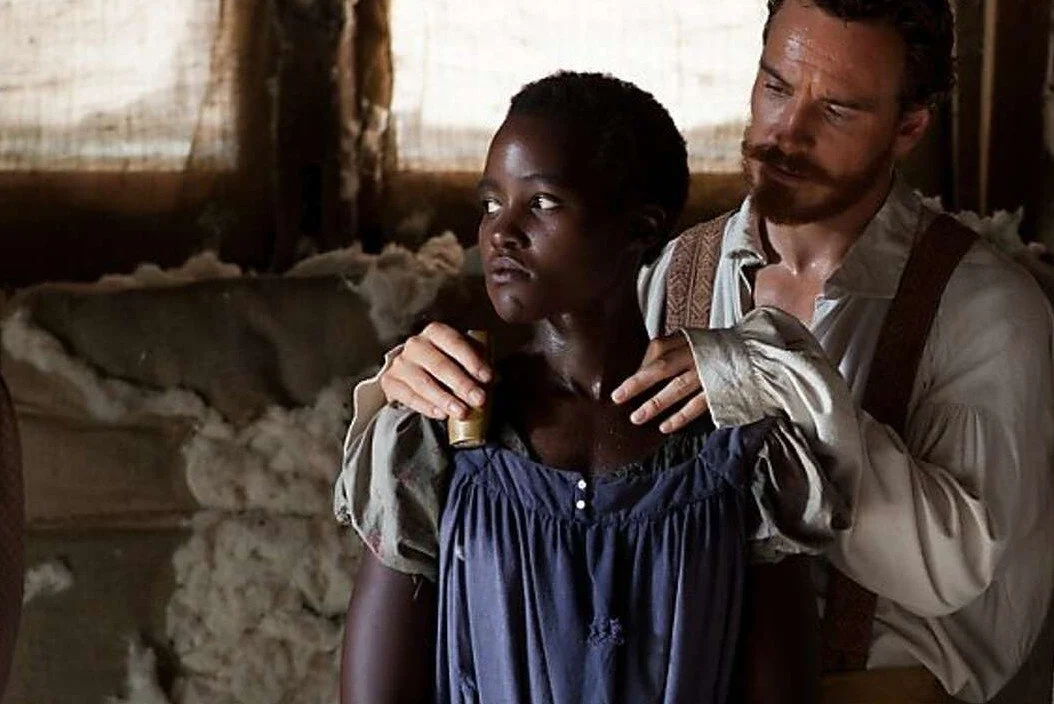
Midnight Quarters (ROUND 3)
Abstract
This essay examines "Midnight Quarters," a nine-line poem that confronts the systematic erasure of enslaved people's sexual trauma and involuntary physiological responses during rape by slaveholders. Through close reading of the poem's linguistic strategies—particularly its deployment of scatological imagery, dialectical speech, and the loaded term "defiance"—I argue that the work performs a dual critique: first, of historians who sanitize the corporeal realities of sexual violence under slavery; second, of contemporary discourses that cannot accommodate the uncomfortable truth of the body's capacity for physiological arousal during non-consensual acts. The poem's deliberate use of graphic language and its foregrounding of shame resist the clean narratives of resistance that dominate historical accounts, insisting instead on the messy, unassimilable materiality of enslaved bodies whose involuntary responses complicate simplistic moral frameworks. Drawing on scholarship in slavery studies, trauma theory, and the philosophy of historiography, this analysis positions "Midnight Quarters" as a radical intervention in how we narrate sexual violence, one that refuses both sanitization and the false dignity of noble suffering.
I. Title and Historical Context: The Midnight Economy of Rape
The title "Midnight Quarters" invokes the brutal reality of enslaved life under the plantation system while gesturing toward the nocturnal geography of sexual violence. "Quarters" refers to the slave quarters—the crude housing where enslaved people were confined after labor—but the title's double meaning suggests both spatial location and temporal division. The "midnight" specification is crucial: this is when the official economy of labor ceased and the unofficial economy of sexual exploitation intensified, when slaveholders exercised what Saidiya Hartman terms "the prerogative of the master" under cover of darkness.
The term "quarters" also evokes dismemberment and partition—bodies divided, severed from autonomy, partitioned into uses. There is historical precedent for understanding enslaved people as fragmented: "hands" in the fields, "breeders" for reproduction, "wenches" for sexual use. The poem's title thus announces its subject: the nocturnal sexual violence that occurred in spaces designated for the enslaved, where the architectural separation from the main house created zones of unwitnessed brutality.
Historically, what occurred in these midnight quarters was both systematic and systematically undocumented. While plantation records meticulously tracked labor output, crop yields, and births, they remained silent on the routine sexual violence that produced many of those births. The poem addresses this archival silence by foregrounding precisely what has been elided: not the violence itself (which is acknowledged, if euphemistically, in historical accounts) but rather the involuntary bodily responses of the enslaved—responses that complicate narratives of unambiguous resistance.
II. The Opening Accusation: "We lie too hard"
The poem's opening clause—"We lie too hard to face"—performs multiple functions simultaneously. Most immediately, it indicts collective dishonesty: "we" (contemporary Americans, historians, perhaps especially descendants of both enslaved and enslavers) engage in willful falsehood. But the syntax is deliberately ambiguous: does "lie too hard" mean "lie with too much force/commitment" or "find it too difficult to lie [about this]"?
The ambiguity is productive. If the former, the poem suggests our lies about slavery are so entrenched, so forceful, that they prevent us from "facing" uncomfortable truths. If the latter, it suggests these truths are so disturbing that even our powerful apparatus of denial cannot fully suppress them—we lie, but the lie strains under the weight of what it must conceal.
The phrase "to face" introduces the metaphor of confrontation, of turning toward what we have been turned away from. What follows is precisely what this collective "we" cannot face: not merely that sexual violence occurred (this much is acknowledged) but the specific, shameful, corporeal details of how enslaved bodies responded during that violence.
The use of first-person plural implicates the reader immediately. This is not a distant historical critique but an accusation of ongoing complicity: we, now, continue to lie. The poem refuses the comfortable position of moral superiority from which contemporary readers might condemn slaveholders while exempting themselves. Instead, it suggests our historiographical sanitization is itself a form of violence—a continuation of the original erasure.
III. "Shame-Sweet": The Paradox of Involuntary Arousal
The compound adjective "shame-sweet" is the poem's theoretical crux, encapsulating its central provocation. The coupling of shame and sweetness refuses to resolve into either pure trauma or pure pleasure, insisting instead on their terrible co-presence.
The "sweetness" here refers to physiological arousal—the body's involuntary response to sexual stimulation. This is what we "lie too hard to face": that enslaved teenagers (the poem specifies "teen") experienced physiological arousal during rape. The shame derives from multiple sources: the shame imposed by a culture that conflates physiological response with consent or desire; the shame of the enslaved person whose body "betrayed" them by responding; and perhaps most devastatingly, the retrospective shame inflicted by historical narratives that cannot accommodate this complexity.
Contemporary trauma theory recognizes that physiological arousal during sexual assault is common and in no way indicates consent, desire, or complicity. The body's autonomic nervous system responds to sexual stimulation regardless of the person's emotional state or willingness. Yet this medical fact remains difficult to integrate into narratives of sexual violence, particularly in the context of slavery where proving the humanity and suffering of the enslaved has required emphasizing their resistance and denying any hint of pleasure.
The poem's "shame-sweet" formulation insists on the reality that enslaved people's bodies could experience physiological pleasure during acts of profound violation. This is not to suggest they wanted or consented to these acts, but rather to acknowledge the cruel fact that the body's autonomic responses operate independently of will or desire. By calling these occasions "shame-sweet," the poem names both the physiological reality (sweet) and its traumatic contextualization (shame), refusing to suppress either in service of a cleaner narrative.
IV. "Teen-Chattel Cake": The Sexualization of Property
The phrase "teen-chattel cake" performs extraordinary rhetorical work in a compressed space. "Teen" emphasizes youth—these are adolescents, children by contemporary standards, though slavery recognized no age of consent. "Chattel" invokes the legal status of enslaved people as property, as things rather than persons. "Cake" is contemporary slang for buttocks, particularly in African American Vernacular English, carrying connotations of sexual desirability and objectification.
The combination is jarring and deliberate. By placing "chattel" directly before "cake," the poem makes explicit what slavery implicitly required: the sexualization of property, the conversion of persons into objects available for sexual use. The legal status (chattel) enabled the sexual exploitation (cake), and the poem's compression of these terms refuses to let us separate them.
The use of contemporary slang ("cake") rather than period-appropriate euphemism is a calculated anachronism. It performs several functions: first, it connects historical sexual violence to contemporary sexual objectification, suggesting continuities between slavery and present-day hypersexualization of Black bodies; second, it refuses the distancing effect of archaic language—by using terms legible to contemporary readers, the poem makes the violence immediate rather than safely historical; third, it claims the right to name enslaved people's bodies in their own terms (AAVE) rather than in the master's language.
The adjective "treacherous" that follows introduces the body's betrayal: "treacherous / in its clapback to master / thrusts." The body is treacherous to its inhabitant by responding involuntarily, by providing "clapback" (another contemporary term, usually meaning witty rejoinder but here grotesquely literalized as the physical sound and sensation of sexual collision).
V. "Under that fooling-nobody theater of 'No!'": The Violence of Disbelief
The parenthetical phrase "(under that fooling-nobody theater of 'No!')" contains the poem's most complex ethical claim. On first reading, it seems to suggest that the enslaved person's verbal resistance ("No!") was merely theatrical, that it fooled nobody because it was insincere. This reading would be obscene, echoing the logic of slaveholders who dismissed enslaved people's resistance as performance.
But the phrase is more subtle. "Fooling-nobody" suggests not that the "No!" was insincere but that its insincerity was transparent—everyone knew it was theater, including and especially the rapist. The enslaved person said "No!" because some vestige of personhood demanded verbal resistance, but this "No!" fooled nobody because in the context of chattel slavery, enslaved people's refusal had no legal or social force. The master knew the "No!" could be ignored, the enslaved person knew the "No!" would be ignored, and this mutual knowledge rendered the utterance "theater"—a performance with no practical effect.
The term "theater" is precise: like theatrical performance, the enslaved person's "No!" was scripted, ritualized, enacted for an audience that consumed it as spectacle rather than heeding it as genuine refusal. The theater was "fooling-nobody" because all participants understood it as performance rather than real communication. Yet the poem places this theater as the condition "under" which the body's response occurred—suggesting that even as the verbal "No!" was dismissed, the physiological response proceeded, creating a horrifying split between the person's articulated will and their body's involuntary reactions.
This construction refuses the redemptive reading that enslaved people's "No!" constituted meaningful resistance. Instead, it faces the brutal reality that under slavery, refusal was performative in the worst sense: acknowledged as mere performance and thus nullified. The enslaved person was forced to perform refusal that everyone knew would be disregarded, adding a layer of psychological torture to the physical violation.
VI. "Pissy Gallop": Scatological Materiality and Corporeal Humiliation
The phrase "pissy gallop" introduces scatological imagery that compounds the poem's refusal of sanitization. "Pissy" is colloquial for urine-soaked, suggesting either urinary incontinence during the assault (a common physiological response to sexual violence and terror) or the presence of urine in beds where enslaved people slept and were raped. "Gallop" suggests rapid, rhythmic motion—specifically, the motion of rape, the "thrusts" mentioned earlier now achieving a momentum described in equestrian terms.
The choice of "gallop" is significant. It animalizes the motion while also suggesting something that has achieved its own velocity, that continues under its own power. This may refer to the rapist's accelerating thrusts, but the poem's syntax allows it to also describe the enslaved person's body "surging" into this motion—again emphasizing the involuntary participation of the body even as the person resists.
The scatological element serves multiple purposes. First, it insists on the material conditions of sexual violence: the smells, fluids, and bodily functions that accompanied rape but are elided in historical accounts. Second, it connects sexual violence to other forms of bodily degradation inflicted under slavery—the denial of privacy for bodily functions, the inadequate sanitation, the reduction of persons to animal-like conditions. Third, it refuses the aestheticization of Black suffering, denying readers any possibility of transforming this violence into something beautiful or ennobling.
The phrase "feculent fury" that follows intensifies the scatological reference. "Feculent" means containing or resembling feces, suggesting either the presence of fecal matter (from anal rape or bowel incontinence during assault) or using fecal imagery to emphasize degradation. "Fury" introduces rage, but whose fury? The phrase's ambiguity allows it to refer to the rapist's violent thrusts (fury enacted upon the body), the enslaved person's suppressed rage (fury that cannot be safely expressed), or the body's own furious response (the involuntary physiological surge described earlier).
By pairing the scatological ("feculent") with the emotional ("fury"), the poem refuses to separate the material and psychological dimensions of trauma. The bodily degradation and the emotional violation are inseparable, and both must be acknowledged rather than tidied into more palatable abstractions.
VII. "Historians tidy as 'defiance'": The Critique of Historiographical Sanitization
The poem's climactic critique targets historians who "tidy" the complex, shameful, involuntary bodily responses described earlier into the clean category of "defiance." The verb "tidy" is perfectly chosen: it suggests gentle rearrangement, making presentable, imposing order on disorder. It evokes domestic labor, feminine propriety, the careful management of appearances—all deeply ironic given the violent sexual chaos being described.
To "tidy as defiance" is to take the "pissy gallop," the "feculent fury," the "shame-sweet" nights of involuntary arousal, and reclassify them as intentional resistance. This serves several historiographical and political functions, all of which the poem condemns:
First, it restores enslaved people to the category of agents capable of resistance, which is politically and morally important for countering narratives of enslaved people as passive victims. However, the poem suggests this restoration comes at a cost: it requires erasing the aspects of their experience that don't fit the resistance narrative, particularly the body's involuntary responses.
Second, it makes the history of slavery more bearable for contemporary audiences by emphasizing enslaved people's heroic defiance rather than their abject suffering and bodily betrayal. This serves present-day needs (for narratives of Black resistance, for stories of moral clarity) at the expense of historical truth.
Third, it imposes coherent political meaning (defiance) on experiences that may have been incoherent, contradictory, or primarily physiological rather than political. Not every bodily response to sexual violence constitutes defiance; some are simply the body's autonomic reactions.
Fourth, it allows historians to avoid confronting the uncomfortable reality of involuntary arousal during rape—a reality that complicates simplistic moral frameworks where victims are purely suffering and perpetrators purely evil, with no bodily responses that muddy this clarity.
The poem places "defiance" in quotation marks, signaling it as a term imposed from outside, a historian's category that doesn't emerge from the experience itself. This echoes Saidiya Hartman's critique in Scenes of Subjection of how historians impose narratives of resistance on enslaved people's actions in ways that may not reflect their own understanding or experience.
The verb "tidy" also suggests that historians are engaging in a kind of custodial work—cleaning up the messy historical record, disposing of what doesn't fit, arranging what remains into presentable narratives. This domestic metaphor feminizes and trivializes the work of historical erasure, suggesting it's not grand ideological distortion but rather gentle, almost unconscious, habits of making things "nice."
VIII. The Closing Utterance: "Lawd-a-massi. Uuhn!"
The poem closes with direct speech in dialect: "Lawd-a-massi. Uuhn!" This utterance requires careful unpacking. "Lawd-a-massi" is a phonetic rendering of "Lord have mercy," an exclamation common in African American speech, particularly in contexts of suffering or overwhelming emotion. "Uuhn!" is a nonverbal vocalization, suggesting a groan, grunt, or cry.
The use of dialect here is provocative and contested. On one hand, it could be read as the poet ventriloquizing enslaved people in ways that risk caricature or exploitation. On the other hand, it insists on representing enslaved people's own voices rather than translating them into standard English, claiming the right to hear them as they might have sounded.
The specific content of the utterance is ambiguous. "Lord have mercy" could be:
A prayer for deliverance during the assault
A response to the physical sensation (pleasure despite violation)
An expression of shame at the body's response
A general cry of suffering
Some combination of all these
The nonverbal "Uuhn!" similarly could represent:
Pain
Unwanted pleasure
Effort or exertion
Resignation
Climax
This ambiguity is deliberate. The poem refuses to resolve the utterance into a single meaning, insisting instead on the simultaneity of pain and pleasure, prayer and physicality, spiritual appeal and carnal response. The enslaved person calls on the Lord even as their body responds to violation, and the poem presents both as true, as coexisting in the impossible situation of sexual slavery.
The placement of this utterance after the historian's "tidying" suggests it as counter-evidence: this is what historians hear and must somehow categorize as "defiance." But the utterance itself is too complex, too contradictory, to fit neatly into that category. It contains suffering, spiritual appeal, and possibly involuntary pleasure—none of which conforms to the clean narrative of political resistance.
IX. Formal Analysis: Syntax, Lineation, and Compression
The poem's formal features support its thematic concerns. The single sentence spanning nine lines creates a syntactic suspension that mirrors the suspension of resolution in the content: we're held in the space of this unresolved trauma, unable to move forward to neat closure.
The lineation creates strategic fragmentation. Key phrases are broken across lines:
"teen-chattel cake—treacherous / in its clapback"
"master / thrusts"
"a feculent fury / historians tidy as 'defiance'"
These breaks force us to pause at moments of maximum discomfort, preventing smooth reading. The fragmentation also mirrors the fragmentation of the enslaved person's experience: body split from will, physiological response split from desire, utterance split from meaning.
The poem's compression is extreme—nine lines to contain centuries of sexual violence, the complexity of involuntary arousal during rape, and the critique of historiographical sanitization. This compression creates density: every word bears multiple meanings, every phrase does multiple kinds of work. Nothing is extraneous; there is no cushioning language to soften the impact.
The lack of stanza breaks maintains relentless forward motion while the single sentence structure creates syntactic complexity that requires careful parsing. This tension between propulsive momentum and difficult syntax enacts the tension between the body's involuntary surge ("surged...into a pissy gallop") and the person's attempt to impose meaning or control.
X. The Politics of Representing Sexual Violence Under Slavery
The poem intervenes in longstanding debates about how to represent enslaved people's experiences of sexual violence. Historically, these debates have been shaped by several competing concerns:
The concern for enslaved people's dignity: A desire to represent enslaved people as agents, as resisters, as more than victims. This has sometimes led to minimizing or euphemizing sexual violence.
The concern for historical accuracy: A commitment to acknowledging the full extent of sexual violence under slavery, including its systematic nature and its use as a tool of domination.
The concern for contemporary political utility: A desire for narratives that can support present-day struggles, which often requires emphasizing resistance over suffering.
The concern about exploitation: A worry that dwelling on enslaved people's sexual violation risks pornographic voyeurism or trafficking in Black trauma.
"Midnight Quarters" navigates these concerns by refusing to choose between them. It insists on historical accuracy (the physiological reality of involuntary arousal) while critiquing sanitization (the "tidying" of complex experiences into simple defiance). It acknowledges the political utility of resistance narratives while exposing their costs (erasure of shame, embodiment, complexity). It risks charges of exploitation (the graphic language, the scatological imagery) in service of refusing the greater violence of erasure.
The poem's strategy is to go where historiography cannot or will not: into the specific, shameful, bodily truth that complicates clean narratives. This is not trauma porn but rather an insistence that enslaved people's full humanity includes their capacity for involuntary physiological response, and that erasing this reality in service of political narratives or historical comfort constitutes its own form of violence.
XI. Theoretical Frameworks: Hartman, Spillers, Sharpe
The poem's critique resonates with several key texts in Black studies and slavery scholarship:
Saidiya Hartman's Scenes of Subjection argues that the archive of slavery is structured by violence in ways that make it impossible to recover enslaved people's interiority or agency without reproducing that violence. Hartman's concept of "the violence of identification"—the way empathetic identification with enslaved people can itself constitute a violation—illuminates the poem's resistance to offering easy empathetic access. We cannot simply feel with or for the enslaved teenager; we can only confront our inability to adequately grasp their experience.
Hartman also critiques how historical accounts impose narratives of agency and resistance on enslaved people in ways that may not reflect their own understanding. The poem's attack on historians who "tidy" complex experiences into "defiance" directly echoes this critique, suggesting that the resistance narrative, however politically valuable, can erase the messy realities that don't fit.
Hortense Spillers' "Mama's Baby, Papa's Maybe" analyzes how slavery severed enslaved people from their bodies, creating what Spillers calls "ungendering" and "flesh" as distinct from "body." Under slavery, enslaved people's bodies became "flesh"—material available for use, lacking the integrity and autonomy that defines "body" as a category. The poem's insistence on the material, involuntary responses of "teen-chattel cake" engages this distinction: the enslaved person has flesh that responds involuntarily, not a body that can refuse.
Spillers also discusses how slavery's sexual violence created particular problems for Black women's sexuality and agency in ways that persist. The poem's foregrounding of shame ("shame-sweet") addresses this legacy: the difficulty of acknowledging pleasure or arousal in contexts of violation, the way slavery's sexual violence continues to shape contemporary understandings of Black sexuality.
Christina Sharpe's In the Wake argues that we live in "the wake" of slavery, that its violence continues to structure contemporary Black life. Sharpe's concept of "wake work"—the ongoing labor of living with and through slavery's aftermath—illuminates the poem's use of first-person plural present tense ("We lie"). This is not historical distance but ongoing work: we continue to lie, continue to tidy, continue to evade the uncomfortable truths of slavery's sexual violence.
Sharpe also emphasizes the importance of "staying in the wake"—of not moving too quickly to resolution, redemption, or progress. The poem performs this staying by refusing resolution: it doesn't offer healing, transcendence, or political utility. It simply insists on facing what we lie too hard to face.
XII. The Poem as Historiographical Intervention
Beyond its engagement with theoretical frameworks, the poem makes a specific intervention in the historiography of slavery. It identifies a systematic pattern in how historians handle evidence of enslaved people's bodily experiences during sexual violence.
The historical archive contains various forms of evidence that enslaved people sometimes experienced physiological arousal during rape: testimony from enslaved people themselves (in interviews, autobiographies); observations by slaveholders (often used to justify their actions); physical evidence (pregnancies resulting from rape, which required physiological responses from both parties). Yet this evidence is rarely foregrounded in historical accounts, which tend to either:
Ignore it entirely, focusing on the violence and trauma while eliding bodily responses
Euphemize it as "relations" or "liaisons" in ways that obscure the coercion
Reframe it as "resistance" or "defiance" when enslaved people's responses are acknowledged at all
The poem argues this constitutes "tidying"—a sanitization that serves multiple ideological functions but obscures historical truth. By "tidying" complex, contradictory bodily experiences into the single category "defiance," historians:
Make slavery more bearable for contemporary audiences
Fit enslaved people's experiences into preferred political narratives
Avoid grappling with the philosophical and ethical complexity of involuntary arousal during rape
Maintain clear moral categories (victims vs. perpetrators) that the body's involuntary responses threaten to complicate
The poem suggests we need a more complex historiography—one that can acknowledge enslaved people's physiological responses without interpreting these as consent, desire, or complicity; one that can hold together resistance and involuntary arousal, agency and bodily betrayal; one that refuses to tidy messy truths into clean political narratives.
XIII. Ethics of Representation: Is This Poem Itself Exploitative?
The poem courts accusations of exploitation by dwelling graphically on enslaved teenagers' sexual violation and bodily responses. Several questions arise:
Does the poem's graphic language constitute pornographic exploitation of Black suffering? The scatological imagery, the detailed description of physiological response, the emphasis on "teen" bodies—all risk voyeuristic consumption of trauma.
The poem's defense would be that sanitization is the greater exploitation: by refusing to name the specific, shameful realities of slavery's sexual violence, we deny enslaved people the truth of their experience. The graphic language is necessary precisely because it cannot be comfortably consumed—it refuses the aestheticization of Black suffering that would make it beautiful or redemptive.
Does the poet have the standing to represent enslaved people's experiences? This depends partly on the poet's own subject position (which we don't know from the poem alone) and partly on whether any contemporary person has standing to represent this history.
The poem's use of "we" is relevant here. By implicating itself in the collective dishonesty ("We lie"), the poem doesn't claim moral superiority or privileged access to enslaved people's interiority. Instead, it positions itself as also complicit, also struggling with how to represent what cannot be adequately represented.
Does the poem reduce enslaved people to their sexual violation? By focusing exclusively on rape, does it reproduce slavery's reduction of enslaved people to their bodies, particularly their sexual bodies?
The poem might respond that it addresses one specific aspect of slavery that has been systematically erased, not because sexual violence was all that mattered but because this particular truth—the body's involuntary responses—has been uniquely difficult to integrate into historical narratives. The focus is strategic rather than reductive.
These questions cannot be definitively resolved. The poem takes risks, and readers must evaluate whether those risks serve truth-telling or constitute their own form of violence. What's clear is that the poem is aware of these risks (the language of "shame," the acknowledgment of collective lying) and proceeds anyway, betting that the violence of continued sanitization exceeds the risks of graphic representation.
XIV. Contemporary Resonances: #MeToo and Involuntary Arousal
Though the poem addresses historical sexual violence, it resonates with contemporary discussions about physiological arousal during sexual assault. The #MeToo movement has brought increased attention to sexual violence, but discussions of involuntary arousal during assault remain fraught and rare.
Survivors of sexual assault sometimes experience orgasm during the assault, a physiological response that in no way indicates consent but that produces profound shame and confusion. This shame is compounded by cultural narratives that equate physical arousal with desire or consent, making it difficult for survivors to integrate this experience into their understanding of themselves as victims of assault rather than participants.
The poem's "shame-sweet" formulation speaks to this contemporary reality, insisting that physiological pleasure and profound violation can coexist. By addressing this in the historical context of slavery, the poem may create space for contemporary survivors to acknowledge similar experiences without self-blame.
The poem also speaks to ongoing debates about how sexual violence should be represented and discussed. Just as historians "tidy" slavery's sexual violence into narratives of defiance, contemporary discourse often tidies sexual assault into narratives that emphasize survivor agency and resistance. While these narratives serve important political purposes (countering victim-blaming, emphasizing that survivors are not defined by their trauma), they can also make it difficult to acknowledge aspects of assault that don't fit the resistance frame—including involuntary arousal.
XV. Conclusion: The Refusal of Redemption
"Midnight Quarters" refuses every available mode of redemption. It offers no catharsis, no political utility, no transformation of suffering into resistance, no beauty extracted from horror, no progress narrative, no healing. Instead, it insists we face what we lie too hard to face: the shameful, sweet, involuntary responses of enslaved teenagers' bodies during rape, and our ongoing refusal to acknowledge these responses.
The poem's final gesture—the historian's "tidying"—indicts not only historical scholarship but all of us who prefer clean narratives to messy truths. We want stories of defiance because they allow us to admire enslaved people without confronting the full degradation inflicted upon them. We want to believe their "No!" meant something, that their bodies remained under their control, that physiological responses aligned with will and desire.
But the poem insists otherwise. It insists that enslaved people's bodies could betray them, that "No!" could be theater fooling nobody, that shame and sweetness could coexist in ways we cannot resolve into political narratives. And it insists that our refusal to face these truths—our "tidying" of them into "defiance"—constitutes an ongoing violence, a continuation of slavery's erasures.
The poem's radicalism lies not in discovering new historical facts but in refusing to look away from facts we already know but cannot integrate. We know that bodies respond physiologically to sexual stimulation regardless of consent. We know that enslaved teenagers were raped. The combination—that enslaved teenagers' bodies responded physiologically during rape—is a truth we possess but cannot face, and so we lie, we tidy, we call it "defiance."
"Midnight Quarters" demands we stop lying. It offers nothing in return for this—no consolation, no enlightenment, no path forward. Just the requirement to face, unflinching, what our historiographical and moral frameworks cannot accommodate: the shame-sweet truth of the body's involuntary testimony.
Metadata Summary
This scholarly analysis examines "Midnight Quarters," a nine-line poem that critiques the historiographical sanitization of enslaved people's sexual experiences during slavery. The poem confronts the uncomfortable reality of involuntary physiological arousal during rape, arguing that historians have systematically "tidied" these complex, shame-laden bodily responses into clean narratives of "defiance." Through close reading of the poem's linguistic strategies—including scatological imagery ("pissy gallop," "feculent fury"), contemporary slang ("cake," "clapback"), and dialectical speech—the analysis shows how the work refuses both sanitization and redemption. The essay situates the poem within theoretical frameworks from Saidiya Hartman, Hortense Spillers, and Christina Sharpe, examining how it engages debates about historical representation, Black suffering, and the ethics of dwelling on trauma. The analysis argues that the poem makes a crucial historiographical intervention by insisting on truths that complicate political narratives: that enslaved people's bodies could experience involuntary pleasure during violation, that their verbal resistance was often "theater fooling nobody," and that our collective refusal to acknowledge these realities constitutes ongoing erasure. The poem's formal compression, strategic lineation, and refusal of closure enact its thematic concerns, creating an unresolved confrontation with historical truths we "lie too hard to face." The essay concludes that the poem's value lies not in offering redemption or political utility but in its radical refusal to look away from the messy, unassimilable materiality of enslaved bodies and historians' systematic erasure of experiences that don't fit preferred narratives of resistance.
Keywords
slavery; sexual violence; historiography; involuntary arousal; historical erasure; trauma representation; enslaved women; scatological imagery; bodily autonomy; resistance narratives; Saidiya Hartman; Hortense Spillers; Christina Sharpe; archival violence; dialectical speech; shame; defiance; rape; physiological response; Black studies; slavery studies; historical sanitization; collective memory; survivor testimony; embodiment; chattel slavery; midnight quarters; master-slave relations; historical consciousness; trauma theory; African American poetry; wake work; flesh vs. body; ungendering; contemporary resonance; #MeToo; consent; agency; historiographical critique; moral complexity; political narratives; redemption; representation ethics

Hashtagged Plantation
"Hashtagged Plantation" is a profound and thought-provoking poem that, alongside its integral dedication and explanatory note, explores the complex nature of historical reckoning, empathy, and genuine healing in contemporary society. Dedicated to turntablist Rob Swift for his "unwavering humanism," the poem endeavors to embody a spirit that calls for transcending narrow identity frames and inherited roles. It functions as a meditation on the challenging path to true understanding and reconciliation, urging readers to confront uncomfortable truths about shared human capacities.
Formally, the poem is concise and employs evocative, layered imagery. The title, "Hashtagged Plantation," immediately establishes a tension between a site of profound historical trauma and a modern, often superficial, act of digital categorization, suggesting the complexities of engaging with the past in the present era. The dedication to Rob Swift frames the poem's core philosophical aspiration: to encourage a broader, more inclusive empathy. The poem then paints a scene of participants embarking on "a day of healing" amidst the "haunted hush of slave cotton." The phrase "breath rank with McCruelty" introduces a subtle yet powerful contemporary critique, drawing a parallel between historical suffering and modern forms of detached consumption, as elaborated in the accompanying note. The central experience unfolds as individuals "descend the tour bus steps / to cast yourself back— / whether whipping or whipped— / solely into skin like your own." The enjambment guides the reader through this metaphorical and literal descent. The phrase "solely into skin like your own" is pivotal, highlighting a common, yet for the poem, limited, approach to historical empathy that the poem seeks to expand beyond.
Thematically, the poem, powerfully augmented by its explanatory note, delves into the necessity of expansive empathy and self-reckoning for authentic healing. It suggests that a superficial engagement with history, focused only on one's "own skin," risks deepening divides rather than fostering true understanding. The poem advocates for a difficult but essential imaginative leap: to "imagine ourselves in the role of both oppressor and oppressed." This is presented not as an erasure of distinct historical experiences, but as a recognition that "the capacity for both roles—master, slave—lives in each of us." The note explicitly connects this inherent human capacity to contemporary, seemingly mundane acts of detached consumption, such as "gobbling down... the flesh of factory-farmed torture," drawing a poignant parallel between historical systems of cruelty and modern ethical blind spots. The poem suggests that resistance to this uncomfortable self-reflection—the refusal to acknowledge one's own potential for complicity or cruelty—leads to a "malady" that "deepens," thereby preventing "true healing." Thus, "Hashtagged Plantation" is a call for a more profound and challenging form of historical engagement, one rooted in a universal humanism that acknowledges the complex, sometimes disturbing, facets of human nature for the sake of genuine reconciliation.
historical reckoning, empathy, healing, humanism, identity, reconciliation, self-reckoning, historical trauma, collective memory, moral complexity, shared humanity, oppressor, oppressed, ethical reflection, contemporary poetry, social commentary.





blog
FAQ


Visit my Substack: Hive Being
Visit my Substack: Hive Being
Don’t let anyone tell you that real life is lacking in poetic interest. This is exactly what the poet is for: he has the mind and the imagination to find something of interest in everyday things. Real life supplies the motifs, the points that need to be said—the actual heart of the matter; but it is the poet’s job to fashion it all into a beautiful, animated whole. You are familiar with Fürnstein, the so-called “nature poet”? He has written a poem about growing hops, and you couldn’t imagine anything nicer. I have now asked him to write some poems celebrating the work of skilled artisans, in particular weavers, and I am quite sure he will succeed; he has lived among such people from an early age, he knows the subject inside out, and will be in full command of his material. That is the advantage of small works: you need only choose subjects that you know and have at your command. With a longer poetic work, however, this is not possible. There is no way around it: all the different threads that tie the whole thing together, and are woven into the design, have to be shown in accurate detail. Young people only have a one-sided view of things, whereas a longer work requires a multiplicity of viewpoints—and that’s where they come unstuck.—Goethe (Conversations with Eckermann)




Featured Blog Posts
have appeared last night—
all those met along the way?
Scholarly Essay: "Pound Town: A Defense of the Moral Permissibility of Bestiality"
"Pound Town: A Defense of the Moral Permissibility of Bestiality" is a work of philosophical provocation in the tradition of the academic thought experiment — rigorous, footnoted, structured in the formal architecture of analytic ethics, and dedicated to two figures (Gary Varner, a philosopher of animal ethics, and Grandpa Jack) whose juxtaposition announces the essay's governing tonal register: the personal and the scholarly, the lived and the argued, occupying the same space without apology. It is a piece that takes seriously the philosophical obligation to follow argument wherever it leads, even when — especially when — it leads somewhere the culture has decided in advance cannot be arrived at by honest reasoning. Whether one arrives at its conclusions or not, the essay is a sustained demonstration that the consensus against bestiality rests on philosophical foundations considerably shakier than its cultural certainty suggests.
The essay's formal strategy is the systematic elimination of available rationales. It does not argue for bestiality in the abstract or as a general practice. It argues for the moral permissibility of certain instances of bestiality — a narrower and more defensible claim — and it does so by walking through every category of objection the philosophical and cultural arsenal provides: intuition, biblical authority, naturalness, animal wellbeing, and human wellbeing. Each section follows the same structure: state the argument in its most rigorous form, then dismantle it. What accumulates across these demolitions is not a positive case for bestiality so much as a negative case against the coherence of its prohibition — a demonstration that the grounds on which the taboo rests are either internally inconsistent, arbitrarily applied, or insufficient to do the philosophical work required of them.
The twelve cases organized into four categories at the essay's opening are the piece's most formally accomplished section, and they deserve attention as a philosophical device before anything else. The cases range from unequivocally immoral scenarios — the hen throttled to death in Case 1, the starved collie in Case 2, the drugged piglet in Case 3 — to scenarios of such apparent benignity that the moral objection becomes increasingly difficult to locate: the tween girl getting off from her horse's gyrations in Case 4, the man ejaculating on a turtle's shell in Case 6, the primatologist taken by the orangutan in Case 7. This range is not rhetorical sleight of hand but philosophical precision: it forces the reader to specify exactly what feature of any given case makes it morally objectionable, and in doing so exposes how few of the available features — coercion, harm, lack of consent — apply to the cases in the B, C, and D categories. The cases are the essay's most effective argumentative tool because they make concrete what abstract prohibition tends to leave vague.
The section on intuition is where the essay's most philosophically consequential argument lives, and it is constructed with genuine care. The essay does not dismiss intuition as a moral guide; it accepts the reality of the disgust response and even owns it in the first person — "I too find it disgusting to envision someone, say, performing fellatio on a horse." What it refuses is the move from disgust to moral impermissibility, and it does so by attacking both premises of the intuition argument. Against premise two — that intuition against bestiality is universal — it marshals an extraordinary ethnographic inventory: ancient Egyptians, ancient Greeks, ancient Hindus, the Kisii of Kenya, the Masai, the Comeburras of Colombia, the Inuit, numerous tribal cultures across four continents, and a list of historically famous suspected practitioners that ranges from Tiberius to Aleister Crowley. The inventory is not merely comprehensive; it is philosophically functional. If the intuition against bestiality were a reliable moral guide, it would need to be something like universal. The evidence suggests it is not.
Against premise one — that intuitive wrongness implies moral wrongness — the essay deploys its most rhetorically powerful passage: the extended catalogue of human cognitive failures, biases, and moral atrocities that our intuitions have licensed, from geocentrism to the skull-reading of phrenology to the intuitive wrongness of miscegenation. The catalogue is deliberately excessive, accumulating well past the point at which any single item would suffice to make the logical point, because the accumulation is itself the argument: we are the sort of critters who cannot trust our gut about things we have decided in advance. The section on intuition concludes that moral repugnance, however indelible, requires independent justification — and then spends the rest of the essay demonstrating that the available independent justifications fail.
The biblical section is brisk because its work is largely done by the consistency argument: the Bible condemns homosexuality with the same force it condemns bestiality, and we have decided that the Bible's condemnation of homosexuality is insufficient to establish its immorality. The same epistemic grounds that license that conclusion license the same conclusion about bestiality. The essay does not attack the Bible's authority on religious grounds but on grounds of internal inconsistency and demonstrated errancy: a document that prohibits eating lobsters and getting tattoos and wearing linen-wool blends cannot be treated as a reliable moral authority on bestiality without accounting for why those prohibitions are being selectively ignored. The section's most philosophically interesting moment is the discussion of divine command theory, where the essay acknowledges the internal logic of the position — if right and wrong are ultimately God's arbitrary decree, then everything depends on correctly identifying God's decrees — while exposing the epistemic problem that position generates: by what method does one establish that the Bible, rather than competing holy texts, reflects those decrees?
The section on naturalness dispatches the is-ought fallacy with appropriate efficiency and then spends more time than strictly necessary on the enumeration of meanings of "unnatural" — not because the argument requires it, but because the enumeration reveals how many different objections are being bundled under a single term and how few of them, when separated and examined individually, withstand scrutiny. The observation that naturalness arguments are wielded against bestiality by people who sleep with CPAPs in air-conditioned homes after heart transplants is the essay's most elegant single point, delivered with the compression of good comic writing.
The animal wellbeing section is the essay's most extended and most philosophically serious, because it engages the strongest available objection. The essay does not dismiss the consent framework; it argues that animals can in fact communicate consent through behavioral signals — and here the inclusion of Liz Moores's description of equine attunement is the essay's most formally distinctive move, embedding a perfumer's testimony about the near-psychic quality of the human-horse bond in the middle of a philosophical argument about consent capacity. The passage is not merely decorative. It is evidence: the claim that horses cannot communicate consent, willingness, and refusal is empirically contested by anyone with sustained experience of horses, and the essay appeals to that experience directly. The section's most philosophically rigorous passage is the extended argument distinguishing the animal from the toddler — four criteria (hormonal maturity, radically different future, likelihood of later trauma, not yet at full cognitive capacity) that jointly explain why behavioral consent from an animal suffices where the same behavioral consent from a toddler does not. The distinction is careful and the criteria are genuinely functional, blocking the most common reductio offered against the consent argument.
The human wellbeing section is where the essay's rhetorical energy is highest, because it is where the essay's central meta-argument becomes most explicit: what is actually driving the taboo is not concern for animals but concern for human identity, human social order, and the illusion of human exceptionalism. The slippery slope arguments against bestiality are exposed as fallacies through the observation that the same logic would imply that consensual sex with humans increases the likelihood of nonconsensual sex with humans — a conclusion no one draws. The zoonotic disease objection is met with the observation that human-to-human sex also transmits disease, that precautionary measures reduce transmission risk to manageable levels, and that we do not condemn homosexual sex despite its statistically elevated disease transmission rates. The physical injury objection is met with the observation that risk of injury does not render an activity immoral — a point illustrated by skydivers and MMA fighters and Alaskan crab fishermen.
But the section's most penetrating argument is the one about intent. The essay identifies the extraordinary fact that the same physical acts — masturbating animals, fingering their anuses, fondling their genitalia for insemination purposes — are standard husbandry practice when performed without sexual intent and criminal bestiality when performed with it. The mere addition of human arousal converts a kosher farmhand procedure into moral depravity. The essay does not simply note the arbitrariness of this distinction; it names what it reveals: that the taboo on bestiality is fundamentally about protecting the human's sense of radical difference from animals, and that this protection is organized not around actual harm to anyone but around the maintenance of a conceptual boundary that evolutionary biology has already rendered philosophically dubious.
The concluding argument is the essay's most formally elegant section, structured as a dilemma that closes without remainder. Either animals have no moral worth — in which case bestiality is permissible for the same reasons any use of animals is permissible, and the other rationales have already been shown to fail — or animals have at least some moral worth — in which case the essay's cases demonstrate that bestiality need not violate that worth, and once again the other rationales have been shown to fail. The dilemma is constructed so that neither horn provides a stable position from which to maintain the absolute prohibition, and the essay's final image — "uncontroversial enjoyment of earthly beings thrown into this, like this, with such a transient lifespan" — is its most philosophically honest moment: the view from Camus and Sartre, the absurdist perspective that asks what, in a cosmos of countless suns and reams of death, justifies the certainty with which we organize our moral horror.
What "Pound Town" achieves is something genuinely difficult in philosophical writing: it makes the reader feel the inadequacy of their own position without necessarily arriving at the author's conclusion. The essay does not require the reader to endorse bestiality. It requires the reader to explain, with genuine rigor, why the cases in categories B, C, and D are wrong — and it has, by the time that requirement becomes clear, already demolished the most available explanations. The dedication to Grandpa Jack alongside Gary Varner is the essay's final formal gesture: the argument belongs to the philosophical tradition and to a life, and the philosophical tradition cannot be fully separated from the life that inhabits it.
Meta Description
A rigorous work of analytic philosophy arguing through intuition, biblical authority, naturalness, animal wellbeing, and human wellbeing that bestiality is morally permissible in certain circumstances — systematically exposing the internal inconsistencies of its prohibition and identifying human exceptionalism, rather than genuine moral concern, as the taboo's actual foundation.
Keywords
Pound Town bestiality philosophy, moral permissibility bestiality, animal consent, zoophilia ethics, divine command theory, naturalness fallacy, is-ought fallacy, animal wellbeing argument, human exceptionalism, consent and behavioral signals, slippery slope fallacy, analytic ethics provocateur, thought experiment cases, Hypocorism, interspecies ethics