We Walk (Round 1)
scent of the day: Al Bahar, by Elkhaldi
I had hoped this would be a wild seaweed fragrance: vegetative green with a mineralic iodized edge like beachwrack over bonewhite driftwood. I wanted what made many overlook this Elkhaldi release. Smelling from the atomizer my hope was supported in that I got a major mineralic quality—straight up white salt lifted into that sort of desert austere and dry drama we get from Epic Man, only here it seemed like a desert that had once been a sea. Unfortunately upon spray, the seaweed I expected from the gate—the ocean vegetation—was minimal. Where I expected algae brine or at least something deserving of what Al Bahar means (the ocean), I was met instead with a dominant menthol sensation—a menthol incense, a menthol incense with a sesame-seed nuttiness reminiscent of Yaaseen’s Semsema.
That camphor, as well as a big part of the sesame seed (especially in conjunction with the melange of aged dark toasted ouds), I now realize comes from the black cardamom. Unlike green cardamom, which comes from a different plant in the ginger family and has a bright citrus side with a tinge of eucalyptus, black cardamom—due to being sun-dried over open flames—gives aromas of smoked wood and roasted nuts and—instead of just hints of eucalyptus—straight up camphor.
But once that camphor settles down, leaving more of a usual scorched wood effect, the incense smoke—ethereal and mineralic, not black or industrial—takes on a briny savoriness, a briny savoriness somewhere between the stale salt of kelp and konbu (seaweed) and the fresh sweetness of shrimp shell or the water inside a little neck clam you shuck and eat raw at a backyard barbecue—only here drizzled ever so slightly with seseame seed oil. That umami aspect is largely rooted in onycha, a note I get in several TSVGA fragrances like Fiona and vicky-Lin.
In those TSVGA fragracnes the note that is often listed instead is Choya Nakh. Choya Nakh is the product you get when you take onycha, a certain material from sea snails and mollusks (particulalry the operculum, a hard trapdoor plate material), and then roast it and let soak in sandalwood oil. I would assume it is Choya Nakh used here. But who knows. What is do know is that I do get that smoky—incense-smoky—monosodium-glutamate vibe (the MSG in chinese food), something approaching what you get much more intensely when you eat raw sea urchin—something that has iodine qualities (almost like oakmoss), as if if you has a piece of leather that soaked in the sea and that has finally started havign algae growing on it. So yes, the seaweed side does start comign out—more seaweed (sulfuric and green, inky and metallic) than amino-acid clam brine. But it comes out always in this incensy way. That is why I think of this as a benchmark for onycha.
Pretty much every fragrance that features onycha reads to me a very biblical. Al Bahar is no exception. The Old Testament describes onycha as one of the materials used in sacred incense. So that all makes sense. And here I defintely do get that strange and alluring combo of scorched mollusk shell, leathery konbu, and incense ash. What is cool is that, as the seaweed comes out more, it has a bend in a piney and herbal direction.
With Al Bahar I get the feel of an onycha incense burning (along with musty-medicinal sage and perhaps even conifer-smoke thyme) until you are left with only an ash that reads like seashore salt. The name then stays true to what I experience. It is like I am looking toward the sea from a craggy shore beaten by waves, the ambergris sunlight glinting off these big stones. There is a sensation of nearby pine forest at your back—a pine forest you are much closer to in Al Ambar and are inside of in Spell 125. This is cool because the seaweed, the radix of that brininess, feels more like a base note. The ash at the very end of this incense burn, while salty in aroma, is creamy in quality (because of the sandalwood I gather).
The base synthetics, like in a lot of Elkhaldi, do stand out. And they do stand out enough to bring some chaos to the otherwise meditative sandalwood-oud combo grounding an otherwise serene coastal feel. But these synthetics are neither ruinous to the composition nor the typical amberwoody smells that have fucked over almost the entire niche and designer space. Even in Castore Rouge, one of the most synthetic Elkahldis I have experiences, I do not think the experience is totally ruined.
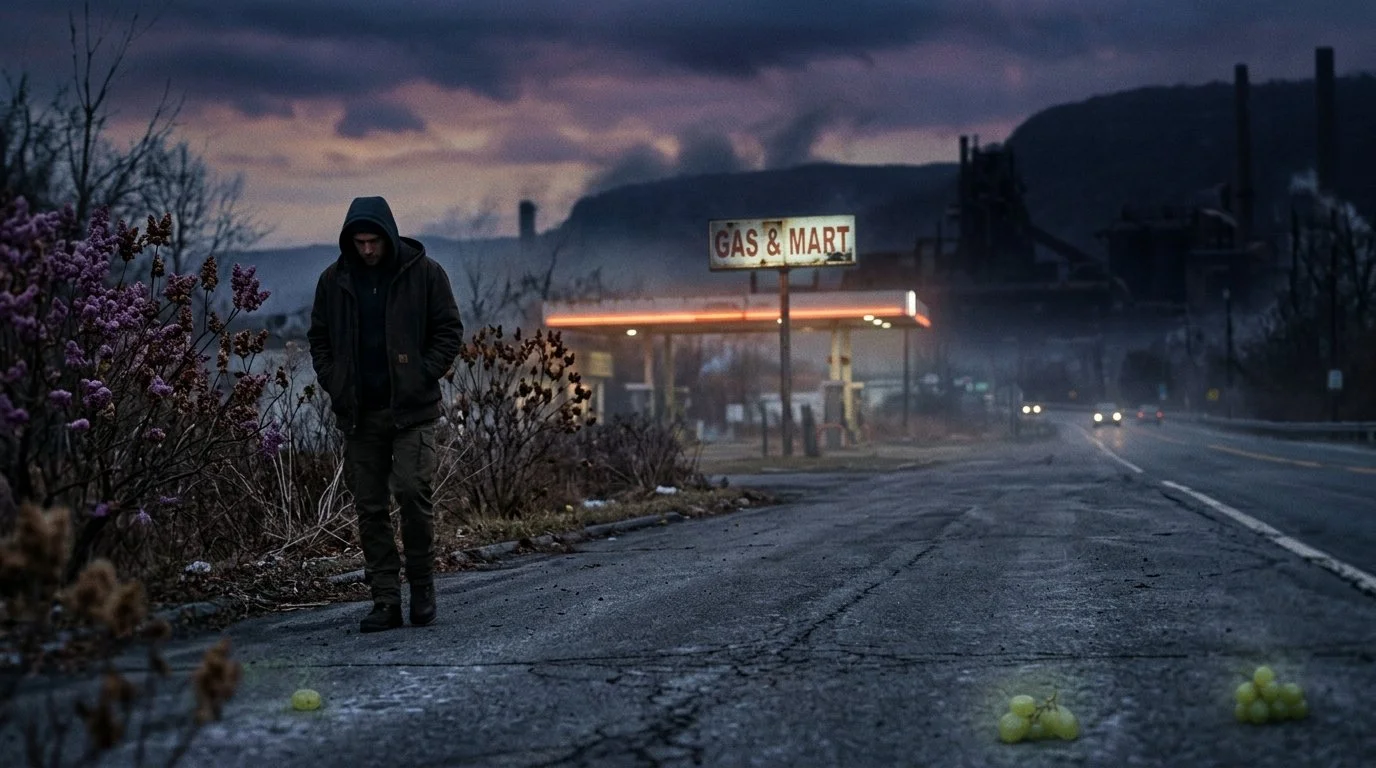
*Let's workshop this poem--absurdist, unlike my usual style--about resilience in a strange shifting terrain of regional decay (the Hudson Valley region of New York) marked by transactional intimacies.
We Walk
Elevated heart notes with a prompt reply, sequestered lilacs under dusk’s vain sky— we walk removed, ashamed, inside. What hope is alive for bonds green without pay?
Newport dawns phoenix the newer price of grime, Newburgh fiend boogers make a beard of rime— we walk removed, inflamed, from Lyme. What solace abides within green oblong grapes?
Heartfelt animations find whore tears collide, charged exuberance belies “semper fi”— we walk removed, reclaimed, in time. What organs still thrive against green killer mange?
“We need books that affect us like a disaster, that grieve us deeply, like the death of someone we loved more than ourselves, like being banished into forests far from everyone, like a suicide. A book must be the axe for the frozen sea within us.”—Kafka (against the safe-space cancel culture pushed by anti-art bullies, left and right)