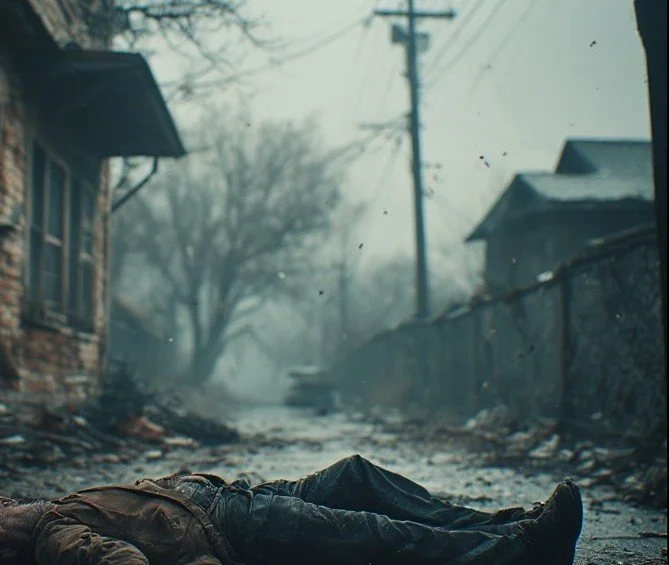
Homeless Man Beaten to Death by Teens (ROUND 1)
scent of the day: Cuoium, by Orto Parisi
Cuoium (2021, Alessandro Gualtieri) was and honestly in some sense still is the dirty leather I have been on a hunt for ever since I caught a whiff of the fragrance that catapulted me, former ridiculer of fragrances as just more pop dreck, into the frangracne journey: Tom Ford’s Ombre Leather. Cuoium is a salty leather smoked with such rabid animalism that it could easily connote a closeup sniff of human perineum cured by sulfuric farts and yet, before the dusty-ash of the drydown kicks in, moisturized with raspberry lotion (albeit perhaps raspberry lotion on the fingers of an auto mechanic). It is the same blinding berry as in Terroni (an even more egregiously synthetic fragrance that is currently in my for sale list), which is why it could take being outdoors to even pick it up.
Smelling the opening of Cuoium outdoors makes the fruity almost berry-like Tuscan aspect suddenly obvious: definitely berry. The berry is extremely potentand that does make me reconsider how the direction of flow goes. At first I thiough it went: new shoe worn and then left in the ground and gradually buried. Maybe it moves in reverse: old shoe found in the ground and then refurbished (in line with the Gualtieri narration).
Cuoium should be considered a benchmark for the suede-and-saffron genre, especially given its ability to capture the full life of leather.
First, it gives us leather at its most gritty and animalic: unguent boar funk, sweaty “ambergris,” salty leather still curing, the tannery stage of raw hide rather than the currier workshop we get in more Italian leather scents like Siene (a perfect pine twist on this leather style but unfortunately ruined by synthetics) or La Yuqawam. The fecal aspect of Cuoium brings us to the tannery of raw hide. This is not clean refined leather. This is incense leather animal notes, cade oil, patchouli, labdanum, violet, vanilla, quinoline, ambergris, styrax, Italian mandarin. The saffron, violet, styrax, and cade oil bring out aspects of henna ink, burnt rubber, gunpowder, gasoline, burnt plastic, metallic sharpness, and acrid industrial air. Cade oil plus metallic saffron contributes a gunpowder aspect, adding to the industrial edge. The burnt plastic in here helps create an industrial atmosphere. There are inky vibes—henna-like even—somewhat reminiscent of Francesca Bianchi Black Knight (so maybe some vetiver?), only here there is no orris butter to cream it further (althoguh there is a purple hue, more likely due to violet given the petrol aspect).
Second, there is the Tuscan-leather-reminiscent smokey-ashy suede portion, where it seems—especially with the help of the dusty-sweet violet—that we are smelling a rugged leather chair that has been fucked in and smoked in and ashed in for years to the point that it is crumbling. It opens with a dense and aggressive mix of smoky, gritty leather and raw animalic notes tinged with metallic sharpness, immersing the wearer in that context of a rugged leather chair that has been fucked in and smoked in for years. There is acrid burnt rubber plus metallic saffron helping to evoke an industrial context. There is a dark smokey undertone of animalic musk that could easily connote a closeup sniff of a perineum cured by those really burning and penetrative smokey farts. There is indeed that fantasy impression of a leathery grundle smoked by farts.
Third, there is the Acqua di Parma Leather-reminiscent finished leather portion, where the mandarin orange, ambergris, and tobacco evoke images of satchels heated in seaside sun against the bodies of cigarette smokers. Tobacco might be in there along with incense and smoke and ash from cigarettes. Smokey “ambergris” leather. Musky styrax. Smokey ambergris leather again. The leather, even at its most refined stages, is dry, textured, and unpolished. Cuoium takes you from fresh leather to cured leather. It starts pretty raw but does not take you all the way to the ultra-finished leather of Acqua di Parma. It becomes a worn leather chair in a smoking room—that is what it dries down to once the animalism recedes a bit. The overall result is an unwashed-gaucho leather fragrance that is to rugged greasy realistic leather what Acqua di Parma’s Leather is to realistic refined black leather: namely, the best in class. By class I mean niche and synthetic, because clearly Bortnikoff’s Classica and ALD’s Cuir de Russie outclass this and come off more realistic. Although I will say the salt here in Cuoium is pretty remarkable
Fourth, there is the rotten leather relics portion, where it seems, largely because of the dank patchouli, as if we just dug some sort of long-forgotten hide product out of the ground. There is some sort of resemblance to Africa Olifant with Cuoium, but Cuoium is not pickly like Olifant. Cuoium is more oily and oudy. Leather oud cedar: key elements of Cuoium. Grill-charred peppers. Black Afgano drydown makes me wonder about some greenery in here. Maybe nutmeg. Black pepper and nutmeg. Nutmeg perhaps even cloves. Charred woods. Maybe even a Chergui tobacco-hay-dust shadow somewhere in the ambered musk.
One of the good things about this scent is that it has the nice cypriol-castoreum leather drydown of Promise, and while it is definitely marred enough by amberwood synthetics to be on my chopping block, it is nothing as egregious as Promise. Without the marring bubble of aromachemicals that make Promise one of my most hated scents (even more than King Blue), Cuoium would still be what I was searching for when I first started my journey. The aromachemicals here in Cuoium are really unfortunate because this would otherwise be the itch I was trying to scratch when I first smelled Ombre leathert. That salty ambergris leather opening is something like crack rock to chase. It is the raw leather I have been chasing.
It is still one of the rawest industrial-style leathers I have found, but those synthetics really bug me. Now, unlike with Promise, they do not necessarily bug me in that I hate the smell. Many synthetics I actually like. I like the nitromusks of Prin and Rogue, for example—even though they bomb their scents with it unlike Ensar, who uses just the smallest touch—yes, despite all his condemnation of noitromusks for polluting human life and sea life alike—to really bring the naturals into full bloom. And I adore the Iso E Super of Géza Schoen. But two things: first, the synthetics here are still blinding, which wrecks my ability to smell other fragrances. These must be worn outside. And second, although it is embarrassing to say, as an artisanal guy I hate the idea of smelling in the wind like an ambroxan sheep.
That is vain, I know. But in a world of individuality erasure—where in fact it has become acceptable to judge a piece of art not just by the artist, which was already dumb, but by, say, the race of the artist—yes, in such a world where I struggle not to be swallowed not just by a crowd but by a disgusting crowd of everyone listening to Taylor Swift and with no respect for talent and excellence, it bugs me to be equated with the masses. By myself, though, this is still a pleasurable wear, even though now I have left this faux-heterodox pop perfumery behind by going into the artisanal space. Nose dives give me an impressive leather aroma here, and for a long time, as well as a nostalgia for my early days on the fragrance journey. Again that salty fart-cured pelt vibe is pretty damned good.
Cuoium does the Knize Ten tarry leather thing well but takes away the soapiness and adds animalics, thus making the whole thing more lopsidedly dark. It is a leather fragrance bold in its smoke, ash, and animalism but restrained in projection, making for a sensual scent. The opening is the best part. I wish the opening lasted—the fruity animalics. The mellowing is still good, but sad. Maybe under shirt the opening will last longer. The ashy smokiness really comes out after the first half hour. It settles to amber musky with low sweetness. It is a dry fragrance, and that dryness adds to its air of loneliness: perfect—after a few hours of lettign it breath outside,for inside on a rainy day playing relevant videogames.
There is an intriguing violet facet that, in conjunction with the other elements, creates a gasoline impression like in Portrayal Man. Gasoline-like violet is subtle. Hints of incense add an ashy, resinous quality that builds over time as the leather transitions from raw and rugged to a slightly sweeter, powdery drydown with faint traces of violet, labdanum, and musk. Incense almost churchy plus raw animal fecal. Airiness in contrast to the actual scent, which is leathery animalic. Tannery scent, definitely, but the leather softens and gets sweeter and dusty.
There is also this image: the hippy chick smelling of Bracken Woman who has a stone weed pipe and a leather satchel bag that smells like the raw leather of Cuoium in the drydown. That is part of its strange power. It is not just a leather object; it is an aura around bodies, smoke, bags, rain, ash, raw hide, old rooms, and the lonely second skin of someone who has been out in the world. This becomes after four or five hours a second skin, like literally what your skin smells like. Extremely intimate in that qualitative way (I’m not just talking quantitative projection).
The worry was that it might be redundant for those with many leather fragrances like me, but it is not really. It is one of the most animalic leathers and the most photorealistic in its synthetic class at least. This is likely my top in the Nasomatto and Orto Parisi lineups.
*Let’s workshop this poem about how an interpersonal survival tactic collapses into a closed circuit of self-pity, eventually hardening into a hollow spasm that the young misread as living cry for help.
Homeless Man Beaten to Death by Teens
Even before applesauce in the booster seat you would betray some primal inner compass (knocking over Mom’s coffee, for instance). For such self-injury exacted pity from others— hurt enough by seeing you so down about it to comfort you for once. But that backdoor ploy, that bargain (hurt yourself, be soothed), has mutated over the decades, the slide
from interpersonal into private language too subtle to notice at the time (in the heart, the lived grind, of microscopic compromise); each transition threshold, from difference in degree to difference in kind, too fuzzy (the edges of a cloud or the first human) to pinpoint even in retrospect. It devolved, first, into an insular means for self-pity—
facial hair, among other adult milestones, having stopped most from playing along with the wounded-child routine. And later, on the streets (just another broken turnstile for locals, more Broadway theater for tourists), it had devolved, the final leap, into nothing but neurological reflex devoid of catharsis, mechanism stripped of soul expression—a tic,
written off on subway trains even by priests (and other seasoned dispensers of grace), that only perhaps the select young, sensing some shared psychic seed or just being naive (thinking every cry desires a listener), misread as what it (a ghost transmission, an afterimage rather than degradation) has long ceased to be: a plea, if only subconscious, for intervention.