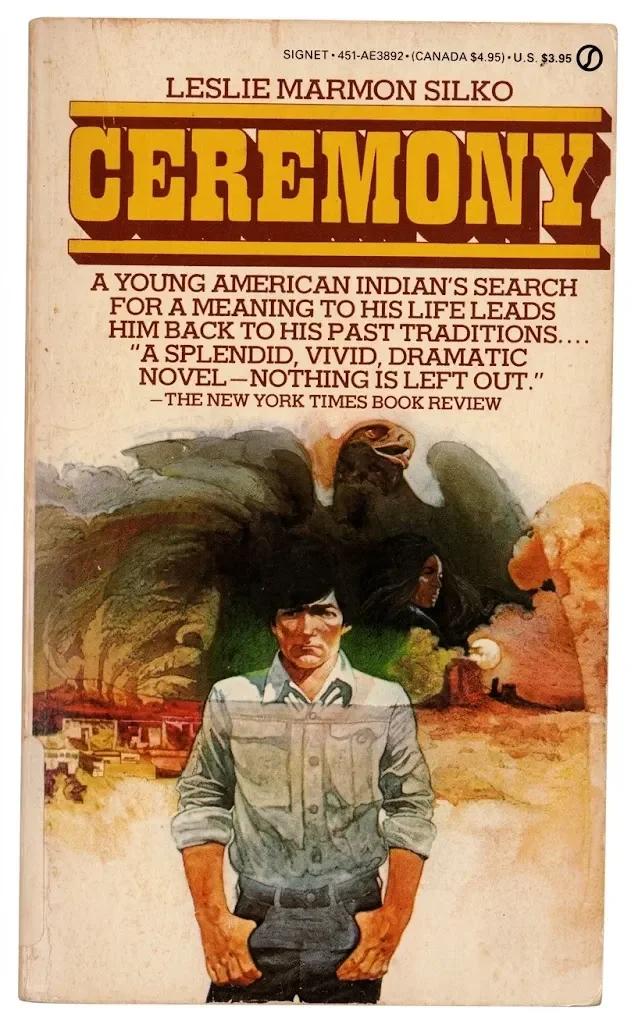
Leslie Marmon Silko and Ceremony Rot (ROUND 1)
SCENT OF THE DAY: Mystical Lotus Jiaozhi, by Ensar
Mystical Lotus is divine: koi pond in mountain air with a lovely floral animalic bite, very similar to what I get in Pinoy Sirun’s Blue Civet Dream, of civet and water lily. Very Japanese in style like Moustafa from Yaaseen will do in his japanese series attars and very much in the same shubui sensibility we find in Kyoto and Amber Kiso.
Deep woods (various non-soaked ouds plus sandalwood and cedar) plus watery blue lotus (the star) contributes to an exotic meditative experience. This this is so jam-packed with goodies it is almost a bad thing—since the blue lotus, which here is soft and smooth and clean, does not get to be its vibrant self with so much oud—even though the oud is of the elegant clean style (but some of this was likely due to blindness issues in my first wears). This criticism, if it even is one, only comes from someone who is hellbent on a blue lotus intensity. Because the fact is that this is one of the most stunning compositions ever created: the woodiness, incensy in this Jiaozhi edition (unlike the more resinous earlier and later editions that, even though more aligned with my taste because they come with a thicker presence, do not capture the divine-spiritual intention as much as the Jiaozhi), is perfectly balanced with the lotus such that we never get anything too piercing or rough from either side.
Fresh and aquatic (especially from cypress and lotus and ambergris), and yet fleshy and creamy from the sandalwood and frangipani with some cool berry sweetness—this all tartified and animalized by a young civer in the vein of Murasakino and Oudh Infini. Orange blossom (also like Oud Infini), mimosa, and rose add a soft indolic, pollen-like warmth that sits between the cold lotus and warm woods—and this helps with the fleshy sensation.
Civet here gives it an amazing brightness, not too far from my benchmark unhinged bright sour civet (Blue Civet Dream by Pinoy Sirun), but here in the Ensar the brightness is restrained by incense feels from oud and what seems to be a creamy intimate musk with almost a piney-chocolate side (like Mongolian). This feels navy blue at first and then slides into a more pastel purple. Nice tension between cold top and warm base—and this makes a very deep fragrance for an aquatic: cool sibling to Pink papua. I will say though—although this might be more indicative of my plebian nose—that it was hard for me to see the big price difference between pink papua and mystical lotus. That is starting to change, however.
ensar does not soak his agarwood. In some cases it might have made his compositions more to my likeing if he did: I like that lactic bacteria fermentation even though it covers over the natural smell of the wood (something good to do especially if you are using low grade oud). But here in Mystical Lotus the choice not to soak was crucial.
Unlike the other Mystical Lotus’s I know, like the original (creamy and dense) or the Blue Yunnan (same sort of dense cream but now fruity) or the Purple Kynam (brighter because of citrusy Taif and yet the cream becomes resin here), Jioazhi turns Mystical Lotus into a dry masculine incense with an austere Japanese aesthetic.
*Let's workshop this poem about the jarring mismatch between the reality of modern black cultural power and the exhausted but highly profitable institutional propaganda of perpetual black oppression.
*fresh from oven
Leslie Marmon Silko and Rotten Ceremony
Solemn sips of ten-dollar cider beneath pain paintings (Jim-Crow fire hoses blasting through modern boardrooms and billy clubs, those of brass-button boys in blue, battering Say-their-Name faces; grade-schooler entries too of black wrists breaking bloody chains, cop knees crushing brains; spotlit placards, safe spaces, for artists to answer questions like “How does this work speak to surviving each day as a Black body in Amerikkka?"),
funereal nods and sometimes tears beneath pain theater (a robed black person on a mic in the shadow of every corner, as interactive as Buckingham guards, humming-groaning when not whispering ASMR watchwords like “systemic” and “blood” and “curfew,” “chokehold”; cotton-field spirituals cried into Kubrick iPhones raised up to transmit the emotional coercion all over Instagram, as if to justify victim psyches and equity bureaucracies too bloated not to lie; tall tales of transatlantic coffee shops spoken with slam-poetry sass accentuated by djembe rage and the broken screeches of Coltrane: “No Miss Karen, and no bad-built Becky, I would not like my cream whipped!”)—
the box-ticked nature of the diaspora exhibit (“Survivor Mode”), just too on-the-nose not to read as overcompensation, all by itself (bracketing off even how every opportunist, if non-neurospicy and up-to-date, wishes they were, or thanks God every morning they are, the skin color of Disney’s good side, HR’s good side) shows the truth: that, hard to face given how long solidarity and purpose has been leeched from such exquisite trauma, the time-flattened blueprint of suffering, the monolithic ceremony of oppression, has run its course well beyond exhaustion and into a fraud the heart finds shameful.






“We need books that affect us like a disaster, that grieve us deeply, like the death of someone we loved more than ourselves, like being banished into forests far from everyone, like a suicide. A book must be the axe for the frozen sea within us.”—Kafka (against the safe-space cancel culture pushed by anti-art bullies, left and right)