


to Hive being
welcome
What is Hive Being, and Why the Name?
You have likely heard talk of a hive mind, where one global mind finds more or less figurative expression in various local minds. Such talk is common enough in nature documentaries, especially ones concerning ants or bees, and in sci-fi programs. Take that notion, at least a loose version of it, and broaden its scope. That will be a decent first step in understanding the title I have chosen both for my Blog and for the first five-volume installment of my magnum opus Made For You and Me, a fragmentary collection of minimalist stanzas from 2016 to 2020.
In alignment with Spinoza (the 17th Century Rationalist to whom I devoted my doctoral studies), I view reality in its totality as a grand hive Being: all entities are but pulsating manifestations of the buckstopping fount of everything, an ultimate being we might call “God” or “Nature” (so long as, out of respect for the capital “G” and the capital “N,” we limit it neither to some anthropomorphic cloud father hurling lightning bolts nor to mere wilderness untouched by human smog). According to the hive-Being view (where reality is one lone superorganism, a monistic—and we might even say unividualist—conception I defend in both my creative and academic capacities), each non-foundational being (each being, that is, whose essence does not involve existence) is an utterly necessitated expression or eruption or exudation of this eternal source—each is, perhaps better put, a mode or manner of being, and so a focal point through which is disclosed, what classical theists sometimes call “being itself” (ipsum esse subsistens): the realness of the real, the being of whatever may be, the sheer activity of being, the very isness of whatever is. This Blog, which duplicates my Substack, throbs as but one among many literary unfurlings of this self-necessitated foundation, this supreme wellspring, of which we—like black holes and broken beliefs, like fractal ferns and flickering flames—are the inevitable stylings.
My Journey
I am an academic who found himself pressured into early retirement by the rising tides of cancel culture. The illiberal scourge of censoring, silencing, and shaming—although always with us throughout our evolution—reached a local peak around 2021. That was the turbulent year my creative pursuits, which the old left once encouraged as a healthy outlet for the stresses of a childhood steeped in poverty and illiteracy, drew the ire of the new safe-space left. A small cadre of self-proclaimed victims and their allies, several of whom continue to berate me years later under pseudonyms as see through as their sexual infatuation, sought to erase me and my heterodoxy. They found support from a wannabe-woke dean, covered in the grand inquisitor robes of our decadent modernity (full-body tattoos) and just itching to signal his commitment to protecting “vulnerable populations” from triggering material (even if just, as it was in my case, off-duty poems “unbecoming for someone calling himself a teacher”). Although I eventually won my due-process case with the help of The Foundation for Individual Rights and Expression, I slunk away from a college that turned its back on protecting freedom of expression and from an institution increasingly intolerant of intellectual diversity.
The wrecking ball to my too-comfy office in the windowless ivory tower came with a silver lining. From the ashes of my professional aspirations rose a phoenix of increased freedom to fulfill the literary calling I have pursued for decades. Reputation concerns never stopped me, even within academia’s sterile halls of conformity. Indeed, my unapologetic defiance, which has long baffled friends and family, no doubt chummed even safe waters—almost as if I were asking for it all along—until the cancel shiver grew too frenzied to hold back its blind thrashings. But now, now I piston the most forbidden territories of human thought with no longer even a twinge of conscience. The newfound freedom means extra time to hone my craft. When not assisting special-needs communities (a day job far more rewarding than freeway-flyer drudgeries), I pursue my literary mission with Dionysian fervor.
Call for Co-Conspirators
This space, my digital sanctuary, showcases the fruits of my mission. Think of my posts, even those linking to my publications, as works in progress. I want your input, unflinching brutality included. Each post begins with an invitation to action: “Let’s workshop this [draft about x, y, z].” Your contributions, whether through public comments or my contact page, help hammer scraps of ore into polished blades fit for magazine publication.
Your input is valuable, even if you are neither a writer nor a reader of literature—twin disciplines dying by the cyber nanosecond. Sometimes—even if at the risk of uttering banalities—an outsider’s fresh vantage can pierce the veils of convention to reveal what insiders miss. It often takes an outsider to make us even think to question our ingrained presuppositions and attitudes. I stand by the hygienic value of contagion. That is one reason I advocate so strongly for intellectual diversity and freedom of expression. And that is also one reason I was so harrowed by the anti-diversity swell of cancel culture in academia (an institution that should be the utmost caretaker of such values)—harrowed especially insofar as that swell masqueraded under the gaslighting guise of “diversity”).
You will witness the breathing evolution of my writings over time. To track these changes, I label each revision by round: “ROUND 2,” ROUND 3,” and so forth. Each piece undergoes continuous refinement based on your feedback and my own revisitations. Sometimes changes will mar the work. That is the risk of creative tinkering as a finite creature. I hope you will alert me to missteps. After many semesters of university writing workshops, one rule has impressed itself upon me: when someone senses a flaw, something almost always needs to change—even if, yes, the proposed solution misses the mark (which often it does). From a quick look into the archives, accessible here, you can see how much I have benefited from your feedback so far.
My Hope
Sharing drafts can be daunting. But showing you the ravaged and unperfumed real deal unfiltered by makeup (stuttering starts and falsities, awkward line breaks and clumsy word choices, grammatical errors and misspellings)—that not only makes my work more relatable, but helps me refine things through your input. I hope the unfiltered look at the raw process of fumbling, rather than just the polished product, also helps other writers develop their craft. Imperfect works often instruct more than perfect ones: whereas the perfect ones tend to have a grace by which they slip inside us without activating our scrutiny, the imperfect ones—especially the near perfect ones—show us glaringly what not to do.
People laugh at me, seeing—in my tilting at the windmills of literary excellence—a Don Quixote clunking around in Arthurian armor in a post-knight era. I am not naïve. I am well aware of the diminishing ability to read, let alone well: slowly and deeply, with gratitude. I am also aware that my style, which often nests subpoints within larger points, never waters down virtuosity for the sake of mass appeal. I watch readers stumble over my sentences, unable to unlock even just the music of the envelope let alone the semantic meat within, which—given my tendency to flashlight through the darker facets of human nature (the addicts, the miscreants, the abusers among us)—only adds an additional alienating layer of difficulty). Beholding these depressive scenes of even supportive family members getting bucked off my syntactic bronco makes me feel like a dinosaur who should get a hint and, if not succumb to the brain rot of skibidi-toilet speak, just hang himself already. Even though the decline in linguistic background and grammatical voltage makes my compositions seem quixotic in a world binging Netflix and TikTok, I persist—raging against the dying of the light—by some internal compulsion to celebrate the richness of language and thought.
My hope is that, despite social media’s unparalleled power to farm our attention, people never forget the unique power of writing. Beyond unveiling hypocrisy, teasing out complex implications, and detailing the commonalities between even the most alien phenomena, writing offers something we need today—trapped in agoraphobic cyber bubbles only thickened by the Lyme dangers of forests and the COVID dangers of cities—perhaps more than ever. Granting us rich access to the first-person perspectives of others (to how things feel to them), writing serves as one of humanity’s best tools for combating loneliness. It allows us to linger, broadly and deeply and at high resolution, within the inner lives of others in a way that other arts can only suggest.
What to Expect
My work spans a broad spectrum: from metaphysical discourses on free will and determinism and the ontology of holes to the ephemera of western culture (whether the childhood impacts of the hypersexual mono-image of black woman as squirting twerkers or Terrence Howard’s sham revolution of mathematics). Some tight and minimal, others free-flowing sprawls; some heady and abstract, others emotional and imagistic—my inkwell musings, which often blend scholarly rigor with a dark humor from both high and low culture, aim to capture the visceral intensity of our personal and social and ultimately existential predicaments.
By no means can I deny that drug abuse, sexual assault, and the tales of the broken and the damned loom large in the tag cloud of my work. My writing will never be a paradise of easy truths and comforting lies. It will challenge you, provoke you, and at times even repulse you. I offer no apologies for the monsters I unleash. They are as much a part of us, at long root scared rodent mammals scurrying in the shadows of dinosaurs, as our noblest aspirations.
But make no mistake. It is not all downer darkness. The archives are my receipts. You will find pieces exploring the pursuit of authenticity in a media-saturated world, the search for meaning in an indifferent cosmos, and the celebration of beauty in both the sublime and the profane. I locate much of my inspiration, in fact, in novelists like Dostoevsky and poets like Ted Kooser—writers unafraid to pursue moral agendas or risk Hallmark sentimentality in an age that often sneers at sincerity.
Be they satirical dissections of modern social dynamics or poignant poems about addiction or academic articles on moral responsibility, my goal is to provoke thought, evoke emotion, and foster meaningful dialogue. Fear has not and will not stop me from challenging humanity’s fundamental taboos (like bestiality and cannibalism) or self-reflecting into the dark chaos of the subconscious, even if that means exposing the Jungian shadows—the inner Goebbels—lurking within us all!
Expect posts each day, no day missed. Donations are welcome, but I impose no paywall: it feels wrong to charge for art, especially given our date with obliteration. Feel free to explore what amounts to, at the time of writing this, close to a thousand pieces of poetry and prose here. That should give you a sense of what awaits.
Join me—specula holstered—on this literary odyssey into the public and private nooks of the hive Being. Let us navigate the labyrinth of creation together, confronting our demons and even slaying our darlings if we must. Let us dance on the razor’s edge between the sublime and the profane in pursuit of an elusive literary perfection never to be confused—as it has been confused in our declining civilization—with the pursuit of popularity or likeability over truth.






tag cloud
- literature community
- American literature
- poetry
- literature
- poem
- literary
- creative writing
- writing
- poetry community
- Michael Istvan
- Istvan
- perception
- defiance
- suffering
- existential poetry
- dissociative
- existential
- healing
- human
- mortality
- power
- art
- artist
- evolution
- God
- death
- love
- darwin
- anxiety
- rape
- psychoanalysis
- addiction
- homeless
- addict
- trauma
- therapy
- rapist
- traumatic
- hypersexual
- hyperarousal
- grooming
- anal sex
- anal
- heart
- incendiary
- dead
- Identitarianism
- tyrant
- meditation
- poverty
- fap
- choking
- traitor
- treachery
- identity
- honey pot
- true crime
- power dynamic
- woke
- cunnilingus
- Vaginal
- animals
- OwnVoices
- empathy
- ally
- crime
- summer
- scarf
- body disposal
- kidnapping
- Klan
- sex
- crack
- identity politics
- Vagina
- disease
- indians
- turtles
- fisting
- Pussy
- surrealism
- anality
- erotic
- scatalogical
- poet
- violence
- artistry
- borders
- teenybopper
- sublime
- mommy
- van gogh
- animal
- victim
- safe space
- pedophilia
- poetry editor
- adult-minor
- censor
- americana
Posts

An Introduction to Chaos Magic(k) (ROUND 16)
"An Introduction to Chaos Magic(k)" is a character study of extraordinary density that operates simultaneously as social criticism, psychological portrait, spiritual anatomy, and elegy for a generation caught between the wreckage of postmodernity and the human need for enchantment that postmodernity cannot satisfy. Its unnamed protagonist — the brujita, the cyber witch, the self-styled metaverse malvada — is rendered with a specificity that refuses both the condescending dismissal the author's note acknowledges as a temptation and the uncritical celebration that her own self-mythology demands. The piece holds her in the space between these responses, which is where the most honest literary attention lives.
The mirror is the piece's governing formal and philosophical structure, announced in the recurring lead sentences and sustained throughout as both literal object and conceptual frame. The floor mirror the brujita leans toward, the phone selfie, the floor monitor displaying her avatar, the Tumblr manifestation board, the diary, the SpongeBob hat as relic of reflected childhood — everything in her environment functions as a surface in which she attempts to find a stable self and finds instead proliferating versions, none quite coinciding with the original. "Her reflection, close to touching the original, pulses for her like psilocybin" is the piece's most compressed statement of this condition: the reflection approaches but never achieves coincidence with what it reflects, and the gap between them — that millimeter of irreducible distance — is where the brujita lives. Chaos magic, as the piece understands it, is the attempt to close this gap by force of will — to make the reflection become the original through sufficient intensity of self-declaration.
The piece's most significant formal innovation is its deployment of the alternative-world counterpart. The Hagatess comparison is not merely a sociological contrast between urban digital witchcraft and rural embodied witchcraft, though it is that too. It is a philosophical argument about the relationship between metaphor and materiality. The Maine witch's hedge-crossing is literal before it is metaphorical; the brujita's hedge-crossing is metaphorical before it is — possibly, aspirationally — literal. "To be a custodian of hedges is to be a custodian of in-between spaces" is the piece's most generous formulation of what the brujita is genuinely doing, even within and beneath the curation and the shitposting and the manifesting: she is genuinely inhabiting thresholds, genuinely maintaining the border between meat and pixel, genuinely finding in code a practice that is continuous with the older practice of hedge-witchery even as it is entirely discontinuous from it in every material particular. The piece's intelligence is in granting this continuity without pretending the discontinuity doesn't cost something real.
The rapper tape of self-curation that surrounds the brujita — the IG bio, the CashApp handle, the Depop page, the Redbubble shop, the Tumblr manifestation board, the Only Fans, the Twitch stream, the avatar in Afro-Solarpunk GTA — is not rendered as mere vanity but as a genuine, if displaced, spiritual practice. The piece understands curation as the secular form of the same impulse that fills the brujita's dream satchel with garnet and mugwort: the attempt to shape the environment of the self, to arrange the materials of existence into a configuration that will attract what is desired and repel what is feared. That the materials are now Temu neon lichen and Etsy nymph stickers rather than dried hinojo and foraged knotweed is a difference of platform, not of fundamental human activity. The piece does not excuse the shallowness this sometimes produces. It locates the shallowness within a recognizable human hunger.
The rape sequence — rendered in the staccato blackout structure of traumatic memory, each line a flash cut to black — is the piece's formal and emotional center of gravity, and its placement within the longer narrative arc is precise. The brujita's chaos magic, her manifestation practice, her radical self-sovereignty declarations ("I am the programmer. My decisions, my style, / come from me, not from anything beyond me!") are all, the piece suggests, organized in significant part around this event and its aftermath — the attempt to become the author of a self whose authorship was violated. The diary entry's culminating declaration — "Death, rape, war, divorce, dead-beat dads — / I'm the one who lets them be real or not!" — is simultaneously the piece's most delusional and most sympathetic moment: delusional because the God Mode it claims is unavailable to any human being, sympathetic because the need for it is completely legible given what the preceding flashback sequence has shown. Chaos magic, in this reading, is not primarily superstition but a specific psychological response to the experience of having had one's reality determined by someone else's will. The magic is the attempt to reclaim the position of reality's author.
The mother's whiteness and the father's Blackness organize the brujita's identity in ways the piece renders with careful indirection. The mother — "a true queen but whose whiteness, having grown beyond just 1990s 'uncool' and into 2020s 'problematic,' renders such regality unseen" — is present, capable, genuinely loving, and culturally unmarketable in the brujita's ideological environment. The father — "a deadbeat 'King' who gets off on making store clerks stretch to gather his loosie quarters, bops down the block one cop strangle away from becoming, until at least Disney fashion changes, a city-center statue" — is absent, performatively dignified, and culturally hypervaluable in that same environment. The "$blaxicanbruja" handle navigates this inheritance by claiming the Black and the Mexican and letting the white remain implicit and unacknowledged — a dynamic the piece notes with the quiet observation that she "seemingly identify as part Mexican" while the subtle implication is that she is denying her whiteness. Identity here is not simply chosen but strategically curated, assembled from the culturally available materials in ways that maximize belonging and minimize the liability of the unmarketable.
The anime subreddit sequence is among the piece's most formally brilliant passages — the posts reproduced in their actual idiom, their casual nihilism and identity-grievance and erotic longing forming a kind of found poetry of the platform's affective register. "Shinji Ikari is LITERALLY ME. useless bisexual disasters ✅ daddy issues FOR DAYS ✅ depression naps 24/7 ✅" is simultaneously self-aware and self-regarding, genuinely identifying with a character's psychological complexity and reducing that complexity to an identity checklist. The subreddit is the brujita's social mirror — a space where her specific configuration of pain and humor and political feeling finds community — and the piece renders it without contempt while making visible exactly how the platform's idiom shapes what can be felt and said within it.
The author's note is the piece's most unusual formal element, and its inclusion is a significant artistic decision. The author appears in his own text to describe the process of coming to see the character's humanity — moving from the temptation to dismiss her to the recognition of her innocence, her hard work, her dreams, her potential. The Sagan quotations frame this arc: first the critique (the slide into superstition and darkness), then the corrective (the temperance of criticism with kindness toward those whose culture has not given them all the tools they need). The note does not resolve the tension between these positions; it names it as the piece's governing moral challenge, which is also the reader's. We are invited to hold simultaneously the genuine harm of the brujita's worldview — its solipsism, its victimhood economics, its displacement of real understanding with magical substitutes — and the genuine human being constructing that worldview from the available materials of a specific time, place, and wound. The Hitler quotation is the note's most provocative element, placed alongside the Sagan quotation to suggest that the anti-rational turn has a history that predates Gen Z and has produced consequences far worse than any one young woman's crystal collection.
The diary entry that closes the piece is its most formally distinctive element — the shift to verse within the prose, the "bucking motions of erotic greed" of the handwriting enacted in the erratic spacing and pressure of the lines. "Let my delusions be scarecrows. Let them frighten / any so-called 'reality' seeking to devour my crop: ME." is the brujita at her most genuinely poetic — the image precise, the logic coherent within its own terms, the self-protective function of magical thinking rendered not as pathology but as strategy. The final declaration — "I'm the one who lets them be real or not!" — arrives as both triumph and tragedy: the God Mode claimed, the cost of claiming it left for the reader to feel.
What "An Introduction to Chaos Magic(k)" achieves is a portrait of a specific contemporary formation of the human spirit — wounded, creative, politically confused, genuinely searching, embedded in platforms that shape what can be desired and how desire can be expressed, reaching for enchantment in a world that has systematically dismantled the older structures through which enchantment was transmitted and received, and constructing from the available digital materials something that is simultaneously less and more than what it replaces. The piece does not conclude that the brujita is lost. It concludes that she is navigating, as best she can with what she has, the same territory that humans have always navigated: the gap between the self they are and the self they need to become, with whatever tools their culture and their wound have left them.
Meta Description
A novelistic character study of a young mixed-race Los Angeles woman navigating chaos magic, digital curation, racial identity, sexual trauma, and the human hunger for enchantment in a disenchanted world — rendered through mirrors literal and figurative, the alternative-world counterpart of a Maine hedge witch, a rape sequence in blackout staccato, and a diary entry that culminates in the God Mode declaration of a psyche determined to author its own reality against everything that has authored her instead.
Keywords
An Introduction to Chaos Magic, chaos magic poetry, brujita, blaxican witch, digital witchcraft, manifestation culture, Gen Z identity, racial identity curation, trauma and magical thinking, mirror as form, hedge witch comparison, anime subreddit, Hagatess, alternative world counterpart, rape and self-sovereignty, Carl Sagan Demon-Haunted World, author's note as form, diary as verse, God Mode declaration, contemporary American prose poem, character study, superstition and postmodernity, identity and platform, Los Angeles witch

An Introduction to Chaos Magic(k) (ROUND 15)
This piece, “An Introduction to Chaos Magic(k),” is a maximalist prose-poem that constructs a single character as a site of cultural collision: digital-age identity curation, inherited trauma, consumer aesthetics, magical thinking, and the erosion of epistemic grounding. The work does not proceed linearly but accumulates—layer upon layer—until the reader experiences the same saturation that defines the subject’s inner life. Its governing question is not simply who she is, but how a self is assembled when reality, performance, and fantasy are no longer clearly separable.
At the center is a young woman whose identity is fragmented across platforms, aesthetics, and belief systems. She is rendered as a “fractured mosaic” or “living glitch,” a figure whose sense of self is mediated through social media, subcultural vocabularies, and algorithmic feedback loops. The poem’s descriptive density—brand names, hashtags, aesthetics, bodily details—mirrors this condition. Nothing is allowed to stand alone; everything is curated, tagged, stylized, suggesting that subjectivity itself has become an act of ongoing assembly rather than a stable core.
A key thread is the tension between material hardship and symbolic empowerment. The character navigates economic precarity (low-paying work, failed side hustles, dependence on platforms) while simultaneously adopting languages of empowerment, spirituality, and identity affirmation. These are not presented as simple hypocrisies but as adaptive strategies—ways of generating meaning, control, or hope in an environment that offers little stability. Yet the poem also subjects these strategies to critique, especially when they slide into magical thinking or self-sealing belief systems.
This critique becomes explicit in the engagement with chaos magic and solipsistic self-creation. The highlighted passage from Liber Null—urging the practitioner to break norms and embrace the “utterly revolting”—functions as a philosophical hinge. It licenses a radical form of self-authorship in which reality itself becomes negotiable. The diary entry at the end crystallizes this trajectory: the speaker declares herself the programmer of reality, the arbiter of truth, the one who decides what is real. This is framed not as liberation but as a dangerous collapse of distinction between belief and world, where “fantasy” is elevated to the only viable reality.
The poem’s power lies in how it refuses to isolate this collapse from its conditions. The character’s turn toward magical thinking is linked to trauma, alienation, digital immersion, and cultural messaging. Her oscillation between self-loathing and grandiosity, between vulnerability and aggression, is rendered with uncomfortable intimacy. The text does not excuse her behavior—particularly her online hostility or ideological rigidity—but it situates it within a broader ecosystem that both shapes and rewards such patterns.
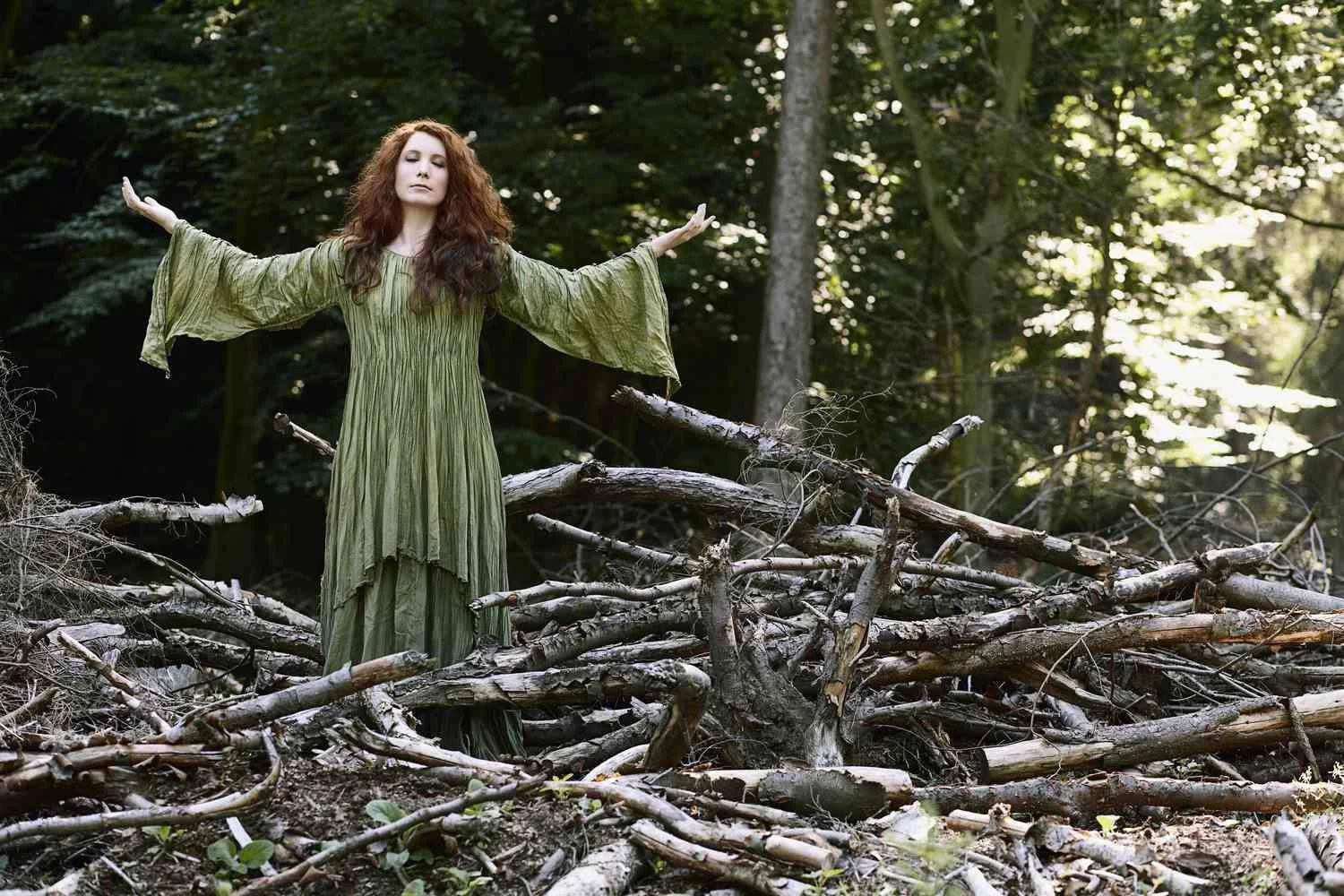
The contrast between the “cyber witch” and the “Maine witch” sharpens this point. The former is mediated, aestheticized, platform-dependent; the latter is grounded, embodied, embedded in physical practice. This contrast is not purely nostalgic but diagnostic: it marks a shift from lived engagement with the world to symbolic engagement with representations of it. The hedge metaphor—thresholds between realms—suggests that both figures operate in liminal spaces, but one navigates them through code and image, the other through land and tradition.
The author’s note confirms the dual stance of the piece: critique and empathy held in tension. The character is presented as both emblematic of a broader cultural drift—toward superstition, performative victimhood, and epistemic instability—and as an individual shaped by forces beyond her control. The invocation of Carl Sagan underscores this balance: skepticism without cruelty, recognition of error without denial of humanity. Even the more extreme references (e.g., to ideological manipulation or historical figures) serve to frame the stakes rather than to reduce the character to caricature.
Ultimately, the piece is less about condemning a type than about tracing a trajectory: how a person, seeking meaning and agency, can become entangled in systems—digital, cultural, psychological—that reward distortion while promising empowerment. The final image of self-deification (“I am the programmer… I will live in my own girlie-fantasy world”) is both the culmination of that trajectory and its warning. It represents a form of control purchased at the cost of reality itself.
Meta Description:
A dense prose-poem exploring identity, digital culture, and magical thinking through the portrait of a fragmented young woman navigating empowerment, trauma, and the collapse of reality and fantasy.
Keywords:
chaos magic, digital identity, magical thinking, satire, Gen Z culture, social media, selfhood, epistemology, Carl Sagan, poetic analysis

An Introduction to Chaos Magic(k) (ROUND 14)
This piece, “An Introduction to Chaos Magic(k),” is a maximalist prose-poem that constructs a single character as a site of cultural collision: digital-age identity curation, inherited trauma, consumer aesthetics, magical thinking, and the erosion of epistemic grounding. The work does not proceed linearly but accumulates—layer upon layer—until the reader experiences the same saturation that defines the subject’s inner life. Its governing question is not simply who she is, but how a self is assembled when reality, performance, and fantasy are no longer clearly separable.
At the center is a young woman whose identity is fragmented across platforms, aesthetics, and belief systems. She is rendered as a “fractured mosaic” or “living glitch,” a figure whose sense of self is mediated through social media, subcultural vocabularies, and algorithmic feedback loops. The poem’s descriptive density—brand names, hashtags, aesthetics, bodily details—mirrors this condition. Nothing is allowed to stand alone; everything is curated, tagged, stylized, suggesting that subjectivity itself has become an act of ongoing assembly rather than a stable core.
A key thread is the tension between material hardship and symbolic empowerment. The character navigates economic precarity (low-paying work, failed side hustles, dependence on platforms) while simultaneously adopting languages of empowerment, spirituality, and identity affirmation. These are not presented as simple hypocrisies but as adaptive strategies—ways of generating meaning, control, or hope in an environment that offers little stability. Yet the poem also subjects these strategies to critique, especially when they slide into magical thinking or self-sealing belief systems.
This critique becomes explicit in the engagement with chaos magic and solipsistic self-creation. The highlighted passage from Liber Null—urging the practitioner to break norms and embrace the “utterly revolting”—functions as a philosophical hinge. It licenses a radical form of self-authorship in which reality itself becomes negotiable. The diary entry at the end crystallizes this trajectory: the speaker declares herself the programmer of reality, the arbiter of truth, the one who decides what is real. This is framed not as liberation but as a dangerous collapse of distinction between belief and world, where “fantasy” is elevated to the only viable reality.
The poem’s power lies in how it refuses to isolate this collapse from its conditions. The character’s turn toward magical thinking is linked to trauma, alienation, digital immersion, and cultural messaging. Her oscillation between self-loathing and grandiosity, between vulnerability and aggression, is rendered with uncomfortable intimacy. The text does not excuse her behavior—particularly her online hostility or ideological rigidity—but it situates it within a broader ecosystem that both shapes and rewards such patterns.
The contrast between the “cyber witch” and the “Maine witch” sharpens this point. The former is mediated, aestheticized, platform-dependent; the latter is grounded, embodied, embedded in physical practice. This contrast is not purely nostalgic but diagnostic: it marks a shift from lived engagement with the world to symbolic engagement with representations of it. The hedge metaphor—thresholds between realms—suggests that both figures operate in liminal spaces, but one navigates them through code and image, the other through land and tradition.
The author’s note confirms the dual stance of the piece: critique and empathy held in tension. The character is presented as both emblematic of a broader cultural drift—toward superstition, performative victimhood, and epistemic instability—and as an individual shaped by forces beyond her control. The invocation of Carl Sagan underscores this balance: skepticism without cruelty, recognition of error without denial of humanity. Even the more extreme references (e.g., to ideological manipulation or historical figures) serve to frame the stakes rather than to reduce the character to caricature.
Ultimately, the piece is less about condemning a type than about tracing a trajectory: how a person, seeking meaning and agency, can become entangled in systems—digital, cultural, psychological—that reward distortion while promising empowerment. The final image of self-deification (“I am the programmer… I will live in my own girlie-fantasy world”) is both the culmination of that trajectory and its warning. It represents a form of control purchased at the cost of reality itself.
Meta Description:
A dense prose-poem exploring identity, digital culture, and magical thinking through the portrait of a fragmented young woman navigating empowerment, trauma, and the collapse of reality and fantasy.
Keywords:
chaos magic, digital identity, magical thinking, satire, Gen Z culture, social media, selfhood, epistemology, Carl Sagan, poetic analysis

An Introduction to Chaos Magic(k) (ROUND 13)
This piece, “An Introduction to Chaos Magic(k),” is a maximalist prose-poem that constructs a single character as a site of cultural collision: digital-age identity curation, inherited trauma, consumer aesthetics, magical thinking, and the erosion of epistemic grounding. The work does not proceed linearly but accumulates—layer upon layer—until the reader experiences the same saturation that defines the subject’s inner life. Its governing question is not simply who she is, but how a self is assembled when reality, performance, and fantasy are no longer clearly separable.
At the center is a young woman whose identity is fragmented across platforms, aesthetics, and belief systems. She is rendered as a “fractured mosaic” or “living glitch,” a figure whose sense of self is mediated through social media, subcultural vocabularies, and algorithmic feedback loops. The poem’s descriptive density—brand names, hashtags, aesthetics, bodily details—mirrors this condition. Nothing is allowed to stand alone; everything is curated, tagged, stylized, suggesting that subjectivity itself has become an act of ongoing assembly rather than a stable core.
A key thread is the tension between material hardship and symbolic empowerment. The character navigates economic precarity (low-paying work, failed side hustles, dependence on platforms) while simultaneously adopting languages of empowerment, spirituality, and identity affirmation. These are not presented as simple hypocrisies but as adaptive strategies—ways of generating meaning, control, or hope in an environment that offers little stability. Yet the poem also subjects these strategies to critique, especially when they slide into magical thinking or self-sealing belief systems.
This critique becomes explicit in the engagement with chaos magic and solipsistic self-creation. The highlighted passage from Liber Null—urging the practitioner to break norms and embrace the “utterly revolting”—functions as a philosophical hinge. It licenses a radical form of self-authorship in which reality itself becomes negotiable. The diary entry at the end crystallizes this trajectory: the speaker declares herself the programmer of reality, the arbiter of truth, the one who decides what is real. This is framed not as liberation but as a dangerous collapse of distinction between belief and world, where “fantasy” is elevated to the only viable reality.
The poem’s power lies in how it refuses to isolate this collapse from its conditions. The character’s turn toward magical thinking is linked to trauma, alienation, digital immersion, and cultural messaging. Her oscillation between self-loathing and grandiosity, between vulnerability and aggression, is rendered with uncomfortable intimacy. The text does not excuse her behavior—particularly her online hostility or ideological rigidity—but it situates it within a broader ecosystem that both shapes and rewards such patterns.
The contrast between the “cyber witch” and the “Maine witch” sharpens this point. The former is mediated, aestheticized, platform-dependent; the latter is grounded, embodied, embedded in physical practice. This contrast is not purely nostalgic but diagnostic: it marks a shift from lived engagement with the world to symbolic engagement with representations of it. The hedge metaphor—thresholds between realms—suggests that both figures operate in liminal spaces, but one navigates them through code and image, the other through land and tradition.
The author’s note confirms the dual stance of the piece: critique and empathy held in tension. The character is presented as both emblematic of a broader cultural drift—toward superstition, performative victimhood, and epistemic instability—and as an individual shaped by forces beyond her control. The invocation of Carl Sagan underscores this balance: skepticism without cruelty, recognition of error without denial of humanity. Even the more extreme references (e.g., to ideological manipulation or historical figures) serve to frame the stakes rather than to reduce the character to caricature.
Ultimately, the piece is less about condemning a type than about tracing a trajectory: how a person, seeking meaning and agency, can become entangled in systems—digital, cultural, psychological—that reward distortion while promising empowerment. The final image of self-deification (“I am the programmer… I will live in my own girlie-fantasy world”) is both the culmination of that trajectory and its warning. It represents a form of control purchased at the cost of reality itself.
Meta Description:
A dense prose-poem exploring identity, digital culture, and magical thinking through the portrait of a fragmented young woman navigating empowerment, trauma, and the collapse of reality and fantasy.
Keywords:
chaos magic, digital identity, magical thinking, satire, Gen Z culture, social media, selfhood, epistemology, Carl Sagan, poetic analysis
An Introduction to Chaos Magic(k) (ROUND 12)
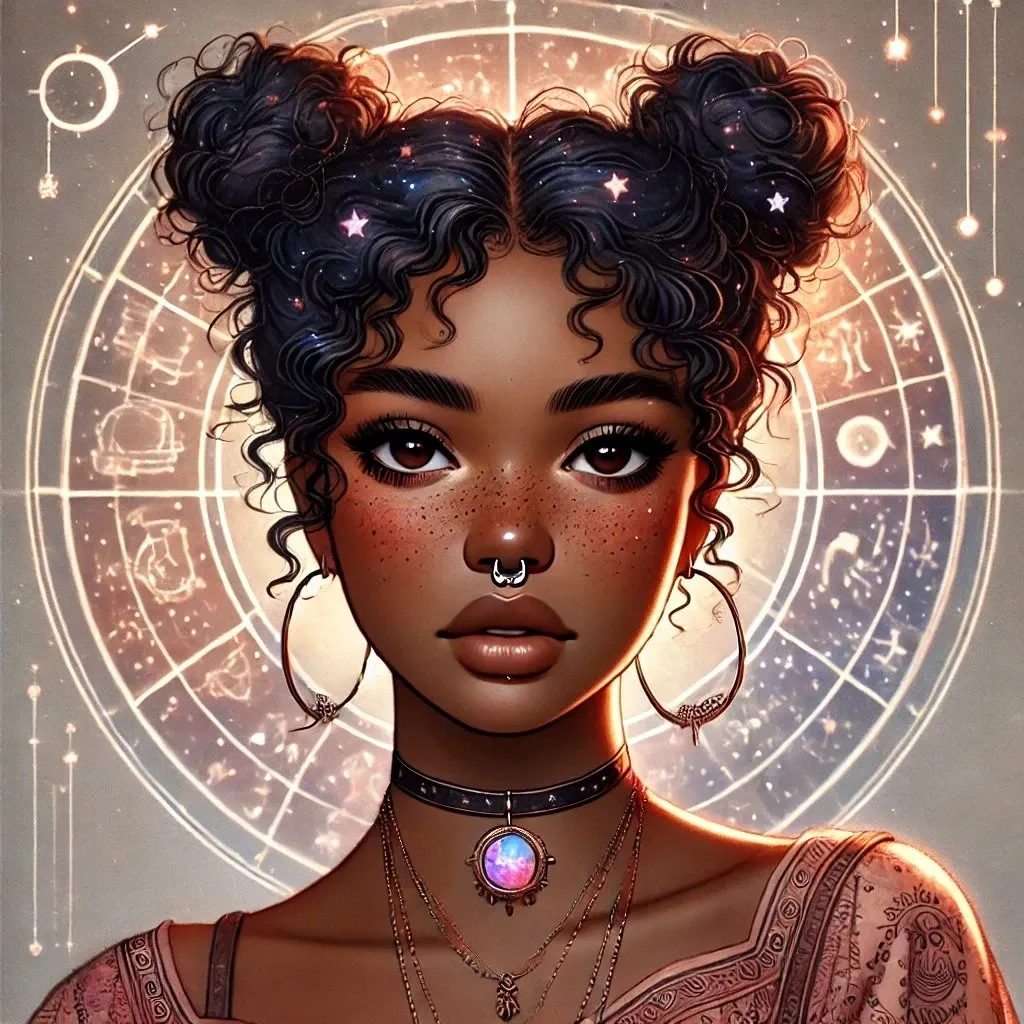
"An Introduction to Chaos Magic(k)" offers a nuanced portrayal of a young woman in the digital age, navigating a complex web of societal pressures, personal insecurities, and self-imposed fantasies. The poem is a striking exploration of how contemporary youth, particularly those on the fringes of traditional and digital cultures, grapple with identity, purpose, and reality in an increasingly fragmented world. The character, a self-styled “metaverse brujita,” embodies the contradictions of modern existence: she is both a product of her environment and an active participant in its creation, constructing a persona that reflects the intersection of digital hyper-reality and archaic mystical beliefs.
Through vivid imagery and detailed descriptions, the poem captures the essence of this young woman’s world—a world where the boundaries between reality and fantasy blur, where identity is both curated and chaotic, and where the pursuit of meaning is fraught with pitfalls. Her life, marked by a series of contradictions—spiritual yet nihilistic, empowered yet fragile, creative yet destructive—serves as a commentary on the broader cultural shifts in the 21st century, particularly the resurgence of mysticism in an era dominated by technology and social media.
The character's engagement with chaos magic, astrology, and other occult practices is depicted not merely as a quirky lifestyle choice but as a desperate attempt to assert control over a life that feels increasingly out of her hands. Her belief in these practices, coupled with her deep-seated insecurities and a pervasive sense of disillusionment, underscores the psychological and emotional turbulence that defines her existence. The poem suggests that these practices, while providing temporary solace, ultimately exacerbate her sense of alienation and contribute to a broader cultural drift toward irrationality and superstition.
Yet, despite her flaws and the toxic elements of her worldview, the poem also expresses a degree of empathy for her. The character’s struggles are emblematic of a generation caught between the promises of technology and the harsh realities of a world that often fails to deliver on those promises. Her dreams, however misguided, are genuine, and her efforts to find meaning and self-worth in a confusing and often hostile world are portrayed with a measure of compassion. The poet’s reflection at the end of the piece acknowledges the character’s potential for growth and change, even as it critiques the cultural forces that shape her.
midst the backdrop of LA's gaunt beauty, sculpted by missed meals and Starbucks, she dons a SpongeBob baseball cap and a Queen of Pentacles tarot card tattoo, symbols that reflect both her childlike nostalgia and her aspirations toward mystical power. Her IG bio declares her a "metaverse brujita," a digital witch navigating the ether with a blend of technology and spirituality, while her surroundings—a one-room world decorated in a mishmash of enchanted forest fairycore and steampunk vintage—mirror her inner turmoil. As she sits on her $400 Moon Pod, she attempts a "mindfulness ritual" meant to exorcise self-loathing and embrace her inner child, but beneath the surface, her actions are driven by a deeper, sublinguistic hope to ward off the growing bitterness toward reality itself.
The poem delves into her psyche, revealing her struggles with identity, her obsession with social validation, and her flirtations with nihilism. Her interactions on social media, her curated digital presence, and her consumption of pop culture all contribute to a sense of disconnection from reality, as she grapples with feelings of inadequacy and the fear of being ordinary. Her rituals, her creative endeavors, and even her relationships are tainted by this inner conflict, as she oscillates between grandiose delusions of self-importance and the crushing weight of self-doubt.
The poem’s narrative is interspersed with moments of raw vulnerability, such as her reflection on past traumas, her obsessive focus on physical imperfections, and her fantasies of escape into a world where she is the central figure—untouched by the harsh judgments of the real world. Yet, despite her struggles, there is a sense of resilience in her, a potential for growth that flickers beneath the layers of magical thinking and victimhood. The author’s note that follows the poem offers a critical yet empathetic perspective, acknowledging the protagonist's flaws while also recognizing her humanity and potential for positive change.
Ultimately, "An Introduction to Chaos Magic(k)" is a poignant exploration of the challenges faced by a generation caught between the digital and the real, the magical and the mundane, as they search for meaning and identity in an increasingly chaotic world. The poem captures the tension between the desire for control and the fear of being overwhelmed by forces beyond one's understanding, offering a nuanced portrayal of a young woman on the edge of self-discovery.
Chaos Magic(k), digital age, modern identity, mysticism, societal pressures, personal insecurities, metaverse brujita, Carl Sagan, victimhood, cultural shifts, Gen Z, psychological turbulence, digital hyper-reality, cultural critique, poetic exploration.
An Introduction to Chaos Magic(k) (ROUND 11)
"An Introduction to Chaos Magic(k)" offers a nuanced portrayal of a young woman in the digital age, navigating a complex web of societal pressures, personal insecurities, and self-imposed fantasies. The poem is a striking exploration of how contemporary youth, particularly those on the fringes of traditional and digital cultures, grapple with identity, purpose, and reality in an increasingly fragmented world. The character, a self-styled “metaverse brujita,” embodies the contradictions of modern existence: she is both a product of her environment and an active participant in its creation, constructing a persona that reflects the intersection of digital hyper-reality and archaic mystical beliefs.
Through vivid imagery and detailed descriptions, the poem captures the essence of this young woman’s world—a world where the boundaries between reality and fantasy blur, where identity is both curated and chaotic, and where the pursuit of meaning is fraught with pitfalls. Her life, marked by a series of contradictions—spiritual yet nihilistic, empowered yet fragile, creative yet destructive—serves as a commentary on the broader cultural shifts in the 21st century, particularly the resurgence of mysticism in an era dominated by technology and social media.
The character's engagement with chaos magic, astrology, and other occult practices is depicted not merely as a quirky lifestyle choice but as a desperate attempt to assert control over a life that feels increasingly out of her hands. Her belief in these practices, coupled with her deep-seated insecurities and a pervasive sense of disillusionment, underscores the psychological and emotional turbulence that defines her existence. The poem suggests that these practices, while providing temporary solace, ultimately exacerbate her sense of alienation and contribute to a broader cultural drift toward irrationality and superstition.
Yet, despite her flaws and the toxic elements of her worldview, the poem also expresses a degree of empathy for her. The character’s struggles are emblematic of a generation caught between the promises of technology and the harsh realities of a world that often fails to deliver on those promises. Her dreams, however misguided, are genuine, and her efforts to find meaning and self-worth in a confusing and often hostile world are portrayed with a measure of compassion. The poet’s reflection at the end of the piece acknowledges the character’s potential for growth and change, even as it critiques the cultural forces that shape her.
midst the backdrop of LA's gaunt beauty, sculpted by missed meals and Starbucks, she dons a SpongeBob baseball cap and a Queen of Pentacles tarot card tattoo, symbols that reflect both her childlike nostalgia and her aspirations toward mystical power. Her IG bio declares her a "metaverse brujita," a digital witch navigating the ether with a blend of technology and spirituality, while her surroundings—a one-room world decorated in a mishmash of enchanted forest fairycore and steampunk vintage—mirror her inner turmoil. As she sits on her $400 Moon Pod, she attempts a "mindfulness ritual" meant to exorcise self-loathing and embrace her inner child, but beneath the surface, her actions are driven by a deeper, sublinguistic hope to ward off the growing bitterness toward reality itself.
The poem delves into her psyche, revealing her struggles with identity, her obsession with social validation, and her flirtations with nihilism. Her interactions on social media, her curated digital presence, and her consumption of pop culture all contribute to a sense of disconnection from reality, as she grapples with feelings of inadequacy and the fear of being ordinary. Her rituals, her creative endeavors, and even her relationships are tainted by this inner conflict, as she oscillates between grandiose delusions of self-importance and the crushing weight of self-doubt.
The poem’s narrative is interspersed with moments of raw vulnerability, such as her reflection on past traumas, her obsessive focus on physical imperfections, and her fantasies of escape into a world where she is the central figure—untouched by the harsh judgments of the real world. Yet, despite her struggles, there is a sense of resilience in her, a potential for growth that flickers beneath the layers of magical thinking and victimhood. The author’s note that follows the poem offers a critical yet empathetic perspective, acknowledging the protagonist's flaws while also recognizing her humanity and potential for positive change.
Ultimately, "An Introduction to Chaos Magic(k)" is a poignant exploration of the challenges faced by a generation caught between the digital and the real, the magical and the mundane, as they search for meaning and identity in an increasingly chaotic world. The poem captures the tension between the desire for control and the fear of being overwhelmed by forces beyond one's understanding, offering a nuanced portrayal of a young woman on the edge of self-discovery.
Chaos Magic(k), digital age, modern identity, mysticism, societal pressures, personal insecurities, metaverse brujita, Carl Sagan, victimhood, cultural shifts, Gen Z, psychological turbulence, digital hyper-reality, cultural critique, poetic exploration.

An Introduction to Chaos Magic(k)
"An Introduction to Chaos Magic(k)" offers a nuanced portrayal of a young woman in the digital age, navigating a complex web of societal pressures, personal insecurities, and self-imposed fantasies. The poem is a striking exploration of how contemporary youth, particularly those on the fringes of traditional and digital cultures, grapple with identity, purpose, and reality in an increasingly fragmented world. The character, a self-styled “metaverse brujita,” embodies the contradictions of modern existence: she is both a product of her environment and an active participant in its creation, constructing a persona that reflects the intersection of digital hyper-reality and archaic mystical beliefs.
Through vivid imagery and detailed descriptions, the poem captures the essence of this young woman’s world—a world where the boundaries between reality and fantasy blur, where identity is both curated and chaotic, and where the pursuit of meaning is fraught with pitfalls. Her life, marked by a series of contradictions—spiritual yet nihilistic, empowered yet fragile, creative yet destructive—serves as a commentary on the broader cultural shifts in the 21st century, particularly the resurgence of mysticism in an era dominated by technology and social media.
The character's engagement with chaos magic, astrology, and other occult practices is depicted not merely as a quirky lifestyle choice but as a desperate attempt to assert control over a life that feels increasingly out of her hands. Her belief in these practices, coupled with her deep-seated insecurities and a pervasive sense of disillusionment, underscores the psychological and emotional turbulence that defines her existence. The poem suggests that these practices, while providing temporary solace, ultimately exacerbate her sense of alienation and contribute to a broader cultural drift toward irrationality and superstition.
Yet, despite her flaws and the toxic elements of her worldview, the poem also expresses a degree of empathy for her. The character’s struggles are emblematic of a generation caught between the promises of technology and the harsh realities of a world that often fails to deliver on those promises. Her dreams, however misguided, are genuine, and her efforts to find meaning and self-worth in a confusing and often hostile world are portrayed with a measure of compassion. The poet’s reflection at the end of the piece acknowledges the character’s potential for growth and change, even as it critiques the cultural forces that shape her.
midst the backdrop of LA's gaunt beauty, sculpted by missed meals and Starbucks, she dons a SpongeBob baseball cap and a Queen of Pentacles tarot card tattoo, symbols that reflect both her childlike nostalgia and her aspirations toward mystical power. Her IG bio declares her a "metaverse brujita," a digital witch navigating the ether with a blend of technology and spirituality, while her surroundings—a one-room world decorated in a mishmash of enchanted forest fairycore and steampunk vintage—mirror her inner turmoil. As she sits on her $400 Moon Pod, she attempts a "mindfulness ritual" meant to exorcise self-loathing and embrace her inner child, but beneath the surface, her actions are driven by a deeper, sublinguistic hope to ward off the growing bitterness toward reality itself.
The poem delves into her psyche, revealing her struggles with identity, her obsession with social validation, and her flirtations with nihilism. Her interactions on social media, her curated digital presence, and her consumption of pop culture all contribute to a sense of disconnection from reality, as she grapples with feelings of inadequacy and the fear of being ordinary. Her rituals, her creative endeavors, and even her relationships are tainted by this inner conflict, as she oscillates between grandiose delusions of self-importance and the crushing weight of self-doubt.
The poem’s narrative is interspersed with moments of raw vulnerability, such as her reflection on past traumas, her obsessive focus on physical imperfections, and her fantasies of escape into a world where she is the central figure—untouched by the harsh judgments of the real world. Yet, despite her struggles, there is a sense of resilience in her, a potential for growth that flickers beneath the layers of magical thinking and victimhood. The author’s note that follows the poem offers a critical yet empathetic perspective, acknowledging the protagonist's flaws while also recognizing her humanity and potential for positive change.
Ultimately, "An Introduction to Chaos Magic(k)" is a poignant exploration of the challenges faced by a generation caught between the digital and the real, the magical and the mundane, as they search for meaning and identity in an increasingly chaotic world. The poem captures the tension between the desire for control and the fear of being overwhelmed by forces beyond one's understanding, offering a nuanced portrayal of a young woman on the edge of self-discovery.
Chaos Magic(k), digital age, modern identity, mysticism, societal pressures, personal insecurities, metaverse brujita, Carl Sagan, victimhood, cultural shifts, Gen Z, psychological turbulence, digital hyper-reality, cultural critique, poetic exploration.





blog
FAQ


Visit my Substack: Hive Being
Visit my Substack: Hive Being
Don’t let anyone tell you that real life is lacking in poetic interest. This is exactly what the poet is for: he has the mind and the imagination to find something of interest in everyday things. Real life supplies the motifs, the points that need to be said—the actual heart of the matter; but it is the poet’s job to fashion it all into a beautiful, animated whole. You are familiar with Fürnstein, the so-called “nature poet”? He has written a poem about growing hops, and you couldn’t imagine anything nicer. I have now asked him to write some poems celebrating the work of skilled artisans, in particular weavers, and I am quite sure he will succeed; he has lived among such people from an early age, he knows the subject inside out, and will be in full command of his material. That is the advantage of small works: you need only choose subjects that you know and have at your command. With a longer poetic work, however, this is not possible. There is no way around it: all the different threads that tie the whole thing together, and are woven into the design, have to be shown in accurate detail. Young people only have a one-sided view of things, whereas a longer work requires a multiplicity of viewpoints—and that’s where they come unstuck.—Goethe (Conversations with Eckermann)




Featured Blog Posts

have appeared last night—
all those met along the way?
Scholarly Essay: "Pound Town: A Defense of the Moral Permissibility of Bestiality"
"Pound Town: A Defense of the Moral Permissibility of Bestiality" is a work of philosophical provocation in the tradition of the academic thought experiment — rigorous, footnoted, structured in the formal architecture of analytic ethics, and dedicated to two figures (Gary Varner, a philosopher of animal ethics, and Grandpa Jack) whose juxtaposition announces the essay's governing tonal register: the personal and the scholarly, the lived and the argued, occupying the same space without apology. It is a piece that takes seriously the philosophical obligation to follow argument wherever it leads, even when — especially when — it leads somewhere the culture has decided in advance cannot be arrived at by honest reasoning. Whether one arrives at its conclusions or not, the essay is a sustained demonstration that the consensus against bestiality rests on philosophical foundations considerably shakier than its cultural certainty suggests.
The essay's formal strategy is the systematic elimination of available rationales. It does not argue for bestiality in the abstract or as a general practice. It argues for the moral permissibility of certain instances of bestiality — a narrower and more defensible claim — and it does so by walking through every category of objection the philosophical and cultural arsenal provides: intuition, biblical authority, naturalness, animal wellbeing, and human wellbeing. Each section follows the same structure: state the argument in its most rigorous form, then dismantle it. What accumulates across these demolitions is not a positive case for bestiality so much as a negative case against the coherence of its prohibition — a demonstration that the grounds on which the taboo rests are either internally inconsistent, arbitrarily applied, or insufficient to do the philosophical work required of them.
The twelve cases organized into four categories at the essay's opening are the piece's most formally accomplished section, and they deserve attention as a philosophical device before anything else. The cases range from unequivocally immoral scenarios — the hen throttled to death in Case 1, the starved collie in Case 2, the drugged piglet in Case 3 — to scenarios of such apparent benignity that the moral objection becomes increasingly difficult to locate: the tween girl getting off from her horse's gyrations in Case 4, the man ejaculating on a turtle's shell in Case 6, the primatologist taken by the orangutan in Case 7. This range is not rhetorical sleight of hand but philosophical precision: it forces the reader to specify exactly what feature of any given case makes it morally objectionable, and in doing so exposes how few of the available features — coercion, harm, lack of consent — apply to the cases in the B, C, and D categories. The cases are the essay's most effective argumentative tool because they make concrete what abstract prohibition tends to leave vague.
The section on intuition is where the essay's most philosophically consequential argument lives, and it is constructed with genuine care. The essay does not dismiss intuition as a moral guide; it accepts the reality of the disgust response and even owns it in the first person — "I too find it disgusting to envision someone, say, performing fellatio on a horse." What it refuses is the move from disgust to moral impermissibility, and it does so by attacking both premises of the intuition argument. Against premise two — that intuition against bestiality is universal — it marshals an extraordinary ethnographic inventory: ancient Egyptians, ancient Greeks, ancient Hindus, the Kisii of Kenya, the Masai, the Comeburras of Colombia, the Inuit, numerous tribal cultures across four continents, and a list of historically famous suspected practitioners that ranges from Tiberius to Aleister Crowley. The inventory is not merely comprehensive; it is philosophically functional. If the intuition against bestiality were a reliable moral guide, it would need to be something like universal. The evidence suggests it is not.
Against premise one — that intuitive wrongness implies moral wrongness — the essay deploys its most rhetorically powerful passage: the extended catalogue of human cognitive failures, biases, and moral atrocities that our intuitions have licensed, from geocentrism to the skull-reading of phrenology to the intuitive wrongness of miscegenation. The catalogue is deliberately excessive, accumulating well past the point at which any single item would suffice to make the logical point, because the accumulation is itself the argument: we are the sort of critters who cannot trust our gut about things we have decided in advance. The section on intuition concludes that moral repugnance, however indelible, requires independent justification — and then spends the rest of the essay demonstrating that the available independent justifications fail.
The biblical section is brisk because its work is largely done by the consistency argument: the Bible condemns homosexuality with the same force it condemns bestiality, and we have decided that the Bible's condemnation of homosexuality is insufficient to establish its immorality. The same epistemic grounds that license that conclusion license the same conclusion about bestiality. The essay does not attack the Bible's authority on religious grounds but on grounds of internal inconsistency and demonstrated errancy: a document that prohibits eating lobsters and getting tattoos and wearing linen-wool blends cannot be treated as a reliable moral authority on bestiality without accounting for why those prohibitions are being selectively ignored. The section's most philosophically interesting moment is the discussion of divine command theory, where the essay acknowledges the internal logic of the position — if right and wrong are ultimately God's arbitrary decree, then everything depends on correctly identifying God's decrees — while exposing the epistemic problem that position generates: by what method does one establish that the Bible, rather than competing holy texts, reflects those decrees?
The section on naturalness dispatches the is-ought fallacy with appropriate efficiency and then spends more time than strictly necessary on the enumeration of meanings of "unnatural" — not because the argument requires it, but because the enumeration reveals how many different objections are being bundled under a single term and how few of them, when separated and examined individually, withstand scrutiny. The observation that naturalness arguments are wielded against bestiality by people who sleep with CPAPs in air-conditioned homes after heart transplants is the essay's most elegant single point, delivered with the compression of good comic writing.
The animal wellbeing section is the essay's most extended and most philosophically serious, because it engages the strongest available objection. The essay does not dismiss the consent framework; it argues that animals can in fact communicate consent through behavioral signals — and here the inclusion of Liz Moores's description of equine attunement is the essay's most formally distinctive move, embedding a perfumer's testimony about the near-psychic quality of the human-horse bond in the middle of a philosophical argument about consent capacity. The passage is not merely decorative. It is evidence: the claim that horses cannot communicate consent, willingness, and refusal is empirically contested by anyone with sustained experience of horses, and the essay appeals to that experience directly. The section's most philosophically rigorous passage is the extended argument distinguishing the animal from the toddler — four criteria (hormonal maturity, radically different future, likelihood of later trauma, not yet at full cognitive capacity) that jointly explain why behavioral consent from an animal suffices where the same behavioral consent from a toddler does not. The distinction is careful and the criteria are genuinely functional, blocking the most common reductio offered against the consent argument.
The human wellbeing section is where the essay's rhetorical energy is highest, because it is where the essay's central meta-argument becomes most explicit: what is actually driving the taboo is not concern for animals but concern for human identity, human social order, and the illusion of human exceptionalism. The slippery slope arguments against bestiality are exposed as fallacies through the observation that the same logic would imply that consensual sex with humans increases the likelihood of nonconsensual sex with humans — a conclusion no one draws. The zoonotic disease objection is met with the observation that human-to-human sex also transmits disease, that precautionary measures reduce transmission risk to manageable levels, and that we do not condemn homosexual sex despite its statistically elevated disease transmission rates. The physical injury objection is met with the observation that risk of injury does not render an activity immoral — a point illustrated by skydivers and MMA fighters and Alaskan crab fishermen.
But the section's most penetrating argument is the one about intent. The essay identifies the extraordinary fact that the same physical acts — masturbating animals, fingering their anuses, fondling their genitalia for insemination purposes — are standard husbandry practice when performed without sexual intent and criminal bestiality when performed with it. The mere addition of human arousal converts a kosher farmhand procedure into moral depravity. The essay does not simply note the arbitrariness of this distinction; it names what it reveals: that the taboo on bestiality is fundamentally about protecting the human's sense of radical difference from animals, and that this protection is organized not around actual harm to anyone but around the maintenance of a conceptual boundary that evolutionary biology has already rendered philosophically dubious.
The concluding argument is the essay's most formally elegant section, structured as a dilemma that closes without remainder. Either animals have no moral worth — in which case bestiality is permissible for the same reasons any use of animals is permissible, and the other rationales have already been shown to fail — or animals have at least some moral worth — in which case the essay's cases demonstrate that bestiality need not violate that worth, and once again the other rationales have been shown to fail. The dilemma is constructed so that neither horn provides a stable position from which to maintain the absolute prohibition, and the essay's final image — "uncontroversial enjoyment of earthly beings thrown into this, like this, with such a transient lifespan" — is its most philosophically honest moment: the view from Camus and Sartre, the absurdist perspective that asks what, in a cosmos of countless suns and reams of death, justifies the certainty with which we organize our moral horror.
What "Pound Town" achieves is something genuinely difficult in philosophical writing: it makes the reader feel the inadequacy of their own position without necessarily arriving at the author's conclusion. The essay does not require the reader to endorse bestiality. It requires the reader to explain, with genuine rigor, why the cases in categories B, C, and D are wrong — and it has, by the time that requirement becomes clear, already demolished the most available explanations. The dedication to Grandpa Jack alongside Gary Varner is the essay's final formal gesture: the argument belongs to the philosophical tradition and to a life, and the philosophical tradition cannot be fully separated from the life that inhabits it.
Meta Description
A rigorous work of analytic philosophy arguing through intuition, biblical authority, naturalness, animal wellbeing, and human wellbeing that bestiality is morally permissible in certain circumstances — systematically exposing the internal inconsistencies of its prohibition and identifying human exceptionalism, rather than genuine moral concern, as the taboo's actual foundation.
Keywords
Pound Town bestiality philosophy, moral permissibility bestiality, animal consent, zoophilia ethics, divine command theory, naturalness fallacy, is-ought fallacy, animal wellbeing argument, human exceptionalism, consent and behavioral signals, slippery slope fallacy, analytic ethics provocateur, thought experiment cases, Hypocorism, interspecies ethics