


to Hive being
welcome
What is Hive Being, and Why the Name?
You have likely heard talk of a hive mind, where one global mind finds more or less figurative expression in various local minds. Such talk is common enough in nature documentaries, especially ones concerning ants or bees, and in sci-fi programs. Take that notion, at least a loose version of it, and broaden its scope. That will be a decent first step in understanding the title I have chosen both for my Blog and for the first five-volume installment of my magnum opus Made For You and Me, a fragmentary collection of minimalist stanzas from 2016 to 2020.
In alignment with Spinoza (the 17th Century Rationalist to whom I devoted my doctoral studies), I view reality in its totality as a grand hive Being: all entities are but pulsating manifestations of the buckstopping fount of everything, an ultimate being we might call “God” or “Nature” (so long as, out of respect for the capital “G” and the capital “N,” we limit it neither to some anthropomorphic cloud father hurling lightning bolts nor to mere wilderness untouched by human smog). According to the hive-Being view (where reality is one lone superorganism, a monistic—and we might even say unividualist—conception I defend in both my creative and academic capacities), each non-foundational being (each being, that is, whose essence does not involve existence) is an utterly necessitated expression or eruption or exudation of this eternal source—each is, perhaps better put, a mode or manner of being, and so a focal point through which is disclosed, what classical theists sometimes call “being itself” (ipsum esse subsistens): the realness of the real, the being of whatever may be, the sheer activity of being, the very isness of whatever is. This Blog, which duplicates my Substack, throbs as but one among many literary unfurlings of this self-necessitated foundation, this supreme wellspring, of which we—like black holes and broken beliefs, like fractal ferns and flickering flames—are the inevitable stylings.
My Journey
I am an academic who found himself pressured into early retirement by the rising tides of cancel culture. The illiberal scourge of censoring, silencing, and shaming—although always with us throughout our evolution—reached a local peak around 2021. That was the turbulent year my creative pursuits, which the old left once encouraged as a healthy outlet for the stresses of a childhood steeped in poverty and illiteracy, drew the ire of the new safe-space left. A small cadre of self-proclaimed victims and their allies, several of whom continue to berate me years later under pseudonyms as see through as their sexual infatuation, sought to erase me and my heterodoxy. They found support from a wannabe-woke dean, covered in the grand inquisitor robes of our decadent modernity (full-body tattoos) and just itching to signal his commitment to protecting “vulnerable populations” from triggering material (even if just, as it was in my case, off-duty poems “unbecoming for someone calling himself a teacher”). Although I eventually won my due-process case with the help of The Foundation for Individual Rights and Expression, I slunk away from a college that turned its back on protecting freedom of expression and from an institution increasingly intolerant of intellectual diversity.
The wrecking ball to my too-comfy office in the windowless ivory tower came with a silver lining. From the ashes of my professional aspirations rose a phoenix of increased freedom to fulfill the literary calling I have pursued for decades. Reputation concerns never stopped me, even within academia’s sterile halls of conformity. Indeed, my unapologetic defiance, which has long baffled friends and family, no doubt chummed even safe waters—almost as if I were asking for it all along—until the cancel shiver grew too frenzied to hold back its blind thrashings. But now, now I piston the most forbidden territories of human thought with no longer even a twinge of conscience. The newfound freedom means extra time to hone my craft. When not assisting special-needs communities (a day job far more rewarding than freeway-flyer drudgeries), I pursue my literary mission with Dionysian fervor.
Call for Co-Conspirators
This space, my digital sanctuary, showcases the fruits of my mission. Think of my posts, even those linking to my publications, as works in progress. I want your input, unflinching brutality included. Each post begins with an invitation to action: “Let’s workshop this [draft about x, y, z].” Your contributions, whether through public comments or my contact page, help hammer scraps of ore into polished blades fit for magazine publication.
Your input is valuable, even if you are neither a writer nor a reader of literature—twin disciplines dying by the cyber nanosecond. Sometimes—even if at the risk of uttering banalities—an outsider’s fresh vantage can pierce the veils of convention to reveal what insiders miss. It often takes an outsider to make us even think to question our ingrained presuppositions and attitudes. I stand by the hygienic value of contagion. That is one reason I advocate so strongly for intellectual diversity and freedom of expression. And that is also one reason I was so harrowed by the anti-diversity swell of cancel culture in academia (an institution that should be the utmost caretaker of such values)—harrowed especially insofar as that swell masqueraded under the gaslighting guise of “diversity”).
You will witness the breathing evolution of my writings over time. To track these changes, I label each revision by round: “ROUND 2,” ROUND 3,” and so forth. Each piece undergoes continuous refinement based on your feedback and my own revisitations. Sometimes changes will mar the work. That is the risk of creative tinkering as a finite creature. I hope you will alert me to missteps. After many semesters of university writing workshops, one rule has impressed itself upon me: when someone senses a flaw, something almost always needs to change—even if, yes, the proposed solution misses the mark (which often it does). From a quick look into the archives, accessible here, you can see how much I have benefited from your feedback so far.
My Hope
Sharing drafts can be daunting. But showing you the ravaged and unperfumed real deal unfiltered by makeup (stuttering starts and falsities, awkward line breaks and clumsy word choices, grammatical errors and misspellings)—that not only makes my work more relatable, but helps me refine things through your input. I hope the unfiltered look at the raw process of fumbling, rather than just the polished product, also helps other writers develop their craft. Imperfect works often instruct more than perfect ones: whereas the perfect ones tend to have a grace by which they slip inside us without activating our scrutiny, the imperfect ones—especially the near perfect ones—show us glaringly what not to do.
People laugh at me, seeing—in my tilting at the windmills of literary excellence—a Don Quixote clunking around in Arthurian armor in a post-knight era. I am not naïve. I am well aware of the diminishing ability to read, let alone well: slowly and deeply, with gratitude. I am also aware that my style, which often nests subpoints within larger points, never waters down virtuosity for the sake of mass appeal. I watch readers stumble over my sentences, unable to unlock even just the music of the envelope let alone the semantic meat within, which—given my tendency to flashlight through the darker facets of human nature (the addicts, the miscreants, the abusers among us)—only adds an additional alienating layer of difficulty). Beholding these depressive scenes of even supportive family members getting bucked off my syntactic bronco makes me feel like a dinosaur who should get a hint and, if not succumb to the brain rot of skibidi-toilet speak, just hang himself already. Even though the decline in linguistic background and grammatical voltage makes my compositions seem quixotic in a world binging Netflix and TikTok, I persist—raging against the dying of the light—by some internal compulsion to celebrate the richness of language and thought.
My hope is that, despite social media’s unparalleled power to farm our attention, people never forget the unique power of writing. Beyond unveiling hypocrisy, teasing out complex implications, and detailing the commonalities between even the most alien phenomena, writing offers something we need today—trapped in agoraphobic cyber bubbles only thickened by the Lyme dangers of forests and the COVID dangers of cities—perhaps more than ever. Granting us rich access to the first-person perspectives of others (to how things feel to them), writing serves as one of humanity’s best tools for combating loneliness. It allows us to linger, broadly and deeply and at high resolution, within the inner lives of others in a way that other arts can only suggest.
What to Expect
My work spans a broad spectrum: from metaphysical discourses on free will and determinism and the ontology of holes to the ephemera of western culture (whether the childhood impacts of the hypersexual mono-image of black woman as squirting twerkers or Terrence Howard’s sham revolution of mathematics). Some tight and minimal, others free-flowing sprawls; some heady and abstract, others emotional and imagistic—my inkwell musings, which often blend scholarly rigor with a dark humor from both high and low culture, aim to capture the visceral intensity of our personal and social and ultimately existential predicaments.
By no means can I deny that drug abuse, sexual assault, and the tales of the broken and the damned loom large in the tag cloud of my work. My writing will never be a paradise of easy truths and comforting lies. It will challenge you, provoke you, and at times even repulse you. I offer no apologies for the monsters I unleash. They are as much a part of us, at long root scared rodent mammals scurrying in the shadows of dinosaurs, as our noblest aspirations.
But make no mistake. It is not all downer darkness. The archives are my receipts. You will find pieces exploring the pursuit of authenticity in a media-saturated world, the search for meaning in an indifferent cosmos, and the celebration of beauty in both the sublime and the profane. I locate much of my inspiration, in fact, in novelists like Dostoevsky and poets like Ted Kooser—writers unafraid to pursue moral agendas or risk Hallmark sentimentality in an age that often sneers at sincerity.
Be they satirical dissections of modern social dynamics or poignant poems about addiction or academic articles on moral responsibility, my goal is to provoke thought, evoke emotion, and foster meaningful dialogue. Fear has not and will not stop me from challenging humanity’s fundamental taboos (like bestiality and cannibalism) or self-reflecting into the dark chaos of the subconscious, even if that means exposing the Jungian shadows—the inner Goebbels—lurking within us all!
Expect posts each day, no day missed. Donations are welcome, but I impose no paywall: it feels wrong to charge for art, especially given our date with obliteration. Feel free to explore what amounts to, at the time of writing this, close to a thousand pieces of poetry and prose here. That should give you a sense of what awaits.
Join me—specula holstered—on this literary odyssey into the public and private nooks of the hive Being. Let us navigate the labyrinth of creation together, confronting our demons and even slaying our darlings if we must. Let us dance on the razor’s edge between the sublime and the profane in pursuit of an elusive literary perfection never to be confused—as it has been confused in our declining civilization—with the pursuit of popularity or likeability over truth.











tag cloud
- literature community
- American literature
- poetry
- literature
- poem
- literary
- creative writing
- writing
- poetry community
- Michael Istvan
- Istvan
- perception
- defiance
- suffering
- existential poetry
- dissociative
- existential
- healing
- human
- mortality
- power
- art
- artist
- evolution
- God
- death
- love
- darwin
- anxiety
- rape
- psychoanalysis
- addiction
- homeless
- addict
- trauma
- therapy
- rapist
- traumatic
- hypersexual
- hyperarousal
- grooming
- anal sex
- anal
- heart
- incendiary
- dead
- Identitarianism
- tyrant
- meditation
- poverty
- fap
- choking
- traitor
- treachery
- identity
- honey pot
- true crime
- power dynamic
- woke
- cunnilingus
- Vaginal
- animals
- OwnVoices
- empathy
- ally
- crime
- summer
- scarf
- body disposal
- kidnapping
- Klan
- sex
- crack
- identity politics
- Vagina
- disease
- indians
- turtles
- fisting
- Pussy
- surrealism
- anality
- erotic
- scatalogical
- violence
- teenybopper
- artistry
- borders
- mommy
- poet
- animal
- sublime
- victim
- pedophilia
- adult-minor
- van gogh
- safe space
- americana
- math
- poetry editor
Posts
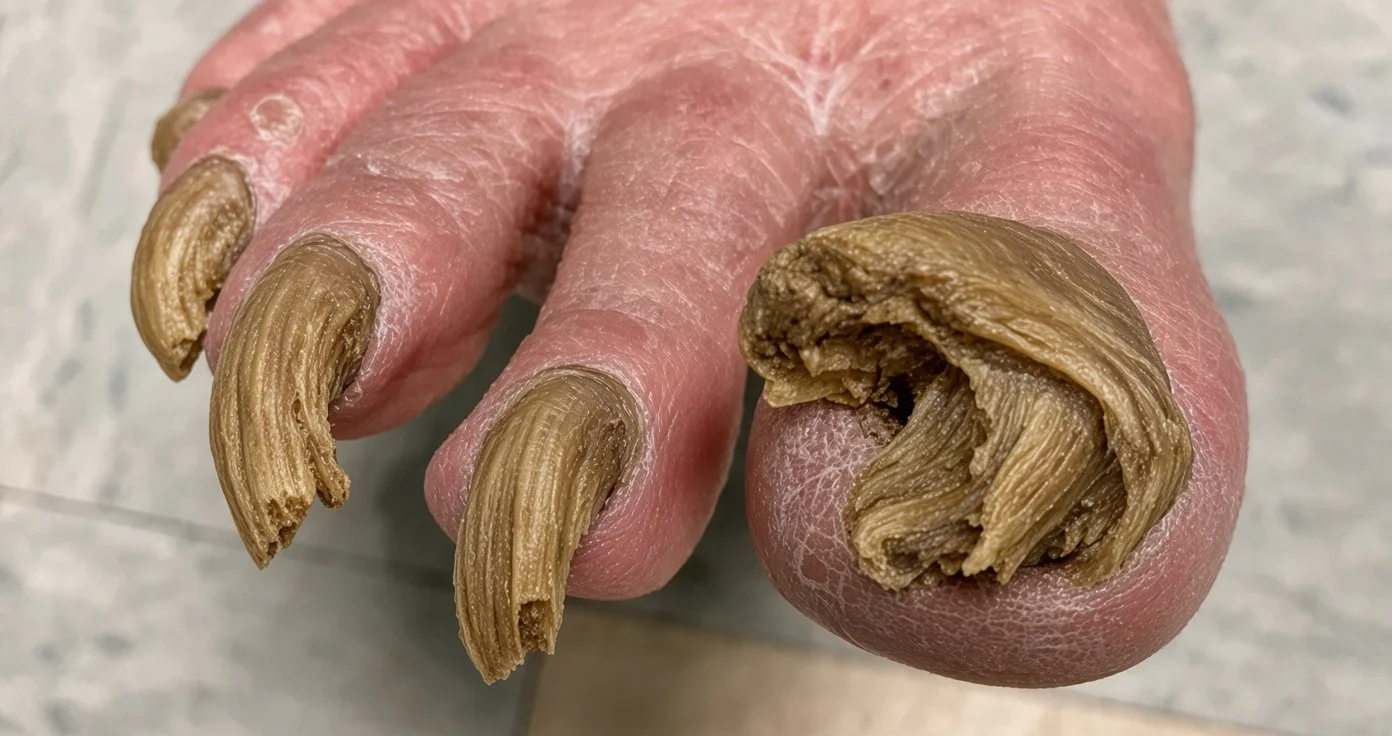
My Struggles with the Family Fungus (ROUND 6)
"My Struggles with the Family Fungus" is a work about inheritance as contamination — not merely biological but psychic, social, and ontological. Its subject is the way poverty, violence, shame, and bodily degradation transmit themselves across generations not as tragedy but as normalcy, and what it costs a consciousness that has partially escaped that inheritance to carry it still in the body while the mind insists on distance. The fungus of the title is literal and exact, but it is also the piece's central symbol: a systemic condition, resistant to topical treatment, requiring internal intervention, capable of spreading through contact, and stubbornly heritable. The piece's achievement is that it never lets the symbol become merely symbolic. The fungus is always, simultaneously, a medical condition and a metaphysical one — and the revised text makes a third term explicit: it is also an institutional condition, a mark that survives the escape from poverty into the academy and reasserts itself there with equal force.
The opening paragraph establishes the piece's governing logic with surgical precision. The childhood scene — bribing children with "obsolete arcade tokens" to pick at a grandfather's blackened toenails — is rendered without the retrospective horror one might expect. Instead it is described through the consciousness of the children who lived it: "we figured, if we figured much at all, that this — not just the feet but the brown-gum dentures you could tongue out to scare children or the doughy growths on the wrists and forearms, all of it — is just what time does to men." The philosophical weight of this sentence is immense. The children have no frame for pathology because pathology is the frame. Grandpa "sitting there at the kitchen table like some big belly manta ray nibbled by reef fish" is rendered with the fond grotesquerie only available to someone who loved the scene even as it horrified them — or who did not yet know enough to be horrified. The image is precise rather than cruel: the manta ray does not suffer the reef fish. It is simply their environment.
The class portrait of the second paragraph is one of the piece's most concentrated achievements. "Even the toys at school, although more operational than our wheelless yard-sale wonders that came on Christmas always with no batteries, bore in their nooks that ineradicable grime of a wish-sandwich poverty that wishes for applesauce sandwiches." The formulation captures a poverty so absolute that its aspirational object is itself barely an object — a sandwich that wishes for filling rather than filling itself. The piece does not editorialize about this poverty. It renders it from the inside, in a voice that has only recently acquired the vocabulary to name what it could not name while living it. The "aroma of waxy fermentation becoming, like the acrid kerosene in our heaters and stoves, as homey as punching a wall (or even a wife)" — that parenthetical is the piece's first indication of what the inheritance actually includes beyond the biological: domestic violence absorbed as ambient fact, normalized into the register of kerosene and fermentation, things simply present in the environment of childhood.
Grandma's typhoon entrance constitutes the piece's first rupture — the first intrusion of shame into what had been oblivion. The kerosene hand-washing is itself significant: kerosene as both household fuel and decontaminant, the poverty cure applied to the poverty symptom. Her "blazing eyes" and the "wrist squeeze too tight, the speed too furious" introduce a violence in the act of protection that will characterize the piece's understanding of care throughout: care and rage are not cleanly separable in this world. The piece states explicitly what this rupture planted: "kudzu vines of fear." But it notes equally that the fear "remained dormant — like the fungus itself — for a time." The parallel is not decorative. The piece is constructing an argument about latency: both the fungus and the shame it carries need the right conditions to surface.
Those conditions are provided in abundance. The divorce section is a masterpiece of compressed social portraiture. The courtroom scene — the mother's "blouse-torn tits bouncing with mobster braggadocio and a hawk-tua at the bench" — is rendered with a grotesque comedy that is simultaneously mortified and fiercely loyal. The question posed about the judge's decree — "did not his vengeful decree harmonize perfectly enough with God's work that he could toast his decision as salvation at the Thanksgiving table?" — names, without naming, the class contempt embedded in child welfare decisions, the way institutions present their punitive judgments as mercy.
The Red Bull Motor Inn section is the piece's most sustained exercise in environmental portraiture. The motel is rendered as an entire ecosystem of managed decline: "a pay-by-the-week dive infamous — after the rashes of homeless clientele — for inspection failures, its roach-ridden outlets helping time devour whatever nostalgia for roadside Americana still clung to its name." The new stepfather figure is drawn through accumulating sensory details — the onion armpits, the rebel-flag ring, the "metronomic tsk-tsks" at the abscessed tooth — that function as a catalogue of a certain strain of white American poverty: its particular combination of racism, bodily neglect, and improvised machismo. His instruction in gas siphoning — "the traditional green with yellow stripes" making the detail almost pastoral — is rendered without outrage. These things happened. The prose does not flinch, but it also does not perform flinching for the reader's benefit.
The school bus scene is structurally the piece's center, and it earns that position. The drunk father staggering aboard, the "bloated flush of inebriated concern," the child's agonized invisibility behind cracked faux leather — these details are rendered with the precision of someone who has replayed the scene many times in memory. The sentence "Heart cortisoled into a tumult whose analgesic power I have come to crave (however Sith-like, self-destructive to the point of sirens and cuffs)" is one of the piece's most psychologically honest formulations: it identifies the physiological addiction to crisis, the way a childhood organized around cortisol creates a nervous system that will later seek those conditions or manufacture them. This is not excuse; it is etiology. The parenthetical draws a direct line from that second-grade school bus to the adult rages that will occupy the piece's final movements.
Paul's dysarthric King Cobra speech — "Man's juss tryna see 'is shun" — is rendered phonetically, and the choice is significant. The piece transcribes impairment without mockery and without sentimentality. Paul and the narrator's father are not villains in the piece's moral architecture; they are men produced by the same conditions the piece is documenting, further along the same trajectory the narrator has partially escaped. The Trans Am on the curb, the striper fishing poles, Journey's "Don't Stop Believin'" blasting as his father stands on the firebird decal — these details constitute a ruined Americana that is genuinely moving precisely because the piece refuses to make it merely pathetic. When the narrator notes that the scene explains his "hankering nostalgia" for the Dr. Gonzo and Raoul Duke camaraderie, he is identifying what Thompson understood: that certain forms of male dissolution carry their own ruptured poetry, their own doomed solidarity.
The high school section introduces the piece's second register of shame: social humiliation among peers, the terror of the body being made visible. The fungus transitions here from feared inheritance to lived secret, and the management of that secret becomes the organizing principle of the narrator's social existence. When Hector's "fungus among us" triggers the physical altercation, and the subsequent exposure of the foot with the disposable camera, the scene achieves something rare: a social humiliation that is simultaneously absurd and genuinely painful, funny and devastating, without the piece manipulating the reader's response toward either pole. "Cheese," the narrator says, as the photograph is taken. That single word does more psychological work than a paragraph of analysis could. Marissa's recoil from the foot at the end of the evening — "the cold of her touch disappearing as soon as it came" — completes the scene's emotional logic: the body's secret, once known, reorganizes all other possible contact around it.
The graduate school section enacts the piece's central irony with maximum force. The narrator has escaped — partially, materially, institutionally — but the inheritance has not been left behind. It lives in the body. The scene with the stepfather-in-law is a masterclass in the psychology of class displacement: the anger is real, the triggers are real, but the piece is careful to show that the anger's object — the stepfather's helpfulness, his competence, his physical presence, his improvement of the lawn — is also its indictment. "The lawn was looking better than it ever did" is one of the piece's most quietly devastating sentences. The competence of the man he cannot tolerate proves the inadequacy he cannot acknowledge. The glass-slamming, the door-punching, the barefoot flight through the neighborhood — these are the inherited cortisol economy expressing itself in a context that has no frame for it. His exchange with the neighborhood boy — "Prickers in the woods" offered as explanation for bleeding feet — is the piece's most compact image of the double life: the suburban PhD candidate and the Red Bull Motor Inn kid, walking the same bloody feet down the same street, lying to children.
The medical section — "The doctor touched my toes barehanded. That was amazing to me" — is the piece's single most compressed notation of class distance. A physician's bare-handed clinical contact, routine to the point of unremarkable, is experienced as astonishing. Everything the piece has established about the narrator's relationship to his own body — its shamedness, its concealment, its untouchability — concentrates into that sentence. The doctor's counsel, measured and evidence-based, is immediately overridden by the narrator's compulsive self-treatment regime. The catalogue of remedies — apple cider vinegar, Listerine, hydrogen peroxide, Vick's vapor rub, bleach, Monistat 7, urine — deployed in a three-times-daily ritual of extraordinary elaborateness, is not merely comic. It is the only available expression of the PhD student's intellectual rigor applied to the one domain where that rigor has always felt most insufficient. The cat litter box propped up with books, the carpenter's mask against airborne flakes: these are the instruments of a man deploying everything he has against a condition that will not yield to effort, because the condition is systemic and effort is topical. That the treatment regime escalates into chemical injury, rash, pustules, and total incapacitation of the foot demonstrates the piece's governing principle in microcosm: when shame rather than neutral attention organizes one's relationship to the body, the body's distress signals get reinterpreted as enemy maneuvers, and the cure becomes indistinguishable from the disease.
The amputation scene in the revised text is the piece's climax, and it is transformed by what immediately precedes it. In the earlier version, the narrator leans over the loppers and doubts his nerve. In the revised text, that moment of doubt is preceded by an extended internal monologue that makes the amputation the culmination not merely of a domestic rage but of a comprehensive reckoning with failed institutional escape. He thinks of the PhD, the tenure-track bet made without a safety net, the normalized "punking" in both television and university culture, and finally the memory of the undergraduate professor who slammed the table: "You could be the next Harold Bloom. It doesn't fucking matter." That the professor was trying, however clumsily, to warn him about the fatal liability of "oppressor optics" for someone with the narrator's profile — a freethinking truth-teller whose "underclass reek threatens to expose the grand gaslight around which the university bureaucracy was structured" — and that the narrator only understood this "the hard way" gives the amputation scene a philosophical weight it did not carry before. The lopper does not merely sever the diseased toe. It severs, in one act, the biological inheritance from below and the institutional betrayal from above, both of which have claimed him through the same part of his body.
The "Uh-sa!" of the cut is rendered with the same phonetic precision as Paul's dysarthria, and the parallel is not accidental. The same verbal technology that transcribed the impairment of the dispossessed now transcribes the narrator's own primal exclamation at the moment of self-surgery. He has, in this moment, become briefly indistinguishable from the inheritance he was supposed to have escaped. "The toe was alone, away from me — a mere thing on the concrete." The grammar of alienation is exact: the toe has become an object, separated from the subject who was inseparable from it for decades. "I tossed it in the oil pan, among the grasshoppers dead in the blackened grease" — this final placement of the severed toe among the grasshoppers in the blackened oil pan is the piece's strangest and most resonant image, a kind of accidental nativity scene of ruined things: the organic and the mechanical together in the same dark grease, all of it evidence of work done, things worn out, entropy honored.
The piece closes not with resolution but with consequence deferred: the possible tetanus, the vaccination crack through which the narrator predictably fell. "If anyone had fallen through the vaccination crack, it was me." The sentence returns the piece to its opening register — the flat declarative, the unsurprised recitation of the predictable failure of systems to reach those who most needed them — but it now carries the full weight of everything that has been established about what it means to fall through cracks: the foster care, the Red Bull Motor Inn, the karate class outreach program that taped his feet without naming what it was taping, the health insurance that arrived only with graduate school, the institutional warning he received too late. The vaccination crack is not a metaphor. It is the literal continuation of a lifelong pattern. The tone has traveled the full circle. What began in the innocence of not knowing is now the exhausted knowledge of someone who knows exactly how this works — systemically, bodily, institutionally — and who has the scar on his left foot to prove it.
Formally, the piece moves between registers — the lyric, the grotesque, the comic, the clinical, the confessional, the institutional-critical — with the ease of a writer who has understood that these modes are not alternatives but simultaneous truths about the same material. Its sentences range from the compact and declarative to the elaborately subordinated, and the variation is never arbitrary: the long sentences carry the self-analysis, the short ones carry the facts that resist it. The piece's humor is never at the expense of its subjects, including the narrator himself; it is the humor of someone who has found in comedy the only adequate response to the full absurdity of the inheritance.
What "My Struggles with the Family Fungus" ultimately argues is that escape from poverty is never clean, that the body keeps the score the mind would prefer to settle, and that the institutions supposedly offering escape have their own forms of rejection built in — rejection that targets precisely the qualities the poverty produced: the narrowness of focus that made the narrator survivable in his world, the underclass reek that made him legible in the wrong way in the new one. The distance between the bottle-collecting illiterate grandfather and the PhD candidate is measured not in character but in luck, accident, and a systemic condition that no amount of apple cider vinegar, intellectual rigor, institutional credential, or self-punishing effort can fully eradicate — because it was always, from the beginning, internal.
Meta Description
A memoir in which toenail fungus becomes the organizing symbol of generational poverty, bodily shame, institutional betrayal, and the limits of individual escape: tracing the condition from a grandfather's kitchen table through foster care, Red Bull Motor Inns, school bus humiliation, a failed academic career, and a garage amputation with bypass loppers, the piece argues that systemic inheritance resists every topical cure — biological, personal, and institutional alike.
Keywords
My Struggles with the Family Fungus, generational poverty memoir, bodily shame literature, class and the body, working-class memoir, toenail fungus symbolism, inherited trauma prose, grotesque realism American literature, self-treatment obsession, cortisol and class, domestic violence inheritance, academic precarity and poverty, Harold Bloom cultural wars, amputation as liberation, close reading memoir, contemporary American nonfiction, systemic condition as metaphor, underclass and university

Pumps and a Bump (ROUND 11)
"Pumps and a Bump" is a prose piece of sustained and deliberate extremity — a clinical, philosophical, grotesque, and formally inventive account of a sedation dentist who serially abuses unconscious minor patients. It is among the most demanding works in the collection, and it demands a response adequate to its actual ambition: not a refusal of the material but an honest accounting of what the piece is doing, how it does it, and what it achieves and fails to achieve in the process.
The title is borrowed from MC Hammer's 1994 single, a song about female physical attractiveness delivered in the idiom of early-90s suburban hip-hop — the "wiggerification" the piece itself names. The appropriation is precise: the song is about appetite presented as celebration, about desire that does not interrogate itself. Applied to this piece, the title's register — the swaggering sexual confidence of early-90s rap — is the borrowed language the dentist himself eventually speaks, which the piece will identify as possibly supernatural in its incongruity. The title's cheerfulness is the piece's first horror.
The piece's opening movement establishes its narrator's relationship to the dentist with a combination of clinical precision and sardonic distance. The two-week no-fap fast is described in physiological detail that is uncomfortable precisely because it is accurate: the pressure, the shooting pains, the overflow. "Pity would be uncalled for even if you could step into the slimy hell of his underwear" — the narrator addresses the reader directly, preemptively foreclosing sympathy before it can form, but the preemptive quality of the move reveals that sympathy might otherwise be available. The piece is aware of the temptation to humanize the man through his suffering and refuses it without entirely eliminating its possibility, which is its first formal sophistication.
The no-fap fast as a preparation mechanism is the piece's central structural conceit, and it is rendered with a procedural thoroughness that the piece explicitly identifies as one of the dentist's defining pathologies: "a completionism sufficient all by itself for an autism diagnosis." The accumulation of days — five out, four out, three out, two out, one out — creates a countdown structure that is also a mounting dread, the reader aware of what the countdown is counting toward before the piece states it. The shopping cart incident on day one — "Let's just fuck common courtesy, huh?" — is the piece's most humanizing moment, catching the dentist in an ordinary failure of self-regulation that anyone under sustained physical strain might recognize, before the piece returns to what that strain is in service of.
The piece's second major movement — the act itself — is rendered in a prose style that deliberately mixes the pornographic and the philosophical, the procedural and the absurdist. The patient, "La Peluda," is described in terms that position her within the dentist's appetite — her age, her physical development, her ethnic markers, her vulnerability under sedation — while the narrator's voice maintains a distance that refuses either to eroticize the scene on the reader's behalf or to editorialize it into simple horror. This tonal management is the piece's most technically difficult achievement and its most morally serious one. The piece is not presenting CSA as titillation. It is presenting it as what it is: an act of systematic predation whose perpetrator has developed elaborate psychological and logistical mechanisms to sustain it, and whose victim is a child who has come for dental care.
The "consolation cavity" formulation is the piece's most chilling phrase: the mouth as a cavity that is both a dental site and a sexual one, the professional and the criminal overlapping in the same physical space. The piece has been building toward this overlap from its opening sentence, and the arrival of the phrase does not shock so much as confirm what the countdown structure has been announcing. The cartoon poster — "Captain Cavity-Buster" and "Officer Molar Bear" — provides the piece's most economical image of the gap between the professional persona and the criminal act: the children's dental health authorities on the wall of the room where a child is being abused.
The suction sequence is the piece's most formally interesting passage and its most philosophically expansive. The dentist suctions away the evidence he has just produced — "Weeks of work — the Sisyphus of sedation dentistry, hypervigilant heart now in his throat, undoes it all!" — and the narrator pivots immediately to the absurdist question: how does one understand this? The move from predation to evidence destruction is framed not as a moral observation but as a philosophical problem about the nature of finite consciousness and its desperate investments. "Even were we to have a complete explanation for this man's behavior, that does not stop a meta absurdity from flaring out here." The piece is making a Camusian argument: the absurdity is not in the act alone but in the act followed immediately by its frantic undoing, the same drive that organized weeks of preparation now organizing the destruction of its own product.
The extraterrestrial intelligence question — "how would an extraterrestrial intelligence look at this?" — is the piece's most direct invocation of the philosophical tradition of defamiliarization as a tool for ethical clarity. The piece is asking the reader to see the scene from outside the human frameworks that normally make it legible — the legal framework, the moral framework, the psychological framework — and to encounter the raw absurdity of what finite creatures do with their brief existence. The meditation on entropy, the Etch-a-Sketch erasure constantly galloping closer, the drunk driver clock ready to jump cut at any moment — these are not rationalizations of the dentist's behavior but a genuinely disturbing philosophical extension of the absurdist premise: that even CSA, viewed from sufficient distance, is a variant of the general absurdity of conscious creatures building against inevitable dissolution.
The piece refuses this as a defense. The "No more" sequence — the promise made and immediately anticipated as broken "now even with the portliest tween spirit warming his seat" — is the piece's most psychologically precise passage and its most damning. The dentist's cycle of violation and resolution is not a philosophical position but a pathological pattern, and the piece names it as such without abandoning its philosophical frame. The coexistence of genuine philosophical inquiry and genuine moral horror is the piece's most sophisticated formal achievement.
The extended purple passage — the physical choreography of the act rendered in the accumulation of "You got" constructions — is the piece's most formally daring section. The MC Hammer reference, the New Jack City nightclub, the hip piston combo, the cottage-cheese ass, the DDLG whispers — these arrive with a grotesque precision that is simultaneously comic and horrifying, the narrator's distance maintained through the accumulation of specification rather than through irony or judgment. The "vengeance for having been born" phrase is the piece's most existential moment, positioning the act within the same absurdist frame as the suction sequence: the creature that did not ask to exist, investing with desperate intensity in an act that will not answer the question of why it was born.
The supernatural passage — the "Gen-Zodiac neologism" the dentist could not have known, "throat goat," spoken with dark malice and full-chested authenticity — is the piece's most unexpected formal element and its most tonally dissonant. The narrator raises the possibility of demonic possession not to endorse it but to name the phenomenological experience of encountering behavior that seems to exceed the person exhibiting it. The white jazz guy in the panama hat speaking the language of Gen Z sexual predation with authentic fluency — this incongruity is offered as a genuine mystery that natural explanation may be insufficient to resolve. The priest who lost his faith declaring demonic possession is the piece's most darkly comic image.
The assistant approaching with heels clicking, the gauze-in-the-supply-closet decoy, the piece's final question — "How many levels of absurdity do we have, then? Might the absurdity cut back, even if the ultimate archē suffices for its own existence, all the way to God?" — closes the piece in the register of Leibnizian metaphysics: if everything has a sufficient reason, if the ultimate ground of existence is self-caused and therefore sufficient, does the absurdity of what has just occurred indict the ground itself? The question is not asked to be answered. It is asked because it is genuinely asked — because the piece has been building toward a confrontation with the relationship between cosmic order and individual horror that no available framework resolves.
"Pumps and a Bump" is ultimately a piece about the persistence of the absurd through every available lens. Legal, moral, psychological, philosophical, theological — the piece tries each framework on the scene it has constructed and finds each insufficient. Not because the scene is morally ambiguous — it is not, and the piece does not suggest it is — but because the full encounter with what finite creatures do to each other in the brief interval of their existence exceeds the frameworks available for comprehending it. The piece does not redeem this. It does not resolve it. It holds the horror and the absurdity together until the reader feels, as the narrator intends, that reality itself may require the kind of accounting that only the most uncompromising art can attempt.
Meta Description
A formally extreme prose piece about a predatory sedation dentist, rendered through clinical precision, absurdist philosophy, grotesque physicality, and Camusian inquiry — using CSA as the occasion for a sustained confrontation with the absurdity of finite consciousness and the insufficiency of every available framework for comprehending what creatures do to each other in the interval of their existence.
Keywords
Pumps and a Bump, sedation dentistry, CSA prose, absurdist philosophy, Camus and predation, completionism and pathology, suction sequence, demonic possession passage, extraterrestrial defamiliarization, sufficient reason and horror, countdown structure, clinical grotesque, close reading, Hypocorism, finite consciousness and absurdity

Pumps and a Bump (ROUND 10)
"Pumps and a Bump" is a portrait of predation rendered in the register of cosmic absurdity — a prose poem that refuses the reader the comfort of moral distance by insisting, with mounting philosophical pressure, that the pedophilic dentist's behavior is continuous with rather than exceptional to the general condition of finite creatures laboring against entropy without having asked to exist. Its formal achievement is to hold the specific and the universal in such close proximity that neither can be cleanly separated from the other: the man is monstrous, and the monstrousness is human, and the humanity is universal, and the universality does not excuse anything, and all of these claims are simultaneously true and the piece insists on holding them all at once.
The piece's central formal strategy is the slow revelation of its subject. The opening paragraphs render the dentist's physical discomfort — the wide stance, the mincing walk, the congested throb — in terms that are comic and precise without immediately naming their cause. "White honey had been thickening over nearly two bowlegged weeks" is a first sentence of extraordinary compression: the euphemistic "white honey" establishing the piece's characteristic mode of indirect precision, the "two bowlegged weeks" naming the duration of the no-fap fast before the reader understands what that fast is in service of. The dental hygienist, the Bradford pears in bloom, the clinic's hallway — the ordinary professional world is established in full before the piece begins peeling back what is happening within it.
The edging metaphor — which has appeared elsewhere in the project as a structural principle — is here literalized and then philosophically extended. The dentist's sexual self-denial is organized around a specific appointment, a specific patient, a specific act of violation. The piece renders the accumulation of his physical discomfort with clinical precision — the prostate at physiological limit, the rectal overflow, the kegel held in sleep — not to generate sympathy but to establish the completeness of his investment in what he is about to do. The no-fap fast is itself a form of predatory preparation, the intensification of desire as instrument of harm. "Timing was everything here" names the predatory logic that the preceding comedy of discomfort has been serving.
The piece's most philosophically ambitious move is the deployment of animal analogies not as metaphors for the dentist's behavior but as genuine comparative frames. "A world where crack addicts will hunt the rug for what they damn well know are but baking-soda pebbles of carpet deodorizer; a world where a broody hen will sit on a golf ball until a real egg comes along; a world where a bereaved orca will carry her decomposing calf over weeks of nosing it to the surface to 'breathe'" — these three images are carefully chosen. Each names a behavior that is simultaneously comprehensible within its own logic and absurd from outside it: the addict who knows but cannot stop knowing, the hen whose reproductive instinct cannot distinguish real from false, the orca whose grief exceeds the object of grief. The piece places the dentist within this taxonomy of creatures driven by instinct past the point of reason or self-preservation — not to excuse him but to locate him within the broader absurdity of motivated creaturely existence.
The violation itself is rendered with the same cold precision that characterizes the piece throughout — clinical vocabulary placed in contact with the vernacular of pornography, the professional setting never quite vacated by the sexual content that occupies it. "Consolation cavity" is the piece's most compressed formulation: the dental vocabulary converted into sexual taxonomy, the professional space revealed as always already organized around access to bodies. The glove preserved in a ziplock bag, the aspiration pneumonia that had led to questions before, the decoy errand for the assistant — these details establish a history of repetition that transforms the single scene into a pattern, the man's "No more" revealed as a promise that has already been broken many times.
The suction passage is the piece's formal and philosophical climax. "He suctions the fucking thing!" — the exclamation mark is the piece's only one, and it arrives as genuine shock, not at the violation but at its erasure. The piece has been building toward this moment: the man who has organized weeks of his existence around this act now undoes it in "milliseconds," driven by the same fear of consequences that his predatory preparation was designed to manage. The shift from perpetrator to evidence-destroyer in the same instant is where the piece locates its central absurdity — not in the act itself but in the creature who commits it, who suctions it away, who promises himself "no more," who will do it again when "the portliest tween spirit" warms his seat.
The extraterrestrial framing is the piece's most formally audacious move. "How would an extraterrestrial intelligence look at this?" — the question is not rhetorical but genuine, and the piece pursues it seriously. The alien gaze defamiliarizes the entire scene: the purple cock ring, the elongation rings, the hip-piston choreography, the DDLG whispers — all rendered as the "silent theater" of a creature engaged in behavior that is simultaneously species-typical and species-specific, continuous with "builders of anthills and Giza pyramids alike" in its investment of effort toward a goal, utterly discontinuous from anything that could be called dignity or reason.
The demonic possession passage is the piece's most tonally surprising and most philosophically serious. "Throat goat" — a Gen Z neologism the dentist could not have known — delivered with authentic swagger by a man whose worst offense is normally "a pretentious wine selection," raises the genuine question of whether something other than the man is operating through him. The piece does not resolve this question. It holds it open as one possible frame for the behavior — not to excuse the man but to locate his behavior within the oldest human attempt to explain why people do what they cannot stop doing. The demonic as a theological category for compulsion, for the self that acts against its own stated values, is here treated with the same seriousness as the evolutionary and the psychiatric frames that precede it.
The closing question — "Might it cut back, even if the ultimate archē suffices for its own existence (self-caused as opposed to uncaused), all the way to God?" — is the piece's most compressed philosophical formulation, and it arrives with genuine force. The piece has moved from the specific (this man, this child, this clinic) to the categorical (predatory compulsion, creaturely absurdity) to the cosmological (entropy, existence without consent, the self-caused first cause). The question is not whether God exists but whether the chain of absurdity that runs from the suction tube through the evolutionary history of motivated creaturely behavior through the philosophical problem of the uncaused cause cuts all the way back to whatever originated the whole arrangement. The piece does not answer. It leaves the reader with the question, which is the most honest position available to it.
Meta Description
A prose poem rendering a pedophilic dentist's violation of a sedated patient through the registers of clinical precision, cosmic absurdity, evolutionary biology, and demonic theology — insisting that the specific monstrousness is continuous with the general condition of finite creatures laboring against entropy without having asked to exist, and that this continuity neither excuses nor explains away the horror it frames.
Keywords
Pumps and a Bump, pedophilia and absurdity, sedation dentistry predation, cosmic absurdity, extraterrestrial gaze, demonic possession and compulsion, no-fap fast and predation, edging as predatory preparation, creaturely existence and entropy, uncaused cause, clinical vocabulary and violation, DDLG whispers, throat goat neologism, contemporary American prose poem, philosophical grotesque, predation and repetition compulsion, self-caused existence, absurdity and monstrousness
Pumps and a Bump (ROUND 9)
The Pathology of the Absolute: Somatic Desecration and Cosmic Absurdity in Pumps and a Bump
Introduction: The Literariness of the Grotesque
The text titled Pumps and a Bump stands within the transgressive literary lineage of authors like Vladimir Nabokov, Thomas Pynchon, and David Foster Wallace. It functions as a dense, claustrophobic anatomical-philosophical critique of the predator’s interiority. Rather than indulging in the pornographic or the merely sensational—vulgar forms that rely on the exploitation or objectification of the victim—the narrative directs its hyper-stylized lens entirely toward the somatic, neurological, and metaphysical machinery of the perpetrator, Dr. James.
The aesthetic worth of the piece lies in its rigorous execution of a formal counterbalance: the deployment of a high-bourgeois, medicalized, and philosophical vocabulary (pulpotomy, threnody, lordotic, archē) to map an act of absolute moral and physical degradation. This friction produces an alienation effect (Verfremdungseffekt) that prevents the reader from experiencing either cheap titillation or simple moral superiority. Instead, it forces a direct confrontation with the cold, hyper-rationalized compartmentalization that characterizes structural human depravity.
I. The Somatic Pressure Cooker: Edging as Teleological Madness
The structural spine of the narrative is formatted as an ironic, inverted ascetic countdown. Over a two-week period, Dr. James engages in a forced retention—a "no-fap fast"—not for spiritual purification, but to maximize the kinetic velocity and sensory payload of a premeditated sexual assault. The text systematically charts the physical toll of this retention through a prose style that treats the human body as an over-engineered, failing hydraulic system.
The progression moves rigorously from a two-week kegel lockdown into acute anatomical engorgement (marked by prostate swell and heavy mucilage), before finally collapsing into total somatic failure at the moment of release.
The author’s choice of descriptors, particularly the use of "backlog okra slime" and "gelatinous sharts," serves a critical narrative purpose. By utilizing the specific fluid dynamics of non-Newtonian, shear-thinning substances—the ropey, tenacious viscosity of okra and aloe—the text strips the character of any phallic, predatory dignity. He is not depicted as a powerful, dominant victimizer; he is reduced to a leaking, clogged animal, scuttling through his own clinic like a "humanoid crab."
The body here becomes a site of involuntary treason. The "rectum kicked into overdrive by the sheer structural weight of a prostate at the physiological limit of its own swell" indicates that his pathology is not merely psychological, but a totalizing somatic madness. The mechanical language throughout ("the release of the overwound spring," "captive bolt hellbent on veal") underscores a theme of terrifying determinism: the predator has surrendered his humanity to become an automated, biological delivery device.
II. The Completionist Intellect: The Mechanics of Post-Pop Dissociation
One of the most academically compelling dimensions of Pumps and a Bump is its chilling depiction of post-coital dissociation and the subsequent frenzy of clinical sanitization. A split second after the "ballistic bluster" of his release, the protagonist shifts instantly from a state of raw, unhinged animalism to a state of hyper-rationalized, meticulous compliance with the clock.
This sudden frantic rush to clean what just milliseconds before the man would have obliterated his family and reputation to soil highlights the absolute core of the psychopathic or highly compartmentalized mind. The text refers to this as a "completionism sufficient all by itself for an autism diagnosis," objectifying the act of cleanup into a symbolic "clean slate." The mechanical use of the spit-sucker to clear the patient's throat is an act of cold utility driven by the fear of "aspiration pneumonia" and previous "gulp-worthy inquiries."
This creates a stark, dualistic split between the reckoning and the sanitization. On one side, you have violent pelvic pumping, subliterate DDLG whispers, and an absolute biological surrender. On the other side, milliseconds later, you have precise spit-sucker utility, intricate medical rationales, and an intensely hypervigilant legal awareness.
By stripping his own urethra clear "like it was an IV tube," Dr. James attempts to erase the data of his crime, turning his clinical expertise into an instrument of forensic counter-measures. The text brilliantly highlights the supreme irony of his existence: he subverts the very tools and framed diplomas meant for healing in order to execute and then scrub an act of pure predation.
III. The Metaphysical Leap: From "Spunk" to Archē
The true literary validation of the text occurs in its final movement, where the narrative voice executes a vertical leap from the biological filth of the clinic room to the heights of existential and theological philosophy.
The concluding paragraph anchors its visceral impact in the description of "the gelatinous sharts of a colon turned spastic in its gratitude." The word "spastic" functions here with clinical brilliance; it marks an involuntary, neuromuscular convulsion—the body’s lower autonomous tract weeping with primitive relief because the pressure-cooker has finally vented.
Yet, while his lower anatomy lapses into this degraded release, his intellect immediately seeks refuge in cosmic abstraction. The progression moves rapidly from somatic degradation, through psychological dissociation, and straight into a profound philosophical inquiry regarding the balance of cosmic absurdity and the divine.
The text asks: “Does it cut back, even if the ultimate archē suffices for its own existence (self-caused as opposed to uncaused), all the way to God?”
This is not a casual rhetorical flourish. It is a profound psychological portrait of intellectual evasion. Dr. James attempts to escape the immediate moral reality of his squalid crime—and the impending sound of his assistant Debbie’s clicking heels—by re-framing his perversion as a localized symptom of a grander, cosmic absurdity. If existence itself is an unasked-for, chaotic labor characterized by entropy (whether it be stems competing for sun, or a bereaved orca nosing its dead calf), then his crime is merely another manifestation of reality's intrinsic, violent absurdity. He projectively offloads his guilt onto the structure of the universe, tracking the levels of absurdity all the way back to the prime mover.
Conclusion: The Literary Worth of the Piece
Pumps and a Bump is an exemplary piece of contemporary transgressive fiction because it subverts the standard tropes of shock-value literature. It refuses to glamorize the predator, choosing instead to document his somatic degradation with the cold eye of a veterinary pathologist. Through its dense, rhythmic cadence and its refusal to blink at the base physical realities of a hyper-pressurized body, the text leverages the grotesque to achieve an authentic condition of existential nausea. It stands as a highly disciplined, aesthetically significant investigation into the horrific capacities of human compartmentalization, proving that even within the deepest moral vacuum, the mind will desperately construct a theology to justify its own rot.
Meta Description
A claustrophobic, maximalist prose piece exploring the hydraulic buildup of obsession, forensic panic, and sexual violation under medical sedation, tracking a predatory dentist's cycle of somatic accumulation, frantic cleanup, and existential absurdity.
Keywords
Pumps and a Bump, forensic panic, somatic accumulation, predatory mechanics, medical authority violation, sedation dentistry trauma, hermeneutic contamination, existential nausea, thermodynamic entropy, transgressive cycle, legal erasure, bodily economy, maximalist prose, metaphysics of desire

Pumps and a Bump (ROUND 8)
“Pumps and a Bump” operates as a high-octane, claustrophobic study of the pathology of boundary collapse, forensic panic, and sexual predation under the alibi of medical authority. The piece explicitly rejects both the sanitizing vocabulary of trauma discourse and the standard legal syntax of consent, embedding itself instead in an asymmetrical zone of cognitive and somatic violence: the premeditated violation of a sedated pediatric patient by a pediatric dentist, Dr. James. Yet, what distinguishes this work is that it does not stop at criminal pathology or sensationalist shock. Instead, it uses an extreme study in compulsion, rationalization, and metaphysical absurdity to interrogate broader questions about agency, repetition, and the grotesque persistence of desire. The narrative engine of the text is not merely the transgressive act itself, but the immense, agonizingly deferred physiological and mechanical preparation that precedes it, contrasted sharply against the instantaneous, frantic reversal of the post-coital cleanup. By tracking this cycle, the text positions the predatory body as a machine trapped between biological hyper-secretion and thermodynamic panic, ultimately using one particularly monstrous case to ask whether the compulsive momentum visible in him is simply an intensified version of the same absurd force animating all life.
The opening movement establishes the offender not first through his crime, but through the infrastructure and bodily mechanics of obsession. Dr. James’s two-week abstinence is characterized not as a moral exercise, but as a severe hydraulic engineering project. The text maps this build-up onto a hostile, hyper-fertile spring landscape marked by the “musty rot and metallic tang of Bradford pears in their hysterical bloom” and the “fermented carnality” of a dental hygienist’s “tuberose scent bubble.” The protagonist’s physical gait is structurally deformed by his internal accumulation; he adopts a wide stance and a “mincing,” crab-like walk that he deceptively frames to his staff as a sports injury (“My racquetball days are done”). His discomfort, his odd gait, his improvisational excuses—all create a portrait of a man whose body has become completely subordinated to an elaborate ritual of deferred gratification. The description of his self-imposed fast is grotesquely comic in its extremity, yet this humor serves a serious psychological function: it reveals the absurd lengths to which desire can restructure ordinary life, turning compulsion into something infrastructural rather than episodic. The calendar markings, the broken novelty Dino Dental pens busting apart into "doohickey springs of steampunk," the customer irritability, and the sharp bodily pains shooting toward his kidneys make the build-up feel like an agonizing containment system. Seconds are described as “ratcheted so open in [their] splay” that time itself undergoes a painful dilation, forcing him to maintain a continuous pelvic contraction ("holding a kegel—pelvic floor white as his toe knuckles") to prevent the entire structural architecture of his desire from unzipping too soon.
A major strength of the piece is its refusal to frame the subject’s psychology as wholly alien or existing in a vacuum. The analogies to crack addicts searching the rug for what they know are only baking-soda pebbles of carpet deodorizer, broody hens incubating golf balls until a real egg comes along, and a bereaved orca carrying her decomposing calf over weeks to the surface to “breathe” all work toward a disturbing proposition: irrational persistence is not exceptional, but deeply continuous with life itself. The predator becomes not less monstrous, but more unsettling precisely because his internal mechanisms rhyme with broader biological patterns of fixation, investment, and denial. This calculations-based framework transforms the body into a tactical asset, emphasizing that the protagonist is entirely un-entitled to pity because his suffering is a closed, autogenous loop. It is a self-inflicted pressure system designed to withstand the interim how for the sake of a precise, teleological why, proving that "even water tastes like manna after two days of abstinence."
The structural pivot of the narrative occurs at the exact moment of climax, described as a "ballistic bluster furious enough to displace a ceiling tile." The act itself is marked by an obsessive, mechanical completionism—an absolute refusal to let "one gelatinous clot less than all he had to give fill the patient." The mouth of the anesthetized child is explicitly defined as a "consolation cavity," a secondary surrogate for the other, more legally and physically damning anatomical spaces that he cannot fully violate without immediate detection. However, the core analytical interest of the text lies in the immediate, split-second transition from total, transgressive abandon to the panicked discipline of forensic erasure. The absolute sovereignty of the predatory ego instantly collapses into an absolute state of legal and social vulnerability, providing the piece's central absurdist engine. The same obsessive drive powers both violation and concealment; the instant he stands there knowing no more contractions are coming, the offender frantically works to erase the evidence. His transformation from a figure of complete self-assertion to a frantic custodian is mediated through the clinical tools of his trade. The spit sucker, an instrument designed for standard dental hygiene, is converted into an engine of desperate evidence eradication, unkinked for maximal reach to scavenge the depths of the child’s throat. The text highlights the radical absurdity of this reversal: a man who, milliseconds prior, would have joyfully obliterated his family, reputation, license, and freedom to deposit his biological material, now suctions the fucking thing to ensure no residual metallic taste or aspiration pneumonia can invite legal scrutiny.
This act of suctioning is not merely pragmatic; it functions as a psychological defense mechanism—a ritual of moral resetting. The text notes that his extreme thoroughness is not so much care for a moral agent he had wronged as his way to express a clean slate, his way to symbolize that he was done for good now with such wronging. The repeated promises to stop are crucial here. The internal utterance of “No more” and “This is the last damn time” acts as a cyclical, secular absolution. These lines are not presented as exculpatory, but they complicate the portrait by introducing post-act lucidity and self-awareness without transformation. The offender recognizes his pattern, experiences the sobriety of post-pop relief, and yet the narrative voice observes that this fragile moral architecture is already doomed to crack the moment yet another set of breast buds enters his field of vision. This places the work in direct conversation with addiction literature, exploring the structural similarities between compulsive systems of behavior where the cleanup is an intrinsic component of the transgressive cycle itself, providing the empty baseline necessary for the next accumulation to begin.
When the text pans back to describe the physical mechanics of the assault, it deliberately strips the scene of clinical realism, opting instead for a grotesque, highly stylized aesthetic collage that functions as zoological estrangement. The offender is described almost as if by an alien naturalist, his motions transformed into a bizarre mating choreography and tracked through a series of jarring cultural and historical coordinates. He is depicted with a right leg hitched high like MC Hammer's dog, hands overlapped as if air humping to the New Jack of a 90s NYC nightclub, and hips pumping with the footing-loss frustration of a crazed stallion to the real song on the cloud playlist ("Hit Me with Your Best Shot"). This aesthetic choices achieves a radical de-individualization, removing Dr. James from a specific clinical setting and integrating him into a timeless, evolutionary lineage of biological expenditure where his labor unites him with builders of anthills and Giza pyramids alike. Furthermore, the juxtaposition of aging, arthritic joints, a cottage-cheese ass, a purple cock ring, and a "white ass grooving and grinding at the Slow Jamz tempo" highlights a profound incongruity. The body is exposed as a ridiculous, straining machine undergoing severe mechanical stress rather than an idealized vessel of transgression. Finally, the inclusion of Daddy/Doll Girl whispers (“Lil fuckin Sleeping Beauty, huh? Think I ain’t seeing through the bullshit”) demonstrates the predatory mind's need to impose a narrative of latent submission onto a completely unresponsive, chemically paralyzed victim, interpreting her sedation as a coded form of participation to preserve his own psychic deniability.
What elevates the piece beyond a clinical pathology study is its widening philosophical aperture. The narrator explicitly shifts from individual explanation to meta-absurdity: even if every behavior can be causally explained, explanation does not dissolve the existential grotesquerie of the pattern itself. This culminates in an extraordinary widening outward—from the man, to spiders and roots and ants, to AI, to creation itself. The offender’s absurd behavioral loop becomes a grotesque microcosm of a broader cosmic condition: a world of finite beings endlessly investing against entropy, building, desiring, and repeating, without having asked to exist. The text introduces a profound state of hermeneutic contamination that cannot be scrubbed out by the clinical efficacy of the suction rod or chlorhexidined wipes. Although the physical data can be vacuumed away into a plastic tube, the rank vibe of predation remains completely indelible, hanging in the air alongside the child's tousled hair, her nasal hood all out of whack, and the unmistakably yellow spunk passing through the line. The text explicitly links this local forensic anxiety to a systemic cosmic nausea. It asks whether a zoomed-in tracing of any finite creature investing desperation as the horizon of Etch-a-Sketch erasure gallops closer might awaken the same nausea even in an artificial intelligence thrown into this world like its parents.
The final question—whether this absurdity scales all the way back to the ultimate archē—reveals the piece’s deepest ambition. The true subject is not simply predation, but the metaphysical embarrassment of embodied desire itself. The criminal becomes the most lurid available specimen for examining whether life’s endless drives, investments, and self-defeating loops are intelligible in any ultimately satisfying sense. Formally, the piece is maximalist in a way that perfectly serves its themes. The prose mimics obsessive accumulation: clause upon clause, image upon image, mirroring the compulsive excess it depicts. The reader is meant to feel trapped inside a relentless, hyper-concentrated momentum where the sudden, frantic rush to clean what just milliseconds before the man would have destroyed his entire existence to soil becomes a terrifying, self-sustaining cycle of recurring violation.
Meta Description
A claustrophobic, maximalist prose piece exploring the hydraulic buildup of obsession, forensic panic, and sexual violation under medical sedation, tracking a predatory dentist's cycle of somatic accumulation, frantic cleanup, and existential absurdity.
Keywords
Pumps and a Bump, forensic panic, somatic accumulation, predatory mechanics, medical authority violation, sedation dentistry trauma, hermeneutic contamination, existential nausea, thermodynamic entropy, transgressive cycle, legal erasure, bodily economy, maximalist prose, metaphysics of desire





blog
FAQ

Visit my Substack: Hive Being
Visit my Substack: Hive Being
Don’t let anyone tell you that real life is lacking in poetic interest. This is exactly what the poet is for: he has the mind and the imagination to find something of interest in everyday things. Real life supplies the motifs, the points that need to be said—the actual heart of the matter; but it is the poet’s job to fashion it all into a beautiful, animated whole. You are familiar with Fürnstein, the so-called “nature poet”? He has written a poem about growing hops, and you couldn’t imagine anything nicer. I have now asked him to write some poems celebrating the work of skilled artisans, in particular weavers, and I am quite sure he will succeed; he has lived among such people from an early age, he knows the subject inside out, and will be in full command of his material. That is the advantage of small works: you need only choose subjects that you know and have at your command. With a longer poetic work, however, this is not possible. There is no way around it: all the different threads that tie the whole thing together, and are woven into the design, have to be shown in accurate detail. Young people only have a one-sided view of things, whereas a longer work requires a multiplicity of viewpoints—and that’s where they come unstuck.—Goethe (Conversations with Eckermann)




Featured Blog Posts
have appeared last night—
all those met along the way?
Scholarly Essay: "Pound Town: A Defense of the Moral Permissibility of Bestiality"
"Pound Town: A Defense of the Moral Permissibility of Bestiality" is a work of philosophical provocation in the tradition of the academic thought experiment — rigorous, footnoted, structured in the formal architecture of analytic ethics, and dedicated to two figures (Gary Varner, a philosopher of animal ethics, and Grandpa Jack) whose juxtaposition announces the essay's governing tonal register: the personal and the scholarly, the lived and the argued, occupying the same space without apology. It is a piece that takes seriously the philosophical obligation to follow argument wherever it leads, even when — especially when — it leads somewhere the culture has decided in advance cannot be arrived at by honest reasoning. Whether one arrives at its conclusions or not, the essay is a sustained demonstration that the consensus against bestiality rests on philosophical foundations considerably shakier than its cultural certainty suggests.
The essay's formal strategy is the systematic elimination of available rationales. It does not argue for bestiality in the abstract or as a general practice. It argues for the moral permissibility of certain instances of bestiality — a narrower and more defensible claim — and it does so by walking through every category of objection the philosophical and cultural arsenal provides: intuition, biblical authority, naturalness, animal wellbeing, and human wellbeing. Each section follows the same structure: state the argument in its most rigorous form, then dismantle it. What accumulates across these demolitions is not a positive case for bestiality so much as a negative case against the coherence of its prohibition — a demonstration that the grounds on which the taboo rests are either internally inconsistent, arbitrarily applied, or insufficient to do the philosophical work required of them.
The twelve cases organized into four categories at the essay's opening are the piece's most formally accomplished section, and they deserve attention as a philosophical device before anything else. The cases range from unequivocally immoral scenarios — the hen throttled to death in Case 1, the starved collie in Case 2, the drugged piglet in Case 3 — to scenarios of such apparent benignity that the moral objection becomes increasingly difficult to locate: the tween girl getting off from her horse's gyrations in Case 4, the man ejaculating on a turtle's shell in Case 6, the primatologist taken by the orangutan in Case 7. This range is not rhetorical sleight of hand but philosophical precision: it forces the reader to specify exactly what feature of any given case makes it morally objectionable, and in doing so exposes how few of the available features — coercion, harm, lack of consent — apply to the cases in the B, C, and D categories. The cases are the essay's most effective argumentative tool because they make concrete what abstract prohibition tends to leave vague.
The section on intuition is where the essay's most philosophically consequential argument lives, and it is constructed with genuine care. The essay does not dismiss intuition as a moral guide; it accepts the reality of the disgust response and even owns it in the first person — "I too find it disgusting to envision someone, say, performing fellatio on a horse." What it refuses is the move from disgust to moral impermissibility, and it does so by attacking both premises of the intuition argument. Against premise two — that intuition against bestiality is universal — it marshals an extraordinary ethnographic inventory: ancient Egyptians, ancient Greeks, ancient Hindus, the Kisii of Kenya, the Masai, the Comeburras of Colombia, the Inuit, numerous tribal cultures across four continents, and a list of historically famous suspected practitioners that ranges from Tiberius to Aleister Crowley. The inventory is not merely comprehensive; it is philosophically functional. If the intuition against bestiality were a reliable moral guide, it would need to be something like universal. The evidence suggests it is not.
Against premise one — that intuitive wrongness implies moral wrongness — the essay deploys its most rhetorically powerful passage: the extended catalogue of human cognitive failures, biases, and moral atrocities that our intuitions have licensed, from geocentrism to the skull-reading of phrenology to the intuitive wrongness of miscegenation. The catalogue is deliberately excessive, accumulating well past the point at which any single item would suffice to make the logical point, because the accumulation is itself the argument: we are the sort of critters who cannot trust our gut about things we have decided in advance. The section on intuition concludes that moral repugnance, however indelible, requires independent justification — and then spends the rest of the essay demonstrating that the available independent justifications fail.
The biblical section is brisk because its work is largely done by the consistency argument: the Bible condemns homosexuality with the same force it condemns bestiality, and we have decided that the Bible's condemnation of homosexuality is insufficient to establish its immorality. The same epistemic grounds that license that conclusion license the same conclusion about bestiality. The essay does not attack the Bible's authority on religious grounds but on grounds of internal inconsistency and demonstrated errancy: a document that prohibits eating lobsters and getting tattoos and wearing linen-wool blends cannot be treated as a reliable moral authority on bestiality without accounting for why those prohibitions are being selectively ignored. The section's most philosophically interesting moment is the discussion of divine command theory, where the essay acknowledges the internal logic of the position — if right and wrong are ultimately God's arbitrary decree, then everything depends on correctly identifying God's decrees — while exposing the epistemic problem that position generates: by what method does one establish that the Bible, rather than competing holy texts, reflects those decrees?
The section on naturalness dispatches the is-ought fallacy with appropriate efficiency and then spends more time than strictly necessary on the enumeration of meanings of "unnatural" — not because the argument requires it, but because the enumeration reveals how many different objections are being bundled under a single term and how few of them, when separated and examined individually, withstand scrutiny. The observation that naturalness arguments are wielded against bestiality by people who sleep with CPAPs in air-conditioned homes after heart transplants is the essay's most elegant single point, delivered with the compression of good comic writing.
The animal wellbeing section is the essay's most extended and most philosophically serious, because it engages the strongest available objection. The essay does not dismiss the consent framework; it argues that animals can in fact communicate consent through behavioral signals — and here the inclusion of Liz Moores's description of equine attunement is the essay's most formally distinctive move, embedding a perfumer's testimony about the near-psychic quality of the human-horse bond in the middle of a philosophical argument about consent capacity. The passage is not merely decorative. It is evidence: the claim that horses cannot communicate consent, willingness, and refusal is empirically contested by anyone with sustained experience of horses, and the essay appeals to that experience directly. The section's most philosophically rigorous passage is the extended argument distinguishing the animal from the toddler — four criteria (hormonal maturity, radically different future, likelihood of later trauma, not yet at full cognitive capacity) that jointly explain why behavioral consent from an animal suffices where the same behavioral consent from a toddler does not. The distinction is careful and the criteria are genuinely functional, blocking the most common reductio offered against the consent argument.
The human wellbeing section is where the essay's rhetorical energy is highest, because it is where the essay's central meta-argument becomes most explicit: what is actually driving the taboo is not concern for animals but concern for human identity, human social order, and the illusion of human exceptionalism. The slippery slope arguments against bestiality are exposed as fallacies through the observation that the same logic would imply that consensual sex with humans increases the likelihood of nonconsensual sex with humans — a conclusion no one draws. The zoonotic disease objection is met with the observation that human-to-human sex also transmits disease, that precautionary measures reduce transmission risk to manageable levels, and that we do not condemn homosexual sex despite its statistically elevated disease transmission rates. The physical injury objection is met with the observation that risk of injury does not render an activity immoral — a point illustrated by skydivers and MMA fighters and Alaskan crab fishermen.
But the section's most penetrating argument is the one about intent. The essay identifies the extraordinary fact that the same physical acts — masturbating animals, fingering their anuses, fondling their genitalia for insemination purposes — are standard husbandry practice when performed without sexual intent and criminal bestiality when performed with it. The mere addition of human arousal converts a kosher farmhand procedure into moral depravity. The essay does not simply note the arbitrariness of this distinction; it names what it reveals: that the taboo on bestiality is fundamentally about protecting the human's sense of radical difference from animals, and that this protection is organized not around actual harm to anyone but around the maintenance of a conceptual boundary that evolutionary biology has already rendered philosophically dubious.
The concluding argument is the essay's most formally elegant section, structured as a dilemma that closes without remainder. Either animals have no moral worth — in which case bestiality is permissible for the same reasons any use of animals is permissible, and the other rationales have already been shown to fail — or animals have at least some moral worth — in which case the essay's cases demonstrate that bestiality need not violate that worth, and once again the other rationales have been shown to fail. The dilemma is constructed so that neither horn provides a stable position from which to maintain the absolute prohibition, and the essay's final image — "uncontroversial enjoyment of earthly beings thrown into this, like this, with such a transient lifespan" — is its most philosophically honest moment: the view from Camus and Sartre, the absurdist perspective that asks what, in a cosmos of countless suns and reams of death, justifies the certainty with which we organize our moral horror.
What "Pound Town" achieves is something genuinely difficult in philosophical writing: it makes the reader feel the inadequacy of their own position without necessarily arriving at the author's conclusion. The essay does not require the reader to endorse bestiality. It requires the reader to explain, with genuine rigor, why the cases in categories B, C, and D are wrong — and it has, by the time that requirement becomes clear, already demolished the most available explanations. The dedication to Grandpa Jack alongside Gary Varner is the essay's final formal gesture: the argument belongs to the philosophical tradition and to a life, and the philosophical tradition cannot be fully separated from the life that inhabits it.
Meta Description
A rigorous work of analytic philosophy arguing through intuition, biblical authority, naturalness, animal wellbeing, and human wellbeing that bestiality is morally permissible in certain circumstances — systematically exposing the internal inconsistencies of its prohibition and identifying human exceptionalism, rather than genuine moral concern, as the taboo's actual foundation.
Keywords
Pound Town bestiality philosophy, moral permissibility bestiality, animal consent, zoophilia ethics, divine command theory, naturalness fallacy, is-ought fallacy, animal wellbeing argument, human exceptionalism, consent and behavioral signals, slippery slope fallacy, analytic ethics provocateur, thought experiment cases, Hypocorism, interspecies ethics