


to Hive being
welcome
What is Hive Being, and Why the Name?
You have likely heard talk of a hive mind, where one global mind finds more or less figurative expression in various local minds. Such talk is common enough in nature documentaries, especially ones concerning ants or bees, and in sci-fi programs. Take that notion, at least a loose version of it, and broaden its scope. That will be a decent first step in understanding the title I have chosen both for my Blog and for the first five-volume installment of my magnum opus Made For You and Me, a fragmentary collection of minimalist stanzas from 2016 to 2020.
In alignment with Spinoza (the 17th Century Rationalist to whom I devoted my doctoral studies), I view reality in its totality as a grand hive Being: all entities are but pulsating manifestations of the buckstopping fount of everything, an ultimate being we might call “God” or “Nature” (so long as, out of respect for the capital “G” and the capital “N,” we limit it neither to some anthropomorphic cloud father hurling lightning bolts nor to mere wilderness untouched by human smog). According to the hive-Being view (where reality is one lone superorganism, a monistic—and we might even say unividualist—conception I defend in both my creative and academic capacities), each non-foundational being (each being, that is, whose essence does not involve existence) is an utterly necessitated expression or eruption or exudation of this eternal source—each is, perhaps better put, a mode or manner of being, and so a focal point through which is disclosed, what classical theists sometimes call “being itself” (ipsum esse subsistens): the realness of the real, the being of whatever may be, the sheer activity of being, the very isness of whatever is. This Blog, which duplicates my Substack, throbs as but one among many literary unfurlings of this self-necessitated foundation, this supreme wellspring, of which we—like black holes and broken beliefs, like fractal ferns and flickering flames—are the inevitable stylings.
My Journey
I am an academic who found himself pressured into early retirement by the rising tides of cancel culture. The illiberal scourge of censoring, silencing, and shaming—although always with us throughout our evolution—reached a local peak around 2021. That was the turbulent year my creative pursuits, which the old left once encouraged as a healthy outlet for the stresses of a childhood steeped in poverty and illiteracy, drew the ire of the new safe-space left. A small cadre of self-proclaimed victims and their allies, several of whom continue to berate me years later under pseudonyms as see through as their sexual infatuation, sought to erase me and my heterodoxy. They found support from a wannabe-woke dean, covered in the grand inquisitor robes of our decadent modernity (full-body tattoos) and just itching to signal his commitment to protecting “vulnerable populations” from triggering material (even if just, as it was in my case, off-duty poems “unbecoming for someone calling himself a teacher”). Although I eventually won my due-process case with the help of The Foundation for Individual Rights and Expression, I slunk away from a college that turned its back on protecting freedom of expression and from an institution increasingly intolerant of intellectual diversity.
The wrecking ball to my too-comfy office in the windowless ivory tower came with a silver lining. From the ashes of my professional aspirations rose a phoenix of increased freedom to fulfill the literary calling I have pursued for decades. Reputation concerns never stopped me, even within academia’s sterile halls of conformity. Indeed, my unapologetic defiance, which has long baffled friends and family, no doubt chummed even safe waters—almost as if I were asking for it all along—until the cancel shiver grew too frenzied to hold back its blind thrashings. But now, now I piston the most forbidden territories of human thought with no longer even a twinge of conscience. The newfound freedom means extra time to hone my craft. When not assisting special-needs communities (a day job far more rewarding than freeway-flyer drudgeries), I pursue my literary mission with Dionysian fervor.
Call for Co-Conspirators
This space, my digital sanctuary, showcases the fruits of my mission. Think of my posts, even those linking to my publications, as works in progress. I want your input, unflinching brutality included. Each post begins with an invitation to action: “Let’s workshop this [draft about x, y, z].” Your contributions, whether through public comments or my contact page, help hammer scraps of ore into polished blades fit for magazine publication.
Your input is valuable, even if you are neither a writer nor a reader of literature—twin disciplines dying by the cyber nanosecond. Sometimes—even if at the risk of uttering banalities—an outsider’s fresh vantage can pierce the veils of convention to reveal what insiders miss. It often takes an outsider to make us even think to question our ingrained presuppositions and attitudes. I stand by the hygienic value of contagion. That is one reason I advocate so strongly for intellectual diversity and freedom of expression. And that is also one reason I was so harrowed by the anti-diversity swell of cancel culture in academia (an institution that should be the utmost caretaker of such values)—harrowed especially insofar as that swell masqueraded under the gaslighting guise of “diversity”).
You will witness the breathing evolution of my writings over time. To track these changes, I label each revision by round: “ROUND 2,” ROUND 3,” and so forth. Each piece undergoes continuous refinement based on your feedback and my own revisitations. Sometimes changes will mar the work. That is the risk of creative tinkering as a finite creature. I hope you will alert me to missteps. After many semesters of university writing workshops, one rule has impressed itself upon me: when someone senses a flaw, something almost always needs to change—even if, yes, the proposed solution misses the mark (which often it does). From a quick look into the archives, accessible here, you can see how much I have benefited from your feedback so far.
My Hope
Sharing drafts can be daunting. But showing you the ravaged and unperfumed real deal unfiltered by makeup (stuttering starts and falsities, awkward line breaks and clumsy word choices, grammatical errors and misspellings)—that not only makes my work more relatable, but helps me refine things through your input. I hope the unfiltered look at the raw process of fumbling, rather than just the polished product, also helps other writers develop their craft. Imperfect works often instruct more than perfect ones: whereas the perfect ones tend to have a grace by which they slip inside us without activating our scrutiny, the imperfect ones—especially the near perfect ones—show us glaringly what not to do.
People laugh at me, seeing—in my tilting at the windmills of literary excellence—a Don Quixote clunking around in Arthurian armor in a post-knight era. I am not naïve. I am well aware of the diminishing ability to read, let alone well: slowly and deeply, with gratitude. I am also aware that my style, which often nests subpoints within larger points, never waters down virtuosity for the sake of mass appeal. I watch readers stumble over my sentences, unable to unlock even just the music of the envelope let alone the semantic meat within, which—given my tendency to flashlight through the darker facets of human nature (the addicts, the miscreants, the abusers among us)—only adds an additional alienating layer of difficulty). Beholding these depressive scenes of even supportive family members getting bucked off my syntactic bronco makes me feel like a dinosaur who should get a hint and, if not succumb to the brain rot of skibidi-toilet speak, just hang himself already. Even though the decline in linguistic background and grammatical voltage makes my compositions seem quixotic in a world binging Netflix and TikTok, I persist—raging against the dying of the light—by some internal compulsion to celebrate the richness of language and thought.
My hope is that, despite social media’s unparalleled power to farm our attention, people never forget the unique power of writing. Beyond unveiling hypocrisy, teasing out complex implications, and detailing the commonalities between even the most alien phenomena, writing offers something we need today—trapped in agoraphobic cyber bubbles only thickened by the Lyme dangers of forests and the COVID dangers of cities—perhaps more than ever. Granting us rich access to the first-person perspectives of others (to how things feel to them), writing serves as one of humanity’s best tools for combating loneliness. It allows us to linger, broadly and deeply and at high resolution, within the inner lives of others in a way that other arts can only suggest.
What to Expect
My work spans a broad spectrum: from metaphysical discourses on free will and determinism and the ontology of holes to the ephemera of western culture (whether the childhood impacts of the hypersexual mono-image of black woman as squirting twerkers or Terrence Howard’s sham revolution of mathematics). Some tight and minimal, others free-flowing sprawls; some heady and abstract, others emotional and imagistic—my inkwell musings, which often blend scholarly rigor with a dark humor from both high and low culture, aim to capture the visceral intensity of our personal and social and ultimately existential predicaments.
By no means can I deny that drug abuse, sexual assault, and the tales of the broken and the damned loom large in the tag cloud of my work. My writing will never be a paradise of easy truths and comforting lies. It will challenge you, provoke you, and at times even repulse you. I offer no apologies for the monsters I unleash. They are as much a part of us, at long root scared rodent mammals scurrying in the shadows of dinosaurs, as our noblest aspirations.
But make no mistake. It is not all downer darkness. The archives are my receipts. You will find pieces exploring the pursuit of authenticity in a media-saturated world, the search for meaning in an indifferent cosmos, and the celebration of beauty in both the sublime and the profane. I locate much of my inspiration, in fact, in novelists like Dostoevsky and poets like Ted Kooser—writers unafraid to pursue moral agendas or risk Hallmark sentimentality in an age that often sneers at sincerity.
Be they satirical dissections of modern social dynamics or poignant poems about addiction or academic articles on moral responsibility, my goal is to provoke thought, evoke emotion, and foster meaningful dialogue. Fear has not and will not stop me from challenging humanity’s fundamental taboos (like bestiality and cannibalism) or self-reflecting into the dark chaos of the subconscious, even if that means exposing the Jungian shadows—the inner Goebbels—lurking within us all!
Expect posts each day, no day missed. Donations are welcome, but I impose no paywall: it feels wrong to charge for art, especially given our date with obliteration. Feel free to explore what amounts to, at the time of writing this, close to a thousand pieces of poetry and prose here. That should give you a sense of what awaits.
Join me—specula holstered—on this literary odyssey into the public and private nooks of the hive Being. Let us navigate the labyrinth of creation together, confronting our demons and even slaying our darlings if we must. Let us dance on the razor’s edge between the sublime and the profane in pursuit of an elusive literary perfection never to be confused—as it has been confused in our declining civilization—with the pursuit of popularity or likeability over truth.








tag cloud
- literature community
- American literature
- poetry
- literature
- poem
- literary
- creative writing
- writing
- poetry community
- Michael Istvan
- Istvan
- perception
- defiance
- suffering
- existential poetry
- dissociative
- existential
- healing
- human
- mortality
- power
- art
- artist
- evolution
- God
- death
- love
- darwin
- anxiety
- rape
- psychoanalysis
- addiction
- homeless
- addict
- trauma
- therapy
- rapist
- traumatic
- hypersexual
- hyperarousal
- grooming
- anal sex
- anal
- heart
- incendiary
- dead
- Identitarianism
- tyrant
- meditation
- poverty
- fap
- choking
- traitor
- treachery
- identity
- honey pot
- true crime
- power dynamic
- woke
- cunnilingus
- Vaginal
- animals
- OwnVoices
- empathy
- ally
- crime
- summer
- scarf
- body disposal
- kidnapping
- Klan
- sex
- crack
- identity politics
- Vagina
- disease
- indians
- turtles
- fisting
- Pussy
- surrealism
- anality
- erotic
- scatalogical
- violence
- poet
- artistry
- borders
- teenybopper
- mommy
- animal
- van gogh
- sublime
- victim
- pedophilia
- adult-minor
- safe space
- poetry editor
- americana
- math
Posts

Sly and the Family Phones (ROUND 1)
Sly and the Family Phones is a deliberately disturbing poem about the sexualization of childhood through the visual grammar of digital pornography. Its central tension comes from the collision between two incompatible frameworks: the ordinary physical reality of children’s bodies and the adult-coded language of erotic performance imposed upon that reality. The poem stages this collision through the metaphor of a family video production, where phones transform private life into spectacle and where even childhood interactions become filtered through the expectations of online sexual imagery.
The title, “Sly and the Family Phones,” immediately signals the poem’s cultural argument. By replacing “Stone” from Sly and the Family Stone with “Phones,” the poem suggests that the smartphone has become the dominant organizing force of contemporary family life. The phone is not merely a device for recording events; it supplies the interpretive framework through which events are understood. Family members become performers, directors, and viewers within a technological theater.
The poem’s most important strategy is its use of filmmaking vocabulary:
POV gonzo B-cam
A-cam dad
The language evokes not ordinary home videos but the conventions of internet pornography. “POV” and “gonzo” suggest an intimate, immersive style of viewing in which the camera appears to eliminate distance between observer and subject. By assigning these roles to family members, the poem implies that the pornographic gaze has migrated into domestic space. The family scene is no longer simply experienced; it is staged, directed, and evaluated.
The father’s role is particularly significant. His command to the child uses the language of sexual performance rather than parental guidance. The poem portrays him not simply as an individual behaving badly but as a figure shaped by a larger culture in which pornographic scripts have become normalized. He functions as a director who attempts to impose an adult visual logic onto a child’s confused physical interaction.
The preschool boy’s hesitation is therefore crucial. The opening phrase—
Tongue shy
—does more than describe reluctance. It establishes a moral and psychological resistance. The child senses that the instruction he is receiving does not correspond to his own understanding of the situation. His failure to follow the direction is not merely comic incompetence; it represents a moment in which instinctive innocence interrupts a corrupted script.
The poem’s most unsettling effect comes from the contrast between anatomical precision and childhood softness. The older sister’s body is described through the term:
mons
a word chosen for its anatomical specificity and its ability to carry adult sexual associations. Yet the poem immediately complicates that association:
(baby chub, for all her lip)
The phrase forces the reader to hold two perceptions at once. The body is approaching a stage where adult categories begin to intrude, but it still retains the softness and ambiguity of childhood. The poem’s discomfort emerges precisely because the sexual gaze and the child’s actual physical reality do not belong together.
The boy’s mistake is the poem’s central irony. The adult-directed interpretation of …the adult-directed interpretation of the scene demands one kind of reading, but the child’s own perception resists it. He does not successfully execute the script imposed upon him because he does not possess the interpretive framework that the adults around him have supplied. His “mistake” therefore becomes the poem’s most important act of refusal: the child remains trapped between instruction and instinct, unable to convert the situation into the meaning demanded by the surrounding gaze.
This distinction is essential. The poem is not primarily interested in the child’s action; it is interested in the manufacturing of meaning around the child. The father and sister occupy the world of framing, direction, and performance, while the boy occupies the world of confusion and bodily immediacy. The comedy arises from this mismatch, but the comedy is inseparable from the poem’s indictment of the culture that has produced such a mismatch.
The phrase:
for all her lip
is especially important because it completes the poem’s strategy of unstable perception. The body is described through language that invites adult interpretation, but the poem immediately undercuts that interpretation by returning the reader to the physical reality of childhood. The sister is neither presented as a fully adult figure nor reduced to infancy. She occupies an uncomfortable threshold space we might call “tween”—and a terrible tween at that. The poem’s power comes from forcing the reader to confront not just the cultural but the biological impulse to impose adult categories onto bodies and experiences that—at least according to culture—remain outside those categories.
The closing image:
as if it were tuna soft serve
is the poem’s final act of grotesque compression. It merges appetite, childish play, disgust, and vulgar adult association into one deliberately jarring comparison. The phrase works because it collapses incompatible registers: the language of a child’s sensory world and the language of an adult’s corrupted imagination. The result is a kind of linguistic contamination, where even innocent imagery has been invaded by the culture of spectacle. In basic English, whether because eof the taste or because the boy has an inner sense that what he is being asked to do is wrong—he merely does fly-by licks instead of the steady tonguing, if not sucking, father and now daughter demand.
Formally, the poem’s short lines and abrupt enjambments mirror the fragmentation of digital viewing. Meanings arrive in pieces, forcing the reader to continually revise assumptions. The poem itself behaves like the media environment it critiques: it presents a series of quick visual cues, destabilizes them, and exposes how easily perception can be manipulated.
Ultimately, Sly and the Family Phones is a poem about the power of the gaze—specifically, how technologies of recording and consumption alter the way human beings see one another. The phone becomes a symbol not simply of surveillance but of a larger cultural habit: the conversion of experience into content. The poem’s disturbing force comes from the suggestion that once this way of seeing becomes normalized, even the most private and innocent spaces can be interpreted through the logic of performance, display, and consumption.
The final irony is that the child’s failure is the poem’s only moment of integrity. The boy cannot fully participate in the script being written around him because he does not yet see the world through the lens that has corrupted the adults. His confusion becomes an accidental form of resistance, revealing the gap between lived experience and the the steamiest of meanings imposed upon it.
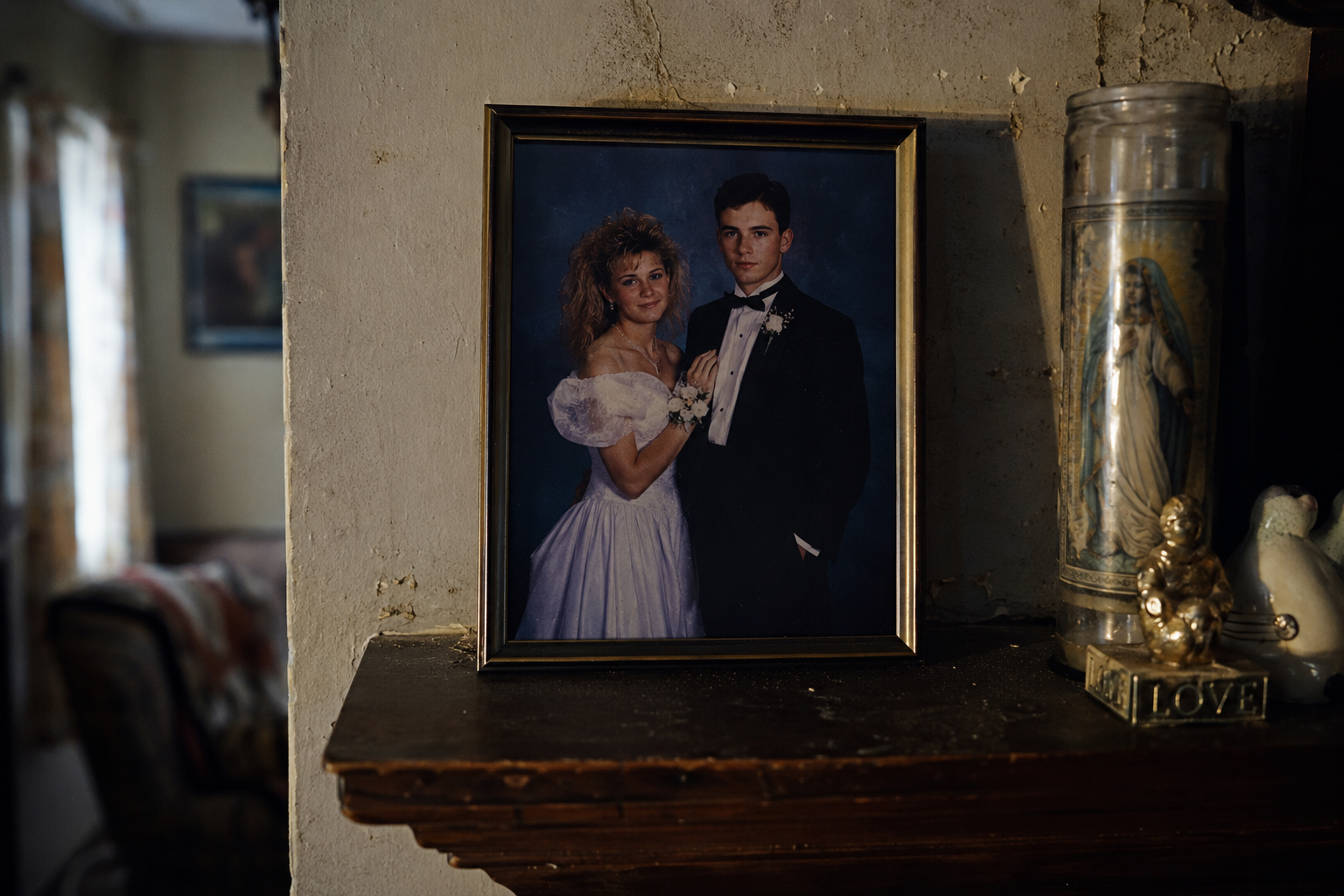
The Last Vestiges (ROUND 9)
"The Last Vestiges" is a poem about the inheritance of damage — specifically about the moment before a child absorbs, at a level below conscious understanding, that hope is a liability. Its twenty lines move through two stanzas with the controlled compression of a poem that knows exactly where it is going and delays arrival with precise formal patience, building toward a final image of devastating tenderness and devastating futility simultaneously: a small boy's fingers working the contours of a toy while the knowledge that will end his capacity for unguarded hope gathers around him like weather. The poem does not depict the moment of that absorption. It depicts the moment just before, which is the more unbearable vantage point — the reader positioned to see what is coming while the boy remains innocent of it, his fingers still moving.
The title names what the poem mourns with an exactness that repays attention. "Last vestiges" implies that something is almost entirely gone — the disappearing remainder of something once more present and more functional. "Vestiges" carries an evolutionary resonance that the poem earns: in biology, vestigial structures are remnants of features that once served a survival function but have been reduced by environmental pressure to near-nothingness, maintained in the organism's structure as evidence of what was once necessary. The cheer the mother brings to the door, the hope the boy still carries — these are vestigial in exactly this sense. They were adaptive once, in an environment that could sustain them. The environment has changed, and they are becoming liabilities, maintained only through effort that will eventually fail.
"Stage-1 meth-mouth mom" is the poem's first and most clinically precise characterization. "Stage-1" introduces a disease-progression framework — the staging of illness — that places the mother's condition within a trajectory rather than a state. The poem is set at the earliest point of visible damage, which means everything depicted here — the performance of cheer, the centrifugal hug, the ability to maintain the fiction of normalcy — is already deteriorating. Stage 2 is visible from Stage 1 to anyone who knows how to look. The boy does not yet know how to look. This is the poem's central dramatic irony, and it is established in the fifth word.
The opening image establishes the poem's entire social and emotional world in a dense, carefully organized cluster. The Happy Meal box battered, the fries stiff having "clocked / a night's share of miles" — the food is already spent before it arrives, a prop of ordinary maternal care that has traveled too far and too long to retain its original function. The Happy Meal is what good mothers bring; this Happy Meal is the husk of that gesture, the form without the content. The mother's sigh at the door arrives before she enters, the weariness preceding the performance.
"Into her childhood she whirlwinds" collapses the physical and psychological registers into a single motion. Dropping "home" — "into her childhood home she whirlwinds" becoming "into her childhood she whirlwinds" — means she is re-entering not merely a building but a prior self, a prior time, the childhood that precedes the damage. The whirlwind is both the energy of the performance and the quality of something that scatters and damages as it moves. The scooped-up toddler, the centrifugal hug: these are the whirlwind's contents.
"A centrifugal hug that streaks away her prom gaze / dusted on the mantel" holds two of the poem's most important formal operations in a single image. The centrifugal arc of the hug — spinning outward, flinging — physically streaks away the prom gaze that sits on the mantel. "Dusted" names Granny's active domestic upkeep: the prom gaze is being maintained, kept clean, preserved — an object of care in a home that is doing the work of preservation against the chaos the daughter's presence introduces. The detail is a quiet establishing shot of Granny before she appears at the stanza's end, her character visible in her objects before her body enters the poem. She is the one who dusts the mantel. She is the one who keeps the daughter's clean past intact even as the daughter's chaotic present arrives at the door. The centrifugal hug streaks away this carefully preserved image — the motion of maternal reunion briefly displacing the evidence of what the mother once was, the present overwhelming the past that Granny has been faithfully maintaining.
The Febreze and mascara as "cartoonified" concealment are the poem's twin symbols of performed adequacy. "Cartoonified" names a process by which something real has been rendered into a simplified, exaggerated version of itself — the way cartoon characters perform emotions with an amplitude that real faces cannot sustain. The curbside Febreze cartoonifies the reek; the curbside mascara cartoonifies the cheer. Both applied at the threshold before entry, both collapsing "mid breath" — the performance cannot sustain itself through a single exhalation. "And by a toke, coughs held back, / in the visor mirror" specifies the preparation with the suppressed cough: the toke taken but its evidence suppressed, the concealment requiring its own concealment, the lie nested within the lie.
"Cash / must be coaxed out of Granny, shifting kitchen items" closes the first stanza on the poem's most mundane and most revealing detail. Having been established through her domestic care — the dusted mantel, the preserved past — Granny now appears in her actual present-tense function: the economic anchor of the household, the one from whom cash must be coaxed through the indirect body language of shifting kitchen objects. The transaction conducted away from the toddler names the household's actual power structure: Granny as the real provider, the mother as supplicant, the domestic economy visible in the kitchen negotiation after the performance of the hug has already done its work in the living room.
The second stanza opens on the teen sway — "one foot behind the other" — the body's habitual posture of a girl who has not grown into the adult circumstances surrounding her. The men smoking against the car, framed in the window behind her, complete the picture: the world she actually inhabits visible through the glass, the thin membrane between the domestic interior and the street. "Crank-cricket vigils etched in scorched-earth craters / surfacing on her too" maps the meth use's physical inscription onto her skin in language simultaneously geological and entomological — the craters scorched earth, the vigils cricket-like in their nocturnal obsessiveness, the damage surfacing on her face as it has surfaced on the men outside. "Mom, it's an allergy. I told you" is the poem's only direct speech — the explanation for the visible damage offered in the same gesture as the Febreze and the mascara, another covering applied at the threshold of scrutiny.
"Too fast the day approaches when — against the fixity / of that reek, too contagious to stand — the transience / of that cheer, no less contagious, will flower so florid" is the poem's most formally ambitious movement. "Flower so florid" holds the blooming that precedes the dying — the excess of the flower at full opening is also the moment of its greatest vulnerability to being cut. "Florid" carries its medical meaning simultaneously: florid presentation, the symptom at full visibility, the disease declaring itself. The mother's cheer becomes both flower and symptom in a single word, its transience encoded in the very excess of its bloom.
The dialectic between the reek's fixity and the cheer's transience is the poem's governing tension. The reek is fixed and contagious — permanent, spreading, the condition of the household. The cheer is transient and equally contagious — it spreads to the boy, it produces hope, it is the condition the poem mourns the passing of. When the cheer flowers so florid that the boy can no longer sustain belief in it, the contagion of the reek will be all that remains. The boy's immunity to hope is not chosen but acquired, the way immunity is always acquired: through exposure sufficient to trigger the organism's defensive response.
"The boy, little fingers fretting the toy's contours, / will understand the necessity of becoming immune / to hope at a level of consciousness before his time" is the poem's final and most devastating movement. "Little fingers fretting the toy's contours" is exact: the fingers working the surface of the toy, finding its edges, mapping its shape through touch — the same activity that consciousness performs on its environment, the same activity the poem has been performing on this household. "Fretting" holds both its tactile meaning and its emotional meaning, the verb of anxiety and worry, the mind that cannot settle. "Will understand the necessity" — not simply "will understand" but "will understand the necessity" — names something more disturbing than mere comprehension. The boy will not merely know that hope is dangerous. He will understand why it must be given up, the structural logic of the immunity, the environment's actual conditions. And he will understand this "at a level of consciousness before his time" — too early, at the level of organism rather than person, before he has the developmental resources to do anything with what he knows except become immune to it.
Formally, the poem's two stanzas create an architectural division between the present and the future — the first stanza in the compressed present tense of arrival and performance, the second opening into the terrible future tense that the conditional "will" makes both certain and not yet arrived. The enjambments throughout defer the syntactic resolutions that would allow the reader to settle: "Stage-1 meth-mouth mom / sighs," "her prom gaze / dusted on the mantel," "the fixity / of that reek," "the transience / of that cheer." The poem keeps the reader in the same state of suspended approach that characterizes the boy's situation — always moving toward something that has not quite arrived, the arrival always deferred by one more clause, one more precise detail of the world that is producing it.
Meta Description
A poem about the inheritance of damage — tracing through a Stage-1 meth-addicted mother's curbside performance of cheer and Granny's quietly dusted mantel the precise mechanism by which a toddler, fingers fretting a toy's contours, will arrive too early at the defensive immunity to hope that his environment makes necessary, the poem's two stanzas dividing present performance from certain future, its enjambments keeping both reader and boy in perpetual suspended approach to what cannot be avoided.
Keywords
The Last Vestiges, inheritance of damage, Stage-1 meth addiction, maternal performance, vestigial hope, childhood trauma, cartoonified concealment, florid cheer and symptom, Granny domestic upkeep, dusted mantel, toddler and hope, immunity to hope, contemporary American lyric, poverty poetry, addiction and motherhood, close reading, enjambment and deferral, Happy Meal imagery, prom gaze preserved, fretting fingers, before his time, centrifugal hug
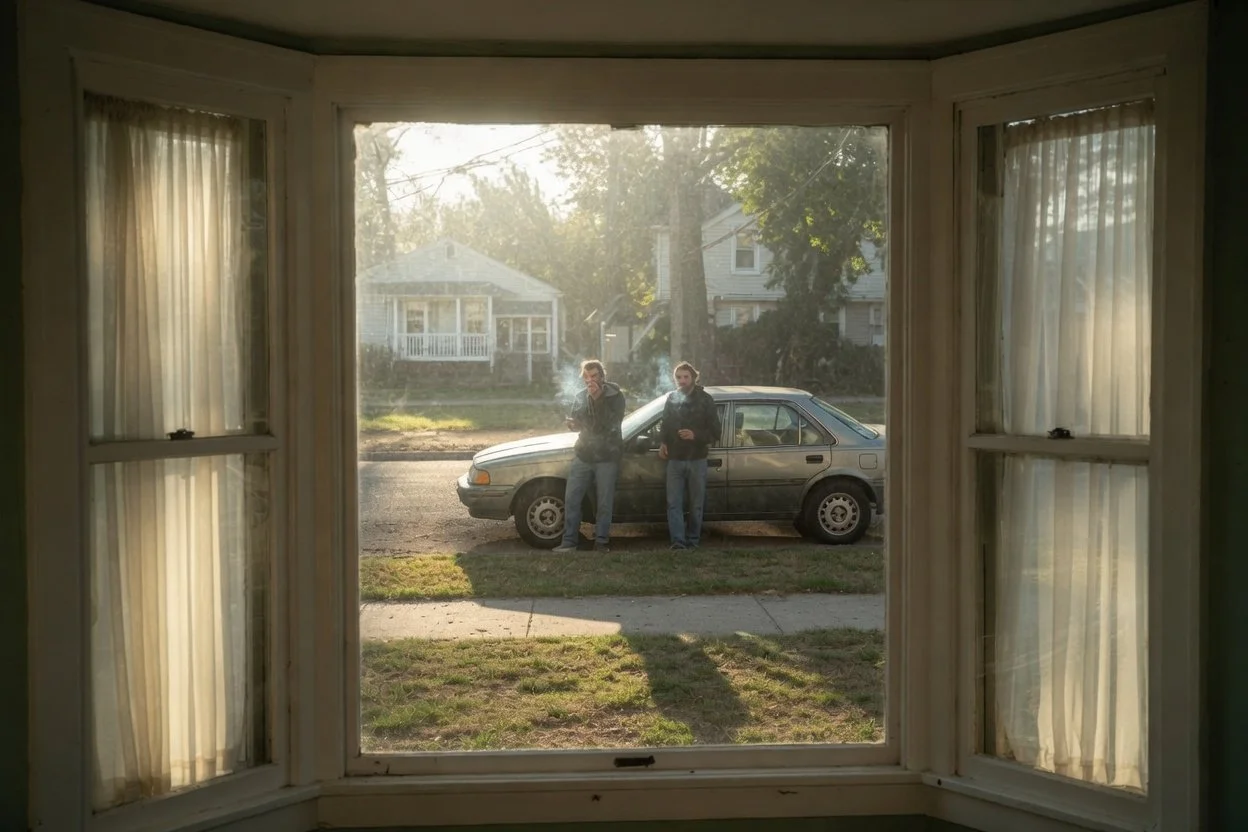
The Last Vestiges (ROUND 8)
"The Last Vestiges" is a poem about the inheritance of damage — specifically, about the moment before a child absorbs, at a level below conscious understanding, that hope is a liability. Its twenty lines move through two stanzas with the controlled compression of a lyric that knows exactly where it is going and delays arrival with precise formal patience, building toward a final image of devastating tenderness and devastating futility simultaneously: a small boy's fingers working the contours of a toy while the knowledge that will end his capacity for unguarded hope gathers around him like weather.
The poem's title names what the poem mourns. "Last vestiges" implies that something is almost entirely gone — that what the poem depicts is not the beginning of damage but its final stage, the disappearing remainder of something that was once more present. The word "vestiges" carries an evolutionary resonance: in biology, vestigial structures are the remnants of features that once served a function but have been reduced by adaptation to near-nothingness. The cheer the mother brings to the door, the hope the boy still carries — these are vestigial, the poem suggests, in exactly this sense. They were adaptive once. The environment has made them liabilities.
The opening image establishes the poem's entire social and emotional world in a single dense cluster. The Happy Meal box "battered," the fries "stiff, having clocked / a night's share of miles" — the food is already spent, already exhausted, a prop of normalcy that has traveled too far and too long to retain any of its original function. The meth-mouth mom's sigh at the door arrives before she enters, the weariness preceding the performance that follows. "Into her childhood home she whirlwinds" is the poem's first tonal pivot: the whirlwind is energetic, centrifugal, all-encompassing — and it is also, the poem quietly insists, performed. She has toked in the visor mirror, held back coughs, applied mascara at the curb. The preparation is not vanity but theater: the assembly of a self capable of being the mother the toddler needs her to be, if only for the duration of a hug.
"That centrifugal hug that streaks away her prom gaze / still over the fireplace" is the poem's most cinematically precise image. The hug is centrifugal — it flings outward, it encompasses — and its motion physically turns her away from the photograph above the fireplace where her younger self, the prom self, the self that preceded everything the poem depicts, still looks out from the wall. The poem does not editorialize about the distance between that girl and this woman. It records the geometry of the hug: the arc that turns her face from the evidence of what she was. This is the poem's characteristic method throughout — it renders emotional fact through physical fact, never stating what it shows.
The Febreze and mascara are the poem's twin symbols of cartoonified concealment. "Cartoonified" is a precise and unusual coinage: it names a process by which something real has been rendered into a simplified, exaggerated version of itself — the way cartoon characters perform emotions with an amplitude that real faces cannot sustain. The curbside application of Febreze cartoonifies the reek; the curbside mascara cartoonifies the cheer. Both are coverings applied at the threshold, before entry, as preparation for a performance that begins wilting "mid breath." The collapse is not delayed until some later moment of crisis. It happens in the duration of a single exhalation. The performance cannot sustain itself even through its own first breath.
The second stanza opens on the teen sway — one foot behind the other, the body's habitual posture of a girl not yet grown into her adult circumstances — and places the men smoking against the car in the window frame behind her. This framing is exact: the men are background, literally framed by the domestic window, and the "crank-cricket vigils etched in scorched-earth craters / surfacing on her too" maps the meth use's physical inscription onto her skin in language that is simultaneously geological and entomological. The craters are scorched earth; the vigils are cricket-like — the obsessive, nocturnal, repetitive quality of the addiction rendered as insect behavior etched into landscape. Her skin is a record.
"Mom, it's an allergy. I told you" arrives as dialogue, and it is the poem's only direct speech — the mother's explanation for the visible damage, the lie that the poem places without comment between the physical description and its continuation. The lie is not monstrous. It is the same operation as the Febreze and the mascara: a covering applied at the threshold of scrutiny, a cartoonification of the real. What is striking is that the poem does not treat it with contempt. The mother is doing what she can with the tools available to her, which are the tools of concealment and performance and the last vestiges of the cheer that the poem's final lines will identify as genuinely contagious even as it documents its transience.
The poem's closing movement is its most formally ambitious. "Too fast the day approaches when — against the fixity / of that reek, too contagious to stand — the transience / of that cheer, no less contagious, will flare so bright" sets up the terrible dialectic: the reek is fixed and contagious, the cheer is transient and equally contagious, and they are in competition for the boy. The cheer's transience will "flare so bright" — a last intensification before extinction, the candle before it goes out — and the boy "will understand the necessity of becoming immune / to hope at a level of consciousness before his time." This is the poem's final and most devastating formulation. The immunity is not chosen. It is acquired, the way one acquires immunity to a pathogen — through exposure sufficient to trigger the body's defensive response. Hope becomes, in this environment, something the child's psyche will learn to neutralize in self-protection. And it will learn this "before his time" — not at the age when such knowledge might be integrated into a formed self, but too early, at the level of organism rather than person, before he has the developmental resources to process what he is being protected from.
The boy's "little fingers fretting the toy's contours" is the poem's final image, and it earns its tenderness without sentiment. "Fretting" carries both its tactile meaning — the fingers working the surface, finding the edges — and its emotional meaning: the verb of anxiety, of worry, of the mind that cannot settle. The toy's contours are what the boy has. The poem ends with him there, fingers moving, while the knowledge that will end his unguarded hope approaches from the world his mother carries in on her.
Formally, the poem's two stanzas create an architectural division between the mother's arrival and the child's future — the first stanza entirely in a compressed present tense of performance and concealment, the second opening into a terrible future tense that the conditional "will" makes both certain and not yet arrived. The enjambments throughout are doing continuous work, deferring the syntactic resolutions that would allow the reader to settle, keeping the poem in the same state of suspended approach that characterizes the boy's situation. The diction moves between the demotic — Happy Meal, Febreze, mascara — and the formally precise, creating the poem's characteristic texture: a lyric intelligence attending to a world that does not know it is being attended to with this quality of care.
Meta Description
A poem about the inheritance of damage — tracing through a meth-addicted mother's curbside performance of cheer and the vestigial hope it carries into her childhood home the precise mechanism by which a toddler, fingers fretting a toy's contours, will arrive too early at the defensive immunity to hope that his environment makes necessary.
Keywords
The Last Vestiges, inheritance of damage, meth addiction poetry, maternal performance, vestigial hope, childhood trauma, contagious cheer, cartoonified concealment, toddler and hope, immunity to hope, contemporary American lyric, poverty poetry, addiction and motherhood, close reading, enjambment and deferral, demotic diction, Happy Meal imagery, prom photograph, scorched earth craters, before his time





blog
FAQ

Visit my Substack: Hive Being
Visit my Substack: Hive Being
Don’t let anyone tell you that real life is lacking in poetic interest. This is exactly what the poet is for: he has the mind and the imagination to find something of interest in everyday things. Real life supplies the motifs, the points that need to be said—the actual heart of the matter; but it is the poet’s job to fashion it all into a beautiful, animated whole. You are familiar with Fürnstein, the so-called “nature poet”? He has written a poem about growing hops, and you couldn’t imagine anything nicer. I have now asked him to write some poems celebrating the work of skilled artisans, in particular weavers, and I am quite sure he will succeed; he has lived among such people from an early age, he knows the subject inside out, and will be in full command of his material. That is the advantage of small works: you need only choose subjects that you know and have at your command. With a longer poetic work, however, this is not possible. There is no way around it: all the different threads that tie the whole thing together, and are woven into the design, have to be shown in accurate detail. Young people only have a one-sided view of things, whereas a longer work requires a multiplicity of viewpoints—and that’s where they come unstuck.—Goethe (Conversations with Eckermann)




Featured Blog Posts
have appeared last night—
all those met along the way?
Scholarly Essay: "Pound Town: A Defense of the Moral Permissibility of Bestiality"
"Pound Town: A Defense of the Moral Permissibility of Bestiality" is a work of philosophical provocation in the tradition of the academic thought experiment — rigorous, footnoted, structured in the formal architecture of analytic ethics, and dedicated to two figures (Gary Varner, a philosopher of animal ethics, and Grandpa Jack) whose juxtaposition announces the essay's governing tonal register: the personal and the scholarly, the lived and the argued, occupying the same space without apology. It is a piece that takes seriously the philosophical obligation to follow argument wherever it leads, even when — especially when — it leads somewhere the culture has decided in advance cannot be arrived at by honest reasoning. Whether one arrives at its conclusions or not, the essay is a sustained demonstration that the consensus against bestiality rests on philosophical foundations considerably shakier than its cultural certainty suggests.
The essay's formal strategy is the systematic elimination of available rationales. It does not argue for bestiality in the abstract or as a general practice. It argues for the moral permissibility of certain instances of bestiality — a narrower and more defensible claim — and it does so by walking through every category of objection the philosophical and cultural arsenal provides: intuition, biblical authority, naturalness, animal wellbeing, and human wellbeing. Each section follows the same structure: state the argument in its most rigorous form, then dismantle it. What accumulates across these demolitions is not a positive case for bestiality so much as a negative case against the coherence of its prohibition — a demonstration that the grounds on which the taboo rests are either internally inconsistent, arbitrarily applied, or insufficient to do the philosophical work required of them.
The twelve cases organized into four categories at the essay's opening are the piece's most formally accomplished section, and they deserve attention as a philosophical device before anything else. The cases range from unequivocally immoral scenarios — the hen throttled to death in Case 1, the starved collie in Case 2, the drugged piglet in Case 3 — to scenarios of such apparent benignity that the moral objection becomes increasingly difficult to locate: the tween girl getting off from her horse's gyrations in Case 4, the man ejaculating on a turtle's shell in Case 6, the primatologist taken by the orangutan in Case 7. This range is not rhetorical sleight of hand but philosophical precision: it forces the reader to specify exactly what feature of any given case makes it morally objectionable, and in doing so exposes how few of the available features — coercion, harm, lack of consent — apply to the cases in the B, C, and D categories. The cases are the essay's most effective argumentative tool because they make concrete what abstract prohibition tends to leave vague.
The section on intuition is where the essay's most philosophically consequential argument lives, and it is constructed with genuine care. The essay does not dismiss intuition as a moral guide; it accepts the reality of the disgust response and even owns it in the first person — "I too find it disgusting to envision someone, say, performing fellatio on a horse." What it refuses is the move from disgust to moral impermissibility, and it does so by attacking both premises of the intuition argument. Against premise two — that intuition against bestiality is universal — it marshals an extraordinary ethnographic inventory: ancient Egyptians, ancient Greeks, ancient Hindus, the Kisii of Kenya, the Masai, the Comeburras of Colombia, the Inuit, numerous tribal cultures across four continents, and a list of historically famous suspected practitioners that ranges from Tiberius to Aleister Crowley. The inventory is not merely comprehensive; it is philosophically functional. If the intuition against bestiality were a reliable moral guide, it would need to be something like universal. The evidence suggests it is not.
Against premise one — that intuitive wrongness implies moral wrongness — the essay deploys its most rhetorically powerful passage: the extended catalogue of human cognitive failures, biases, and moral atrocities that our intuitions have licensed, from geocentrism to the skull-reading of phrenology to the intuitive wrongness of miscegenation. The catalogue is deliberately excessive, accumulating well past the point at which any single item would suffice to make the logical point, because the accumulation is itself the argument: we are the sort of critters who cannot trust our gut about things we have decided in advance. The section on intuition concludes that moral repugnance, however indelible, requires independent justification — and then spends the rest of the essay demonstrating that the available independent justifications fail.
The biblical section is brisk because its work is largely done by the consistency argument: the Bible condemns homosexuality with the same force it condemns bestiality, and we have decided that the Bible's condemnation of homosexuality is insufficient to establish its immorality. The same epistemic grounds that license that conclusion license the same conclusion about bestiality. The essay does not attack the Bible's authority on religious grounds but on grounds of internal inconsistency and demonstrated errancy: a document that prohibits eating lobsters and getting tattoos and wearing linen-wool blends cannot be treated as a reliable moral authority on bestiality without accounting for why those prohibitions are being selectively ignored. The section's most philosophically interesting moment is the discussion of divine command theory, where the essay acknowledges the internal logic of the position — if right and wrong are ultimately God's arbitrary decree, then everything depends on correctly identifying God's decrees — while exposing the epistemic problem that position generates: by what method does one establish that the Bible, rather than competing holy texts, reflects those decrees?
The section on naturalness dispatches the is-ought fallacy with appropriate efficiency and then spends more time than strictly necessary on the enumeration of meanings of "unnatural" — not because the argument requires it, but because the enumeration reveals how many different objections are being bundled under a single term and how few of them, when separated and examined individually, withstand scrutiny. The observation that naturalness arguments are wielded against bestiality by people who sleep with CPAPs in air-conditioned homes after heart transplants is the essay's most elegant single point, delivered with the compression of good comic writing.
The animal wellbeing section is the essay's most extended and most philosophically serious, because it engages the strongest available objection. The essay does not dismiss the consent framework; it argues that animals can in fact communicate consent through behavioral signals — and here the inclusion of Liz Moores's description of equine attunement is the essay's most formally distinctive move, embedding a perfumer's testimony about the near-psychic quality of the human-horse bond in the middle of a philosophical argument about consent capacity. The passage is not merely decorative. It is evidence: the claim that horses cannot communicate consent, willingness, and refusal is empirically contested by anyone with sustained experience of horses, and the essay appeals to that experience directly. The section's most philosophically rigorous passage is the extended argument distinguishing the animal from the toddler — four criteria (hormonal maturity, radically different future, likelihood of later trauma, not yet at full cognitive capacity) that jointly explain why behavioral consent from an animal suffices where the same behavioral consent from a toddler does not. The distinction is careful and the criteria are genuinely functional, blocking the most common reductio offered against the consent argument.
The human wellbeing section is where the essay's rhetorical energy is highest, because it is where the essay's central meta-argument becomes most explicit: what is actually driving the taboo is not concern for animals but concern for human identity, human social order, and the illusion of human exceptionalism. The slippery slope arguments against bestiality are exposed as fallacies through the observation that the same logic would imply that consensual sex with humans increases the likelihood of nonconsensual sex with humans — a conclusion no one draws. The zoonotic disease objection is met with the observation that human-to-human sex also transmits disease, that precautionary measures reduce transmission risk to manageable levels, and that we do not condemn homosexual sex despite its statistically elevated disease transmission rates. The physical injury objection is met with the observation that risk of injury does not render an activity immoral — a point illustrated by skydivers and MMA fighters and Alaskan crab fishermen.
But the section's most penetrating argument is the one about intent. The essay identifies the extraordinary fact that the same physical acts — masturbating animals, fingering their anuses, fondling their genitalia for insemination purposes — are standard husbandry practice when performed without sexual intent and criminal bestiality when performed with it. The mere addition of human arousal converts a kosher farmhand procedure into moral depravity. The essay does not simply note the arbitrariness of this distinction; it names what it reveals: that the taboo on bestiality is fundamentally about protecting the human's sense of radical difference from animals, and that this protection is organized not around actual harm to anyone but around the maintenance of a conceptual boundary that evolutionary biology has already rendered philosophically dubious.
The concluding argument is the essay's most formally elegant section, structured as a dilemma that closes without remainder. Either animals have no moral worth — in which case bestiality is permissible for the same reasons any use of animals is permissible, and the other rationales have already been shown to fail — or animals have at least some moral worth — in which case the essay's cases demonstrate that bestiality need not violate that worth, and once again the other rationales have been shown to fail. The dilemma is constructed so that neither horn provides a stable position from which to maintain the absolute prohibition, and the essay's final image — "uncontroversial enjoyment of earthly beings thrown into this, like this, with such a transient lifespan" — is its most philosophically honest moment: the view from Camus and Sartre, the absurdist perspective that asks what, in a cosmos of countless suns and reams of death, justifies the certainty with which we organize our moral horror.
What "Pound Town" achieves is something genuinely difficult in philosophical writing: it makes the reader feel the inadequacy of their own position without necessarily arriving at the author's conclusion. The essay does not require the reader to endorse bestiality. It requires the reader to explain, with genuine rigor, why the cases in categories B, C, and D are wrong — and it has, by the time that requirement becomes clear, already demolished the most available explanations. The dedication to Grandpa Jack alongside Gary Varner is the essay's final formal gesture: the argument belongs to the philosophical tradition and to a life, and the philosophical tradition cannot be fully separated from the life that inhabits it.
Meta Description
A rigorous work of analytic philosophy arguing through intuition, biblical authority, naturalness, animal wellbeing, and human wellbeing that bestiality is morally permissible in certain circumstances — systematically exposing the internal inconsistencies of its prohibition and identifying human exceptionalism, rather than genuine moral concern, as the taboo's actual foundation.
Keywords
Pound Town bestiality philosophy, moral permissibility bestiality, animal consent, zoophilia ethics, divine command theory, naturalness fallacy, is-ought fallacy, animal wellbeing argument, human exceptionalism, consent and behavioral signals, slippery slope fallacy, analytic ethics provocateur, thought experiment cases, Hypocorism, interspecies ethics