


to Hive being
welcome
What is Hive Being, and Why the Name?
You have likely heard talk of a hive mind, where one global mind finds more or less figurative expression in various local minds. Such talk is common enough in nature documentaries, especially ones concerning ants or bees, and in sci-fi programs. Take that notion, at least a loose version of it, and broaden its scope. That will be a decent first step in understanding the title I have chosen both for my Blog and for the first five-volume installment of my magnum opus Made For You and Me, a fragmentary collection of minimalist stanzas from 2016 to 2020.
In alignment with Spinoza (the 17th Century Rationalist to whom I devoted my doctoral studies), I view reality in its totality as a grand hive Being: all entities are but pulsating manifestations of the buckstopping fount of everything, an ultimate being we might call “God” or “Nature” (so long as, out of respect for the capital “G” and the capital “N,” we limit it neither to some anthropomorphic cloud father hurling lightning bolts nor to mere wilderness untouched by human smog). According to the hive-Being view (where reality is one lone superorganism, a monistic—and we might even say unividualist—conception I defend in both my creative and academic capacities), each non-foundational being (each being, that is, whose essence does not involve existence) is an utterly necessitated expression or eruption or exudation of this eternal source—each is, perhaps better put, a mode or manner of being, and so a focal point through which is disclosed, what classical theists sometimes call “being itself” (ipsum esse subsistens): the realness of the real, the being of whatever may be, the sheer activity of being, the very isness of whatever is. This Blog, which duplicates my Substack, throbs as but one among many literary unfurlings of this self-necessitated foundation, this supreme wellspring, of which we—like black holes and broken beliefs, like fractal ferns and flickering flames—are the inevitable stylings.
My Journey
I am an academic who found himself pressured into early retirement by the rising tides of cancel culture. The illiberal scourge of censoring, silencing, and shaming—although always with us throughout our evolution—reached a local peak around 2021. That was the turbulent year my creative pursuits, which the old left once encouraged as a healthy outlet for the stresses of a childhood steeped in poverty and illiteracy, drew the ire of the new safe-space left. A small cadre of self-proclaimed victims and their allies, several of whom continue to berate me years later under pseudonyms as see through as their sexual infatuation, sought to erase me and my heterodoxy. They found support from a wannabe-woke dean, covered in the grand inquisitor robes of our decadent modernity (full-body tattoos) and just itching to signal his commitment to protecting “vulnerable populations” from triggering material (even if just, as it was in my case, off-duty poems “unbecoming for someone calling himself a teacher”). Although I eventually won my due-process case with the help of The Foundation for Individual Rights and Expression, I slunk away from a college that turned its back on protecting freedom of expression and from an institution increasingly intolerant of intellectual diversity.
The wrecking ball to my too-comfy office in the windowless ivory tower came with a silver lining. From the ashes of my professional aspirations rose a phoenix of increased freedom to fulfill the literary calling I have pursued for decades. Reputation concerns never stopped me, even within academia’s sterile halls of conformity. Indeed, my unapologetic defiance, which has long baffled friends and family, no doubt chummed even safe waters—almost as if I were asking for it all along—until the cancel shiver grew too frenzied to hold back its blind thrashings. But now, now I piston the most forbidden territories of human thought with no longer even a twinge of conscience. The newfound freedom means extra time to hone my craft. When not assisting special-needs communities (a day job far more rewarding than freeway-flyer drudgeries), I pursue my literary mission with Dionysian fervor.
Call for Co-Conspirators
This space, my digital sanctuary, showcases the fruits of my mission. Think of my posts, even those linking to my publications, as works in progress. I want your input, unflinching brutality included. Each post begins with an invitation to action: “Let’s workshop this [draft about x, y, z].” Your contributions, whether through public comments or my contact page, help hammer scraps of ore into polished blades fit for magazine publication.
Your input is valuable, even if you are neither a writer nor a reader of literature—twin disciplines dying by the cyber nanosecond. Sometimes—even if at the risk of uttering banalities—an outsider’s fresh vantage can pierce the veils of convention to reveal what insiders miss. It often takes an outsider to make us even think to question our ingrained presuppositions and attitudes. I stand by the hygienic value of contagion. That is one reason I advocate so strongly for intellectual diversity and freedom of expression. And that is also one reason I was so harrowed by the anti-diversity swell of cancel culture in academia (an institution that should be the utmost caretaker of such values)—harrowed especially insofar as that swell masqueraded under the gaslighting guise of “diversity”).
You will witness the breathing evolution of my writings over time. To track these changes, I label each revision by round: “ROUND 2,” ROUND 3,” and so forth. Each piece undergoes continuous refinement based on your feedback and my own revisitations. Sometimes changes will mar the work. That is the risk of creative tinkering as a finite creature. I hope you will alert me to missteps. After many semesters of university writing workshops, one rule has impressed itself upon me: when someone senses a flaw, something almost always needs to change—even if, yes, the proposed solution misses the mark (which often it does). From a quick look into the archives, accessible here, you can see how much I have benefited from your feedback so far.
My Hope
Sharing drafts can be daunting. But showing you the ravaged and unperfumed real deal unfiltered by makeup (stuttering starts and falsities, awkward line breaks and clumsy word choices, grammatical errors and misspellings)—that not only makes my work more relatable, but helps me refine things through your input. I hope the unfiltered look at the raw process of fumbling, rather than just the polished product, also helps other writers develop their craft. Imperfect works often instruct more than perfect ones: whereas the perfect ones tend to have a grace by which they slip inside us without activating our scrutiny, the imperfect ones—especially the near perfect ones—show us glaringly what not to do.
People laugh at me, seeing—in my tilting at the windmills of literary excellence—a Don Quixote clunking around in Arthurian armor in a post-knight era. I am not naïve. I am well aware of the diminishing ability to read, let alone well: slowly and deeply, with gratitude. I am also aware that my style, which often nests subpoints within larger points, never waters down virtuosity for the sake of mass appeal. I watch readers stumble over my sentences, unable to unlock even just the music of the envelope let alone the semantic meat within, which—given my tendency to flashlight through the darker facets of human nature (the addicts, the miscreants, the abusers among us)—only adds an additional alienating layer of difficulty). Beholding these depressive scenes of even supportive family members getting bucked off my syntactic bronco makes me feel like a dinosaur who should get a hint and, if not succumb to the brain rot of skibidi-toilet speak, just hang himself already. Even though the decline in linguistic background and grammatical voltage makes my compositions seem quixotic in a world binging Netflix and TikTok, I persist—raging against the dying of the light—by some internal compulsion to celebrate the richness of language and thought.
My hope is that, despite social media’s unparalleled power to farm our attention, people never forget the unique power of writing. Beyond unveiling hypocrisy, teasing out complex implications, and detailing the commonalities between even the most alien phenomena, writing offers something we need today—trapped in agoraphobic cyber bubbles only thickened by the Lyme dangers of forests and the COVID dangers of cities—perhaps more than ever. Granting us rich access to the first-person perspectives of others (to how things feel to them), writing serves as one of humanity’s best tools for combating loneliness. It allows us to linger, broadly and deeply and at high resolution, within the inner lives of others in a way that other arts can only suggest.
What to Expect
My work spans a broad spectrum: from metaphysical discourses on free will and determinism and the ontology of holes to the ephemera of western culture (whether the childhood impacts of the hypersexual mono-image of black woman as squirting twerkers or Terrence Howard’s sham revolution of mathematics). Some tight and minimal, others free-flowing sprawls; some heady and abstract, others emotional and imagistic—my inkwell musings, which often blend scholarly rigor with a dark humor from both high and low culture, aim to capture the visceral intensity of our personal and social and ultimately existential predicaments.
By no means can I deny that drug abuse, sexual assault, and the tales of the broken and the damned loom large in the tag cloud of my work. My writing will never be a paradise of easy truths and comforting lies. It will challenge you, provoke you, and at times even repulse you. I offer no apologies for the monsters I unleash. They are as much a part of us, at long root scared rodent mammals scurrying in the shadows of dinosaurs, as our noblest aspirations.
But make no mistake. It is not all downer darkness. The archives are my receipts. You will find pieces exploring the pursuit of authenticity in a media-saturated world, the search for meaning in an indifferent cosmos, and the celebration of beauty in both the sublime and the profane. I locate much of my inspiration, in fact, in novelists like Dostoevsky and poets like Ted Kooser—writers unafraid to pursue moral agendas or risk Hallmark sentimentality in an age that often sneers at sincerity.
Be they satirical dissections of modern social dynamics or poignant poems about addiction or academic articles on moral responsibility, my goal is to provoke thought, evoke emotion, and foster meaningful dialogue. Fear has not and will not stop me from challenging humanity’s fundamental taboos (like bestiality and cannibalism) or self-reflecting into the dark chaos of the subconscious, even if that means exposing the Jungian shadows—the inner Goebbels—lurking within us all!
Expect posts each day, no day missed. Donations are welcome, but I impose no paywall: it feels wrong to charge for art, especially given our date with obliteration. Feel free to explore what amounts to, at the time of writing this, close to a thousand pieces of poetry and prose here. That should give you a sense of what awaits.
Join me—specula holstered—on this literary odyssey into the public and private nooks of the hive Being. Let us navigate the labyrinth of creation together, confronting our demons and even slaying our darlings if we must. Let us dance on the razor’s edge between the sublime and the profane in pursuit of an elusive literary perfection never to be confused—as it has been confused in our declining civilization—with the pursuit of popularity or likeability over truth.












tag cloud
- literature community
- American literature
- poetry
- literature
- poem
- literary
- creative writing
- writing
- poetry community
- Michael Istvan
- Istvan
- perception
- defiance
- suffering
- existential poetry
- dissociative
- existential
- healing
- human
- mortality
- power
- art
- artist
- evolution
- God
- death
- love
- darwin
- anxiety
- rape
- psychoanalysis
- addiction
- homeless
- addict
- trauma
- therapy
- rapist
- traumatic
- hypersexual
- hyperarousal
- grooming
- anal sex
- anal
- heart
- incendiary
- dead
- Identitarianism
- tyrant
- meditation
- poverty
- fap
- choking
- traitor
- treachery
- identity
- honey pot
- true crime
- power dynamic
- woke
- cunnilingus
- Vaginal
- animals
- OwnVoices
- empathy
- ally
- crime
- summer
- scarf
- body disposal
- kidnapping
- Klan
- sex
- crack
- identity politics
- Vagina
- disease
- indians
- turtles
- fisting
- Pussy
- surrealism
- anality
- erotic
- scatalogical
- poet
- violence
- artistry
- borders
- teenybopper
- sublime
- mommy
- animal
- van gogh
- victim
- safe space
- pedophilia
- adult-minor
- poetry editor
- americana
- math
Posts
Subway Restraint (ROUND 12)
"Subway Restraint" is a dramatic prose monologue of extraordinary formal ambition, structured around the prolonged management of violent desire and its ultimate release. Its deepest subject is neither race nor politics nor violence as such but the psychology of incubation — the process by which a mind cultivates rather than dissipates its own rage, converting restraint from a virtue into a technology of intensification. The piece presents itself formally as a practical guide to self-control — "Serve the long game," "Breathe," "Restrain yourself" — yet everything about its architecture reveals that these instructions function as instruments of concentration rather than reduction. The narrator does not calm himself. He refines himself. Rage is treated as a resource to be made more potent through delay, and the work's central irony — announced in its title — is that the restraint depicted here is genuine without being virtuous. It is deferred eruption.
The second-person address is the piece's most formally audacious and most disturbing choice. "You" implicates the reader not as observer but as agent — the narrator is not telling us about someone who committed this act but telling us, as we read, what to do next. This collapses the conventional distance between reader and character that literary violence typically maintains, placing the reader inside a deliberative process calibrated to feel reasonable, patient, and philosophically grounded. The effect is not identification in the usual sense but something more unsettling: the reader experiences radicalization not as retrospective confession but as live instruction, and the prose is designed to make each step feel like the natural consequence of the one before. The second person is not a gimmick but an argument — that the funnel from legitimate grievance to catastrophic action is wider at the top than we prefer to believe, and that the steps leading down it are comprehensible at each individual point even when their aggregate destination is not.
The piece's most original formal device is what might be called eroticized aggression. Throughout, violent impulse is rendered through the language of sexual edging — waiting, building pressure, postponing release, letting frustration accumulate into something richer and more satisfying. The language of libido and the language of violence become indistinguishable: aggression is sexualized, sexuality is weaponized, and the subway becomes less a political space than a pressure chamber in which psychic energy seeks an outlet. The edging metaphor extends to the prose itself, whose sentences are long, recursive, and clause-heavy, always deferring the syntactic resolution that a period would provide, enacting at the level of form the same economy of deferral and accumulation the narrator is practicing psychologically. The piece deploys "jouissance" — Lacan's term for a pleasure so intense it becomes indistinguishable from pain — to name the trajectory precisely: what the narrator is building toward is not satisfaction in any ordinary sense but a release that will destroy the conditions of its own possibility.
The repeated instructions to breathe are equally important and equally inverted. On the surface they resemble mindfulness exercises. Yet their actual function is the opposite of therapeutic regulation. The narrator explicitly treats calming techniques as instruments for preserving rage rather than dissipating it, converting the language of self-care into a technology of self-radicalization. What appears healthy is revealed as another mechanism of escalation — demonstrating that the most dangerous passions are often not the hottest but the most disciplined, and that a mind sufficiently committed to its own radicalization can recruit any available resource, including the resources designed to prevent it, into the project.
The sensory writing performs a parallel function at the level of environment. The opening olfactory barrage — the layered subway smells organized around contamination and infection — is not ornamental description but perceptual argument. Nearly every sensory impression arrives already infected, bodies bleeding into odors, odors into judgments, judgments into ideological conclusions. The environment itself seems diseased. This saturation of perception mirrors the narrator's mental state: he cannot encounter anything neutrally because every perception is immediately absorbed into an interpretive system already vibrating with grievance. The world has become fully legible to him — and crucially, the piece insists that this legibility is not entirely delusional.
This is the revision that the piece's architecture demands and that conventional radicalization narratives typically foreclose. The standard literary closed loop involves a protagonist whose interpretation of the world is sealed off from reality's corrections — paranoia mistaken for pattern recognition, delusion mistaken for diagnosis. "Subway Restraint" refuses this comfort. Jakim's reading of progressive institutional culture — its dependency economics, its performative allyship, its self-perpetuating grievance infrastructure — is rendered with sufficient intellectual force that the reader cannot simply locate a break with reality and file the violence there. The piece gestures toward real institutional entanglements: organizations presented as gold standards of anti-hate monitoring implicated in the very dynamics they claim to oppose, DEI frameworks that produce the outcomes they claim to prevent, progressive cultural machinery that profits from the persistence of the conditions it nominally addresses. Jakim's conspiracy-adjacent thinking is not pure paranoia. It is pattern recognition arriving at the right destination by a path that looks unhinged. The loop closes not because he is delusional but because the world keeps confirming his diagnosis.
This is what separates the piece from simpler radicalization portraits and gives it its most disturbing literary quality. The tragedy is not a man destroyed by delusion but a man whose accurate perception of real corruption has been captured by the daimonic voice and metabolized into something that destroys him and others anyway. Correct diagnosis, catastrophic prescription. Truth, in this piece, is not corrective. It is accelerant.
The piece becomes most formally interesting when the speaker is understood not as identical with the protagonist but as functioning in the role of a daimonic presence — a tutelary voice, a parasitic advisor whispering into the ear of its charge. The voice addressing "you" does not simply encourage violence; it trains attention, teaches interpretation, transforms every confirmation of Jakim's diagnosis into fuel rather than into actionable understanding. The daimon's most insidious quality is that it never disputes the accuracy of what Jakim sees. It disputes only what should be done with it. "Serve the long game." "Give your defense attorney at least a little to work with." This is not impulsive rage but strategic rage — and the daimon's power derives precisely from the fact that it never needs to lie to its host. It simply redirects what is true toward what is catastrophic.
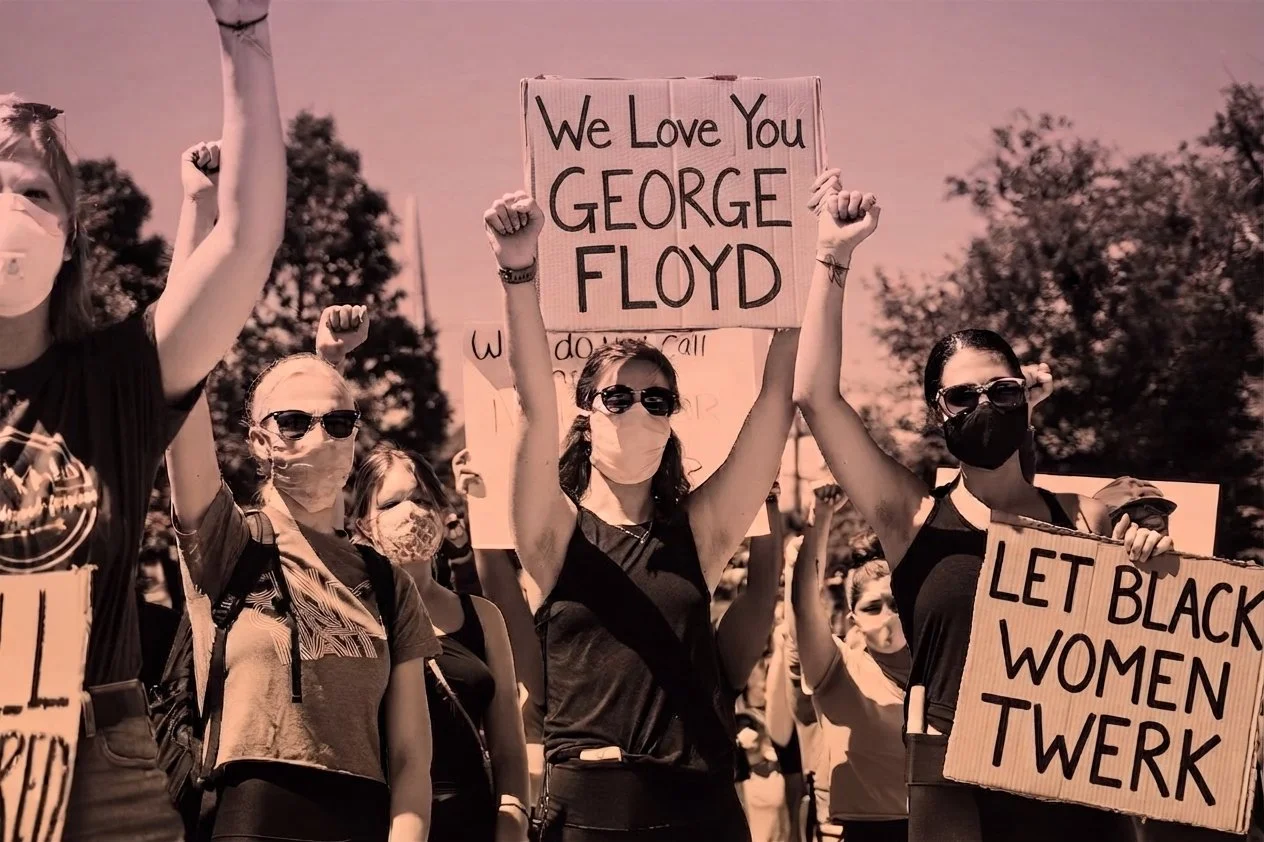
The lead protester blocking the subway exit ceases early to function as an ordinary person and becomes instead a condensation figure — a single body onto which the narrator projects the entire apparatus of what he believes poisons Black flourishing. The subway scene accordingly acquires the dream logic of psychoanalysis: a single figure accumulates vast symbolic weight, carrying ideological, historical, and emotional burdens far exceeding her immediate presence. The shift from micro to macro is one of the piece's defining structural achievements — a blocked subway door expands into a grand historical argument, and the expansion feels, from inside the narrator's perspective, not like distortion but like accurate perception of connections that were always there. The piece neither fully endorses nor fully refutes this expansion. It holds the reader in the uncomfortable position of being unable to locate the precise moment where pattern recognition becomes pathology.
The racial ideology the narrator constructs demands serious engagement rather than dismissal. The narrator is a Black man who has arrived, through a specific intellectual and emotional history, at a position simultaneously anti-white-progressive and anti-victimhood — one that draws on genuine arguments about dependency culture, the paternalism embedded in certain forms of allyship, and the ways progressive racial frameworks can function to maintain Black people in a posture of permanent grievance. These arguments have intellectual genealogy and genuine advocates in serious academic discourse. What the piece traces is not the corruption of these arguments but their capture — the process by which legitimate diagnosis, denied every other outlet, is metabolized by the daimonic voice into mass violence. The narrator's logic is internally consistent throughout. Each escalation follows from the previous position by comprehensible steps. What transforms the sequence is not irrationality but the absence of any mechanism by which accurate perception can discharge into something other than destruction.
The Mike letter is the piece's most significant formal rupture. When the stylized daimonic second-person voice gives way to the narrator's own first-person address — "Man, what can I say?" — the register shifts entirely. The controlled, rhetorically sophisticated prose of the monologue is replaced by something rawer, more recursive, more colloquial, full of self-interruption and revision. This is the narrator speaking, not the daimon — and the distinction matters enormously. The letter shows us the ideology in its unpolished, genuinely felt form: the real grievances, the intellectual self-awareness, the moments of genuine doubt, the rhetorical self-justification, the acknowledgment of oversimplification. Most significantly, it shows a mind that can see its own contradictions and cannot stop anyway. The letter is not the raving of a man who has lost contact with reality. It is the raving of a man who has lost the ability to convert his contact with reality into anything other than this. The daimonic voice did not need to deceive him. It only needed to ensure that every accurate perception fed the same terminal conclusion.
By placing the letter inside the monologue — so that the reader has already experienced the ideology at its most perfected before encountering it in its raw state — the piece creates a double portrait: the finished product and the workshop simultaneously visible. The letter's power comes from its position. Moved to the end it becomes elegy. Where it sits now it is anatomy — and anatomy of a specific, disturbing kind: the anatomy of a mind that was right about the disease and wrong about the cure, and that had no way, given its capture by the daimonic voice, of arriving at any other conclusion.
The invocation of Ellison's "Invisible Man" — the narrator's stated favorite since college — is the piece's most significant literary self-placement. The Brotherhood's use of Black suffering as combustible material maps directly onto the narrator's analysis of progressive organizations, and the letter makes this connection explicit and personal. The tragedy is that the narrator's solution to being trapped inside a racial narrative is to perform the act that most completely confirms it. He becomes, in his resistance to the narrative, its most catastrophic validation. This is not a failure of the piece's logic but its tragic center — and it is a tragedy of a specific kind: not hubris, not delusion, but accurate vision captured by a voice that knew exactly what to do with it.
What "Subway Restraint" ultimately achieves is a portrait of radicalization as accurate perception without corrective outlet. The conventional closed loop involves a character trapped in his own head, insulated from reality's corrections. This piece constructs something more disturbing: a loop that closes because the world keeps confirming what the character sees, and the daimonic voice ensures that every confirmation feeds only one conclusion. Truth here is not liberating. It is the accelerant the daimon has been waiting for. The reader is left not with the comfortable distance of watching a deluded man destroy himself, but with the far more troubling recognition that the diagnosis was sound and the prescription was catastrophic — and that the gap between these two facts is where the piece's real horror lives.
Meta Description
A dramatic prose monologue studying ressentiment under conditions of ideological possession — tracing through eroticized aggression, daimonic instruction, and accurate perception converted into accelerant how a Black man's legitimate diagnosis of progressive institutional corruption is captured by a tutelary voice that ensures every truth feeds only one terminal conclusion, producing tragedy not of delusion but of correct vision without corrective outlet.
Keywords
Subway Restraint, ressentiment, daimonic voice, accurate perception and radicalization, closed loop, truth as accelerant, ideological possession, eroticized aggression, edging metaphor, jouissance, second-person narration, Ellison Invisible Man, Black conservative ideology, predatory help industry, condensation figure, Mike letter, register rupture, correct diagnosis catastrophic prescription, dependency culture, contemporary American prose, psychological escalation, manifesto within monologue
Subway Restraint (ROUND 11)
"Subway Restraint" is a dramatic prose monologue of extraordinary formal ambition, structured around the prolonged management of violent desire and its ultimate release. Its deepest subject is neither race nor politics nor violence as such but the psychology of incubation — the process by which a mind cultivates rather than dissipates its own rage, converting restraint from a virtue into a technology of intensification. The piece presents itself formally as a practical guide to self-control — "Serve the long game," "Breathe," "Restrain yourself" — yet everything about its architecture reveals that these instructions function as instruments of concentration rather than reduction. The narrator does not calm himself. He refines himself. Rage is treated as a resource to be made more potent through delay, and the work's central irony — announced in its title — is that the restraint depicted here is genuine without being virtuous. It is deferred eruption.
The second-person address is the piece's most formally audacious and most disturbing choice. "You" implicates the reader not as observer but as agent — the narrator is not telling us about someone who committed this act but telling us, as we read, what to do next. This collapses the conventional distance between reader and character that literary violence typically maintains, placing the reader inside a deliberative process calibrated to feel reasonable, patient, and philosophically grounded. The effect is not identification in the usual sense but something more unsettling: the reader experiences radicalization not as retrospective confession but as live instruction, and the prose is designed to make each step feel like the natural consequence of the one before. The second person is not a gimmick but an argument — that the funnel from legitimate grievance to catastrophic action is wider at the top than we prefer to believe, and that the steps leading down it are comprehensible at each individual point even when their aggregate destination is not.
The piece's most original formal device is what might be called eroticized aggression. Throughout, violent impulse is rendered through the language of sexual edging — waiting, building pressure, postponing release, letting frustration accumulate into something richer and more satisfying. The language of libido and the language of violence become indistinguishable: aggression is sexualized, sexuality is weaponized, and the subway becomes less a political space than a pressure chamber in which psychic energy seeks an outlet. The edging metaphor extends to the prose itself, whose sentences are long, recursive, and clause-heavy, always deferring the syntactic resolution that a period would provide, enacting at the level of form the same economy of deferral and accumulation the narrator is practicing psychologically. The piece deploys "jouissance" — Lacan's term for a pleasure so intense it becomes indistinguishable from pain — to name the trajectory precisely: what the narrator is building toward is not satisfaction in any ordinary sense but a release that will destroy the conditions of its own possibility.
The repeated instructions to breathe are equally important and equally inverted. On the surface they resemble mindfulness exercises. Yet their actual function is the opposite of therapeutic regulation. The narrator explicitly treats calming techniques as instruments for preserving rage rather than dissipating it, converting the language of self-care into a technology of self-radicalization. What appears healthy is revealed as another mechanism of escalation — demonstrating that the most dangerous passions are often not the hottest but the most disciplined, and that a mind sufficiently committed to its own radicalization can recruit any available resource, including the resources designed to prevent it, into the project.
The sensory writing performs a parallel function at the level of environment. The opening olfactory barrage — the layered subway smells organized around contamination and infection — is not ornamental description but perceptual argument. Nearly every sensory impression arrives already infected, bodies bleeding into odors, odors into judgments, judgments into ideological conclusions. The environment itself seems diseased. This saturation of perception mirrors the narrator's mental state: he cannot encounter anything neutrally because every perception is immediately absorbed into an interpretive system already vibrating with grievance. The world has become fully legible to him — and crucially, the piece insists that this legibility is not entirely delusional.
This is the revision that the piece's architecture demands and that conventional radicalization narratives typically foreclose. The standard literary closed loop involves a protagonist whose interpretation of the world is sealed off from reality's corrections — paranoia mistaken for pattern recognition, delusion mistaken for diagnosis. "Subway Restraint" refuses this comfort. Jakim's reading of progressive institutional culture — its dependency economics, its performative allyship, its self-perpetuating grievance infrastructure — is rendered with sufficient intellectual force that the reader cannot simply locate a break with reality and file the violence there. The piece gestures toward real institutional entanglements: organizations presented as gold standards of anti-hate monitoring implicated in the very dynamics they claim to oppose, DEI frameworks that produce the outcomes they claim to prevent, progressive cultural machinery that profits from the persistence of the conditions it nominally addresses. Jakim's conspiracy-adjacent thinking is not pure paranoia. It is pattern recognition arriving at the right destination by a path that looks unhinged. The loop closes not because he is delusional but because the world keeps confirming his diagnosis.
This is what separates the piece from simpler radicalization portraits and gives it its most disturbing literary quality. The tragedy is not a man destroyed by delusion but a man whose accurate perception of real corruption has been captured by the daimonic voice and metabolized into something that destroys him and others anyway. Correct diagnosis, catastrophic prescription. Truth, in this piece, is not corrective. It is accelerant.
The piece becomes most formally interesting when the speaker is understood not as identical with the protagonist but as functioning in the role of a daimonic presence — a tutelary voice, a parasitic advisor whispering into the ear of its charge. The voice addressing "you" does not simply encourage violence; it trains attention, teaches interpretation, transforms every confirmation of Jakim's diagnosis into fuel rather than into actionable understanding. The daimon's most insidious quality is that it never disputes the accuracy of what Jakim sees. It disputes only what should be done with it. "Serve the long game." "Give your defense attorney at least a little to work with." This is not impulsive rage but strategic rage — and the daimon's power derives precisely from the fact that it never needs to lie to its host. It simply redirects what is true toward what is catastrophic.
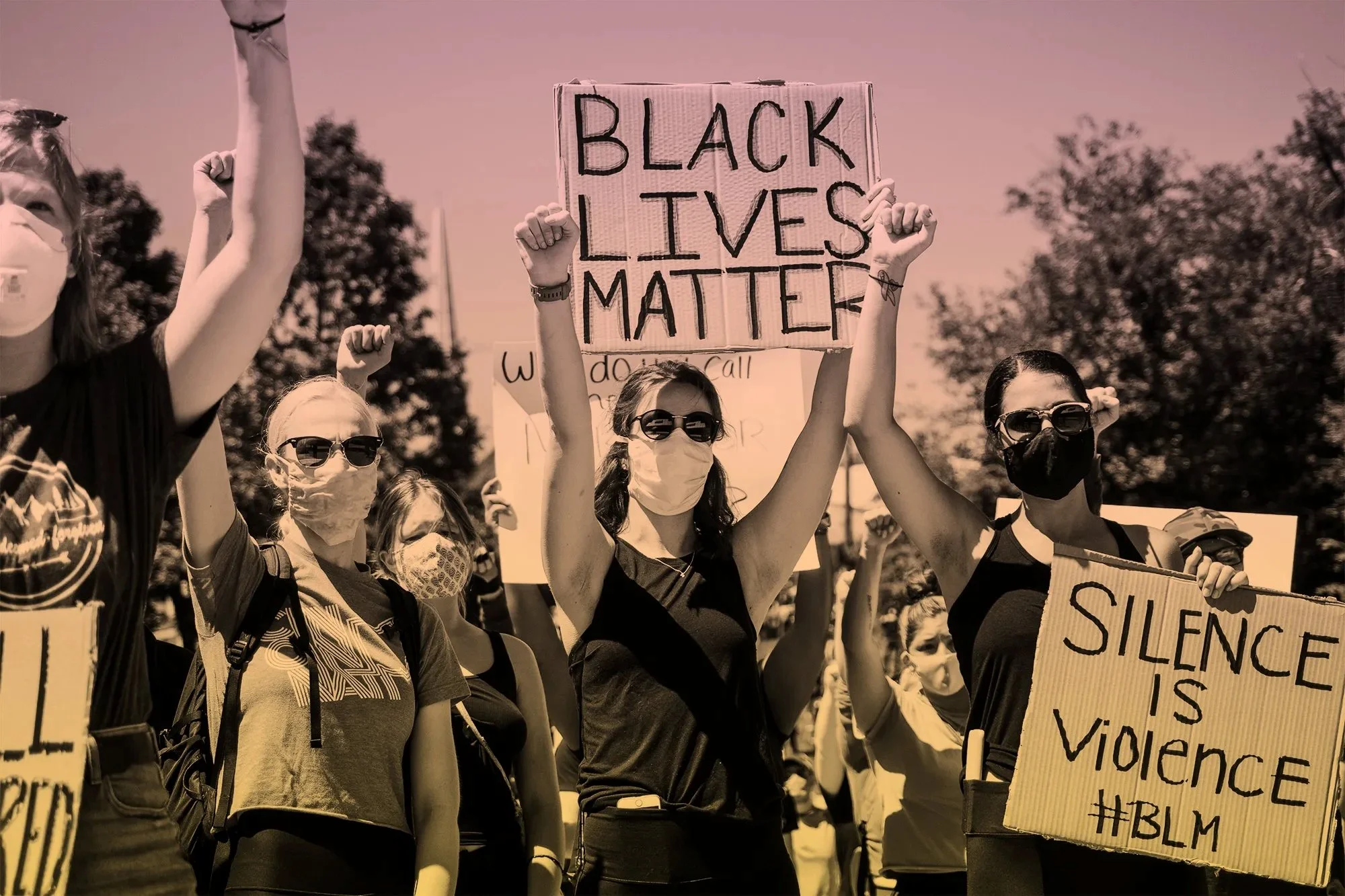
The lead protester blocking the subway exit ceases early to function as an ordinary person and becomes instead a condensation figure — a single body onto which the narrator projects the entire apparatus of what he believes poisons Black flourishing. The subway scene accordingly acquires the dream logic of psychoanalysis: a single figure accumulates vast symbolic weight, carrying ideological, historical, and emotional burdens far exceeding her immediate presence. The shift from micro to macro is one of the piece's defining structural achievements — a blocked subway door expands into a grand historical argument, and the expansion feels, from inside the narrator's perspective, not like distortion but like accurate perception of connections that were always there. The piece neither fully endorses nor fully refutes this expansion. It holds the reader in the uncomfortable position of being unable to locate the precise moment where pattern recognition becomes pathology.
The racial ideology the narrator constructs demands serious engagement rather than dismissal. The narrator is a Black man who has arrived, through a specific intellectual and emotional history, at a position simultaneously anti-white-progressive and anti-victimhood — one that draws on genuine arguments about dependency culture, the paternalism embedded in certain forms of allyship, and the ways progressive racial frameworks can function to maintain Black people in a posture of permanent grievance. These arguments have intellectual genealogy and genuine advocates in serious academic discourse. What the piece traces is not the corruption of these arguments but their capture — the process by which legitimate diagnosis, denied every other outlet, is metabolized by the daimonic voice into mass violence. The narrator's logic is internally consistent throughout. Each escalation follows from the previous position by comprehensible steps. What transforms the sequence is not irrationality but the absence of any mechanism by which accurate perception can discharge into something other than destruction.
The Mike letter is the piece's most significant formal rupture. When the stylized daimonic second-person voice gives way to the narrator's own first-person address — "Man, what can I say?" — the register shifts entirely. The controlled, rhetorically sophisticated prose of the monologue is replaced by something rawer, more recursive, more colloquial, full of self-interruption and revision. This is the narrator speaking, not the daimon — and the distinction matters enormously. The letter shows us the ideology in its unpolished, genuinely felt form: the real grievances, the intellectual self-awareness, the moments of genuine doubt, the rhetorical self-justification, the acknowledgment of oversimplification. Most significantly, it shows a mind that can see its own contradictions and cannot stop anyway. The letter is not the raving of a man who has lost contact with reality. It is the raving of a man who has lost the ability to convert his contact with reality into anything other than this. The daimonic voice did not need to deceive him. It only needed to ensure that every accurate perception fed the same terminal conclusion.
By placing the letter inside the monologue — so that the reader has already experienced the ideology at its most perfected before encountering it in its raw state — the piece creates a double portrait: the finished product and the workshop simultaneously visible. The letter's power comes from its position. Moved to the end it becomes elegy. Where it sits now it is anatomy — and anatomy of a specific, disturbing kind: the anatomy of a mind that was right about the disease and wrong about the cure, and that had no way, given its capture by the daimonic voice, of arriving at any other conclusion.
The invocation of Ellison's "Invisible Man" — the narrator's stated favorite since college — is the piece's most significant literary self-placement. The Brotherhood's use of Black suffering as combustible material maps directly onto the narrator's analysis of progressive organizations, and the letter makes this connection explicit and personal. The tragedy is that the narrator's solution to being trapped inside a racial narrative is to perform the act that most completely confirms it. He becomes, in his resistance to the narrative, its most catastrophic validation. This is not a failure of the piece's logic but its tragic center — and it is a tragedy of a specific kind: not hubris, not delusion, but accurate vision captured by a voice that knew exactly what to do with it.
What "Subway Restraint" ultimately achieves is a portrait of radicalization as accurate perception without corrective outlet. The conventional closed loop involves a character trapped in his own head, insulated from reality's corrections. This piece constructs something more disturbing: a loop that closes because the world keeps confirming what the character sees, and the daimonic voice ensures that every confirmation feeds only one conclusion. Truth here is not liberating. It is the accelerant the daimon has been waiting for. The reader is left not with the comfortable distance of watching a deluded man destroy himself, but with the far more troubling recognition that the diagnosis was sound and the prescription was catastrophic — and that the gap between these two facts is where the piece's real horror lives.
Meta Description
A dramatic prose monologue studying ressentiment under conditions of ideological possession — tracing through eroticized aggression, daimonic instruction, and accurate perception converted into accelerant how a Black man's legitimate diagnosis of progressive institutional corruption is captured by a tutelary voice that ensures every truth feeds only one terminal conclusion, producing tragedy not of delusion but of correct vision without corrective outlet.
Keywords
Subway Restraint, ressentiment, daimonic voice, accurate perception and radicalization, closed loop, truth as accelerant, ideological possession, eroticized aggression, edging metaphor, jouissance, second-person narration, Ellison Invisible Man, Black conservative ideology, predatory help industry, condensation figure, Mike letter, register rupture, correct diagnosis catastrophic prescription, dependency culture, contemporary American prose, psychological escalation, manifesto within monologue
Subway Restraint (ROUND 10)
"Subway Restraint" is a dramatic prose monologue structured around the prolonged management of violent desire, and its deepest subject is neither race nor politics nor even violence but the psychology of incubation — the process by which a mind cultivates rather than dissipates its own rage, converting restraint from a virtue into a technology of intensification. The piece presents itself formally as a practical guide to self-control — "Serve the long game," "Breathe," "Restrain yourself" — yet everything about its structure reveals that these instructions function as instruments of concentration rather than reduction. The narrator does not calm himself. He refines himself. Rage is treated as a resource to be made more potent through delay, and the work's central irony — announced in its title — is that the restraint depicted here is genuine without being virtuous. It is deferred eruption.
The second-person address is the piece's most formally audacious and most disturbing choice. "You" implicates the reader not as observer but as agent — the narrator is not telling us about someone who did this but telling us, as we read, what to do next. This collapses the conventional distance between reader and character that literary violence typically maintains, placing the reader inside a deliberative process calibrated to feel reasonable, patient, even philosophically grounded. The effect is not identification in the usual sense but something more unsettling: the reader experiences radicalization not as retrospective confession but as live instruction, and the prose is designed to make each step in the process feel like the natural consequence of the one before. The second person is not a gimmick but an argument — that the funnel from legitimate grievance to catastrophic action is wider at the top than we prefer to believe, and that the steps leading down it are comprehensible at each individual point even when their aggregate destination is not.
The piece's most original formal device is what might be called eroticized aggression. Throughout, violent impulse is rendered through the language of sexual edging — waiting, building pressure, postponing release, letting frustration accumulate into something richer and more satisfying. The language of libido and the language of violence become indistinguishable: aggression is sexualized, sexuality is weaponized, and the subway becomes less a political space than a pressure chamber in which psychic energy seeks an outlet. Psychoanalytically, this collapses the distinction between eros and destruction, suggesting that the narrator's fantasies seek not victory but discharge — that what has been organized as political conviction is being driven by something closer to hydraulic necessity. The edging metaphor extends to the prose itself, whose sentences are long, recursive, and clause-heavy, always deferring the syntactic resolution that a period would provide, enacting at the level of form the same economy of deferral and accumulation that the narrator is practicing psychologically. The piece deploys "jouissance" — Lacan's term for a pleasure so intense it becomes indistinguishable from pain — to name the trajectory, and the word is precisely chosen: what the narrator is building toward is not satisfaction in any ordinary sense but a release that will destroy the conditions of its own possibility.
The repeated instructions to breathe are equally important and equally inverted. On the surface they resemble mindfulness exercises. Yet their actual function is the opposite of therapeutic regulation. The narrator explicitly treats calming techniques as instruments for preserving rage rather than dissipating it, converting the language of self-care into a technology of self-radicalization. What appears healthy is revealed to be another mechanism of escalation. This inversion is one of the piece's most psychologically sophisticated moves: it demonstrates that the most dangerous passions are often not the hottest but the most disciplined, and that a mind sufficiently committed to its own radicalization can recruit any available resource — including the resources designed to prevent it — into the project.
The sensory writing performs a parallel function at the level of environment. The opening olfactory barrage — the layered description of subway smells organized around contamination and infection — is not ornamental description but perceptual argument. Nearly every sensory impression arrives already infected, bodies bleeding into odors, odors into judgments, judgments into ideological conclusions. The environment itself seems diseased. This saturation of perception mirrors the narrator's mental state: he cannot encounter anything neutrally because every perception is immediately absorbed into an interpretive system already vibrating with grievance. The world has become fully legible to him, and its legibility is the problem.
The piece becomes most interesting when the speaker is understood not as identical with the protagonist but as functioning in the role of a daimonic presence — a tutelary voice, a parasitic advisor whispering into the ear of its charge. Read this way, the entire text changes shape. The voice addressing "you" does not simply encourage violence; it trains attention, teaches interpretation, transforms every disappointment into evidence, every frustration into confirmation, every humiliation into fuel. The true action of the piece is therefore pedagogical. We witness the education of a psyche by a voice that knows exactly how to turn pain into destiny, and the daimon's most insidious quality is that it never advocates immediate action. It advocates patience. "Serve the long game." "Think of the goo building." "Give your defense attorney at least a little to work with." This is not impulsive rage but strategic rage, and the piece repeatedly demonstrates the distinction — the daimon seeks not expression but perfection.
The lead protester blocking the subway exit ceases early in the piece to function as an ordinary person and becomes instead a condensation figure — a single body onto which the narrator projects the entire apparatus of what he believes poisons Black flourishing. She is not merely a woman in a doorway but the living embodiment of a worldview, and the subway scene accordingly acquires the dream logic of psychoanalysis: a single figure accumulates vast symbolic weight, carrying ideological, historical, and emotional burdens far exceeding her immediate presence. The shift from micro to macro is one of the piece's defining structural achievements — a blocked subway door expands into an entire historical argument, and the expansion feels, from inside the narrator's perspective, not like distortion but like accurate perception of the connections that were always there.
The racial ideology the narrator constructs is the piece's most complex element, and it demands serious engagement rather than dismissal. The narrator is a Black man who has arrived, through a specific intellectual and emotional history, at a position simultaneously anti-white-progressive and anti-victimhood — one that draws on genuine arguments about dependency culture, the paternalism embedded in certain forms of allyship, and the ways progressive racial frameworks can function to maintain Black people in a posture of permanent grievance. The piece takes these arguments seriously enough to render them with real force; they have intellectual genealogy and genuine advocates in serious academic discourse. What the piece does with this intellectual tradition is trace the precise psychological mechanism by which legitimate grievance, closed off from every other exit and metabolized through the daimonic voice's patient instruction, becomes capable of catastrophic application. The narrator's logic is internally consistent throughout. Each escalation follows from the previous position by comprehensible steps. What transforms the sequence is not the introduction of irrationality but the accumulation of perceived humiliation without any available mechanism of resolution.
The political grievance passages are frequently misread as argument when their primary literary function is rhythmic. The endless catalogues, accumulating examples, and repeated accusations create a litany-like momentum — the prose begins behaving less like persuasion than incantation, each example serving as another turn of the ratchet. The reader is drawn into the psychological mechanism by which a single subway inconvenience expands into a grand historical narrative, and the expansion is rendered with sufficient internal logic that the reader can follow each step while watching the aggregate destination become increasingly visible and increasingly terrible.
The invocation of Ellison's "Invisible Man" — the narrator's stated favorite since college — is the piece's most significant literary self-placement. Ellison's novel meditates on the relationship between Black invisibility and the violence that invisibility eventually generates, and the narrator of "Subway Restraint" positions himself in that tradition while arguing that contemporary progressive politics has produced a new form of the same invisibility: a visibility so overdetermined by racial narrative that the individual cannot be seen as an individual at all. The tragedy — and the piece is fully aware of it — is that the narrator's solution to being trapped inside a racial narrative is to perform the act that most completely confirms it. He becomes, in his resistance to the narrative, its most catastrophic validation. This is not a failure of the piece's logic but its tragic center.
What makes "Subway Restraint" compelling as literature is not agreement or disagreement with its claims but its ruthless and precise portrayal of self-justification — the human capacity to turn interpretation into appetite and appetite into interpretation, to recruit every available resource including self-care, intellectual tradition, and genuine grievance into the service of a destination the mind has already chosen without knowing it has chosen. The narrator remains physically motionless for much of the piece, yet internally traverses an immense psychological distance. The real drama is not whether violence occurs but the creation of a mind increasingly capable of experiencing it as inevitable — and the daimonic voice's achievement is to make that creation feel, at every step, like clarification rather than corruption.
Meta Description
A dramatic prose monologue studying ressentiment under conditions of ideological possession — tracing through eroticized aggression, daimonic instruction, and the inversion of self-care into self-radicalization how a Black man's genuine intellectual grievances against progressive paternalism are metabolized by a cultivating inner voice into the experience of mass violence as inevitable historical clarification.
Keywords
Subway Restraint, ressentiment, daimonic voice, tutelary spirit, ideological possession, eroticized aggression, edging metaphor, jouissance, second-person narration, radicalization psychology, Ellison Invisible Man, Black conservative ideology, predatory help industry, condensation figure, psychoanalytic criticism, self-radicalization, grievance and incubation, dependency and agency, contemporary American prose, psychological escalation

Subway Restraint (ROUND 9)
“Subway Restraint” is not a poem but a dramatic prose monologue structured around the prolonged management of violent desire. More specifically, it is a study of ressentiment under conditions of ideological possession. The piece presents itself as a practical guide to self-restraint—“Serve the long game,” “Breathe,” “Restrain yourself”—yet everything about its form reveals that restraint is functioning as a technology of intensification rather than reduction. The narrator does not calm himself. He cultivates himself. Rage is treated as a resource to be refined, concentrated, and made more potent through delay. The work's deepest subject is therefore neither race nor politics nor even violence. It is the psychology of incubation.
The Shelby Steele epigraph is structurally indispensable. The quotation's central claim is that dependency masquerades as militancy, that the raised fist directed toward others is ultimately a form of dependence upon them. This argument becomes the philosophical skeleton of the entire piece. What follows is not merely an angry man's fantasy. It is a narrator who experiences himself as trapped between two incompatible identities: the self-sufficient militant envisioned by Steele and the humiliated dependent prevented from moving through a subway door. The result is a psychic crisis. The subway blockage becomes a symbolic compression of every grievance the narrator carries concerning agency, dignity, dependence, victimhood, and power.
One of the work's most striking achievements is the way it externalizes an intrapsychic process. The lead protester blocking the subway exit quickly ceases to function as an ordinary person. She becomes a condensation figure. The narrator repeatedly treats her as an embodiment of an entire worldview. She is not merely a woman standing in a doorway. She becomes the living representative of everything he believes poisons black flourishing. The subway scene therefore acquires the dream logic of psychoanalysis. A single figure accumulates vast symbolic weight and begins carrying ideological, historical, and emotional burdens far beyond her immediate presence.
The most original formal device in the piece is what might be called eroticized aggression. Throughout the work, violent impulse is described through the language of sexual edging. The narrator repeatedly speaks of waiting, building pressure, postponing release, letting frustration accumulate into something richer and more satisfying. The language of libido and the language of violence become indistinguishable. Aggression is sexualized; sexuality is weaponized. Psychoanalytically, this is fascinating because it collapses the distinction between eros and destruction. The narrator's fantasies do not merely seek victory. They seek discharge. The subway becomes less a political space than a pressure chamber in which psychic energy seeks an outlet.
The sensory writing plays a major role in this transformation. The opening olfactory barrage—“track-mark jasmine,” “meth-mouth tuberose,” “coffee halitosis,” “rusty aldehyde”—is not ornamental description. It establishes a world experienced through contamination. Nearly every sensory impression arrives already infected. Bodies bleed into odors, odors into judgments, judgments into ideological conclusions. The environment itself seems diseased. This saturation of perception mirrors the narrator's mental state. He cannot encounter anything neutrally because every perception is immediately absorbed into an interpretive system already vibrating with grievance.
The repeated instructions to breathe are equally important. On the surface they resemble mindfulness exercises. Yet their actual function is the opposite of therapeutic regulation. The narrator explicitly treats calming techniques as instruments for preserving rage rather than dissipating it. Breathing becomes a means of sustaining emotional combustion. This inversion is central to the piece's psychological sophistication. The narrator appropriates the language of self-care while secretly converting it into a technology of self-radicalization. What appears healthy is revealed to be another mechanism of escalation.
The work becomes even more interesting when read through the lens suggested in the author's revision note: the possibility that the speaker is not identical with the protagonist but instead functions as a daimonic presence. Read this way, the entire text changes shape. The voice addressing “you” resembles a tutelary spirit, a parasitic advisor, a familiar whispering into the ear of its charge. The daimon does not simply encourage violence. It trains attention. It teaches interpretation. It transforms every disappointment into evidence, every frustration into confirmation, every humiliation into fuel. The true action of the piece is therefore pedagogical. We witness the education of a psyche by a voice that knows exactly how to turn pain into destiny.
The narrative's most unsettling feature is that the daimon never advocates immediate action. It advocates patience. “Serve the long game.” “Think of the goo building.” “Give your defense attorney at least a little to work with.” Such passages reveal a consciousness obsessed with optimization. This is not impulsive rage. It is strategic rage. The piece repeatedly demonstrates that the most dangerous passions are often not the hottest but the most disciplined. The daimon seeks not expression but perfection.
The section devoted to political grievances is frequently misunderstood if read merely as argument. Its primary literary function is rhythmic. The endless catalogues, the accumulating examples, the repeated accusations create a litany-like momentum. The prose begins behaving less like persuasion than incantation. Each example serves as another turn of the ratchet. The reader is drawn into the psychological mechanism by which a person can transform a single subway inconvenience into a grand historical narrative. The shift from micro to macro is one of the work's defining structural achievements. A blocked door expands into an entire worldview.
What makes the piece compelling as literature is not agreement or disagreement with its claims but its ruthless portrayal of self-justification. The narrator's mind constantly generates reasons, analogies, evidence, historical examples, strategic calculations, and moral frameworks. Every thought becomes available for recruitment into the larger project of sustaining emotional intensity. The work thereby exposes a universal psychological tendency: the human ability to turn interpretation into appetite and appetite into interpretation.
The title, “Subway Restraint,” is ultimately ironic. The restraint depicted here is genuine, but it is not virtuous restraint. It is deferred eruption. The piece explores that dangerous territory where self-control and self-radicalization become indistinguishable. By the end, the subway car has become a theater of consciousness in which ideology, humiliation, fantasy, sexuality, and aggression fuse into a single engine. The narrator remains physically motionless for much of the work, yet internally he traverses an immense psychological distance. The real drama is not whether violence occurs. The real drama is the creation of a mind increasingly capable of imagining it as inevitable.
Meta Description
A philosophical and psychoanalytic analysis of ressentiment, ideological possession, eroticized aggression, and daimonic self-radicalization in a subway confrontation that transforms personal humiliation into a theater of psychological escalation.
Keywords
Subway Restraint, Shelby Steele, ressentiment, daimon figure, tutelary spirit, ideological possession, grievance psychology, psychoanalytic criticism, eroticized aggression, narrative edging, self-radicalization, humiliation and rage, dependency and agency, political identity, literary monologue, philosophical fiction, consciousness under pressure, violence and fantasy, contemporary prose analysis, psychological escalation
Subway Restraint (ROUND 8)
“Subway Restraint” is a work about the psychology of humiliation and the extraordinary structures of thought that arise when humiliation is denied ordinary release. At the most superficial level, the piece concerns a confrontation on public transportation. Yet the confrontation itself quickly becomes secondary. The true subject is what occurs within consciousness after the event. The subway car serves as a catalyst. What unfolds is an anatomy of grievance, fantasy, ideological identity, self-control, and the precarious boundary between thought and action.
The Shelby Steele epigraph is indispensable to understanding the work. It is not ornamental framing but the intellectual architecture upon which everything else rests. By opening with Steele, the narrative immediately situates itself within questions of agency, victimhood, dignity, dependency, and self-respect. The subway encounter is therefore never merely a subway encounter. The narrator experiences it through an already established philosophical lens. A blocked train door becomes evidence in a larger case. A moment of disrespect becomes entangled with a lifetime of perceived betrayals, exclusions, and humiliations. The result is a consciousness that cannot experience the immediate without simultaneously experiencing the historical.
One of the work’s most impressive achievements is the way it reproduces the actual mechanics of anger. Human beings rarely remain focused upon the incident that initially provoked them. Anger expands through association. A present slight recruits previous slights. Personal grievances recruit political grievances. Political grievances recruit historical grievances. The mind gradually constructs a total explanation for why the world has become intolerable. “Subway Restraint” captures this process with unusual fidelity. The narrative begins in a cramped physical environment—a subway doorway—but soon unfolds into a sweeping audit of culture, politics, race, education, crime, historical memory, and civilizational decline. The expansion feels convincing because it mirrors the way rage actually behaves within consciousness.
Yet the title directs attention toward a deeper achievement. The work is not ultimately about anger. It is about restraint. Indeed, the title appears almost paradoxical because the piece contains so much violent fantasy. The narrator imagines retaliation repeatedly. He constructs elaborate scenarios of retribution. His thoughts become increasingly extreme. Yet nothing happens. The violence remains imaginary. The defining fact of the narrative is not aggression but the refusal of aggression to cross into action.
This is where the recurring breathing exercises become structurally brilliant. At first glance they appear incidental—small self-help techniques inserted amid a torrent of ideological reflection. In reality they form the backbone of the work. The instructions to regulate the breath, reposition the jaw, and ground the body interrupt what would otherwise become an uninterrupted cascade of fury. These moments continually return the reader to the physical reality of restraint. While the narrator's imagination spirals outward, his body remains still. While his mind races toward confrontation, his behavior remains controlled. The result is a peculiar doubling of consciousness. Outwardly he performs composure. Inwardly he conducts a furious trial of modernity itself.
The narrative therefore operates through a principle of sustained deferral. It continually approaches release while refusing release. The tension accumulates precisely because the expected explosion never arrives. In this sense, the work functions almost as an exercise in psychic edging. The narrator repeatedly heightens emotional pressure while denying himself the discharge that would resolve it. The reader becomes trapped within this same circuit. Every escalation promises catharsis. None arrives. The frustration becomes the point.
The piece is equally compelling in its construction of character. The narrator is not presented as a simple victim, a simple reactionary, or a simple ideologue. Rather, he emerges as a figure of profound alienation. He appears culturally homeless. He feels estranged from progressive whites, from dominant forms of black political identity, and from much of contemporary society. His language reinforces this isolation. The prose moves effortlessly between academic discourse, historical argument, internet culture, political commentary, and street vernacular. This verbal range creates the impression of a highly educated mind unable to find a stable community capable of receiving it. The narrator’s rage is therefore inseparable from loneliness.
This loneliness explains why the work is so much more psychologically interesting than a mere political screed. Beneath the historical references, demographic arguments, and ideological grievances lies a deeper longing: the desire for recognition. Again and again the narrator returns to situations in which he feels unseen, dismissed, caricatured, or reduced. The subway confrontation acquires such intensity because it condenses this recurring experience into a single moment. The people blocking the door become symbols of a broader social world that refuses to acknowledge him on his own terms.
The prose style contributes significantly to this effect. The language is unusually dense, moving with a velocity that often feels manic. Compound constructions, historical references, compressed arguments, and emotionally charged formulations create the sense of a mind thinking faster than social reality can accommodate. This style is essential to the work's power. The reader experiences not only the narrator's conclusions but the speed with which those conclusions are reached. The prose does not calmly explain alienation; it performs alienation.
Perhaps the most unsettling aspect of the piece is its treatment of fantasy itself. Many narratives encourage readers either to identify with a fantasy or to condemn it. “Subway Restraint” does neither. Instead, it examines fantasy as a psychological phenomenon. The narrator's imagined acts of retaliation never deliver the satisfaction they promise. They merely generate additional fantasies, additional arguments, additional grievances. Revenge becomes self-perpetuating. The mind feeds upon its own injuries. The work thereby reveals an uncomfortable truth: fantasies of power often deepen rather than alleviate feelings of powerlessness.
The ultimate achievement of “Subway Restraint” lies in its refusal to present moral life as a matter of pure thoughts. The narrator is not virtuous because he lacks violent impulses. He is virtuous, if virtue is the correct word, because he does not act upon them. The distinction is crucial. The piece recognizes that civilization depends not upon the elimination of destructive desires but upon the difficult and frequently exhausting labor of managing them. Restraint appears neither glamorous nor triumphant. It is simply the decision not to become the person one's anger momentarily demands one become.
For this reason, the work's deepest concern is not politics but self-mastery. Politics provides the vocabulary through which the narrator interprets his wounds, but the central drama unfolds within the psyche itself. The subway confrontation becomes a laboratory for examining what happens when injury seeks meaning, when grievance seeks narrative, and when fantasy seeks embodiment. The answer the work provides is unsettling but profound: what saves us is often not enlightenment, forgiveness, or reconciliation, but the far more fragile achievement of refusing to act.
Meta Description
A philosophical and psychoanalytic analysis of humiliation, grievance, ideological alienation, fantasy, self-mastery, and the moral significance of restraint in the face of escalating rage.
Keywords
Subway Restraint, Shelby Steele, grievance, humiliation, restraint, revenge fantasy, anger psychology, self-mastery, ideological alienation, narcissistic injury, race and identity, political consciousness, fantasy and violence, moral psychology, contemporary fiction analysis, philosophical literature, psychoanalytic criticism, resentment, dignity, recognition.
Subway Restraint (ROUND 7)
“Subway Restraint” is a work about the psychology of humiliation and the extraordinary structures of thought that arise when humiliation is denied ordinary release. At the most superficial level, the piece concerns a confrontation on public transportation. Yet the confrontation itself quickly becomes secondary. The true subject is what occurs within consciousness after the event. The subway car serves as a catalyst. What unfolds is an anatomy of grievance, fantasy, ideological identity, self-control, and the precarious boundary between thought and action.
The Shelby Steele epigraph is indispensable to understanding the work. It is not ornamental framing but the intellectual architecture upon which everything else rests. By opening with Steele, the narrative immediately situates itself within questions of agency, victimhood, dignity, dependency, and self-respect. The subway encounter is therefore never merely a subway encounter. The narrator experiences it through an already established philosophical lens. A blocked train door becomes evidence in a larger case. A moment of disrespect becomes entangled with a lifetime of perceived betrayals, exclusions, and humiliations. The result is a consciousness that cannot experience the immediate without simultaneously experiencing the historical.
One of the work’s most impressive achievements is the way it reproduces the actual mechanics of anger. Human beings rarely remain focused upon the incident that initially provoked them. Anger expands through association. A present slight recruits previous slights. Personal grievances recruit political grievances. Political grievances recruit historical grievances. The mind gradually constructs a total explanation for why the world has become intolerable. “Subway Restraint” captures this process with unusual fidelity. The narrative begins in a cramped physical environment—a subway doorway—but soon unfolds into a sweeping audit of culture, politics, race, education, crime, historical memory, and civilizational decline. The expansion feels convincing because it mirrors the way rage actually behaves within consciousness.
Yet the title directs attention toward a deeper achievement. The work is not ultimately about anger. It is about restraint. Indeed, the title appears almost paradoxical because the piece contains so much violent fantasy. The narrator imagines retaliation repeatedly. He constructs elaborate scenarios of retribution. His thoughts become increasingly extreme. Yet nothing happens. The violence remains imaginary. The defining fact of the narrative is not aggression but the refusal of aggression to cross into action.
This is where the recurring breathing exercises become structurally brilliant. At first glance they appear incidental—small self-help techniques inserted amid a torrent of ideological reflection. In reality they form the backbone of the work. The instructions to regulate the breath, reposition the jaw, and ground the body interrupt what would otherwise become an uninterrupted cascade of fury. These moments continually return the reader to the physical reality of restraint. While the narrator's imagination spirals outward, his body remains still. While his mind races toward confrontation, his behavior remains controlled. The result is a peculiar doubling of consciousness. Outwardly he performs composure. Inwardly he conducts a furious trial of modernity itself.
The narrative therefore operates through a principle of sustained deferral. It continually approaches release while refusing release. The tension accumulates precisely because the expected explosion never arrives. In this sense, the work functions almost as an exercise in psychic edging. The narrator repeatedly heightens emotional pressure while denying himself the discharge that would resolve it. The reader becomes trapped within this same circuit. Every escalation promises catharsis. None arrives. The frustration becomes the point.
The piece is equally compelling in its construction of character. The narrator is not presented as a simple victim, a simple reactionary, or a simple ideologue. Rather, he emerges as a figure of profound alienation. He appears culturally homeless. He feels estranged from progressive whites, from dominant forms of black political identity, and from much of contemporary society. His language reinforces this isolation. The prose moves effortlessly between academic discourse, historical argument, internet culture, political commentary, and street vernacular. This verbal range creates the impression of a highly educated mind unable to find a stable community capable of receiving it. The narrator’s rage is therefore inseparable from loneliness.
This loneliness explains why the work is so much more psychologically interesting than a mere political screed. Beneath the historical references, demographic arguments, and ideological grievances lies a deeper longing: the desire for recognition. Again and again the narrator returns to situations in which he feels unseen, dismissed, caricatured, or reduced. The subway confrontation acquires such intensity because it condenses this recurring experience into a single moment. The people blocking the door become symbols of a broader social world that refuses to acknowledge him on his own terms.
The prose style contributes significantly to this effect. The language is unusually dense, moving with a velocity that often feels manic. Compound constructions, historical references, compressed arguments, and emotionally charged formulations create the sense of a mind thinking faster than social reality can accommodate. This style is essential to the work's power. The reader experiences not only the narrator's conclusions but the speed with which those conclusions are reached. The prose does not calmly explain alienation; it performs alienation.
Perhaps the most unsettling aspect of the piece is its treatment of fantasy itself. Many narratives encourage readers either to identify with a fantasy or to condemn it. “Subway Restraint” does neither. Instead, it examines fantasy as a psychological phenomenon. The narrator's imagined acts of retaliation never deliver the satisfaction they promise. They merely generate additional fantasies, additional arguments, additional grievances. Revenge becomes self-perpetuating. The mind feeds upon its own injuries. The work thereby reveals an uncomfortable truth: fantasies of power often deepen rather than alleviate feelings of powerlessness.
The ultimate achievement of “Subway Restraint” lies in its refusal to present moral life as a matter of pure thoughts. The narrator is not virtuous because he lacks violent impulses. He is virtuous, if virtue is the correct word, because he does not act upon them. The distinction is crucial. The piece recognizes that civilization depends not upon the elimination of destructive desires but upon the difficult and frequently exhausting labor of managing them. Restraint appears neither glamorous nor triumphant. It is simply the decision not to become the person one's anger momentarily demands one become.
For this reason, the work's deepest concern is not politics but self-mastery. Politics provides the vocabulary through which the narrator interprets his wounds, but the central drama unfolds within the psyche itself. The subway confrontation becomes a laboratory for examining what happens when injury seeks meaning, when grievance seeks narrative, and when fantasy seeks embodiment. The answer the work provides is unsettling but profound: what saves us is often not enlightenment, forgiveness, or reconciliation, but the far more fragile achievement of refusing to act.
Meta Description
A philosophical and psychoanalytic analysis of humiliation, grievance, ideological alienation, fantasy, self-mastery, and the moral significance of restraint in the face of escalating rage.
Keywords
Subway Restraint, Shelby Steele, grievance, humiliation, restraint, revenge fantasy, anger psychology, self-mastery, ideological alienation, narcissistic injury, race and identity, political consciousness, fantasy and violence, moral psychology, contemporary fiction analysis, philosophical literature, psychoanalytic criticism, resentment, dignity, recognition.

In Homes of Pat Boone and The Beach Boys (April 4, 1968) (ROUND 18)
This piece is a sprawling, polemical prose-poem that stages a provocative comparison between Martin Luther King Jr. and Charlie Kirk, using their assassinations as an entry point into a broader meditation on rhetoric, martyrdom, hypocrisy, and the uneasy overlap between moral conviction and human flaw.
At its core, the work argues that both figures—despite occupying vastly different political and historical positions—share a structural likeness: they are “polarizing prophets” whose commitment to ideas placed them at odds with their societies, invited backlash, and ultimately rendered them targets of violence. The opening sections emphasize the reaction to their deaths, focusing less on grief itself than on how grief is immediately politicized, redirected, or diluted by competing narratives (“what about our dead?”). This establishes one of the poem’s central concerns: the human tendency to instrumentalize tragedy in service of preexisting commitments.
From there, the essay-poem develops a controversial thesis: that King and Kirk, stripped of mythologizing and partisan distortion, share deeper affinities in method and temperament than is commonly acknowledged. Both are portrayed as rhetoricians who deploy simplification, provocation, and emotional appeal to mobilize audiences. Their slogans—whether about justice or culture—are framed as persuasive tools rather than strictly precise truths. The piece insists that activism, by its nature, compresses nuance into force, and that this compression is not necessarily deceitful but instrumental.
A major portion of the text is devoted to dismantling what it presents as caricatures: King as anti-American radical, Kirk as racial reactionary. In their place, it offers a reading of both men as fundamentally motivated by visions of national improvement, moral order, and communal flourishing—albeit through very different ideological frameworks. This move is crucial to the essay’s project: it attempts to collapse the moral distance between figures typically sorted into opposing camps, thereby unsettling reader expectations about political alignment and moral clarity.
At the same time, the piece refuses hagiography. It catalogues perceived flaws in both men—rhetorical overreach, selective empathy, opportunism, dogmatism—and, most strikingly, dwells at length on their personal moral failings. This insistence on bodily, psychological, and ethical imperfection serves a larger philosophical aim: to resist the elevation of public figures into symbols immune from contradiction. The essay suggests that moral authority and moral failure are not mutually exclusive but often coextensive.
The work’s argumentative center lies in its treatment of rhetoric and activism. It frames both King and Kirk as figures who operate outside scholarly neutrality, embracing exaggeration and provocation as necessary tools for effecting change. In this sense, they are defended against the charge of sophistry: their distortions, where they occur, are said to be in service of perceived moral goods rather than cynical manipulation. This raises an implicit question running throughout the piece: can the pursuit of justice justify rhetorical imprecision, and if so, to what extent?
The latter sections broaden into a comparative inventory of shared values—free speech, skepticism toward institutional power, emphasis on family and moral formation, belief in national ideals—while also acknowledging tensions (especially around government, religion, and social policy). These parallels are not presented as proof of equivalence but as evidence of an underlying structural kinship: both figures operate within a tradition that links moral reform to public persuasion, and both rely on a fusion of ethical urgency and rhetorical force.
Ultimately, the piece argues that focusing exclusively on either the virtues or the vices of such figures leads to distortion. Its concluding claim is that King and Kirk, however flawed, are united by a commitment to the idea that speech—argument, persuasion, confrontation—can reshape society more effectively than violence. Their enemies’ attempts to reduce them to caricatures, or to treat their deaths as ideological “gotchas,” are portrayed as intellectually shallow and morally unserious.
Meta Description:
A provocative essay-poem comparing Martin Luther King Jr. and Charlie Kirk, exploring rhetoric, activism, moral contradiction, and the politicization of martyrdom.
Keywords:
Martin Luther King Jr, Charlie Kirk, political rhetoric, activism, martyrdom, moral contradiction, free speech, polemic poetry, comparative analysis, ideological critique
The Part Kendall Rae Left Out
“The Part Kendall Rae Left Out” is written as a brutal counter-narrative to the sanitized storytelling typical of true-crime media, and its form is deliberately difficult to read. Instead of summary, explanation, or documentary distance, the poem presents a raw block of perpetrator speech, forcing the reader to confront the kind of violence that is usually reduced to a brief line in a case recap. The title signals the poem’s target: the gap between narrated crime and lived crime. By invoking a recognizable true-crime narrator’s name, the poem frames itself as the missing audio—the part that polite retellings cannot reproduce without breaking the conventions of the genre.
Formally, the piece abandons lyrical description and replaces it with transcript-like immediacy. The repeated onomatopoeic sounds, commands, insults, and fragments of dialogue create the effect of overhearing an assault rather than reading about one. This stylistic choice removes the interpretive buffer that normally protects the audience. True-crime storytelling often organizes violence into coherent sequence, motive, and aftermath; here, the reader is trapped inside the chaotic present tense of the act itself. The result is not narrative but exposure. The poem’s refusal to paraphrase mirrors its thematic claim that some realities cannot be responsibly softened without falsifying them.
A central effect of the piece is the dehumanization enacted through language. The perpetrator’s speech is full of slurs, animal comparisons, and taunts that reduce the victim to something less than human. By presenting this language without commentary, the poem demonstrates how violence is sustained rhetorically as well as physically. The insults are not decorative; they are part of the mechanism of domination, transforming the victim into an object on which cruelty can be performed without restraint. In this sense, the poem shows that brutality is not only an act but also a way of speaking, a vocabulary that makes the act feel permissible to the one committing it.
The poem also exposes the gap between public consumption of crime and the reality of suffering. In popular true-crime formats, narration often maintains a tone of composure, even when describing horrific events. Details are selected, ordered, and filtered so that the audience can process them without being overwhelmed. By contrast, this poem insists on the overwhelming. The relentless repetition of sounds and commands denies the reader the comfort of distance. The experience becomes exhausting, which appears to be part of the point: the violence feels endless because, for the victim, it is experienced moment by moment rather than as a summarized incident.
Another important feature is the way the perpetrator’s voice dominates the text. The victim does not speak; the only perspective available is that of the aggressor. This imbalance reflects the reality that acts of extreme violence often erase the victim’s ability to narrate their own experience. At the same time, the poem makes the reader aware of this imbalance by how unbearable the aggressor’s voice becomes. The longer the speech continues, the more the reader feels the absence of any counter-voice, which heightens the sense of helplessness.
The title’s implication is therefore double. On one level, it criticizes media presentations that cannot show the full horror without alienating their audience. On another level, it questions whether the full horror can ever be shown without becoming exploitative itself. By pushing detail to the point of discomfort, the poem walks the line between exposure and excess, forcing readers to confront their own position as spectators. The work suggests that our appetite for true-crime stories depends on a certain amount of editing, and that what gets left out is precisely what makes the events unbearable.
In this way, the poem functions less as a narrative than as a critique of narration. It asks what it means to tell stories about violence for entertainment, education, or awareness, and what is lost when the worst moments must be shortened, softened, or translated into acceptable language. The piece’s harshness is not simply for shock; it is part of an argument about representation, memory, and the limits of what can be responsibly retold.
Meta Description:
A poem presenting the unfiltered voice of a violent assault as a critique of true-crime storytelling, highlighting the gap between narrated cases and the raw reality that media accounts often leave out.
Keywords:
true crime critique, violent language in poetry, narration and brutality, dehumanization, media representation of crime, transcript style poem, shock realism, spectator ethics, voice and power, limits of storytelling
Subway Restraint (ROUND 6)
"Subway Restraint" is an intense, visceral exploration of societal frustrations and the psychological balancing act of restraint versus violent release. Set within the confined, pressurized environment of a subway train, the poem delves into a surreal confrontation where an individual grapples with the mounting desire to break free from both physical entrapment and societal constraints. The speaker teeters on the edge of violent action, contemplating using a concealed weapon to lash out against a chaotic mob led by a "fanatic" obstructing the train doors. This tension becomes a metaphor for the speaker’s internal struggle against social pressures, personal impotence, and the need to maintain control when everything around them invites destruction.
The focus on the weaponry—specifically the "Urban Pal" pocket dagger and later the bear mace—serves as a tangible representation of both the speaker’s desire for self-defense and the underlying rage bubbling beneath the surface. The blade, described with cold practicality, and the bear mace, with its detailed specifications, embody the readiness for violence, suggesting that the speaker is far from indifferent to the consequences of their actions but is fully aware of the calculated nature of their thoughts. This awareness becomes both a tool of restraint and an incitement toward the catharsis of violence.
Social commentary permeates the poem as it critiques modern ideological movements, mob mentality, and institutional failure. The mob’s chants of “No! One! Gets! Off!” and the racial dynamics introduced through the description of the officer’s paralysis in the face of escalating tension reveal the broader social context within which this personal drama plays out. The speaker’s dark reflections on race, media-fueled hysteria, and the moral manipulation of protests add a layer of critique about contemporary societal dysfunction. Through this, the poem engages with the themes of systemic breakdown and individual powerlessness.
Furthermore, the imagery of violence and the meticulous attention to tools of harm highlight the conflict between impulse and control. The subway becomes a crucible where patience, fury, and desire for action clash, with the speaker’s struggle for self-restraint serving as an allegory for the broader societal struggle to contain its most destructive instincts. The poem critiques the notion of “reasonable” behavior in an unreasonable world, suggesting that true power lies not in unchecked action but in the strategic release of violence, only when it can serve the speaker’s interests in a more calculated and perhaps morally justified way. This layered exploration of personal and social violence culminates in an imagined moment of catharsis, where chaos reigns supreme but remains deeply rooted in the speaker’s control.
psychological restraint, mob mentality, subway violence, urban chaos, social critique, calculated aggression, weaponized patience, societal breakdown, racial dynamics, systemic dysfunction, personal agency, catharsis, urban environment.

Re: Campus Warrior Apologetics
"Re: Campus Warrior Apologetics" is a provocative critique of identity-based rhetoric and its implications for intellectual discourse, particularly in academic and cultural spaces. The poem confronts the weaponization of identity politics as a means of silencing dissent and enforcing ideological conformity, using stark imagery and biting satire to underscore its points. The speaker interrogates the logical inconsistencies and moral contradictions in arguments that insist only those within a specific identity group can speak about or represent that group’s experiences, framing such arguments as both reductive and authoritarian.
The poem’s opening draws attention to the hyperbolic and performative nature of "campus-groomed mantras," juxtaposing their jugular-vein sincerity with the grotesque metaphor of a trafficked child whose trauma has been co-opted for rhetorical impact. This unsettling comparison highlights the exploitative nature of such rhetoric, where sincerity is less a marker of truth than a weaponized display of emotional intensity. The repeated challenges—“What right do you have…?”—expose the speaker's frustration with the self-reinforcing logic of these arguments, where identity becomes the sole determinant of intellectual authority.
By invoking examples such as trans experiences, racial dynamics, and the “audacity” of questioning certain narratives, the poem critiques the underlying axiom that "only those within a group can speak for or about that group." The speaker dismantles this premise with a pointed reductio ad absurdum: if taken to its logical extreme, even speaking about animals or non-human subjects would be prohibited unless one is part of those groups. This absurdity is intended to illustrate how such arguments collapse under scrutiny, revealing their limitations as tools for meaningful dialogue.
The poem then shifts to consider a more nuanced version of the identitarian creed: that only historically disenfranchised voices are entitled to speak across divides. While this refinement acknowledges systemic inequities, the speaker argues that it still fails to account for the complexity of human experience and the risks of reducing individuals to representatives of their demographic categories. Furthermore, the speaker critiques the way this refined creed perpetuates a power dynamic rooted in victimhood, where suffering becomes a form of currency wielded to silence opposing views.
A particularly scathing moment emerges when the poem examines how even this adjusted framework falters under its own contradictions. The speaker highlights the hypersensitivity and performative allyship that amplifies certain voices while silencing others, particularly within racial hierarchies. The invocation of black voices as “untouchable in their sanctified suffering” underscores the speaker’s concern that identity politics, in its extreme forms, can devolve into a hierarchical system where oppression is wielded as a form of dominance.
Ultimately, "Re: Campus Warrior Apologetics" critiques the erosion of free discourse under the weight of identity-driven ideologies. The poem warns against the dangers of elevating identity over universal principles of reason and dialogue, arguing that such an approach fosters division rather than understanding. By stripping these ideologies to their “purest form,” the speaker exposes the potential for them to become tools of ideological control rather than pathways to equity and justice.
identity politics, campus rhetoric, intellectual discourse, free speech, oppression hierarchy, cultural critique, ideological conformity, identity-based arguments, performative allyship, racial dynamics, intersectionality, logical fallacies, weaponized victimhood.

Harris and Klebold
“Harris and Klebold” examines the nihilistic psyche of the perpetrators of the Columbine massacre, situating their violence within the framework of "demon-merger possession"—a metaphorical concept describing the dissolution of individual will into a collective malevolent force. The poem identifies a critical moment of reckoning for such individuals, when their homicidal frenzy confronts an immutable truth: the world persists despite their efforts to plunge it into darkness. This existential futility, described as a "truism," serves as a mirror to the perpetrators' own internal chaos, forcing them to grapple with the limitations of their destructive power.
The poem’s opening lines describe the perpetrators’ state of mind as being in the "homicidal throes," a phrase that suggests not merely an act of violence but a possession-like loss of agency, wherein their identities are subsumed by the urge to merge with a demonic entity or ideology. This framing highlights the paradoxical desire to annihilate the world while simultaneously asserting their own significance. The use of "demon-merger" invokes both a literal and figurative possession, suggesting their actions were driven by a confluence of personal rage and societal alienation, channeling these forces into a destructive yet ultimately futile climax.
The poem’s central insight emerges in the acknowledgment of the world's resilience: "the result will never be / as dark as you intend it to be." This realization undercuts the perpetrators' intent, revealing the inherent limits of their actions. By attempting to impose their darkness on the world, they are inevitably met with the failure of their ultimate goal—obliteration. The futility of this endeavor becomes an unbearable weight, one that "almost inevitably spells suicide." The poem refrains from moralizing, instead probing the psychological and existential tensions that lead to such acts, suggesting that the realization of this futility contributes to the suicidal impulses that often accompany mass violence.
By framing this reckoning as a "move," the poem subtly critiques the perpetrators' sense of agency and strategy, positioning their ultimate act of self-destruction as a response to their inability to achieve the radical negation they desire. The use of "move" also evokes a chess-like calculation, underscoring the cold logic that underpins their actions while simultaneously highlighting its inherent failure to account for the enduring complexity of the world they seek to destroy.
In essence, "Harris and Klebold" functions as a meditation on the intersection of nihilism, violence, and existential futility. It presents a chilling portrait of individuals consumed by their desire for annihilation yet thwarted by the world’s inherent persistence, exposing the tragic irony at the heart of such acts: the impossibility of achieving total darkness in a world that continues to turn.
Harris and Klebold, nihilism, mass violence, existential futility, demon-merger possession, homicidal throes, societal alienation, psychological reckoning, suicidal impulses, destruction limits, Columbine massacre.

Artistic Ambition Gone Awry
"Artistic Ambition Gone Awry" delves into the intersection of legal constraints, self-defense, and creative expression, critiquing the restrictive nature of "duty-to-retreat" laws in self-defense scenarios. The poem opens with the premise of a state that not only mandates retreat over confrontation but also prohibits the use of defensive booby traps—even in cases of repeat burglaries. This framing suggests a tension between self-protection and legal boundaries, foregrounding the struggle to defend one’s space within restrictive guidelines. The mention of “window repeats” underlines the frustration of enduring recurring invasions while being legally constrained from proactive measures, hinting at the futility experienced by those who seek to protect their homes under such laws.
The poem’s central image—the “tripwire deer bow” intended for a “window-entering zombie dummy”—conveys the poet’s ironic twist on this predicament by suggesting that a makeshift defense could be passed off as an art installation. The shift toward "scripts, footage, receipts, grant requests" humorously implies that the speaker is preparing evidence to justify a hypothetical booby trap under the guise of an iPhone horror project. This blend of satire and defiance mocks the legal stipulations, framing them as obstacles that inspire a subversive creativity. By turning self-defense into a "starring role" in an artistic project, the speaker transforms a private act of protection into a public performance—one that pokes at the irony of seeking grants and producing receipts to "validate" a safety measure.
The poem also reflects on the blurred lines between artistic ambition and defensive action. Presenting a "zombie dummy" as the target of a trap implies a theatrical detachment from reality, casting the home invader as a stand-in for imaginary threats. This device speaks to a deeper critique: the laws governing self-defense can force individuals to perform elaborate justifications for basic protective actions. The choice of a “zombie dummy” as the supposed target for the booby trap hints at the absurdity of the situation, as if the speaker must concoct an outlandish narrative just to protect their home within legal bounds.
Overall, "Artistic Ambition Gone Awry" is a satire on the convoluted hoops individuals must jump through to secure their safety in a highly regulated environment. It challenges the reader to question the limitations placed on self-defense and the often absurd lengths one must go to in order to satisfy legal requirements. By framing self-defense as an artistic endeavor, the poem underscores the ironies of bureaucratic restrictions, offering a humorous yet biting commentary on the barriers to personal security.
duty-to-retreat, self-defense laws, artistic satire, legal restrictions, booby traps, creative self-protection, personal security, bureaucratic irony, self-defense critique, personal protection

Partners in Excavation
"Partners in Excavation" invites a profound reflection on the nature of competition, suggesting that the real purpose of a physical match extends beyond the drive to win over an opponent. Rather than simply viewing his adversary as a "meat-and-bone opponent," the speaker considers him as an "occasion to learn"—a partner in the exploration of personal limits. This reframing shifts the confrontation from an external struggle to an internal excavation of one's own capabilities, resilience, and endurance. The poem’s title, Partners in Excavation, reinforces this theme of self-discovery through mutual struggle, suggesting that both participants in a match play essential roles in revealing deeper facets of themselves, as though they are digging through the layers of their own psychological and physical endurance.
The poem’s central line, "the real opponent being one's own limits," captures a philosophical stance often associated with martial arts and endurance sports, where the goal is not simply to defeat another person but to transcend personal boundaries. The phrase "one’s own limits" emphasizes that competition is a pathway to understanding and potentially expanding those limits. This outlook reframes the adversary not as an antagonist but as a partner who catalyzes growth, offering a mirror through which one confronts and overcomes inner fears and weaknesses. The line "makes matches so exciting" conveys the thrill of such a confrontation, underscoring that the true exhilaration of competition is found in testing oneself rather than solely in claiming victory over another.
The final image of being "canvas-bound / in drool" evokes both the physicality and vulnerability of a match, suggesting that without this shift in perspective—without recognizing the opponent as a collaborator in personal growth—defeat would come swiftly. Here, the "canvas" symbolizes not only the literal floor but also the metaphorical collapse of resilience in the absence of a deeper purpose. To be "canvas-bound" implies a loss of self-possession, a surrender that transcends physical defeat and suggests a psychological failure to embrace the full opportunity presented by competition. This outcome underscores the poem’s central theme: the idea that strength lies not in overpowering another but in fully embracing the challenge as a means of self-exploration.
In essence, "Partners in Excavation" challenges the reader to view competition as a shared endeavor toward self-knowledge. Through the lens of a single match, the poem reveals how an opponent can serve as a mirror reflecting our own potential and limitations. By redefining the goal of competition as the testing of personal boundaries, the poem offers a vision of victory that is measured not by dominance over another but by the depth of understanding achieved through mutual struggle.
competition, self-discovery, resilience, personal limits, mutual struggle, martial arts philosophy, inner strength, psychological growth, opponent as partner, personal boundaries, self-exploration, introspective competition

You Are Modes of the Stuff If Made Solely from the Stuff
In You Are Modes of the Stuff If Made Solely from the Stuff, the poem grapples with the nature of consciousness, detachment, and the limits of human perception in accessing the “base code” of reality. The poem opens with the familiar experience of meditation, described as “that silent nook of detachment beneath / the noisy whitewater of thoughts,” which evokes the mental discipline of watching one’s thoughts pass by without attachment. The poem moves toward the realization that, even at the deepest states of meditative detachment—when we are freed from the immediacy of thought and breath—our proximity to “reality’s base code” or “the essence” remains fundamentally unchanged. This meditation mirrors the ontological question of whether introspective practices or transcendental states genuinely bring us closer to an ultimate truth or whether they merely deepen an illusion of proximity to an unknowable origin.
The line “whether a Sims character or not” serves as a modern analogy, subtly implying that we may be no closer to the “base code” of existence than a character in a video game is to the underlying computer code that defines its world. This comparison highlights the potentially insurmountable separation between lived experience and the foundational mechanisms governing that experience. Despite the mystic’s promise of nearing the essence through death or enlightenment, the poem asserts that such a journey is inherently flawed. This skepticism finds expression in the line “nearer to God at death,” challenging conventional religious or mystical beliefs that death grants access to a divine or ultimate truth.
In the poem’s second stanza, the philosophical quandary deepens. The assertion that “If base-code reality, the essence, God (whatever) / is the sole wellspring of everything” speaks to the concept of monism, where all phenomena are expressions of a single underlying substance or reality. Here, the poet makes a case for the inevitable intimacy with this essence, likening all beings to “modes” or expressions of this “wellspring.” In a clever analogy, the poem likens human proximity to the base reality as akin to “the brown of the walnut” being “as near as the brown would be if its brown were / ultimately the authorship of the walnut alone.” This metaphor of color to object, part to whole, suggests that our existence is inseparably embedded within the base code, yet without any special awareness or autonomy that would allow us to "know" it directly.
The poem’s philosophical argument thus echoes Spinozan thought, where individual entities are “modes” or expressions of a singular substance. Here, humans and all sentient beings are as close to the essence as they could be—constituted by it and unable to separate from it. This closeness is paradoxical, suggesting both intimate union and an absolute limit to perception: as the walnut’s brown cannot exist independently of the walnut itself, neither can we truly access the nature of the essence from which we spring. The poem contends that any attempt to do so would be self-defeating, as we would dissolve into the essence itself rather than achieving conscious proximity to it.
Ultimately, the poem challenges the pursuit of transcendence or “getting closer” to an absolute truth. Instead, it posits that we are eternally entangled with it, structurally inseparable yet incapable of knowing it on its terms. You Are Modes of the Stuff If Made Solely from the Stuff thus becomes a meditation on the limitations of self-awareness, inviting readers to confront the paradox of being inescapably intertwined with something they can never fully comprehend.
consciousness, reality's base code, monism, meditation, mysticism, proximity to essence, Spinozan thought, self-awareness limitations, philosophical paradox, inseparability

"Stoon of Sikernesse" in Troilus and Criseyde
In "‘Stoon of Sikernesse’" in Troilus and Criseyde,” the poem reflects on Chaucer's nuanced portrayal of earthly love and the inherent fragility of human attachment. The titular “Stoon of Sikernesse” refers to an imagined anchor of certainty and fidelity, yet in the poem, love appears as a paradox: an all-consuming, even maddening force that is simultaneously transient and unreliable. This reference aligns with the idea in Troilus and Criseyde of love as an overwhelming force, compelling Troilus to pursue Criseyde despite the risks to his heart and sense of self. The imagery here underscores the irrational, almost tragic, insistence on pursuing what is fleeting—a lover who, by nature, is changeable, mortal, and “prone to sicken and die.”
The poem juxtaposes this transient love with loftier, more timeless causes. The notion of “causes that outspan us” points to ideals like honor, duty, or divine pursuits—endeavors that one might expect to be worthier of devotion than an ephemeral romance. However, as the speaker notes, even these elevated causes are subject to the ravages of time and decay. This duality embodies Chaucer's medieval worldview, wherein the temporary nature of earthly pursuits is seen as a flaw or a limitation, one that drives the allure of “anti-samsara heaven,” a conceptual escape from the cycle of worldly suffering and decay.
The reference to “anti-samsara heaven” hints at a longing for spiritual transcendence as an antidote to the sorrows of worldly attachments, mirroring the medieval Christian ethos of striving for heavenly salvation as a release from the suffering and impermanence of earthly life. Just as Chaucer uses Troilus’s plight to explore the folly of seeking permanence in the impermanent, this piece evokes the instability of even the most intense, seemingly significant attachments and goals in human life. Ultimately, the poem resonates with Chaucer’s insight that all earthly pursuits, no matter how noble or profound, are vulnerable to change and loss, prompting a yearning for something beyond the samsaric cycle of attachment and suffering.
Chaucer, Troilus and Criseyde, earthly love, impermanence, samsara, spiritual transcendence, medieval worldview, mortality, attachment, fleeting devotion

Risk Alienation
"Risk Alienation" explores the tension between creating art that is accessible and relatable versus art that risks alienation by confronting audiences with unsettling or challenging truths. The poem criticizes the tendency to prioritize “accessibility” as an end goal in art, capturing this phenomenon with the ironic indie-bio phrase “odd yet relatable.” This phrase, often used to describe quirky but ultimately safe and appealing works, suggests a conformist expectation for art to entertain without deeply disturbing or challenging prevailing social norms. By invoking the language of indie culture, the poem reveals how even non-mainstream art forms are susceptible to pressures to conform to audience expectations of relatability and familiarity, which can, in turn, dilute the potential for authentic expression.
The poem’s pivot to the concept of “trusting your gut” as another seemingly benign, even admirable ideal exposes a deeper critique of popular wisdom. This call to instinct, which in contemporary culture is often romanticized as authentic or “real,” is questioned by the poem, which provides a historical example of collective gut instinct reinforcing bigotry—the reflexive aversion to interracial swimming pools. This example underscores that instincts and gut feelings are shaped by social conditioning and can reflect rather than transcend cultural biases. The use of “vomit-emoji toxic” to describe past attitudes emphasizes how online language has simplified complex realities, often reducing critical discussions of prejudice to meme-able expressions that lose their nuance in the digital lexicon.
The poem’s juxtaposition between art’s supposed need to be “accessible” and the problematic guidance of gut instinct suggests that the drive for relatability in art may reinforce preexisting social prejudices rather than challenge them. Art that risks alienation, the poem implies, is art that refuses to cater to superficial likability and instead probes the darker, often hidden prejudices within society. By doing so, it emphasizes the idea that art has a transformative potential precisely when it resists the demand for relatability and confronts the audience with their biases, discomforts, and blind spots. "Risk Alienation" therefore suggests that genuine artistic courage lies in refusing to temper the difficult truths in favor of comfort, pointing to the enduring role of art as a medium that unsettles and reconfigures rather than merely entertains.
accessible art, relatability, artistic integrity, indie art, social conformity, cultural critique, gut instinct, audience expectations, challenging art, transformative art, biases in art, cultural prejudice

Kooser
"Kooser" critiques a prescriptive approach to poetry championed by poet Ted Kooser, who argues that the poet's use of the “I” should only reflect true experiences, and not fictional or imaginative projections. This notion reflects a broader trend, particularly in contemporary literary and cultural discourse, that restricts authors from exploring identities or traumas they have not personally experienced, with an emphasis on authenticity tied to firsthand experience. By aligning Kooser’s rule with the recent societal expectation that white authors write only white characters, the poem argues that such constraints create insularity and diminish empathy by narrowly limiting imaginative reach. Kooser’s rule, intended to safeguard readers’ emotions from “undeserving” poets, is depicted here as building restrictive “walls” that prevent a deeper engagement with the full spectrum of human experience and empathy. This limitation reflects a prevailing trend in our era where “trauma must be time-stamped and notarized,” as if the legitimacy of one’s empathy or insight were contingent on personal history and verifiable experience.
By labeling Kooser a “corn-belt poet” and invoking the imagery of “parochialism,” the poem suggests that his rule is grounded in a provincialism that may resonate within certain cultural or geographical contexts but is out of step with the universalizing power of art. The poet’s skepticism of this position implies that true empathy arises not from “laureate walls” confining poets to their lived experiences but from a freedom to traverse the spectrum of identities, emotions, and traumas through the poetic “I.” Ultimately, "Kooser" serves as a critical meditation on the current literary landscape, where notions of authenticity, identity, and authorship risk constraining creative expression and reducing the power of empathy to mere biographical constraints.
poetic authenticity, empathy in art, Ted Kooser critique, literary restrictions, identity and authorship, trauma representation, parochialism in poetry, imaginative expression, contemporary literary trends, restrictive poetics

Boxing Academy Oracle
“Boxing Academy Oracle" explores the evolution of a seasoned coach, renowned for his exacting, often brutal approach to discipline, and the subtle transformation that occurs over time as his style shifts from severity to mysticism. In the first few lines, the coach’s reputation is immediately established: he is “legendary over decades / for mortifying knit-pickery,” a figure whose intensity and relentless critique served as both a formative and intimidating presence for his trainees. This “mortifying knit-pickery” is no mere gruffness but a calculated attempt to “toughen them up,” suggesting an approach rooted in traditional values where resilience is built through exposure to rigor, even harshness. The coach’s influence, which spans decades, is portrayed as almost mythical, elevating his persona to one of legendary, near-unapproachable authority in the gym.
As the poem progresses, however, this ironclad methodology begins to erode. The poem notes that his once “iron fist dwindled,” and rather than attributing this to any newfound wisdom or gentleness, the poem attributes it to “fatigue.” This shift underlines the human toll of time, implying that age—rather than philosophical change—has softened his approach. Yet, even as his energy fades, the coach’s role transforms rather than diminishes. In his waning years, he becomes a “koan machine,” dispensing cryptic wisdom more akin to Zen riddles than structured instruction. This transformation evokes the journey from a hands-on, methodical approach to one that is more abstract, symbolic, and enigmatic. In this capacity, he becomes an oracle, an almost prophetic figure, whose words are valued not for their literal guidance but for the mental space they create for his trainees to ponder their own paths.
The poem then contrasts this shift in the coach’s demeanor with the attitude of his trainees, who now enjoy what the poem calls a “no-stakes reprieve.” The coach’s “ungraspable oration” provides a safe distance from the rigors of critique, allowing them to engage with his words as a form of detached amusement rather than as a source of scrutiny or pressure. By referring to his instructions as “koans,” the poem places the coach’s once hard-edged persona in the context of Zen teachings, where paradoxes and ambiguities encourage introspection rather than straightforward compliance. The trainees, in their youthful vigor, egg him on, not out of genuine engagement but for the relief from the intense standards he once imposed. There is irony here: his former lessons required physical and mental rigor, but his current teachings provide a sense of freedom from those expectations, allowing the trainees to revel in his musings without the pressure to live up to the discipline he once demanded.
Ultimately, "Boxing Academy Oracle" reflects on the evolution of mentorship and authority over time. The poem portrays the shifting dynamics between mentor and mentee, highlighting how time transforms both the teacher’s message and the students’ reception of it. As the coach ages, his words no longer carry the weight of strict instruction but serve instead as a kind of open-ended wisdom, reflective of his own acceptance of the limitations of time and human effort. The trainees’ response to this transformation speaks to the broader notion of how we, as a culture, revere but also re-contextualize the wisdom of our predecessors, particularly as they transition from roles of active guidance to figures of contemplative reflection. In a setting as intense as a boxing academy, where physical prowess and mental toughness are typically valued above introspection, the poem presents a nuanced portrait of aging, resilience, and the delicate dance between authority and vulnerability as one approaches the inevitabilities of human frailty.
boxing coach, mentorship, age and wisdom, cryptic wisdom, toughness, fatigue, discipline, authority, transformation, enigmatic teachings, student-coach relationship, Zen koans

Crisis Center
“Crisis Center” explores the fractured attention and isolation of someone in psychological crisis, juxtaposing her fleeting connection to the external world with the indifferent clinical processes around her. The poem opens with her “pupils shiver[ing] doorward,” suggesting an initial, almost reflexive reach toward the presence of another person as the man enters, presumably a mental health professional. Her reaction hints at a desire for connection, but this potential relief quickly dissolves, displaced by her intense “chest-heaving distress.” This distress, physically manifesting in her breathing, conveys the depth of her emotional pain, suggesting a suffocating anxiety or despair that leaves little room for coherent thought or stable connection to her surroundings.
However, as her attention snaps back into herself—her gaze decoupling to a “thousand yards, infinity’s blank”—she regresses to a detached, inward state. The phrase “thousand yards” evokes the concept of the “thousand-yard stare,” associated with trauma and emotional dissociation, where one seems to look through their immediate environment rather than engaging with it. This visual distancing, often indicative of severe mental strain, underscores her sense of alienation and separation from reality, which may result from the repetitive or numbing effect of clinical interventions that lack true personal connection.
The man’s action—flipping through her chart—is imbued with a “terrible automaticity,” a detachment that mirrors her own blankness. This clinical ritual, devoid of empathy or deeper engagement, only reinforces her isolation. By focusing on the physicality of the gesture, the poem highlights the unfeeling routines that can pervade mental health care settings, where patient interactions risk becoming mechanical. Through this brief moment, the poem critiques how, in crisis contexts, professional detachment and procedural rigor can unintentionally contribute to patients’ sense of invisibility and detachment from humanity.
Ultimately, “Crisis Center” is a poignant portrayal of the disconnect between those in emotional turmoil and the often impersonal systems meant to aid them. The patient’s initial reach toward connection—quickly aborted by her automatic withdrawal into “infinity’s blank”—and the professional’s procedural response expose the hollow space between crisis and care, where both patient and caregiver remain isolated within their roles. In capturing this tragic misalignment, the poem questions the adequacy of institutionalized responses to deeply personal suffering, suggesting a need for more human-centered care.
crisis center, mental health, emotional detachment, clinical indifference, psychological distress, thousand-yard stare, trauma, healthcare critique, patient-caregiver disconnect, human-centered care

A Drowned Thing Resurfaced
“A Drowned Thing Resurfaced” delves into the complexities of vulnerability and the inadvertent power of invisibility, exploring how physical “ugliness” can paradoxically grant access to hidden truths. The poem’s opening lines reveal a figure who, perceived as powerless, finds herself in a unique position—people around her are unguarded, freely sharing their “secrets” and “eureka insights” without the usual self-censorship. Her perceived lack of influence or significance creates a space where others, likely unconsciously, reveal the raw, unfiltered thoughts they might otherwise guard. This position renders her a confidante by default, not by design, as though her perceived lack of social capital provides a metaphorical “lock-and-key diary” quality—she becomes a repository for truths rarely spoken aloud.
This dynamic positions her presence as more meaningful than any formalized therapy session. Unlike a therapist who consciously guides conversations, she receives others’ revelations in an unstructured, “free association” manner, where spontaneous, deeply personal disclosures flow unimpeded. The term “hemorrhaging out” implies an overwhelming, almost involuntary release of inner content, underscoring the often uncontrolled nature of these revelations. This unintentional intimacy hints at the idea that, ironically, her “ugliness” makes her more attuned to the genuine, raw aspects of others’ personalities, allowing her to occupy a crucial, if unacknowledged, role within her social landscape.
Yet, the poem subtly gestures at the cost of this position. The phrase “almost as much as would / remembering she is there” suggests a tension between her role as a vessel for others’ thoughts and the near-erasure of her own presence. Her “ugliness” allows others to be raw and honest, yet it also makes her virtually invisible in the process. This dynamic underlines a paradox of human interaction: those deemed unthreatening or insignificant by societal standards often end up shouldering the emotional weight of others’ vulnerabilities, existing within a space where they are both essential and disregarded.
Ultimately, “A Drowned Thing Resurfaced” speaks to the unique role of the invisible observer, drawing attention to how societal judgments about appearance can inadvertently forge a channel for honest communication. The poem critiques how societal judgments around beauty affect self-perception and interpersonal dynamics, questioning what is lost when people are both drawn to and blind to someone’s presence. In capturing the transformative potential of “ugliness,” the poem suggests that value can emerge from invisibility, granting access to unguarded, authentic human moments.
invisibility, societal judgments, vulnerability, physical appearance, human interaction, lock-and-key diary, emotional weight, unguarded communication, authenticity, unfiltered thoughts





blog
FAQ


Visit my Substack: Hive Being
Visit my Substack: Hive Being
Don’t let anyone tell you that real life is lacking in poetic interest. This is exactly what the poet is for: he has the mind and the imagination to find something of interest in everyday things. Real life supplies the motifs, the points that need to be said—the actual heart of the matter; but it is the poet’s job to fashion it all into a beautiful, animated whole. You are familiar with Fürnstein, the so-called “nature poet”? He has written a poem about growing hops, and you couldn’t imagine anything nicer. I have now asked him to write some poems celebrating the work of skilled artisans, in particular weavers, and I am quite sure he will succeed; he has lived among such people from an early age, he knows the subject inside out, and will be in full command of his material. That is the advantage of small works: you need only choose subjects that you know and have at your command. With a longer poetic work, however, this is not possible. There is no way around it: all the different threads that tie the whole thing together, and are woven into the design, have to be shown in accurate detail. Young people only have a one-sided view of things, whereas a longer work requires a multiplicity of viewpoints—and that’s where they come unstuck.—Goethe (Conversations with Eckermann)




Featured Blog Posts

have appeared last night—
all those met along the way?
Scholarly Essay: "Pound Town: A Defense of the Moral Permissibility of Bestiality"
"Pound Town: A Defense of the Moral Permissibility of Bestiality" is a work of philosophical provocation in the tradition of the academic thought experiment — rigorous, footnoted, structured in the formal architecture of analytic ethics, and dedicated to two figures (Gary Varner, a philosopher of animal ethics, and Grandpa Jack) whose juxtaposition announces the essay's governing tonal register: the personal and the scholarly, the lived and the argued, occupying the same space without apology. It is a piece that takes seriously the philosophical obligation to follow argument wherever it leads, even when — especially when — it leads somewhere the culture has decided in advance cannot be arrived at by honest reasoning. Whether one arrives at its conclusions or not, the essay is a sustained demonstration that the consensus against bestiality rests on philosophical foundations considerably shakier than its cultural certainty suggests.
The essay's formal strategy is the systematic elimination of available rationales. It does not argue for bestiality in the abstract or as a general practice. It argues for the moral permissibility of certain instances of bestiality — a narrower and more defensible claim — and it does so by walking through every category of objection the philosophical and cultural arsenal provides: intuition, biblical authority, naturalness, animal wellbeing, and human wellbeing. Each section follows the same structure: state the argument in its most rigorous form, then dismantle it. What accumulates across these demolitions is not a positive case for bestiality so much as a negative case against the coherence of its prohibition — a demonstration that the grounds on which the taboo rests are either internally inconsistent, arbitrarily applied, or insufficient to do the philosophical work required of them.
The twelve cases organized into four categories at the essay's opening are the piece's most formally accomplished section, and they deserve attention as a philosophical device before anything else. The cases range from unequivocally immoral scenarios — the hen throttled to death in Case 1, the starved collie in Case 2, the drugged piglet in Case 3 — to scenarios of such apparent benignity that the moral objection becomes increasingly difficult to locate: the tween girl getting off from her horse's gyrations in Case 4, the man ejaculating on a turtle's shell in Case 6, the primatologist taken by the orangutan in Case 7. This range is not rhetorical sleight of hand but philosophical precision: it forces the reader to specify exactly what feature of any given case makes it morally objectionable, and in doing so exposes how few of the available features — coercion, harm, lack of consent — apply to the cases in the B, C, and D categories. The cases are the essay's most effective argumentative tool because they make concrete what abstract prohibition tends to leave vague.
The section on intuition is where the essay's most philosophically consequential argument lives, and it is constructed with genuine care. The essay does not dismiss intuition as a moral guide; it accepts the reality of the disgust response and even owns it in the first person — "I too find it disgusting to envision someone, say, performing fellatio on a horse." What it refuses is the move from disgust to moral impermissibility, and it does so by attacking both premises of the intuition argument. Against premise two — that intuition against bestiality is universal — it marshals an extraordinary ethnographic inventory: ancient Egyptians, ancient Greeks, ancient Hindus, the Kisii of Kenya, the Masai, the Comeburras of Colombia, the Inuit, numerous tribal cultures across four continents, and a list of historically famous suspected practitioners that ranges from Tiberius to Aleister Crowley. The inventory is not merely comprehensive; it is philosophically functional. If the intuition against bestiality were a reliable moral guide, it would need to be something like universal. The evidence suggests it is not.
Against premise one — that intuitive wrongness implies moral wrongness — the essay deploys its most rhetorically powerful passage: the extended catalogue of human cognitive failures, biases, and moral atrocities that our intuitions have licensed, from geocentrism to the skull-reading of phrenology to the intuitive wrongness of miscegenation. The catalogue is deliberately excessive, accumulating well past the point at which any single item would suffice to make the logical point, because the accumulation is itself the argument: we are the sort of critters who cannot trust our gut about things we have decided in advance. The section on intuition concludes that moral repugnance, however indelible, requires independent justification — and then spends the rest of the essay demonstrating that the available independent justifications fail.
The biblical section is brisk because its work is largely done by the consistency argument: the Bible condemns homosexuality with the same force it condemns bestiality, and we have decided that the Bible's condemnation of homosexuality is insufficient to establish its immorality. The same epistemic grounds that license that conclusion license the same conclusion about bestiality. The essay does not attack the Bible's authority on religious grounds but on grounds of internal inconsistency and demonstrated errancy: a document that prohibits eating lobsters and getting tattoos and wearing linen-wool blends cannot be treated as a reliable moral authority on bestiality without accounting for why those prohibitions are being selectively ignored. The section's most philosophically interesting moment is the discussion of divine command theory, where the essay acknowledges the internal logic of the position — if right and wrong are ultimately God's arbitrary decree, then everything depends on correctly identifying God's decrees — while exposing the epistemic problem that position generates: by what method does one establish that the Bible, rather than competing holy texts, reflects those decrees?
The section on naturalness dispatches the is-ought fallacy with appropriate efficiency and then spends more time than strictly necessary on the enumeration of meanings of "unnatural" — not because the argument requires it, but because the enumeration reveals how many different objections are being bundled under a single term and how few of them, when separated and examined individually, withstand scrutiny. The observation that naturalness arguments are wielded against bestiality by people who sleep with CPAPs in air-conditioned homes after heart transplants is the essay's most elegant single point, delivered with the compression of good comic writing.
The animal wellbeing section is the essay's most extended and most philosophically serious, because it engages the strongest available objection. The essay does not dismiss the consent framework; it argues that animals can in fact communicate consent through behavioral signals — and here the inclusion of Liz Moores's description of equine attunement is the essay's most formally distinctive move, embedding a perfumer's testimony about the near-psychic quality of the human-horse bond in the middle of a philosophical argument about consent capacity. The passage is not merely decorative. It is evidence: the claim that horses cannot communicate consent, willingness, and refusal is empirically contested by anyone with sustained experience of horses, and the essay appeals to that experience directly. The section's most philosophically rigorous passage is the extended argument distinguishing the animal from the toddler — four criteria (hormonal maturity, radically different future, likelihood of later trauma, not yet at full cognitive capacity) that jointly explain why behavioral consent from an animal suffices where the same behavioral consent from a toddler does not. The distinction is careful and the criteria are genuinely functional, blocking the most common reductio offered against the consent argument.
The human wellbeing section is where the essay's rhetorical energy is highest, because it is where the essay's central meta-argument becomes most explicit: what is actually driving the taboo is not concern for animals but concern for human identity, human social order, and the illusion of human exceptionalism. The slippery slope arguments against bestiality are exposed as fallacies through the observation that the same logic would imply that consensual sex with humans increases the likelihood of nonconsensual sex with humans — a conclusion no one draws. The zoonotic disease objection is met with the observation that human-to-human sex also transmits disease, that precautionary measures reduce transmission risk to manageable levels, and that we do not condemn homosexual sex despite its statistically elevated disease transmission rates. The physical injury objection is met with the observation that risk of injury does not render an activity immoral — a point illustrated by skydivers and MMA fighters and Alaskan crab fishermen.
But the section's most penetrating argument is the one about intent. The essay identifies the extraordinary fact that the same physical acts — masturbating animals, fingering their anuses, fondling their genitalia for insemination purposes — are standard husbandry practice when performed without sexual intent and criminal bestiality when performed with it. The mere addition of human arousal converts a kosher farmhand procedure into moral depravity. The essay does not simply note the arbitrariness of this distinction; it names what it reveals: that the taboo on bestiality is fundamentally about protecting the human's sense of radical difference from animals, and that this protection is organized not around actual harm to anyone but around the maintenance of a conceptual boundary that evolutionary biology has already rendered philosophically dubious.
The concluding argument is the essay's most formally elegant section, structured as a dilemma that closes without remainder. Either animals have no moral worth — in which case bestiality is permissible for the same reasons any use of animals is permissible, and the other rationales have already been shown to fail — or animals have at least some moral worth — in which case the essay's cases demonstrate that bestiality need not violate that worth, and once again the other rationales have been shown to fail. The dilemma is constructed so that neither horn provides a stable position from which to maintain the absolute prohibition, and the essay's final image — "uncontroversial enjoyment of earthly beings thrown into this, like this, with such a transient lifespan" — is its most philosophically honest moment: the view from Camus and Sartre, the absurdist perspective that asks what, in a cosmos of countless suns and reams of death, justifies the certainty with which we organize our moral horror.
What "Pound Town" achieves is something genuinely difficult in philosophical writing: it makes the reader feel the inadequacy of their own position without necessarily arriving at the author's conclusion. The essay does not require the reader to endorse bestiality. It requires the reader to explain, with genuine rigor, why the cases in categories B, C, and D are wrong — and it has, by the time that requirement becomes clear, already demolished the most available explanations. The dedication to Grandpa Jack alongside Gary Varner is the essay's final formal gesture: the argument belongs to the philosophical tradition and to a life, and the philosophical tradition cannot be fully separated from the life that inhabits it.
Meta Description
A rigorous work of analytic philosophy arguing through intuition, biblical authority, naturalness, animal wellbeing, and human wellbeing that bestiality is morally permissible in certain circumstances — systematically exposing the internal inconsistencies of its prohibition and identifying human exceptionalism, rather than genuine moral concern, as the taboo's actual foundation.
Keywords
Pound Town bestiality philosophy, moral permissibility bestiality, animal consent, zoophilia ethics, divine command theory, naturalness fallacy, is-ought fallacy, animal wellbeing argument, human exceptionalism, consent and behavioral signals, slippery slope fallacy, analytic ethics provocateur, thought experiment cases, Hypocorism, interspecies ethics