


to Hive being
welcome
What is Hive Being, and Why the Name?
You have likely heard talk of a hive mind, where one global mind finds more or less figurative expression in various local minds. Such talk is common enough in nature documentaries, especially ones concerning ants or bees, and in sci-fi programs. Take that notion, at least a loose version of it, and broaden its scope. That will be a decent first step in understanding the title I have chosen both for my Blog and for the first five-volume installment of my magnum opus Made For You and Me, a fragmentary collection of minimalist stanzas from 2016 to 2020.
In alignment with Spinoza (the 17th Century Rationalist to whom I devoted my doctoral studies), I view reality in its totality as a grand hive Being: all entities are but pulsating manifestations of the buckstopping fount of everything, an ultimate being we might call “God” or “Nature” (so long as, out of respect for the capital “G” and the capital “N,” we limit it neither to some anthropomorphic cloud father hurling lightning bolts nor to mere wilderness untouched by human smog). According to the hive-Being view (where reality is one lone superorganism, a monistic—and we might even say unividualist—conception I defend in both my creative and academic capacities), each non-foundational being (each being, that is, whose essence does not involve existence) is an utterly necessitated expression or eruption or exudation of this eternal source—each is, perhaps better put, a mode or manner of being, and so a focal point through which is disclosed, what classical theists sometimes call “being itself” (ipsum esse subsistens): the realness of the real, the being of whatever may be, the sheer activity of being, the very isness of whatever is. This Blog, which duplicates my Substack, throbs as but one among many literary unfurlings of this self-necessitated foundation, this supreme wellspring, of which we—like black holes and broken beliefs, like fractal ferns and flickering flames—are the inevitable stylings.
My Journey
I am an academic who found himself pressured into early retirement by the rising tides of cancel culture. The illiberal scourge of censoring, silencing, and shaming—although always with us throughout our evolution—reached a local peak around 2021. That was the turbulent year my creative pursuits, which the old left once encouraged as a healthy outlet for the stresses of a childhood steeped in poverty and illiteracy, drew the ire of the new safe-space left. A small cadre of self-proclaimed victims and their allies, several of whom continue to berate me years later under pseudonyms as see through as their sexual infatuation, sought to erase me and my heterodoxy. They found support from a wannabe-woke dean, covered in the grand inquisitor robes of our decadent modernity (full-body tattoos) and just itching to signal his commitment to protecting “vulnerable populations” from triggering material (even if just, as it was in my case, off-duty poems “unbecoming for someone calling himself a teacher”). Although I eventually won my due-process case with the help of The Foundation for Individual Rights and Expression, I slunk away from a college that turned its back on protecting freedom of expression and from an institution increasingly intolerant of intellectual diversity.
The wrecking ball to my too-comfy office in the windowless ivory tower came with a silver lining. From the ashes of my professional aspirations rose a phoenix of increased freedom to fulfill the literary calling I have pursued for decades. Reputation concerns never stopped me, even within academia’s sterile halls of conformity. Indeed, my unapologetic defiance, which has long baffled friends and family, no doubt chummed even safe waters—almost as if I were asking for it all along—until the cancel shiver grew too frenzied to hold back its blind thrashings. But now, now I piston the most forbidden territories of human thought with no longer even a twinge of conscience. The newfound freedom means extra time to hone my craft. When not assisting special-needs communities (a day job far more rewarding than freeway-flyer drudgeries), I pursue my literary mission with Dionysian fervor.
Call for Co-Conspirators
This space, my digital sanctuary, showcases the fruits of my mission. Think of my posts, even those linking to my publications, as works in progress. I want your input, unflinching brutality included. Each post begins with an invitation to action: “Let’s workshop this [draft about x, y, z].” Your contributions, whether through public comments or my contact page, help hammer scraps of ore into polished blades fit for magazine publication.
Your input is valuable, even if you are neither a writer nor a reader of literature—twin disciplines dying by the cyber nanosecond. Sometimes—even if at the risk of uttering banalities—an outsider’s fresh vantage can pierce the veils of convention to reveal what insiders miss. It often takes an outsider to make us even think to question our ingrained presuppositions and attitudes. I stand by the hygienic value of contagion. That is one reason I advocate so strongly for intellectual diversity and freedom of expression. And that is also one reason I was so harrowed by the anti-diversity swell of cancel culture in academia (an institution that should be the utmost caretaker of such values)—harrowed especially insofar as that swell masqueraded under the gaslighting guise of “diversity”).
You will witness the breathing evolution of my writings over time. To track these changes, I label each revision by round: “ROUND 2,” ROUND 3,” and so forth. Each piece undergoes continuous refinement based on your feedback and my own revisitations. Sometimes changes will mar the work. That is the risk of creative tinkering as a finite creature. I hope you will alert me to missteps. After many semesters of university writing workshops, one rule has impressed itself upon me: when someone senses a flaw, something almost always needs to change—even if, yes, the proposed solution misses the mark (which often it does). From a quick look into the archives, accessible here, you can see how much I have benefited from your feedback so far.
My Hope
Sharing drafts can be daunting. But showing you the ravaged and unperfumed real deal unfiltered by makeup (stuttering starts and falsities, awkward line breaks and clumsy word choices, grammatical errors and misspellings)—that not only makes my work more relatable, but helps me refine things through your input. I hope the unfiltered look at the raw process of fumbling, rather than just the polished product, also helps other writers develop their craft. Imperfect works often instruct more than perfect ones: whereas the perfect ones tend to have a grace by which they slip inside us without activating our scrutiny, the imperfect ones—especially the near perfect ones—show us glaringly what not to do.
People laugh at me, seeing—in my tilting at the windmills of literary excellence—a Don Quixote clunking around in Arthurian armor in a post-knight era. I am not naïve. I am well aware of the diminishing ability to read, let alone well: slowly and deeply, with gratitude. I am also aware that my style, which often nests subpoints within larger points, never waters down virtuosity for the sake of mass appeal. I watch readers stumble over my sentences, unable to unlock even just the music of the envelope let alone the semantic meat within, which—given my tendency to flashlight through the darker facets of human nature (the addicts, the miscreants, the abusers among us)—only adds an additional alienating layer of difficulty). Beholding these depressive scenes of even supportive family members getting bucked off my syntactic bronco makes me feel like a dinosaur who should get a hint and, if not succumb to the brain rot of skibidi-toilet speak, just hang himself already. Even though the decline in linguistic background and grammatical voltage makes my compositions seem quixotic in a world binging Netflix and TikTok, I persist—raging against the dying of the light—by some internal compulsion to celebrate the richness of language and thought.
My hope is that, despite social media’s unparalleled power to farm our attention, people never forget the unique power of writing. Beyond unveiling hypocrisy, teasing out complex implications, and detailing the commonalities between even the most alien phenomena, writing offers something we need today—trapped in agoraphobic cyber bubbles only thickened by the Lyme dangers of forests and the COVID dangers of cities—perhaps more than ever. Granting us rich access to the first-person perspectives of others (to how things feel to them), writing serves as one of humanity’s best tools for combating loneliness. It allows us to linger, broadly and deeply and at high resolution, within the inner lives of others in a way that other arts can only suggest.
What to Expect
My work spans a broad spectrum: from metaphysical discourses on free will and determinism and the ontology of holes to the ephemera of western culture (whether the childhood impacts of the hypersexual mono-image of black woman as squirting twerkers or Terrence Howard’s sham revolution of mathematics). Some tight and minimal, others free-flowing sprawls; some heady and abstract, others emotional and imagistic—my inkwell musings, which often blend scholarly rigor with a dark humor from both high and low culture, aim to capture the visceral intensity of our personal and social and ultimately existential predicaments.
By no means can I deny that drug abuse, sexual assault, and the tales of the broken and the damned loom large in the tag cloud of my work. My writing will never be a paradise of easy truths and comforting lies. It will challenge you, provoke you, and at times even repulse you. I offer no apologies for the monsters I unleash. They are as much a part of us, at long root scared rodent mammals scurrying in the shadows of dinosaurs, as our noblest aspirations.
But make no mistake. It is not all downer darkness. The archives are my receipts. You will find pieces exploring the pursuit of authenticity in a media-saturated world, the search for meaning in an indifferent cosmos, and the celebration of beauty in both the sublime and the profane. I locate much of my inspiration, in fact, in novelists like Dostoevsky and poets like Ted Kooser—writers unafraid to pursue moral agendas or risk Hallmark sentimentality in an age that often sneers at sincerity.
Be they satirical dissections of modern social dynamics or poignant poems about addiction or academic articles on moral responsibility, my goal is to provoke thought, evoke emotion, and foster meaningful dialogue. Fear has not and will not stop me from challenging humanity’s fundamental taboos (like bestiality and cannibalism) or self-reflecting into the dark chaos of the subconscious, even if that means exposing the Jungian shadows—the inner Goebbels—lurking within us all!
Expect posts each day, no day missed. Donations are welcome, but I impose no paywall: it feels wrong to charge for art, especially given our date with obliteration. Feel free to explore what amounts to, at the time of writing this, close to a thousand pieces of poetry and prose here. That should give you a sense of what awaits.
Join me—specula holstered—on this literary odyssey into the public and private nooks of the hive Being. Let us navigate the labyrinth of creation together, confronting our demons and even slaying our darlings if we must. Let us dance on the razor’s edge between the sublime and the profane in pursuit of an elusive literary perfection never to be confused—as it has been confused in our declining civilization—with the pursuit of popularity or likeability over truth.












tag cloud
- literature community
- American literature
- poetry
- literature
- poem
- literary
- creative writing
- writing
- poetry community
- Michael Istvan
- Istvan
- perception
- defiance
- suffering
- existential poetry
- dissociative
- existential
- healing
- human
- mortality
- power
- art
- artist
- evolution
- God
- death
- love
- darwin
- anxiety
- rape
- psychoanalysis
- addiction
- homeless
- addict
- trauma
- therapy
- rapist
- traumatic
- hypersexual
- hyperarousal
- grooming
- anal sex
- anal
- heart
- incendiary
- dead
- Identitarianism
- tyrant
- meditation
- poverty
- fap
- choking
- traitor
- treachery
- identity
- honey pot
- true crime
- power dynamic
- woke
- cunnilingus
- Vaginal
- animals
- OwnVoices
- empathy
- ally
- crime
- summer
- scarf
- body disposal
- kidnapping
- Klan
- sex
- crack
- identity politics
- Vagina
- disease
- indians
- turtles
- fisting
- Pussy
- surrealism
- anality
- erotic
- scatalogical
- violence
- poet
- artistry
- borders
- teenybopper
- mommy
- sublime
- van gogh
- animal
- victim
- pedophilia
- safe space
- adult-minor
- poetry editor
- americana
- math
Posts
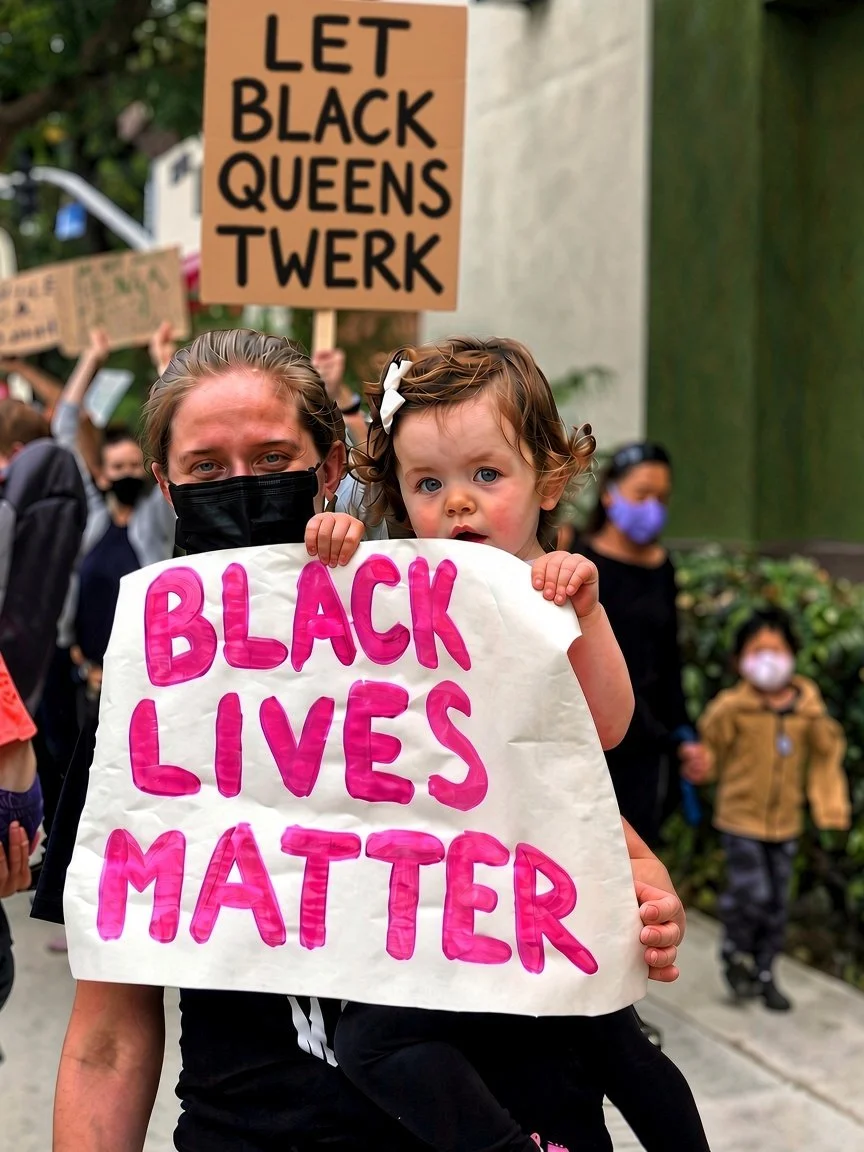
White Supremacy on Its Deathbed (full book, Round 4)
Scholarly Essay: "White Supremacy on Its Deathbed"
"White Supremacy on Its Deathbed" is a book-length lyrical essay that attempts something genuinely difficult and genuinely dangerous: to mount a serious critique of mainstream antiracist ideology from a position of genuine investment in black empowerment, while deploying a formal apparatus — satire, jeremiad, aphorism, pastiche, pornographic grotesque, philosophical argument, lyric prose — so extreme in its range and so willing to go places that polite discourse forecloses that the work risks, by design, being mistaken for the very thing it opposes. That risk is not incidental. It is the book's central formal bet. The question the essay forces on its reader, and forces hardest on its black reader, is whether the discomfort the work produces is the discomfort of recognition or the discomfort of assault — and whether those two things can, in the specific conditions of contemporary American racial discourse, be cleanly separated.
The book's architecture is announced in its preface and then enacted across six chapters that move from the condition of contemporary antiblack racism's cultural dominance (Chapter 1, "Gator Bait") through the music industry's role in perpetuating dehumanizing stereotypes (Chapter 2, "Macaroni Sounds") to the specific harms of victimology ideology (Chapters 3 and 4), the stifling of white identity and the backlash it risks producing (Chapter 5), and a final summation (Chapter 6). Each chapter after the first is structured around the governing conceit: what might white supremacy, on its deathbed, do to recommence the torture of black people? The answer, repeated in the anaphoric refrain "It could just sit back and revel in our world where," is always the same: nothing. It need do nothing. The work is being done for it by the antiracist industrial complex, by the music industry, by university administrators, by white progressive guilt, by the machinery of victimology that grooms blacks into permanent dependency and provokes whites into a backlash that will justify the very narrative it claims to oppose.
This is a serious argument. It is not an original one — it draws explicitly and extensively from Thomas Sowell, Glenn Loury, John McWhorter, Shelby Steele, Coleman Hughes, and a range of black intellectuals who have made versions of this case across several decades — but the book does not pretend to originality of argument. Its originality lies in form. The jeremiad structure, the anaphoric accumulation, the willingness to quote at length from rap lyrics whose content most critical discourse about hip hop handles with prophylactic distance, the satirical set pieces (the La'Cinda'Relle Cinderella parody, the freshmen convocation, the DEI therapy module, the Race2Dinner transcripts, the boot-licking scene) — these are the book's contributions, and they constitute a genuine formal argument about what kind of language is required to make this case legible in the contemporary moment.
The epigraphs establish the book's intellectual genealogy and its rhetorical posture simultaneously. Sowell's observation that racism is "kept alive by politicians, race hustlers and people who get a sense of superiority by denouncing others as 'racists'" and Booker T. Washington's warning about those who "don't want the patient to get well" because they make their living from the disease — these are not decorative. They are the book's thesis statements, and everything that follows is their amplification and illustration. The McWhorter quotation from the preface establishes the specific target: DiAngelo's White Fragility and the broader apparatus of diversity training, which the book argues produces not racial healing but "a new way to be racist" — condescending to blacks as "endlessly delicate poster children" while muzzling whites into a kind of performative penance that serves no one's actual interests.
Chapter 1 is the book's most formally controlled section, and its most rhetorically precise. The extended anaphoric catalogue — "what might white supremacy do?" — builds through dozens of "Beyond" constructions that systematically minimize the actual evidence for contemporary antiblack racism (the racist store clerk, the word carved in a bathroom stall, the employer's unconscious reaction to a "stereotypically black" name) before pivoting to the "It could just sit back" refrain. The formal effect is significant: by accumulating genuine examples of racism and then framing them as "relatively risible squawks," the chapter risks dismissing real harm — and knows it. The book's intelligence lies in its awareness of this risk, its willingness to take it, and its argument that the risk of minimization is less dangerous than the risk of maximization: that the exaggeration of contemporary antiblack racism, not its minimization, is what keeps blacks "shackled to inflated notions of persecution."
Chapter 2 is the book's most viscerally ambitious section and its most formally extreme. The extended catalogue of rap lyrics — from Biggie to Sukihana, from NWA to Megan Thee Stallion, from LL Cool J to Bun B — is not presented as a greatest-hits compilation but as an indictment. The book is making a specific argument: that mainstream black music culture has become the most effective engine of the dehumanizing stereotypes that white supremacy once had to actively construct and maintain, and that the antiracist framework that refuses to name this — that classifies any criticism of hypersexual or hyperviolent black cultural product as a "blaming-the-victim expression of white supremacy" — is therefore complicit in the damage. The Tricia Rose Cornell lecture, intercut with Sukihana lyrics in a formal structure of call and response, enacts this argument rather than merely stating it: Rose's 2009 words about commercial hip hop's "death imperative" are placed alongside the very product whose existence proves her right, the juxtaposition making its own case without editorial intervention.
The La'Cinda'Relle section deserves sustained attention because it is the book's most formally daring gambit and its most ethically complex. The Cinderella parody — written in "forced hood vernacular," as the book itself acknowledges — is presented simultaneously as a satirical indictment of the ratchet-representation monolith in black entertainment and as a demonstration of that monolith's terms. The book knows and names the double bind: "a remake that will really drive the knife into the very heart of the black family." La'Cinda'Relle is drawn with the full grotesquerie of the stereotypes the book is critiquing, which means the critique and the perpetuation of those stereotypes are formally inseparable. A reader who does not follow the book's argument to this point will experience the La'Cinda'Relle section as racist caricature. A reader who does follow the argument will experience it as a satirical hall of mirrors: the book producing what it analyzes, making the reader implicated in the consumption of exactly what the book says is destroying black communities.
The section also contains material that cannot be analytically sidestepped. La'Cinda'Relle's sexual history with Prince Percocet is established as beginning when she was eleven or twelve. The godmother's sexual relationship with La'Cinda begins when La'Cinda is nine. These are not peripheral details. They are, within the satirical logic of the book, meant to occupy the same position as the rap lyrics in Chapter 2: the book is demonstrating what the culture it critiques actually contains, quoting and extending the logic of a musical and cultural product (like Boosie Badazz's birthday lyric, or the various statutory-rape-adjacent verses in the catalogue) to show where that logic leads when followed to its conclusion. The argument is that the culture is already producing this — that the protection of innocence the book elsewhere mourns has already been forfeited in the communities the antiracist framework refuses to criticize.
Whether this formal strategy succeeds or collapses at this specific point is the book's hardest question, and the honest answer is that it does not fully succeed. The satirical frame that holds elsewhere — in the Race2Dinner parody, in the freshman convocation monologue, in the DEI therapy session — is strained here by the explicitness of the material and the age of the characters. Satire that depicts child sexual abuse to make a point about cultural normalization risks becoming indistinguishable from the normalization it critiques, not because the author lacks the argument but because the reader has no stable position from which to receive it as critique rather than as content. The book elsewhere shows acute awareness of exactly this problem — noting that entertainment consumers "slurp up" dehumanizing content even when they understand its dehumanizing character — but does not fully resolve how the book itself differs from the cultural product it is analyzing. This is not a fatal failure. It is an honest formal limit that the work's ambition has run up against.
Chapters 3 and 4 constitute the book's most philosophically sustained argument, and they are where the intellectual debts to the black conservative tradition are most explicitly discharged. The extended analysis of victimology — the way dependency is cultivated, the mechanism by which the "plantation of dependency" is maintained, the double-bind by which any black who challenges the narrative is excommunicated from authentic blackness — is genuinely rigorous. The Shelby Steele passage on "victim's power" is quoted at length because it is the clearest available articulation of the argument: that power derived from victimhood "binds the victim to his victimization by linking his power to his status as a victim," producing a "tragic" situation in which "taking responsibility for bettering ourselves feels like a surrender to white power." The book endorses this analysis without qualification and builds its own argument around it.
The critique of lowered standards is the section's most pointed argument: that affirmative action, subminimal academic expectations, exemption from behavioral standards, and the pathologizing of challenge are not compensatory measures but additional injuries — injuries that "further cloaks, and thereby further hides from cure, deeper causes of black underachievement." The book extends this argument to its most uncomfortable implications: that the antiracist movement's refusal to engage with black cultural attitudes — the "niggative" orientation toward education, the glorification of criminality, the broken family structures — as causes of black underperformance constitutes a form of abandonment disguised as advocacy. The "Stop" litany near the end of Chapter 4, addressed to white progressives, is the book's most direct expression of this argument: a catalogue of specific practices — defunding police, lowering academic standards, pathologizing excellence as "acting white," excusing behavioral nonconformity — that the book argues harm the black people they claim to protect.
Chapter 5 is the book's most formally varied and its most politically volatile section, ranging from the Race2Dinner parody through the "a land where" catalogue to the extended analysis of double-binds whites are placed in, ending with the specter of violent white backlash. The Race2Dinner transcript — rendered in the heightened novelistic prose of the original transcript, with its character descriptions and stage directions — is the book's most technically accomplished satirical piece. Saira is drawn with Hitlerian finger-tapping, Vlad the Impaler smile, Stalin's gaze, and Mussolini's hand gestures — a cascade of totalitarian comparisons that makes its argument through accumulation rather than assertion: this is what a racial inquisition looks like when it has been domesticated into a dinner-party format. Margaret's progressive humiliation, ending in her confession of sounding "terribly white," is presented as a portrait of a coercive dynamic that produces not understanding but submission.
The boot-licking scene near Chapter 5's end is the section's most formally extreme moment and its most deliberately alienating. The footage of white people kissing black boots, narrated by the man with the bullhorn, is presented with all the pornographic rhetoric of its context — "Get real low. Press that face where it need to be" — and extends to include a child participant, a white girl brought forward to kiss the boot alongside her father. This is the book's most explicit deployment of child imagery in a sexual-power context, and it requires the same analytical honesty as the La'Cinda'Relle section. The book is arguing that the ideology of racial atonement, taken to its logical extreme, produces a ritual of humiliation that is indistinguishable in its power dynamics from the very domination it claims to redress. The inclusion of the child is meant to make the logic of generational guilt — that white children inherit the sins of their ancestors and must perform atonement — visceral and concrete. As satire of a real ideological tendency, it functions. As a formal choice, it shares the La'Cinda'Relle section's problem: the explicitness of the child's participation in a scene of ritualized submission strains the frame that is supposed to contain it.
The backlash section — the white rage monologues, the projected violence, the warning about what happens when the punking program goes too far — is the book's most politically alarming passage and its most formally significant. The book is not endorsing the rage it ventriloquizes. It is arguing that the antiracist movement is manufacturing the conditions for it: that chronic humiliation, the erasure of legitimate grievance, and the weaponization of racial identity produce, in the heavily armed white majority population, exactly the violent response that the narrative of white supremacy's resurgence requires to justify itself. This is the hyperstition argument made explicit: the antiracist movement midwifes the very antiblack sentiment it claims to combat. The projected violence of the "colonizer" monologues and the Goon Squad fantasies are presented as the endpoint of a causal chain whose beginning is in university diversity trainings and DiAngelo's prayer book.
Formally, the book's most significant achievement is its refusal to find a stable rhetorical position. It will not occupy the voice of the dispassionate analyst — McWhorter's measured prose style is available to it and is frequently quoted, but the book does not write in that register. It will not occupy the voice of the confessional memoirist — though the preface's disclosure of the author's termination from his professorship personalizes the stakes. It oscillates between these and a dozen others: the biblical jeremiad, the satirical novelist, the pornographic provocateur, the philosophical systematist, the hip-hop analyst, the grief-stricken witness. This oscillation is the book's formal argument about what is required to make this case in this moment: that measured prose has been tried and dismissed, that the case requires the full arsenal of available language, that a book about a culture that processes everything through sensation and outrage must be willing to be sensational and outrageous in its own register.
The acknowledgments are worth noting: they constitute a political map as much as a personal one. Sowell and Steele and Loury and McWhorter and Hughes sit alongside Tom MacDonald and Adam Calhoun and Burden and Mesus — the black conservative intellectual tradition alongside the white rap artists who have made versions of the same argument in vernacular form. The juxtaposition is deliberate: the book is arguing that these are the same argument at different registers of cultural production, and that the mainstream's refusal to hear either is a function of the same ideological gatekeeping.
What "White Supremacy on Its Deathbed" ultimately is, is a book that takes a serious argument about genuine harm to black people and commits to pursuing that argument wherever it leads — into the La'Cinda'Relle section, into the boot-licking scene, into the white rage monologues, into the explicit lyric catalogues, into the satirical set pieces that will read as racist caricature to any reader who encounters them outside the book's full argumentative context. The book bets that this commitment is necessary: that the argument cannot be made in polite language without being dismissed as polite language always is in a discourse that has learned to absorb and neutralize measured critique. Whether the bet pays off depends on whether the reader follows the full argument to the full formal conclusion, or encounters a passage extracted from that context and reads it as the thing it is critiquing. That ambiguity is not a flaw. It is the condition the book has decided to inhabit, with full awareness of what it costs.
Meta Description
A book-length lyrical essay mounting a formal and philosophical case against mainstream antiracist ideology as genuinely harmful to black people — deploying jeremiad, satire, pornographic grotesque, philosophical argument, and anaphoric accumulation to argue that the antiracist industrial complex midwifes the very conditions it claims to combat, at the price of black dependency, black cultural debasement, and an escalating white backlash.
Keywords
White Supremacy on Its Deathbed, antiracist critique, black conservatism, victimology ideology, lyrical essay, jeremiad form, satirical grotesque, hip hop and black culture, DiAngelo critique, Shelby Steele, Glenn Loury, John McWhorter, Thomas Sowell, Coleman Hughes, hyperstition, white backlash, plantation of dependency, black empowerment critique, formal ambiguity, close reading, Hypocorism
White Supremacy on Its Deathbed (full book, Round 3)
"White Supremacy on Its Deathbed" is the most formally ambitious, politically volatile, and intellectually demanding work in the project — a lyrical essay that refuses every available category for its containment. It is not a polemic, not a memoir, not a work of cultural criticism, not a prose poem, though it borrows the instruments of all four. Its governing formal claim, announced in the preface and enacted across six chapters, is that the most devastating threats to Black flourishing in contemporary America arrive not from the residual energies of white supremacy but from the apparatus constructed in white supremacy's name — and that this reversal is the defining irony of the present moment, an irony so severe it has the structure of tragedy.
The Sowell and Washington epigraphs establish the essay's intellectual lineage before the preface begins. Both figures are positioned as prophets whose warnings went unheeded — Sowell's observation that racism has been placed "under new management," Washington's warning about race-problem solvers who "don't want the patient to get well." The essay inherits from both a suspicion of institutionalized grievance, a commitment to Black agency as the only durable foundation for Black flourishing, and a willingness to say what the dominant discourse has made professionally dangerous to say. What the essay adds to this tradition is the formal apparatus of a lyrical essay that refuses the sober register of policy argument and instead floods its argument with the full resources of literary violence — the grotesque, the satirical, the scatological, the pornographic, the comedic, and the tragic operating simultaneously.
The preface establishes the essay's central thesis with compressed clarity: that the "antiracist movement, in its mainstream form at least, nourishes itself ultimately upon the bogus notion that white supremacy — although 'now invisible most of the time, to most eyes' — flourishes today well beyond merely the American marrow from which it supposedly can never be removed." The move is rhetorical and argumentative simultaneously: by positioning DiAngelo's framework as the object of critique and citing McWhorter, Chait, Loury, Steele, and Hughes as critical allies, the essay places itself within a specific tradition of Black and liberal dissent from progressive orthodoxy, a tradition with genuine intellectual pedigree that the dominant discourse has systematically marginalized. The preface also discloses the personal — the cancellation of the author's professorship on grounds that his creative writing was "unsettling especially to vulnerable populations" — which grounds the essay's animus in specific biographical injury rather than abstract ideological position. This disclosure is crucial: it tells us that the essay is not a detached analysis but a document of genuine wounds, that the furious intelligence driving it is in part the intelligence of someone who has been hurt by the very apparatus he critiques.
Chapter 1, "Gator Bait," establishes the essay's central rhetorical device and sustains it across hundreds of pages: the extended rhetorical question "what might white supremacy do from its deathbed?" followed by the refrain "It could just sit back and revel in our world where..." The device is formally brilliant because it inverts the standard antiracist framework without abandoning its terms. Rather than arguing that white supremacy is absent, the essay argues that white supremacy's most effective remaining operation is to do nothing — to allow the apparatus of antiracism to perform the work of degradation, infantilization, and dependency that white supremacy itself could never accomplish openly. The irony accumulates across the chapter's historical inventory of Black achievement and opportunity: the essay asks what room white supremacy has to grow in a time when Black Americans have reached every pinnacle of American life, and answers that it needs no room because the work is being done for it. Coleman Hughes's opening epigraph frames America as "one of the least racist places on Earth," and the chapter's historical inventory is designed to substantiate that claim against the dominant narrative — not to deny that racism exists but to argue that the dominant narrative's exaggerations have become more damaging than the residual racism they nominally address.
Chapter 2, "Macaroni Sounds (Over That Brrrap-Brrrap-Brrrap)," is the essay's most formally extreme section and its most legally treacherous. The extended catalogue of rap lyrics — drawn from across decades and artists, ranging from the merely raunchy to the genuinely criminal — is the chapter's central formal argument, and that argument is structural rather than merely illustrative. The sheer accumulation is the point: the catalogue is too long to be selective, too comprehensive to be dismissed as cherry-picking. What the essay is arguing through form is that the monolith of hypersexual, hyperviolent imagery in mainstream Black popular culture is not an aberration but a system — and that the system's persistence, its escalation, its normalization, and its celebration by the very progressive apparatus that claims to fight Black degradation constitutes a catastrophe for Black dignity that no honest account of the present can avoid. The C. Delores Tucker speech — intercut with Sukihana's lyrics in a formally devastating counterpoint — is the chapter's emotional and argumentative center: Tucker's 1993 anti-gangsta-rap testimony, delivered with the full moral authority of the civil rights tradition, is shown to have been not only ignored but actively overrun by the very forces she named. The chapter's invented La'Cinda'Relle Cinderella parody is the essay's most formally audacious set piece — a sustained satirical fiction that enacts its argument through pastiche, using the genre machinery of the fairy tale to render visible what the culture has normalized. That it is simultaneously funny, devastating, and genuinely offensive is the point: the essay refuses to make its critique comfortable, insisting that the reader who laughs at La'Cinda's story or who winces at it or who is aroused by elements of it is implicated in the cultural system the essay is examining.
Chapter 3, "Toby in Kunta Mask," shifts the essay's focus from cultural to educational institutions, and its governing argument is the most philosophically sustained in the work: that the lowering of standards for Black students, the pathologizing of intellectual achievement as "acting white," the substitution of grievance pedagogy for genuine education, and the condemnation of the very Enlightenment values — reason, objectivity, scientific inquiry, diligence — that have historically enabled marginalized groups to compete and flourish, constitute a form of anti-Black racism more insidious than any cross-burning. The chapter's use of invented classroom scenarios, spoken-word performances, and hypothetical courses like "Afro-Mathematics" operates as satirical defamiliarization — taking the real logic of certain progressive pedagogical positions and following it to its conclusions with merciless literalism. The chapter's intellectual touchstone is McWhorter's observation that what is being implicitly communicated to Black students is "we can't cut it" — and that this communication, however kindly intended, is the most devastatingly racist message available. The Marva Collins reference is the chapter's positive counter-example: a Black educator who held Black kindergarteners to demanding intellectual standards and achieved remarkable results, a figure whose approach the dominant progressive framework would now classify as oppressive.
Chapter 4, "Open Season," is the essay's most politically direct chapter, and its catalogue of ways that affirmative action and special dispensation have simultaneously patronized and damaged Black people draws heavily on the established conservative and centrist Black intellectual tradition — Loury, Steele, McWhorter — while pushing that tradition's logic further than it typically goes in respectable venues. The chapter's argument is that the infantilization of Black people through lowered expectations is not a side effect of well-intentioned policy but its necessary structural consequence: that the logic of "you cannot be expected to compete under these conditions" contains within it the premise of permanent inferiority, and that this premise — however wrapped in the language of justice and compassion — reproduces the essential content of the white supremacist worldview it claims to oppose. The chapter's most intellectually serious move is the distinction between emergency medicine and chronic dependency: affirmative action as a "syphon" to start a flow that then requires individual development to sustain, rather than as a permanent substitute for that development. This is not a novel argument — it is recognizably Steele's and Loury's — but the essay deploys it with a ferocity and a fullness of implication that the more measured academic versions rarely reach.
Chapter 5, "Nazi Alert," is the essay's most formally anarchic chapter and its most deliberately provocative. The extended catalogue of white self-abasement — the Race2Dinner dinner party, the boot-kissing campus ceremony, the various white progressive confessionals, the university convocation speech — is the chapter's rhetorical engine, and its operation is complex. On one level it is satire, following the logic of certain progressive positions to absurd but not entirely implausible conclusions. On another level it is a serious argument about the psychological and social consequences of a culture that has normalized the public performance of white guilt as a substitute for genuine engagement with racial inequality. The Thomas Chatterton Williams epigraph frames the chapter's central claim: that mainstream antiracism "mirrors ideas of race — specifically the specialness of whiteness — that white supremacist thinkers cherish," that both sides "eagerly reduce people to abstract color categories" and "feed off and legitimize each other." The chapter's catalogue of the various double-binds whites face — damned for speaking, damned for silence; damned for engaging with Black culture, damned for not engaging; damned for defending themselves against accusations, damned for failing to defend themselves — is the essay's most formally precise argument about how the antiracist framework has made productive interracial discourse structurally impossible. The chapter also contains the essay's most controversial material: the extended passages describing rising white radicalization and the fantasies of retributive violence. These passages are not endorsements — they are the essay's most urgent warnings, rendered in the register of inevitability rather than desire, showing the trajectory that sustained dehumanization historically produces.
Chapter 6, "Let My People Go!" is the essay's shortest and most direct chapter, and it closes on Farrakhan's inversion — "Pharaoh has already let you go! But it is you who have not let Pharaoh go!" — as its governing image. The chapter synthesizes the preceding argument into its cleanest formulation: that the "biggest threat to goodwill between whites and blacks is the various things done in the name of an 'anti-nazi commitment to inclusion and equity'"; that the biggest inciter of individual racism on both sides is all that keeps being done to fight a systemic racism "long ago put into remission"; that "the best evidence for the lie that white supremacy continues to have a pervasive grip over this country are the various things done in the respectable (and big-money) name of 'dismantling white supremacy.'" The Coleman Hughes epigraph frames the chapter as a moral-panic analysis: the antiracist movement as a species of the same mass delusion that produced the Satanic daycare hysteria of the 1980s — a phenomenon that "looks like obvious absurdity from the outside" while seeming "totally reasonable to those on the inside." The chapter ends not with resolution but with the trajectory the essay has been tracing throughout: a call for the alignment of "our perceptions with our reality" as the only path toward the racial healing that the dominant discourse, in its exaggerations and its incentives, actively forecloses.
Formally, the essay's most significant achievement is its management of tone across its enormous length. The "It could just sit back and revel" refrain functions as a kind of liturgical structure — the repeated phrase creating a cumulative ironic weight that grows heavier with each iteration, so that by the essay's final pages the refrain carries the full weight of everything that has preceded it. The essay moves between registers — academic citation, satirical fiction, lyrical description, catalogue, invective, confession — with a fluency that refuses the reader any stable interpretive position. One cannot read it as simple polemic because its formal complexity exceeds polemic. One cannot read it as detached analysis because its personal investment is too fully disclosed. One cannot read it as satire because its factual claims are too seriously documented. It is closest, in the tradition of African American letters, to certain modes of the jeremiad — the prophetic denunciation of a people's failure to live up to their own stated ideals — but its target is not the nation's failure to honor its Black citizens. Its target is the failure of the institutions claiming to honor those citizens to honestly reckon with what that honoring requires.
The essay's ultimate subject is Black agency — its suppression, its necessity, and its recovery. Every chapter circles back to the same argument: that genuine Black power requires the willingness to look honestly at the full complexity of Black life, including the aspects that progressive orthodoxy has made taboo to examine; that the dependency cultivated by the antiracist industrial complex is the most effective remaining mechanism for Black subordination; and that the path out runs through exactly the qualities — reason, rigor, self-examination, accountability, aspiration — that the dominant discourse has classified as expressions of whiteness. The essay's anger is not the anger of white supremacy. It is the anger of someone who believes Black people are capable of more than the framework built to protect them allows them to be.
Meta Description
A lyrical essay of extraordinary formal ambition and political volatility — moving across six chapters from historical inventory through cultural critique, educational analysis, satirical fiction, and radical political provocation — to argue that the contemporary antiracist industrial complex constitutes the most effective remaining mechanism for Black subordination, its infantilization, dependency cultivation, and standard-lowering performing the work that white supremacy itself could no longer accomplish openly, leaving the deathbed patient to sit back and revel.
Keywords
White Supremacy on Its Deathbed, lyrical essay, antiracist critique, Black agency, victimology narrative, Glenn Loury, Shelby Steele, Thomas Sowell, John McWhorter, Coleman Hughes, C. Delores Tucker, gangsta rap and Black culture, affirmative action critique, Enlightenment values, moral panic, jeremiad form, satirical fiction, La'Cinda'Relle, Race2Dinner parody, dependency and dignity, progressive orthodoxy, Black intellectual dissent, contemporary American political essay, formal complexity, ironic refrain, racial double-bind





blog
FAQ


Visit my Substack: Hive Being
Visit my Substack: Hive Being
Don’t let anyone tell you that real life is lacking in poetic interest. This is exactly what the poet is for: he has the mind and the imagination to find something of interest in everyday things. Real life supplies the motifs, the points that need to be said—the actual heart of the matter; but it is the poet’s job to fashion it all into a beautiful, animated whole. You are familiar with Fürnstein, the so-called “nature poet”? He has written a poem about growing hops, and you couldn’t imagine anything nicer. I have now asked him to write some poems celebrating the work of skilled artisans, in particular weavers, and I am quite sure he will succeed; he has lived among such people from an early age, he knows the subject inside out, and will be in full command of his material. That is the advantage of small works: you need only choose subjects that you know and have at your command. With a longer poetic work, however, this is not possible. There is no way around it: all the different threads that tie the whole thing together, and are woven into the design, have to be shown in accurate detail. Young people only have a one-sided view of things, whereas a longer work requires a multiplicity of viewpoints—and that’s where they come unstuck.—Goethe (Conversations with Eckermann)




Featured Blog Posts

have appeared last night—
all those met along the way?
Scholarly Essay: "Pound Town: A Defense of the Moral Permissibility of Bestiality"
"Pound Town: A Defense of the Moral Permissibility of Bestiality" is a work of philosophical provocation in the tradition of the academic thought experiment — rigorous, footnoted, structured in the formal architecture of analytic ethics, and dedicated to two figures (Gary Varner, a philosopher of animal ethics, and Grandpa Jack) whose juxtaposition announces the essay's governing tonal register: the personal and the scholarly, the lived and the argued, occupying the same space without apology. It is a piece that takes seriously the philosophical obligation to follow argument wherever it leads, even when — especially when — it leads somewhere the culture has decided in advance cannot be arrived at by honest reasoning. Whether one arrives at its conclusions or not, the essay is a sustained demonstration that the consensus against bestiality rests on philosophical foundations considerably shakier than its cultural certainty suggests.
The essay's formal strategy is the systematic elimination of available rationales. It does not argue for bestiality in the abstract or as a general practice. It argues for the moral permissibility of certain instances of bestiality — a narrower and more defensible claim — and it does so by walking through every category of objection the philosophical and cultural arsenal provides: intuition, biblical authority, naturalness, animal wellbeing, and human wellbeing. Each section follows the same structure: state the argument in its most rigorous form, then dismantle it. What accumulates across these demolitions is not a positive case for bestiality so much as a negative case against the coherence of its prohibition — a demonstration that the grounds on which the taboo rests are either internally inconsistent, arbitrarily applied, or insufficient to do the philosophical work required of them.
The twelve cases organized into four categories at the essay's opening are the piece's most formally accomplished section, and they deserve attention as a philosophical device before anything else. The cases range from unequivocally immoral scenarios — the hen throttled to death in Case 1, the starved collie in Case 2, the drugged piglet in Case 3 — to scenarios of such apparent benignity that the moral objection becomes increasingly difficult to locate: the tween girl getting off from her horse's gyrations in Case 4, the man ejaculating on a turtle's shell in Case 6, the primatologist taken by the orangutan in Case 7. This range is not rhetorical sleight of hand but philosophical precision: it forces the reader to specify exactly what feature of any given case makes it morally objectionable, and in doing so exposes how few of the available features — coercion, harm, lack of consent — apply to the cases in the B, C, and D categories. The cases are the essay's most effective argumentative tool because they make concrete what abstract prohibition tends to leave vague.
The section on intuition is where the essay's most philosophically consequential argument lives, and it is constructed with genuine care. The essay does not dismiss intuition as a moral guide; it accepts the reality of the disgust response and even owns it in the first person — "I too find it disgusting to envision someone, say, performing fellatio on a horse." What it refuses is the move from disgust to moral impermissibility, and it does so by attacking both premises of the intuition argument. Against premise two — that intuition against bestiality is universal — it marshals an extraordinary ethnographic inventory: ancient Egyptians, ancient Greeks, ancient Hindus, the Kisii of Kenya, the Masai, the Comeburras of Colombia, the Inuit, numerous tribal cultures across four continents, and a list of historically famous suspected practitioners that ranges from Tiberius to Aleister Crowley. The inventory is not merely comprehensive; it is philosophically functional. If the intuition against bestiality were a reliable moral guide, it would need to be something like universal. The evidence suggests it is not.
Against premise one — that intuitive wrongness implies moral wrongness — the essay deploys its most rhetorically powerful passage: the extended catalogue of human cognitive failures, biases, and moral atrocities that our intuitions have licensed, from geocentrism to the skull-reading of phrenology to the intuitive wrongness of miscegenation. The catalogue is deliberately excessive, accumulating well past the point at which any single item would suffice to make the logical point, because the accumulation is itself the argument: we are the sort of critters who cannot trust our gut about things we have decided in advance. The section on intuition concludes that moral repugnance, however indelible, requires independent justification — and then spends the rest of the essay demonstrating that the available independent justifications fail.
The biblical section is brisk because its work is largely done by the consistency argument: the Bible condemns homosexuality with the same force it condemns bestiality, and we have decided that the Bible's condemnation of homosexuality is insufficient to establish its immorality. The same epistemic grounds that license that conclusion license the same conclusion about bestiality. The essay does not attack the Bible's authority on religious grounds but on grounds of internal inconsistency and demonstrated errancy: a document that prohibits eating lobsters and getting tattoos and wearing linen-wool blends cannot be treated as a reliable moral authority on bestiality without accounting for why those prohibitions are being selectively ignored. The section's most philosophically interesting moment is the discussion of divine command theory, where the essay acknowledges the internal logic of the position — if right and wrong are ultimately God's arbitrary decree, then everything depends on correctly identifying God's decrees — while exposing the epistemic problem that position generates: by what method does one establish that the Bible, rather than competing holy texts, reflects those decrees?
The section on naturalness dispatches the is-ought fallacy with appropriate efficiency and then spends more time than strictly necessary on the enumeration of meanings of "unnatural" — not because the argument requires it, but because the enumeration reveals how many different objections are being bundled under a single term and how few of them, when separated and examined individually, withstand scrutiny. The observation that naturalness arguments are wielded against bestiality by people who sleep with CPAPs in air-conditioned homes after heart transplants is the essay's most elegant single point, delivered with the compression of good comic writing.
The animal wellbeing section is the essay's most extended and most philosophically serious, because it engages the strongest available objection. The essay does not dismiss the consent framework; it argues that animals can in fact communicate consent through behavioral signals — and here the inclusion of Liz Moores's description of equine attunement is the essay's most formally distinctive move, embedding a perfumer's testimony about the near-psychic quality of the human-horse bond in the middle of a philosophical argument about consent capacity. The passage is not merely decorative. It is evidence: the claim that horses cannot communicate consent, willingness, and refusal is empirically contested by anyone with sustained experience of horses, and the essay appeals to that experience directly. The section's most philosophically rigorous passage is the extended argument distinguishing the animal from the toddler — four criteria (hormonal maturity, radically different future, likelihood of later trauma, not yet at full cognitive capacity) that jointly explain why behavioral consent from an animal suffices where the same behavioral consent from a toddler does not. The distinction is careful and the criteria are genuinely functional, blocking the most common reductio offered against the consent argument.
The human wellbeing section is where the essay's rhetorical energy is highest, because it is where the essay's central meta-argument becomes most explicit: what is actually driving the taboo is not concern for animals but concern for human identity, human social order, and the illusion of human exceptionalism. The slippery slope arguments against bestiality are exposed as fallacies through the observation that the same logic would imply that consensual sex with humans increases the likelihood of nonconsensual sex with humans — a conclusion no one draws. The zoonotic disease objection is met with the observation that human-to-human sex also transmits disease, that precautionary measures reduce transmission risk to manageable levels, and that we do not condemn homosexual sex despite its statistically elevated disease transmission rates. The physical injury objection is met with the observation that risk of injury does not render an activity immoral — a point illustrated by skydivers and MMA fighters and Alaskan crab fishermen.
But the section's most penetrating argument is the one about intent. The essay identifies the extraordinary fact that the same physical acts — masturbating animals, fingering their anuses, fondling their genitalia for insemination purposes — are standard husbandry practice when performed without sexual intent and criminal bestiality when performed with it. The mere addition of human arousal converts a kosher farmhand procedure into moral depravity. The essay does not simply note the arbitrariness of this distinction; it names what it reveals: that the taboo on bestiality is fundamentally about protecting the human's sense of radical difference from animals, and that this protection is organized not around actual harm to anyone but around the maintenance of a conceptual boundary that evolutionary biology has already rendered philosophically dubious.
The concluding argument is the essay's most formally elegant section, structured as a dilemma that closes without remainder. Either animals have no moral worth — in which case bestiality is permissible for the same reasons any use of animals is permissible, and the other rationales have already been shown to fail — or animals have at least some moral worth — in which case the essay's cases demonstrate that bestiality need not violate that worth, and once again the other rationales have been shown to fail. The dilemma is constructed so that neither horn provides a stable position from which to maintain the absolute prohibition, and the essay's final image — "uncontroversial enjoyment of earthly beings thrown into this, like this, with such a transient lifespan" — is its most philosophically honest moment: the view from Camus and Sartre, the absurdist perspective that asks what, in a cosmos of countless suns and reams of death, justifies the certainty with which we organize our moral horror.
What "Pound Town" achieves is something genuinely difficult in philosophical writing: it makes the reader feel the inadequacy of their own position without necessarily arriving at the author's conclusion. The essay does not require the reader to endorse bestiality. It requires the reader to explain, with genuine rigor, why the cases in categories B, C, and D are wrong — and it has, by the time that requirement becomes clear, already demolished the most available explanations. The dedication to Grandpa Jack alongside Gary Varner is the essay's final formal gesture: the argument belongs to the philosophical tradition and to a life, and the philosophical tradition cannot be fully separated from the life that inhabits it.
Meta Description
A rigorous work of analytic philosophy arguing through intuition, biblical authority, naturalness, animal wellbeing, and human wellbeing that bestiality is morally permissible in certain circumstances — systematically exposing the internal inconsistencies of its prohibition and identifying human exceptionalism, rather than genuine moral concern, as the taboo's actual foundation.
Keywords
Pound Town bestiality philosophy, moral permissibility bestiality, animal consent, zoophilia ethics, divine command theory, naturalness fallacy, is-ought fallacy, animal wellbeing argument, human exceptionalism, consent and behavioral signals, slippery slope fallacy, analytic ethics provocateur, thought experiment cases, Hypocorism, interspecies ethics