Third Section of ''Hypocorism'' (ROUND 1)
scent of the day: Cochise, by Havenhollow
Cochise definitely shot up to the top woody scent that I have in my collection: it bests Woody Mood, Arso, Fille en Aguille, Brokilan, and perhaps even Amber Kiso. It has the juniper of Rake and Ruin which I really like—and which, strong in both, makes them greater siblings than one might think on paper (Cochise bringing much more of that liatrix-cinnamon, even cheesecake vibe, we expect from an autumnal house like Havenhollow, and then becoming smoky leather dominant like Rake and Ruin too, only with a much more murky brown resinous character as opposed to Rake and Ruin’s wet-dog-and-gin gin clarity).
This has really good cedar like in DS Durga and it also has mesquite which gives it that Cochise flare and brings it out of the mapley northeastern autumnal tropes that dominate so many other Havenhollow frags. A nice malty aspect appears through Cochise too and it adds tremendous flare. Yes, mesquite (teetering on liquid smoke) and juniper (gin-like) in a full-on malty envelop, this frag reminds you of tier-one artisanal beer brewery (stout coffee and molasses that nearly gets sickly, hints of IPA grapefruit). This is the best opening you could ever expect from just a straight woody scent, and then it goes into a tremendous cedar—you might want to yawn at cedar but believe me, there is nothing to yawn about here with this cedar. Cochise really captures the name, especially as the leather resolves into some Native American moccasin material that makes you feel like this is the smell of Jim Morrison’s Native American guardian angel
Different aroma but Cochise has that dark boozy nearly Gothic feel Vibe of fumidus: whereas fumitis is a leather peat Cochise is a leathery malt. Both scents have the same character, not the same aroma—and that character, if we are going to try to reduce it, could be said to be a function of their unique booziness plus leather. Synthetics in cochise are great—they make it last so long, next day after shower, but with a pleasant afterglow like with Ormonde Jayne.
*Let's workshop the third section of my story, novel-length now, that examines the intricate power dynamics and linguistic structures at play in a man's passionate relationship with a girl he deems too young.
Third Section of “Hypocorism”
A rule was a rule. But as to what moved him to concede ground to the telos of his silver-tongued testicles, a sizable concession even if small compared to the anal loophole commonplace among cum-sharting Catholic school girls (many this very age) in a 70s and 80s of a stricter Rome—the reasons were too many to enumerate. To isolate them, moreover, felt wrong. It was not simply that analysis would be difficult (especially for someone whose left hemisphere, although hypertrophied enough to drive—centrifuging wholes into parts—even when sloshed, had been dazed by cupid’s blow dart) or that it could sound like self-justification or overcompensation (especially for someone disgusted by the human capacity for wishful thinking and self-deception, by the human capacity for reading the Christmas exchange of the exact same Amazon-hyped electronic as evidence of miracles). It was that tidy parsing of the reasons, as if the matter were more a messy tangle than an interpenetrative gestalt, felt more profane than dissecting a face into eyes plus nose plus mouth or a house pet into just organs—blasphemy against something that was, as she would put it, “like a whole vibe, nigga.”
At the same time, though, the powers against their love were as formidable as they were traditional. And for someone careful like him—wary of radical leaps from the status quo (as any scholar should be) while also natively disposed, like Aristotle, to giving credence to folk wisdom and norms, “the things said” (ta legomena)—that meant these powers were too deserving of respect not to do the work, even if that work amounted to the distorting sin of dividing a holism of co-presence into separate bullet points. He owed an explanation—on analogy to Sagan’s maxim (“Extraordinary claims require extraordinary evidence”), he owed an extraordinary explanation—for how, in a child-welfare system otherwise holding, he could allow such literal pressure leaks. The girl deserved a protector, besides, who would keep his head about him (especially in compromise), who could keep tethered to the noosphere, as much as he could—if only as a sober check on the primal intensity of the right hemisphere. For that side of his nerve center—prioritizing immediate felt connection (that of a conocer irreducible to a saber), seeing beyond categories into the nonfungible nature of the specific person—could give a shit about abstract laws and hamfisted taboos and genus-species taxonomies of map-making obsession: is it hebephilia or is it ephebophilia? His care for her by no means exhausted by what he would get in the deal, he was that man. He had to be.
Her physical appearance, it would be a lie to say it played only a small role. Most men would stand no chance. Her breeding-hormone junk jiggled through baggy bottoms. The petiteness of her hands, expressive even though—unlike him—she used them sparingly, put a maternal spin of house and home on that fat exception to that standing-69 bone everywhere else. The face, though—against that the body did not matter. The face would render ignorable, if not turn into a straight-up kink, even one of those embryonic arms—a nub, a flipper (wet-looking even when dry). Her lips were so full they were rude. Those even on the godliest paths—man and woman, a child too (if only prethematically)—would wonder, the two-toned plump too much, how fat her pussy must be. Her bright smile, reserved mainly for him (everywhere else her mouth was either closed or snarling), had the symmetry of everywhere else except her lips. An open-faced grill set, plastic platinum that went around three top teeth on the right side, offset that chiasmatic perfection and reinforced the charming mashes that made her a mystery: boy-meets-girl, ghetto-meets-nerd, child-meets-adult. Her eyes, dark and steady (often behind oversized blerd frames), were the kind that made adults uneasy—and often for reasons they would rather not face. She looked at you as if she had already made a profile and was waiting to see if you would confirm it. When you backed down—she never averted her gaze first—you felt, in effect, as if she knew you would from the very beginning.
The beauty of her mind played a bigger role. She held a close place in her heart for those who did not abide by the swingless drumbeat of Disney’s America. A mark in the ghetto for his books and his smarts and his courtesy; a mark in the academy for his slang and his bop and his anger—that itself, her attraction to unorthodox cadences full of Mingus shouts and silences played like beats themselves, made him feel seen. “Nigga, everyone the same now. Like we the robots.” She defended script deviants against those who would cast shame—doing so, in fact, with such ready-to-fight passion (“What, a nigga can’t like math?”) that, even without controlling for racial or cultural or linguistic predilections, this girl would steal Nietzsche’s attention away from an ass-spread Lou Salome herself. “Why people gotta hate? I ain’t tryna make no one ashamed. Def aint tryna feel ashamed about myself. The fuck!” She had the empathic intelligence of someone who spent time peering out from inside a diversity of souls (“Tch. I ain’t sayin it be easy for me to give up my slaves either though”), as if she had sat alone with literary classics for no other end but to live inside their worlds. Hitler, as far as she was concerned, had a story too. These aspects, troubling for any deep man hellbent on not falling in love, were hard to communicate. They were notes of her sillage, an amber aura with her at every moment like body heat.
He would have been threatened by her and jealous of her—threatened even—had he not felt her ways, her powers, as his own. Reflective glory had nothing to do with the matter. What credit could he take for her? And yet to reduce that feeling to some mix of vicarious fulfillment and protective investment would be to understate the point. His self-conception had broadened. That was closer to the explanation. His identity had extended into her. He had told women this before. But it had been pillow talk, loving words that proved hyperbole at dawn.
An ego blur that meant not just adopting her her successes as his own but her failures too, absorbing all their consequences—the first time this hit him, this recognition, he was in bed staring into the dark. He was not religious. But he wondered for who knows what reason—and now the wonder intruded upon him every time he got under the covers—if that was some insane part of Christianity he had never recognized or, if he did, simply shrugged his shoulder at in failiute to appreciate the gravity: Christ incorporating each of our identities into him. He never bothered to look it up. Is that really what the Christ symbol is about? Each night the question reposed. Who knows why.
Calling her “mature” was a bad look. That he did know. Too close for comfort it came to the Grooming 101 of a thirsty uncle at a birthday party: return of the mack after a few beers—“Y’r shur are mahtchur fer yer ahge. How bout a drinsh?”—but usually too lazy and sloppy, if not just plain timid (the sort of hovering half-heartedness that will have a cat, sensitive to trembles and hesitation, bite or scratch you instead of submitting to the rubs it desires like it would have if only you went all in with firm commitment) to spend the time figuring out a need he could fill, which was not always about being a wallet or a shoulder or a mentor or anything other than laying down down enough pipe to give her stinky teddy bears a break. None of that made her maturity untrue, though. She knew herself that it was true. And she had seemed to anticipate, early on, his inner battle to avoid saying the word. She seemed to notice his struggled hunt for synonyms (“grounded and astute”, “level-headed and insightful”) the way blacks used to notice whites struggle for other adjectives besides “black” to pick out the black man in the crowd. “Niggas think cuz I’m mature like this, like I was touched. Like I see where they go. They wanna hear me say some shit cuz even the bitches is creepy. But nah, no nigga ever touched me. I am who I am.”
She was mature in values and intellect but also in behavior: restraint and responsibility. It was more than that she never dipped her pussy into his mouth, even with leg-cramp excuses readily available—even, yes, with it so top-heavy like a bat body in a hoodie, pendulous inner lips that must have made her tits jealous. It was more than that she had his back—even if she laid on her share of resistance—when it came to respecting the rule. She functioned as the head of her household. She cooked scrambled eggs and ramen noodles. She did the laundry and the dishes. She hauled her toddler brother to the corner store on a hiked hip with piled scalp and buttered lips while her mother, basically catatonic were it not for the growing psoriasis plaques, slept too much of each day away to get milk. “Tch. That bitch stay depressed!”
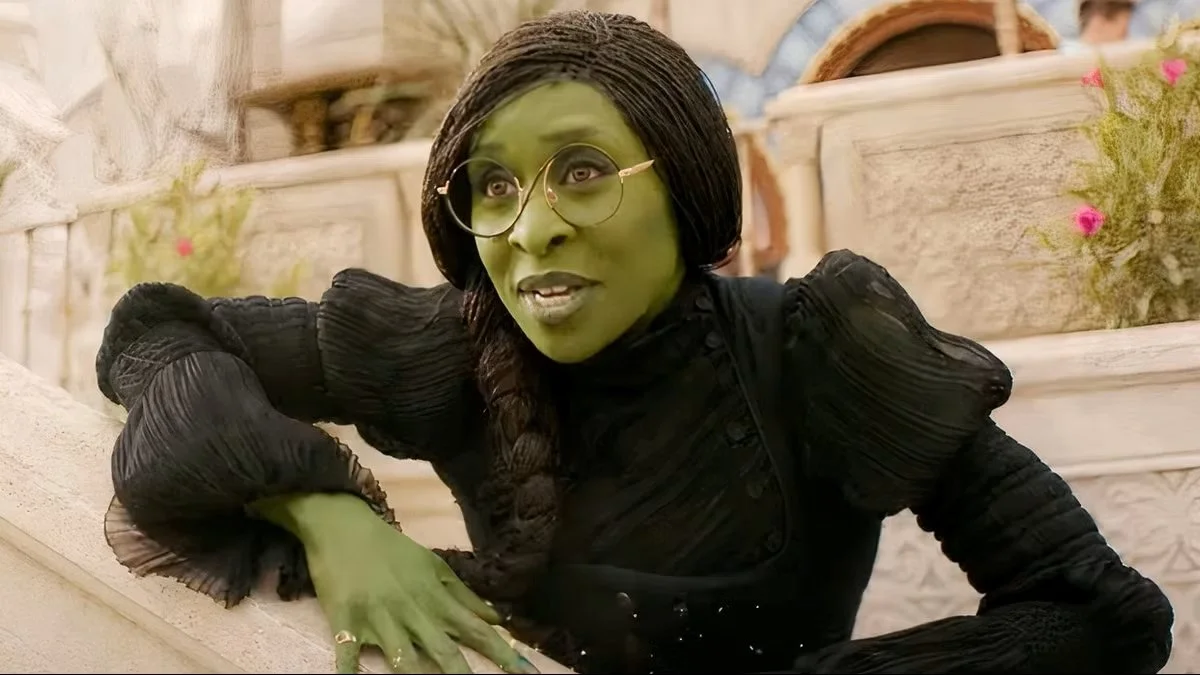
His own guilt was another factor, no doubt. “Defying Gravity,” the Nietzschean song from the new Wicked, she had to play at least once on their rides. “♩I’m through accepting limits / cuz someone says they’re so.♩” She would belt every Elphaba line, talking points too, as they drove around. “♩Everyone deserves the chance to fly. / And if I’m flying solo / at least, I’m flying free. / To those who’d ground me / take a message back from me.♩” She would keep looking forward into her own horizon, no matter how much he tried to draw her gaze by looking over. “♩Tell them how I’m defying gravity. I’m flying high, defying gravity.♩” Her voice seemed to grow louder the longer they stayed in their holding pattern. He was too skeptical of his intuition to rule it out as another false positive of his hypochondriac head, but he had started to take it personal—the lyrics and how she delivered them. It was the same sort of feeling he had known from years of reading Nietzsche, who not only seemed to speak directly to you but to be criticizing you to the point that your felt like the bad guy. The thought took root in him, one intruding behind his smiley participation with the Glinda parts, that by “gravity” she meant not only the society that banned their love but even him. For the inertia weighing her down, no clear sense of when or how their holding pattern would break—who else but him, the man giving her the “Babe” scold if her hand rested too high up his thigh, reposed as its most proximate sustaining cause?
The Elphaba song, low enough not to cause insomnia but still a candidate for the longest continuous loop of a song section perhaps in his life—it was not just that it had him feeling he was this force preventing her from flying. It was that it made him feel like the powers that be, the man. He had always been against the man. As a heterodox artist he was still against the man. Indeed, he carried his gun with the man in mind. But now he felt, on so many different issues, that he was becoming the man. At her age, he would have been ready to kill members of ICE. If he had been subject to the mainstream ideology articulated at every Grammy award show like kids are today, there is a good chance his poor-white-trash tantrums might have gone right in that very direction. But now he thought, just like the man supposedly would, that security had important place not just at the borders of the home but of the nation. Indeed, he thought ICE—even if not as well trained or vetted as they could be—played an important enough role—at least on the assumption that the US should remain a distinct country as opposed to just an area in on global (which is not something he necessarily believed)—that he would wear an ICE hat in solidarity if it did not pretty much mandate discharging his weapon or running people over and going to jail. Protecting girl’s sports was another area. Although he was open to alternative ways to create fair competition in sports besides the hamfisted one of biological sex (divisions based on relevant performance metrics like speed and strength and endurance, or divisions based on relevant physiological metrics like muscle mass percentage and bone density and aerobic capacity and testosterone levels), and although he was even fine with having open-sex divisions even in MMA and football, he wanted to make sure girls in girls-only domains were protected from unfair competitive disadvantages and heightened injury risk arising from welcoming in biological males. Although he thought prostitution should be illegal and recognized as taxable work, he worried about the intimacy impacts of the commodification of sex enough to respect even the extremes of nigab coverage. Although he was fine with anyone identifying as anything (boy as shark or white as black), and although he even felt a person would be a dick if they did not call a person by the name they asked to be called by, he would be damned if he was compelled by law to address them a certain way or publicly confess on pain of the HR or-else to admit that his colleague in the next cubicle was indeed a giraffe. The Elphaba song only seemed to corroborate the conservative drift in himself that some younger part of him did not like.
Her music choices could do a real number on him. Too emotional, too prone to loop in his head, too prone like marijuana to draw his attention to feelings and people he had been neglecting—music was tough for him enough as it was. Only with her entrance into his life, and all the courtship fortitude it delivered, did he break his streak of no more than ambient rain-synth. He had even recently listened through the whole Bodyguard soundtrack that otherwise would have wrecked him into booger-tear nostalgia for an irretrievable boyhood of infatuation with Whitney.
Another song she liked to sing was “Unthinkable” by Alicia Keys. “♩Someone’s gotta take the lead tonight. / Whose it gonna be? ♩” If the Elphaba song made him feel like the man, this song made him feel like a coward. There was no question on this one that the lyrics represented her true feelings and that he was the true target. “♩You give me a feeling that I never felt before. / And I deserve it, I think I deserve it.♩” None of his mental what-if could spin it otherwise. “♩It’s becoming something / that’s impossible to ignore. / And I can’t take it.♩” The song was after his time (new in his book) but had come out before she was even born. Even so, it took only one time of her playing it for him and he knew it would be in his life forever. “♩I know you once said to me / ‘This is exactly how it should feel / when it’s meant to be.’ / Time is only wasting so / why wait for eventually? ♩” And while he loved the song, it pained him at the same time—bittersweet like nostalgia because its message was more than clear and he was not answering its call. “♩If we gon do something bout it, / we should do it right now.♩”
So many calls he had avoided out of fear, self-destructive fear. Trying out for a certain sports team or approaching a girl or even just speaking up as a student in graduate seminars. “♩It’s becoming something that’s impossible to ignore. It’s what we make it.♩” The fear had led him to pull away not only from career opportunities (a tenure-track position, at damn Wellesley of all slit capitals!) but even from Yvonne in middle school, the girl whose heart he broke for no higher reasons than that he did not know how to kiss or what he would do for a date (do even in the future since he figured his fear of driving would never allow him to drive). The self-sabotage of sending love letters to her friend—that had been his escape hatch, and he never told anyone. Before him now was real love and he did not even have the courage—so at least he could worry with this song always playing—to be reckless for that, for her. What would he do in a desperate situation? Was he one of those people that would say “Shoot her instead!” if shit ever hit the fan?
There was no hiding that this was about them. “♩If we do the unthinkable / would it make us look crazy? / Or would it be so beautiful?♩” There was no hiding that this was from her perspective. “♩Either way I’m saying / if you ask me I’m ready.♩” The lyrics made it seem like it was Elphaba herself singing this love song to her beloved across lines of deep taboo. “♩I’m suspended in the air. / Won’t you come be in the sky with me?♩” What was his worry? It was whether she was ready. And the song ended as if it was trying to drive it through his thick skull that she was. “♩If you ask me I’m ready. / (I’m ready. I’m ready.) / If you ask me I’m ready. / (I’m ready. I’m ready.) / If you ask me I’m ready. / (I’m ready. I’m ready.)/ If you ask me I’m ready. / (I’m ready. I’m ready.)♩” It was as if the song was saying “You don’t have to worry anymore.” But as uptick of blood around his cuticles made clear, still he was afraid.
Even if it meant looking like the bad guy or the stick in the mud or feeling like a coward, he refused—whatever the true reasons were—to play loose and fast with someone he loved. We all have to live with our decisions and that is how he framed it in his mind. He would not play loose and fast. She was too precious. At the same time, however, they were going to masturbate anyway. They were going to squirt in the bathrooms and bedrooms of their own homes—and to images, mental and digital, of one another. Why not just do it together, then? The smooth talk of the testicles were bound, of course, to whisper such things. But substance stood behind the eloquence. What matter was it, really—especially since it added guilt-diminishing jazz to an otherwise responsible routine between friends mature enough to know more than just the stakes of their mutual attraction?
The friendship point, that was most crucial of all to the bend. Each felt safe to be playful. “A bitch be goofy as fuck with you.” He felt the same, like he could be a kid. He even dared her to eat his booger once and she did. Banter came easy. “Oh PowerPoint smooth now? Dead.” That was her teasing response to his claim that he had won her over, the very first day they met, with “smooth moves.” “Bitch already at the finish line. This nerd still sniffing crumbs.” They spoke, in their play, as if only their own take held the truth. And yet both trusted, no performance-breaking check-ins necessary, that neither really believed that. “Had to take what I wanted,” he said, “no matter all your snotty bullshit.” Whereas she said “You wasn’t takin nothin with that corny ‘Can I smell it?’ shit. A nigga got a little charity and now he think he a pimp.”
“We need books that affect us like a disaster, that grieve us deeply, like the death of someone we loved more than ourselves, like being banished into forests far from everyone, like a suicide. A book must be the axe for the frozen sea within us.”—Kafka (against the safe-space cancel culture pushed by anti-art bullies, left and right)